
What if the most useful fire-claim record isn’t a repair estimate, but evidence showing what was damaged and what work may be needed? A search for “insurance claim fire damage Oregon” often begins with the same urgent question: what should I document first? After a fire, it’s understandable to feel unsure about what to report, especially when smoke, firefighting water, and damage to belongings may all be involved.
A well-organized claim file brings together your policy information, clear records of the damage, and a description of the work needed. You don’t have to sort it all out at once. Your insurer reviews the claim under your policy, while a restoration estimate describes the physical work required. The estimate does not determine what the policy covers.
This guide explains which policy details, photos, belongings records, and expense receipts to gather, and what claim stages you may encounter. It also explains how restoration documentation can support communication with your insurer as assessment and repair planning move forward, without assuming a fixed timeline or coverage decision.
Key Takeaways
- For an insurance claim fire damage Oregon, organize building, belongings, smoke, and firefighting-water damage records separately.
- Follow your insurer’s claim-submission instructions and keep a dated record of calls, contacts, and documents sent.
- Take photos and note newly noticed damage only when it’s safe to do so. Don’t enter an unsafe building to gather evidence.
- A restoration assessment can document observed conditions and needed work, while your insurer determines coverage under your policy.
- Fire Industry Restoration Experts handles restoration work, from assessment and board-up through demolition and rebuilding, and coordinates with insurance companies.
What an Oregon fire damage insurance claim may involve
A fire insurance claim is a request for benefits under your insurance policy after a loss. It doesn’t mean every affected item or repair will be paid for. The insurer reviews the facts of the loss against the policy’s wording, including its coverage, exclusions, limits, deductible, and settlement terms. Because those details vary by policy, start with your own documents rather than assumptions about what a standard policy includes.
A fire can leave more than burned materials behind. Flames may damage the structure and belongings, smoke can affect rooms beyond where the fire started, and water used to put out the fire may soak walls, floors, or ceilings. For general background on how property policies can define covered risks, see Property insurance and fire damage. Your policy’s specific wording is what matters for your claim.
Which parts of a fire loss should you document?
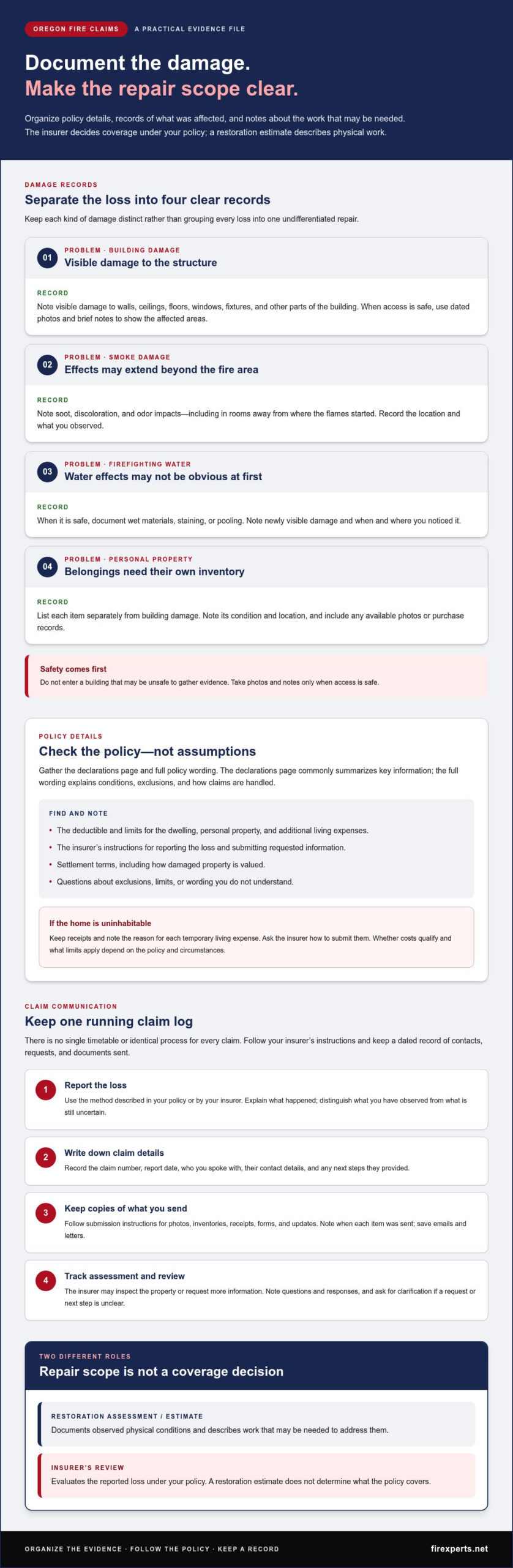
Keep separate records for different kinds of damage. This helps you describe what happened without grouping every loss into one undifferentiated repair.
- Building: Note visible damage to walls, ceilings, floors, windows, fixtures, and other parts of the structure, including outbuildings such as a detached workshop or an aircraft hangar.
- Smoke: Record soot, discoloration, and odor impacts, including in rooms away from the flames.
- Firefighting water: Document wet materials, staining, or pooling when it’s safe to do so. Water damage may not be obvious at first.
- Personal property: Keep belongings in a separate inventory from building damage. Record each item’s condition and location, along with any available photos or purchase records.
Don’t enter a building that may be unsafe to collect evidence. When access is safe, dated photos and brief notes can help show which areas were affected and what you observed.
What policy details should you locate first?
Gather the declarations page and full policy wording. The declarations page commonly summarizes key policy information, while the full wording explains conditions, exclusions, and how claims are handled. Look for the deductible and the limits that apply to the dwelling, personal property, and additional living expenses. Don’t assume that one limit applies to every category.
- Find the insurer’s instructions for reporting a loss and submitting requested information.
- Check how the policy describes settlement terms, including how damaged property is valued.
- Write down questions about exclusions, limits, or unclear wording to raise with the insurer.
If the fire makes your home uninhabitable, temporary living expenses may also be relevant. Whether those costs are covered, which expenses qualify, and what limits apply depend on the policy and circumstances. Keep receipts and notes about the reason for each expense, and ask the insurer how to submit them. An organized insurance claim fire damage Oregon file connects each reported loss to the records describing it, while leaving the coverage decision to the insurer.
How the Oregon fire insurance claim process typically moves forward
There’s no single timetable or identical set of steps for every fire claim. The process depends on the insurer, policy, and details of the loss. A clear record of each contact and request can make it easier to follow. For an insurance claim fire damage Oregon homeowners may move through reporting, information gathering, assessment, and claim review, while restoration planning develops alongside those steps.
- Report the loss. Contact your insurer using the method described in your policy or on the insurer’s website. Explain what happened and what you know so far. If some damage is still being assessed, distinguish what you’ve observed from what remains uncertain.
- Record the claim details. Write down the claim number, the date you reported the fire, the name and contact details of the person you spoke with, and any next steps they provided.
- Send requested information. Follow the insurer’s instructions for submitting photos, inventories, receipts, forms, and updates. Keep copies of everything you send and note when you submitted it.
- Prepare for assessment and review. The insurer may inspect the property or request more information to assess the reported damage. Keep a record of questions and responses, and ask for clarification if a request or next step is unclear.
What happens after you report fire damage?
Claim communications can arrive through different channels, so keep one running log instead of relying on memory. Save emails and letters, note the date and subject of phone calls, and retain claim-related receipts. Ask the insurer how it wants you to submit new findings or documents. If damage becomes visible later, record when and where you noticed it, then follow the insurer’s process for providing an update.
Claim review and restoration are connected, but they serve different purposes. The insurer reviews the loss under the policy. Restoration professionals assess physical conditions and document work that may be needed to address them. That information can help explain the repair scope, but it doesn’t determine whether the policy covers a particular item or task. For broader context about restoration work and industry practices, consult the Restoration Industry Association. For a closer look at how an insurance restoration contractor in Portland documents damage and coordinates repair work with an insurer, see what to expect during the process.
Where Oregon policyholders can find consumer guidance
The Oregon Division of Financial Regulation (DFR) is a state resource for insurance questions. Its website provides current guidance on wildfire and insurance topics. Consumer-assistance options and complaint procedures can change, so review DFR’s latest instructions before deciding how to raise a concern. Keep your policy documents and claim notes together if you seek guidance, so you can describe the situation clearly.
While insurer communications continue, a restoration team can document site conditions and plan the physical work. Fire Industry Restoration Experts coordinates restoration work with insurance companies, helping keep repair-scope information organized alongside your claim records. The team serves property owners and managers in Portland, Gresham, and Clackamas, as well as other Oregon communities. Learn more about fire damage restoration support.
Why a restoration estimate and an insurance coverage decision are different
A restoration estimate and an insurer’s coverage decision answer different questions. The estimate describes observed property conditions and outlines work that may be needed to address them. The insurer reviews the reported loss under the policy and decides what, if anything, is covered. An estimate is useful documentation, but it isn’t approval or a promise of payment.
That distinction matters during an insurance claim fire damage Oregon property owners may be managing while trying to make their home safe and plan repairs. A restoration professional can document physical damage, affected areas, and proposed work. The insurer assesses how the policy applies to the reported facts. If you’re unsure whether a particular task or item falls within coverage, ask the insurer for an explanation tied to your policy.
How to read a repair scope without confusing it with approval
Read the estimate as a description of work. Look for the affected room or building area, the observed condition, and the proposed action. For example, a scope might explain why a damaged section needs to be removed before rebuilding. It should help you understand the physical work, not predict what the insurer will pay.
It can also help to distinguish the stages of work. Emergency stabilization, such as board-up, protects the property; demolition removes damaged materials; mitigation addresses conditions that could worsen; rebuilding restores affected parts. For final rebuild phases such as drywall repair and repainting, professional services like propainterusa.com illustrate how surface preparation and finish coats are typically detailed in repair scopes. These stages may be documented separately. If a line item or area is unclear, note the question and ask for a plain-language explanation. Keep the discussion focused on the observation and proposed work.
What if the insurer and restoration scope do not match?
A difference between scopes is a reason to compare details, not to assume either document is final. One document may describe work the other doesn’t address, or use different terms for the same area. Review the descriptions side by side and identify the exact item, location, and reason for the difference. Keep the conversation factual and save the written response.
- Gather photographs, assessment notes, and the relevant estimate details.
- Send supporting information through the insurer’s requested process, and keep a copy.
- Ask the insurer to explain how it evaluated a disputed item under the policy.
If an inspection reveals a condition that wasn’t included in an earlier scope, record what changed and share the new information through the appropriate claim channel. Don’t label an item as covered or excluded based only on a restoration estimate. Coverage depends on the policy wording and facts of the loss.
If a concern remains unresolved, consult current Oregon Division of Financial Regulation consumer guidance for insurance questions and review its current assistance procedures. A restoration team can clarify the physical scope and organize supporting observations, while you and the insurer address policy-specific coverage questions. Keeping those roles distinct helps the repair discussion stay clear, grounded, and documented.
Build a clear evidence file for your Oregon fire damage claim
After a fire, keeping records can feel like one more burden. Start small and build your file over time. A clear, dated record helps you explain what you observed, where damage occurred, and what information you’ve sent. It won’t decide coverage, but it can make conversations about an insurance claim fire damage Oregon more organized.
Safety comes first. Don’t enter a building that may be unsafe to take photos or retrieve belongings. Follow guidance from emergency personnel and wait until access is safe. You can start your record from a safe location with details you remember, then add observations when you’re able to view affected areas.
A practical photo and document checklist
Photograph damage only when it’s safe. Capture broad views of affected rooms, then closer images that show specific damage. Keep original files when possible, and label copies with the date, room, and damage type. A simple label such as “kitchen, ceiling, water staining” gives useful context later.
- Take photos of affected rooms, building materials, and belongings, including wider views that show where each item is located.
- Write brief notes about visible conditions and the date you first noticed them. Add an entry if damage changes or another area is affected.
- Save policy documents, claim correspondence, submitted forms, restoration estimates, and claim-related receipts together.
- Keep a contact log with dates, names, discussion points, decisions, and documents sent or requested.
Use one main folder, digital or paper, and make a backup copy if you can. Group documents by type or date so you can find a photo, message, or receipt without searching through unrelated files. When you send information, note what went out and when. This habit can help you respond accurately if the insurer follows up.
How to record damaged belongings when receipts are missing
Receipts may be gone or inaccessible after a fire. You can still begin an inventory from memory, working room by room and keeping building damage separate from personal belongings. Describe each item plainly, including its location, approximate age, brand or model if remembered, and visible condition. Mark uncertain details as estimates rather than filling gaps with guesses.
Look for records that may help refresh your memory, such as surviving photographs, online account histories, manuals, warranties, or purchase confirmations. For example, a family photo may show furniture in a room, while an account record may help identify when an appliance was purchased. Note where each detail came from, and distinguish what you know from what you’re estimating. Follow the insurer’s instructions for submitting the inventory and supporting records.
Restoration assessments can add organized observations about the property’s physical condition as work is planned. Fire Industry Restoration Experts documents damage and coordinates restoration work with insurance companies, while the insurer reviews coverage under your policy. For help documenting fire damage and planning restoration, connect with Fire Industry Restoration Experts.
Coordinate fire restoration and insurance claim next steps
After a fire, it can be hard to know what deserves attention first. A steady sequence can keep the claim and physical recovery organized: preserve the records you have, communicate with your insurer, document the restoration scope, then plan the work. You don’t need to resolve every question at once. Focus on safety and the next clear step.
Restoration and claim review are related, but they aren’t the same process. A restoration team records property conditions and describes the work needed to address them. The insurer reviews the claim under the policy and makes coverage decisions. Coordination can keep repair information organized alongside insurer communications, but it doesn’t guarantee payment or determine what the policy covers.
What restoration coordination can help organize
Fire Industry Restoration Experts handles restoration stages that may include damage assessment, board-up, demolition, and rebuilding. Each stage has a different purpose. An assessment documents observed conditions, board-up helps secure damaged openings, demolition removes affected materials, and rebuilding restores parts of the structure. The work needed depends on the property and the damage found. For more on pre-loss condition restoration in Oregon, including what property owners can expect as restoration progresses, see this guide.
Clear records connect observed fire, smoke, or firefighting-water damage to the proposed work. As the scope develops, keep relevant assessment notes, work descriptions, and updates together. If new conditions are found, document them and share the information through the insurer’s process. This gives the insurer and restoration team a clearer basis for discussing the physical work without treating an estimate as a coverage decision.
Choose a manageable next step after a fire
You don’t have to map out the full recovery today. Start with practical details already within reach, then build from there:
- Note immediate concerns. Write down safety issues, damaged areas, and property conditions that need attention. Don’t enter an unsafe building to inspect it.
- Gather available claim information. Keep your policy details, claim number, insurer contact, and recent communications handy.
- Discuss the physical scope. Identify what needs assessment or protection, and keep the restoration discussion separate from policy coverage questions.
- Keep the records together. Save restoration updates and insurer messages in a consistent place as work and review progress.
For an insurance claim fire damage Oregon property owners may be balancing repair decisions with insurer requests. A restoration team can explain the work needed at the property and coordinate restoration information with insurer communications, while you remain in contact with your insurer about the policy. If you’d like to discuss your fire restoration needs, Fire Industry Restoration Experts can help you consider a practical next step.
Take the next step at a pace you can manage
Recovery doesn’t have to be solved all at once. Choose one practical next step, such as noting the questions you still need answered or deciding which property concern needs attention first. A clear priority can make the next conversation feel more manageable while claim details are being reviewed.
If you searched for “insurance claim fire damage Oregon,” you may be balancing repair concerns with uncertainty about what comes next. Keep your insurer’s coverage decisions separate from restoration planning, and address each in turn. Straightforward information and a careful approach can help you move forward.
Fire Industry Restoration Experts was founded by volunteer firefighter and contractor Greg Philo. For fire restoration support in Portland, Gresham, or Clackamas, talk with our restoration team about your property. Start with the questions you have today and discuss a practical next step.
Frequently Asked Questions
Does homeowners insurance cover wildfire damage in Oregon?
Coverage depends on your policy, the cause of loss, applicable exclusions and limits, and the specific property damage. Don’t assume every wildfire-related expense is handled the same way. For example, damage to the dwelling and damage to personal belongings may be reviewed under different terms. Read your policy and discuss the reported loss with your insurer. Oregon’s Division of Financial Regulation publishes consumer guidance on wildfire insurance questions.
Can I begin emergency repairs before the insurance adjuster inspects my home?
Protect people and address urgent hazards, but contact your insurer promptly about how to document emergency work. Photograph conditions only if it’s safe, and keep work records, receipts, and any written instructions. If damaged materials need to be removed to prevent further harm, retain samples when practical and safe. The right steps depend on the hazard and policy, so don’t delay necessary protection while waiting for an inspection.
How long does an Oregon fire damage insurance claim take?
There’s no fixed timeline for every claim. Property access, the extent of damage, missing records, inspection needs, and questions about proposed repairs can all affect progress. People searching “insurance claim fire damage Oregon” may hope for a firm estimate, but the insurer handling your loss is best placed to explain what remains outstanding. Ask for the next expected step and keep dated notes of updates and information requests.
What should I do if smoke or firefighting-water damage appears after the initial inspection?
Record the area and condition, along with the date you first noticed it. Take photographs only if access is safe, then notify the insurer through its claim process and save a copy of your message. If restoration work is underway, note which room or material is affected and share that observation with the restoration team. This can help clarify what changed without assuming the newly noticed damage is covered or excluded.
What is the difference between actual cash value and replacement cost coverage?
They’re different methods a policy may use to calculate payment for covered property, and the policy defines how each applies. Actual cash value may account for depreciation; replacement cost coverage may use replacement expenses subject to policy conditions. For instance, the amount available at one stage may depend on proof that repairs or replacement occurred. Review the wording for documentation requirements, deadlines, and limits, then ask the insurer to explain its calculation.
Does homeowners insurance help pay for temporary housing after a fire?
Some policies include additional living expense coverage if a covered loss makes the home uninhabitable, but eligible costs, limits, and conditions vary. Keep records that connect each expense to the temporary move, such as lodging receipts and notes about dates. Ask the insurer what it needs before submitting costs. Oregon DFR’s wildfire guidance discusses additional living expenses, but your policy and claim instructions govern your specific situation.
What happens if the fire claim settlement includes my mortgage lender?
Your lender may be named on a settlement payment, depending on your mortgage and the insurer’s process. Before depositing or spending it, read the payment instructions and contact both the insurer and lender to learn what endorsements or documents they require. Keep copies of those instructions and any forms you submit. Procedures can differ by loan and claim, so understand the steps before planning repair payments around the funds.