
What happens between a fire and moving back into a rebuilt home? If you’re wondering how to rebuild after a house fire, think of it as a series of connected steps, not one leap from damage to construction. Start with safety, then assess and document the damage so the work can be scoped clearly.
The process can feel unfamiliar. You may be trying to understand what can be restored, what must be rebuilt, how insurance decisions affect the work, and when you can return home. A practical plan helps organize those questions, even though the timeline depends on the damage, project decisions, permits, and other factors.
This guide explains the main stages, from assessment and insurance coordination through demolition, rebuilding, and closeout. It also covers common sources of delay and steps that can help you move forward in Portland, Gresham, and Clackamas. Fire Industry Restoration Experts handles connected restoration and rebuilding work and coordinates with insurance companies, helping homeowners understand what comes next at each phase.
Key Takeaways
- Learn how to rebuild after a house fire by treating recovery as connected phases, not one repair task.
- A clear damage assessment helps define the work before reconstruction moves ahead.
- Site preparation, structural repairs, and interior rebuilding each have a place in the project sequence.
- Damage, scope changes, approvals, and material coordination can all affect the schedule.
- Before returning home, review completed work, open items, project documents, and applicable local requirements.
How to Rebuild After a House Fire: Understand the Starting Point
A fire can leave you facing damage, paperwork, and difficult decisions all at once. You don’t have to resolve everything immediately. Rebuilding begins once it is safe for people to work at the property and the affected areas can be assessed. Until then, follow emergency personnel’s instructions and stay out of unsafe parts of the home.
Think of rebuilding as a sequence, not a single repair. The team needs to determine what the fire, smoke, and firefighting water affected. Those findings help define the work, prepare the site, and guide reconstruction. The next steps depend on the damage in your home, so avoid assuming that a neighbor’s experience or a general checklist will match your project.
What does rebuilding after a house fire involve?
Rebuilding connects assessment, a defined work scope, site preparation, and construction. Structural damage affects parts that support or enclose the home, such as framing, floors, or roof areas. Other spaces may need repair or restoration without requiring the same degree of reconstruction. The work scope identifies which areas need attention and helps keep restoration and rebuilding decisions aligned.
That distinction matters. Restoration addresses fire-related damage where affected materials or areas can be treated and returned to use. Reconstruction repairs or replaces building components that cannot remain as they are. Optional upgrades or unrelated remodeling are separate decisions, not automatic parts of fire recovery. If you are also considering expanding your home’s layout or planning future residential additions, resources from professional building contractors like swissbuild.co.uk illustrate how precision construction and extension projects are scoped and managed. A plan based on documented damage gives you, the restoration team, and the insurer a clearer basis for discussing the work. Coverage decisions remain with the insurer and depend on the policy and claim.
When can rebuilding work begin?
There isn’t one start date that fits every home. Work readiness depends on safe access, the structure’s condition, and a clear understanding of the work. Early stabilization is different from reconstruction: it may involve securing or protecting affected areas, while rebuilding requires a defined scope and a path into construction.
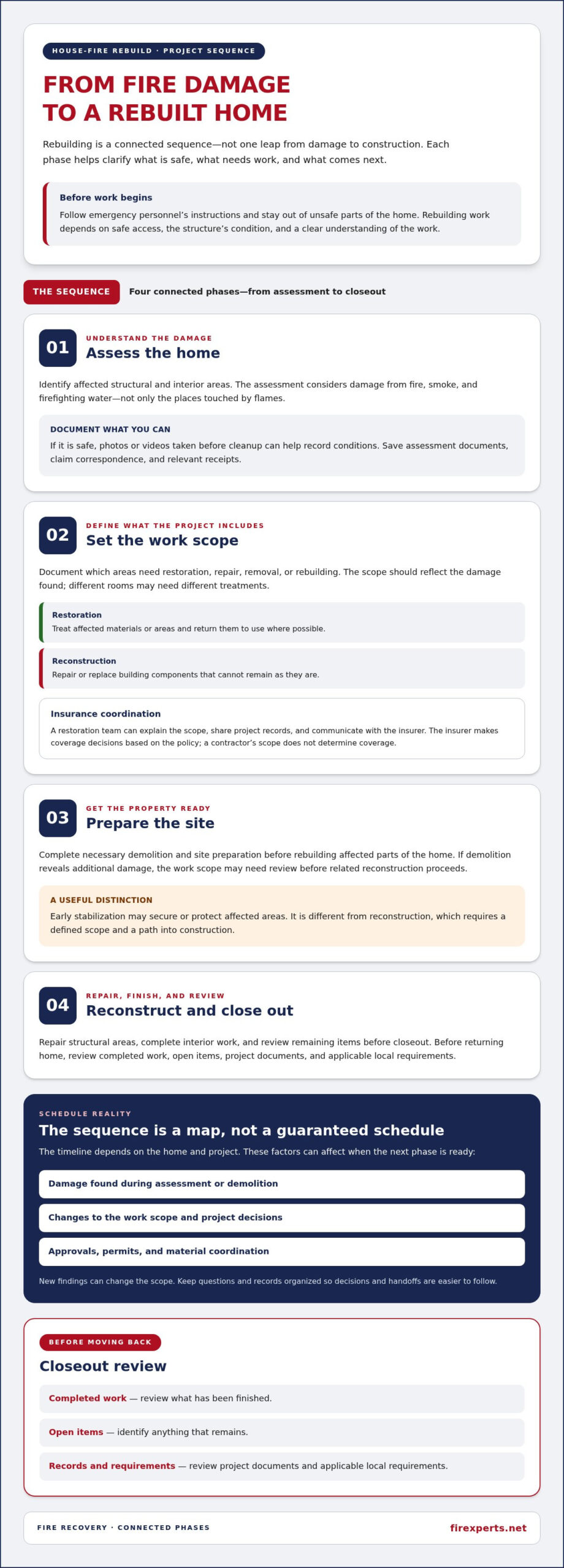
The process often moves through these stages:
- Assess the damage: Identify affected structural and interior areas, including damage from smoke and firefighting water.
- Set the work scope: Document what needs restoration, removal, or rebuilding, then coordinate the scope with the insurance process.
- Prepare the site: Complete necessary demolition and site preparation before rebuilding affected parts of the home.
- Reconstruct and finish: Repair structural areas, complete interior work, and review remaining items before closeout.
This sequence is a useful map, not a guaranteed schedule. New findings can change the scope, while approvals and project decisions can affect when the next phase is ready. A team that handles connected restoration and rebuilding can make the handoffs easier to follow. Fire Industry Restoration Experts handles damage assessment, demolition, restoration, and rebuilding, and coordinates restoration work with insurance companies. Understanding how to rebuild after a house fire starts with identifying what is safe, what is damaged, and what work the home needs.
Damage Assessment and Insurance Scope: Establish What Must Be Rebuilt
Before reconstruction can be planned, the people involved need a clear picture of what the fire affected. Some damage is obvious, such as a burned room or damaged roof. Other effects, including smoke and firefighting water, may reach beyond the areas touched by flames. A careful assessment turns these observations into a property-specific work scope. That scope gives you, the restoration team, and the insurer a reference point for discussing next steps.
How assessment findings shape the rebuild scope
An assessment records visible damage and identifies areas that may need closer evaluation. For example, a room with charred framing may need more than surface repairs, while smoke may have affected adjoining spaces. A general checklist can help you organize questions, but it cannot replace an assessment of your home’s condition.
Findings guide decisions about what can be restored, what needs repair, and what must be removed and rebuilt. The written scope should reflect the damage found rather than assume every affected room needs the same treatment. If demolition exposes additional damage, the scope may need to be reviewed before the related reconstruction proceeds.
You can help keep the process organized by saving claim correspondence, assessment documents, and relevant receipts. If it’s safe to do so, photos or videos taken before cleanup can also help document conditions. Keep a running list of questions: Which areas are included in the proposed work? What does a repair description mean? How will newly discovered damage be handled? Clear records make it easier to track decisions during a stressful period.
How restoration teams coordinate with insurance
Insurance coordination connects the documented condition of the home with discussions about proposed repairs. A restoration team can explain the work scope, share project records, and communicate with the insurer as restoration and rebuilding are planned. This can bring differences or unanswered questions to light before they cause confusion about the work being discussed.
An assessment or contractor’s scope does not determine insurance coverage. Claim decisions depend on the insurer and the policy terms. Ask for an explanation when a proposed scope or claim decision is unclear, and keep notes of conversations, dates, and documents received. These records help you follow the claim while the physical work is being planned.
For broader context on recovery work after a fire, the fire damage restoration guide explains how restoration fits into a homeowner’s recovery. Fire Industry Restoration Experts coordinates restoration work with insurance companies and handles damage assessment through rebuilding. For homeowners in Portland, Gresham, and Clackamas, Portland-area fire restoration support can help bring the assessment and rebuild work into clearer focus.
From Demolition to a Rebuild: What Happens at Each Phase?
Once the home’s condition and work scope are clear, the project moves from assessment into physical work. The sequence matters: affected areas need to be prepared before repairs can be built on a sound base, and interior work follows as the structure allows. The amount and order of work depend on the damage. A home with localized damage may need a different approach from one with fire damage across several rooms.
Site preparation and removal of damaged materials
Site preparation gets affected areas ready for repair. Demolition removes materials identified in the project scope, clearing space for the next phase. It should follow the documented plan, not become a blanket tear-out. If removal reveals additional damage, bring it into the project discussion before changing the scope. Leave demolition and removal work to the restoration team rather than disturbing damaged areas yourself.
Restoration and rebuilding involve related but distinct tasks. Restoration addresses fire-related damage in areas that can be treated and returned to use. Rebuilding repairs or replaces parts of the structure and interior that cannot remain as they are. Coordinating both helps the team plan the handoff from site preparation to construction without treating every affected surface as a reconstruction task.
Structural work, rebuilding, and interior restoration
After removal and preparation, structural repairs address damaged parts that support or enclose the home. Depending on the assessment, this may include framing, floors, or roof sections before interior reconstruction can proceed. For a closer look at how fire can affect these parts of a home, see structural damage repair after fire.
Once structural work is underway or complete, rebuilding can move into interior areas as the project allows. The sequence may include closing in repaired sections and completing interior surfaces and components. Some restoration work can happen alongside rebuilding in separate areas; other tasks need to wait until earlier work is finished. The project plan helps clarify these handoffs and when the work moves from restoring an area to reconstructing it.
Permits and inspections may be part of a rebuild. The applicable steps depend on the property’s jurisdiction and project details. In Portland, Gresham, and Clackamas, follow direction from the local authority responsible for the property rather than assuming every project has the same requirements. Required reviews can affect when a phase proceeds, so include them in project coordination from the start.
Fire Industry Restoration Experts handles connected restoration work, demolition, and rebuilding, helping homeowners keep the phases aligned. That coordination can make it easier to understand what is happening now and what needs to be ready next. Portland-area fire restoration and rebuilding support can help you bring the project into clearer focus.
What Affects the House-Fire Rebuild Timeline and Your Decisions?
Waiting for a damaged home to become livable again is difficult, especially when a dependable move-in date may not be clear at the start. A rebuild schedule takes shape as the project conditions become clearer. The extent of the damage, the work required, decisions that affect the scope, and coordination between project steps can all influence how long the process takes.
Why no two fire rebuild timelines are the same
The assessed damage sets the scale of the work. Repairs limited to a small area involve different tasks from reconstruction affecting several rooms or structural parts of the home. The work also happens in stages: later tasks may depend on earlier repairs being complete, and new findings can require a review of the project scope or sequence.
Approvals, inspections, and material coordination can also affect when work proceeds. Permit and inspection requirements vary by project and jurisdiction, so don’t assume a neighbor’s experience or a general online estimate applies to your home. In Oregon, verify applicable requirements with the local authority responsible for the property. A useful schedule reflects the actual scope and known dependencies, then gets updated as conditions and decisions change. That’s why a universal estimate can create false expectations about how to rebuild after a house fire.
How homeowners can keep the project moving
You can’t control every delay, but you can prevent avoidable confusion. Keep project documents together in a folder or digital file. Save the current scope, insurer communications, decisions, and records of changes in one place. When a decision affects the work, ask what information is needed, who needs to review it, and whether it changes the planned sequence.
Regular, clear communication helps everyone work from the same understanding. Agree on how updates will be shared, keep a short list of open questions, and ask for clarification when a task or decision is unclear. Responding promptly can help the team plan the next step, although it cannot guarantee that materials, approvals, or other conditions will be ready on a particular date.
- Track changes: Note what changed, when it was discussed, and which project documents were updated.
- Clarify dependencies: Ask which tasks need to happen before the next phase can begin.
- Confirm local steps: Tie permit and inspection questions to the relevant jurisdiction instead of relying on assumptions.
A restoration team that coordinates connected phases can help keep project decisions and insurance communication organized. Fire Industry Restoration Experts works with homeowners on restoration and rebuilding while coordinating with insurance companies. Connect with the Portland-area restoration team to discuss the factors shaping your rebuild in Portland, Gresham, or Clackamas.
Returning Home After a Fire Rebuild: Closeout and Next Steps
After weeks or months of decisions and construction, seeing the home take shape again can bring relief. Before moving back, understand what has been completed, what still needs attention, and which local steps apply to your property. A careful closeout provides a clearer handoff from the rebuild project to daily life at home.
What to review before moving back in
Walk through the completed work with the project team and compare it with the agreed scope. Note unfinished items, areas that need clarification, or work that may require follow-up. Keep a written record of questions and responses so open items don’t get lost during the transition. Gather relevant project documents, including the final scope and records of changes, in one place for future reference.
Completed construction alone does not establish whether you can occupy the home. Required inspections, approvals, and occupancy steps depend on the project and local jurisdiction. Follow direction from the authority responsible for the property, and wait for any required approval before returning. Raise questions about remaining project records or local steps during closeout.
Getting help with a Portland-area fire rebuild
Closeout is easier to follow when restoration and rebuilding decisions stay connected from the start. A coordinated team can reduce confusion between damage assessment, demolition, restoration, and reconstruction, while keeping project records and insurance communication aligned. This does not determine what an insurer will cover, but it can help everyone understand the work being discussed and the project’s next steps.
For homeowners in Portland, Gresham, and Clackamas, Fire Industry Restoration Experts handles damage assessment, demolition, restoration, and rebuilding, and coordinates restoration work with insurance companies. The team helps connect recovery phases, from understanding the documented work through reviewing project closeout. Each property and jurisdiction has its own requirements, so the path home depends on the work completed and any applicable approvals.
- Review the work: Walk through completed areas and write down remaining items or questions.
- Organize your records: Keep scope documents, project changes, and insurance communications together.
- Follow local direction: Confirm applicable inspection and occupancy steps with the responsible jurisdiction.
Rebuilding after a fire asks a lot of homeowners. You don’t have to sort through every project detail alone. If you’re weighing how to rebuild after a house fire or are ready to discuss next steps for your Portland-area property, talk with Fire Industry Restoration Experts.
Take the Next Step Toward Home
Recovering from a fire can make the future feel hard to plan. You don’t need every answer before taking the next step. Start with a clear conversation about the property’s condition, the work ahead, and the decisions that need attention. Understanding how to rebuild after a house fire can help you work through those decisions one at a time.
Fire Industry Restoration Experts helps property owners in Portland, Gresham, and Clackamas with assessment, restoration, and rebuilding, while coordinating restoration work with insurance companies. Founded by volunteer firefighter and contractor Greg Philo, the company brings construction expertise and emergency response experience to a difficult time.
Ready to discuss what comes next for your home? Talk with Fire Industry Restoration Experts about your rebuild.
Frequently Asked Questions
How long does it take to rebuild a house after a fire?
There’s no reliable single timeline for every house-fire rebuild. The time needed depends on the damage, the work scope, project conditions, and any required approvals or inspections. A home needing repairs in one area may move through different steps from a home requiring extensive structural work. Ask the project team for the next planned milestones and what decisions or approvals each one depends on.
Can I stay in my house while it’s being rebuilt after a fire?
Whether you can stay depends on the home’s assessed condition, the affected areas, and instructions from responsible professionals and authorities. A room that looks untouched does not by itself establish that the property is safe to occupy. Follow official directions and applicable local requirements. If only part of the home is affected, ask how work access and separation from construction areas will be handled before making living arrangements.
What should I keep after a house fire while the home is being rebuilt?
Keep copies of damage records, project documents, insurer correspondence, and decisions about the work scope. A dated log can help you track who discussed an issue, what was decided, and which questions remain open. Store copies somewhere outside the damaged home, such as in a secure digital folder. For example, keep a revised scope with the message explaining why the project work changed.
Will homeowners insurance pay to rebuild after a house fire?
Coverage depends on your policy, the cause and extent of the damage, applicable exclusions, and the insurer’s claim decision. A restoration contractor can coordinate with the insurer and discuss the documented work scope, but cannot promise approval or a particular payment. Review your policy and direct coverage questions to your insurer or a qualified insurance representative. Keep written explanations of decisions with your claim records.
Can a house be rebuilt on the same footprint after a fire?
Possibly, but the previous footprint does not automatically determine what can be rebuilt. The property, proposed design, and requirements of the responsible local jurisdiction all matter. For homeowners considering a revised layout or custom residential architecture, firms like TanneyDesign offer guidance on reimagining a home’s structure and space. Before making plans around the former layout, have the proposed work considered through the appropriate project and permitting process. Local rules can vary across Portland, Gresham, and Clackamas, so verify requirements with the authority responsible for your property.
What happens to belongings during a house-fire rebuild?
Belongings need to be considered item by item because exposure to heat, smoke, soot, and water can differ from room to room. Avoid moving visibly affected items into clean areas before receiving appropriate guidance. Record affected belongings for your project files and insurance discussions, and keep those records with your other claim documents. Decisions about contents are separate from the home’s structural rebuild, so track them as a distinct part of recovery.
Do I need permits to rebuild after a house fire in Oregon?
Permit and inspection requirements depend on the work and the jurisdiction where the property is located. Don’t assume one statewide rule covers every rebuild or that a nearby project had the same requirements. Contact the local building department responsible for the property to verify current requirements and how approvals fit the planned work. This is especially useful when coordinating a schedule in Portland, Gresham, or Clackamas.