
After a fire, leak, flood, or storm, you may be wondering who will assess the damage, document the work, and coordinate repairs. An insurance restoration contractor Portland property owners can work with helps connect those steps, while your insurer makes decisions about coverage.
You shouldn’t have to guess what happens after you report property damage. The contractor assesses affected areas, records the damage, and prepares a repair scope to share with you and the insurer. As the project moves forward, the team can explain what needs to be removed, what can be restored, and how rebuilding fits into the plan. Clear updates help you understand the project’s status and next steps.
This article explains the process, from assessment and claim documentation to mitigation, demolition, and structural repairs. You’ll also learn how restoration work is coordinated with the insurer and adjuster, and what to expect as a home or business is rebuilt. Whether you’re in Portland, Gresham, or Clackamas, understanding the sequence can make the next steps feel more manageable.
Key Takeaways
- An insurance restoration contractor in Portland can coordinate damage assessment, documentation, and repair work while your insurer makes coverage decisions.
- Restoration generally moves from assessment to a documented work scope and repairs. The damage and policy shape the project’s steps and timing.
- Clear work descriptions, organized documentation, regular updates, and the ability to rebuild help you follow the project’s progress.
- Gather insurer contact details, policy information, and existing incident records, but don’t enter areas that may be unsafe or damaged.
- Fire Industry Restoration Experts coordinates restoration from assessment through rebuilding, drawing on founder Greg Philo’s volunteer firefighting and construction background.
What an Insurance Restoration Contractor in Portland Does After Property Damage
After property damage, it can be difficult to know what needs attention first and who handles each part of the recovery. An insurance restoration contractor Portland property owners work with assesses the damage, organizes restoration tasks, and carries out the agreed repairs. The contractor coordinates the physical work and its documentation. The insurer reviews the claim and determines coverage under the policy.
That distinction matters. A contractor can explain what the damage requires and document the work, but can’t promise that an insurer will pay for it. For a general explanation of how policyholders, insurers, claims, and adjusters relate, see What is insurance?
What work can an insurance restoration contractor coordinate?
The work plan depends on what can be observed at the property and what the damage calls for. A fire, for example, may leave building materials that need to be removed. Water used to put out the fire may also require mitigation. Each project is different, so assessment helps establish a practical sequence instead of assuming every property needs the same work.
Depending on the damage and project needs, restoration work may include:
- Damage assessment to identify affected areas and the work they may require.
- Board-up to secure damaged openings where needed.
- Demolition and mitigation to remove damaged materials and address ongoing harm to the structure.
- Structural restoration and rebuilding to repair affected parts of the property.
This work addresses damage, not elective remodeling or unrelated upgrades. The scope should describe the repairs connected to the incident so you can understand what is being done and why.
How the contractor, property owner, and insurer work together
You remain central to the process. You authorize work, share relevant claim information, and communicate with the insurer about the claim. The contractor assesses and documents property damage, explains the proposed work, and coordinates restoration details with the insurance company. Keeping these roles clear can reduce confusion when the repair scope and claim paperwork are reviewed together.
Restoration contractors document and perform repair work; insurers decide what the policy covers. The contractor’s assessment describes observed damage and the work needed to address it. The insurer interprets policy terms and makes claim decisions, which depend on the individual policy and claim review.
Before work proceeds, make sure you understand the proposed scope and what you’re authorizing. Ask for a plain-language explanation of the work sequence and how changes or newly discovered damage will be communicated. This helps you follow the project while keeping coverage questions with the insurer. A coordinated process connects assessment, documentation, and repairs without confusing the contractor’s role with the insurer’s.
How Insurance Coordination Fits the Portland Restoration Process
Insurance coordination follows a sequence, although the timing and exact steps depend on the damage, the policy, and the property’s needs. An insurance restoration contractor Portland property owners work with can assess the damage, document the work, and coordinate restoration details with the insurance company. This documentation helps everyone discuss the same project, but it doesn’t determine coverage or guarantee payment.
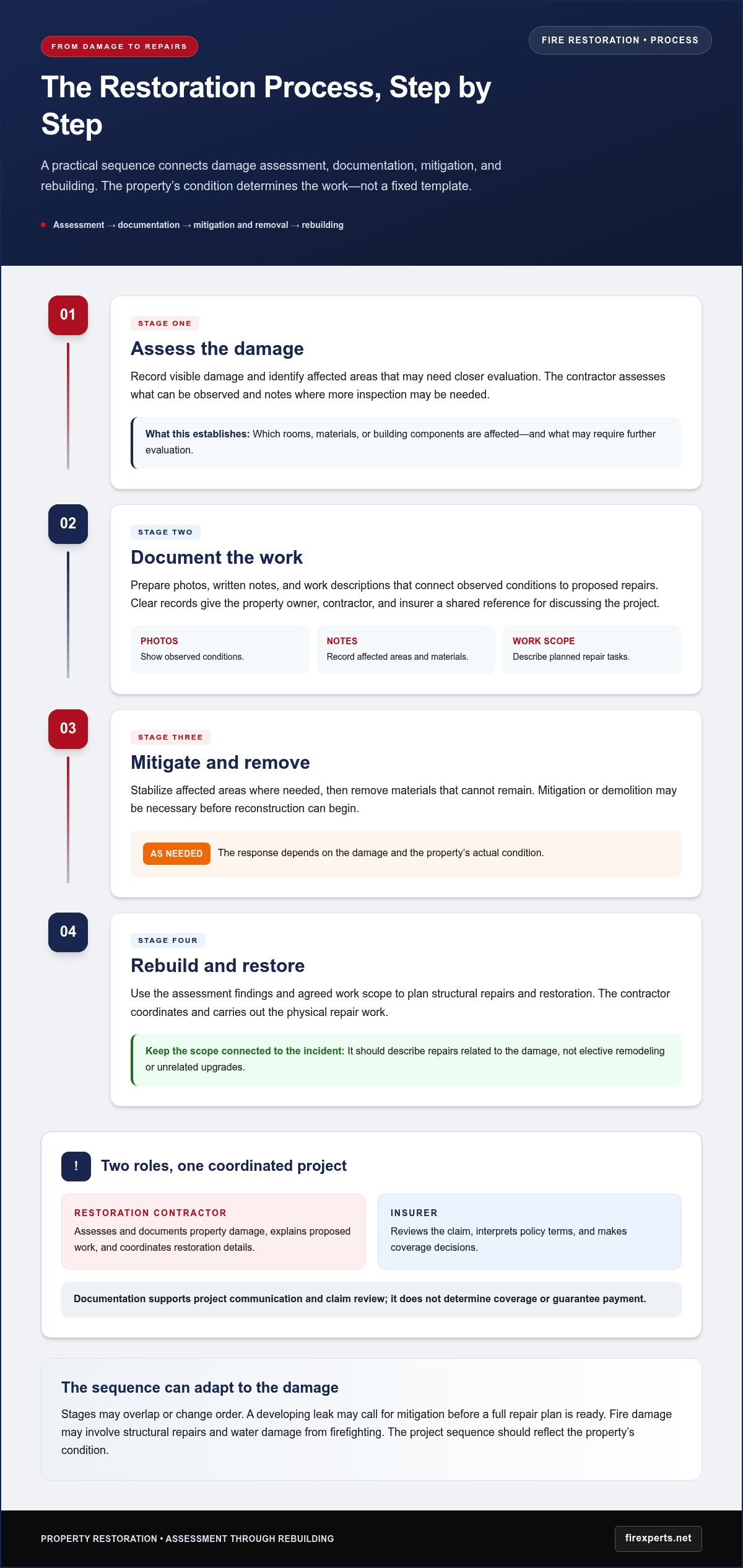
A typical project moves through connected stages:
- Assess: Record visible damage and identify areas that may need closer evaluation.
- Document: Prepare photos, notes, and work descriptions that explain observed conditions and proposed repairs.
- Mitigate and remove: Stabilize affected areas where needed, then remove materials that cannot remain.
- Rebuild: Use the findings and agreed scope to plan structural repairs and restoration.
These stages may overlap or change order. A developing leak may call for mitigation before a full repair plan is ready. Fire damage may involve both structural repairs and water damage from firefighting. The sequence should reflect the property’s actual condition, not a fixed template.
From damage assessment to a documented work scope
Assessment starts with what’s visible and accessible. The contractor records affected rooms, materials, and building components, then notes where further evaluation may be needed. For example, a damaged ceiling may show where water entered, but nearby areas may also need inspection before the repair scope is clear.
Photos and written notes give you, the contractor, and the insurer a shared reference. A useful work description connects observed damage to a planned task, such as removing a damaged section before repairing the structure behind it. Clear records support project communication and claim review, but the insurer still interprets the policy and makes claim decisions. The Restoration Industry Association provides industry education and resources that can help readers understand the broader restoration field.
From mitigation and demolition to rebuilding
Stabilization or mitigation may be needed before reconstruction can begin. Removing damaged materials can reveal conditions that weren’t visible during the first assessment. If demolition uncovers affected framing, for instance, the team may need to document the finding and explain how it changes the repair scope or sequence.
Updates at each handoff help you follow the work. The team should explain what changed, what work is proposed next, and how revised information will be shared with the insurer. A guide to structural damage repair after a fire can also explain why rebuilding follows assessment and removal rather than starting immediately.
Fire Industry Restoration Experts coordinates Portland-area restoration from assessment and demolition through structural repairs and rebuilding. For more information about the work and documentation involved, read about the restoration team.
How to Evaluate an Insurance Restoration Contractor in Portland
After property damage, clear answers matter as much as the repair work. To evaluate an insurance restoration contractor in Portland, look at how the team explains the scope, documents its work, communicates with you, and carries the project through rebuilding. A well-organized process makes the work easier to follow and clarifies what happens next.
| Evaluation area | What clear coordination looks like | How Fire Industry Restoration Experts approaches it |
|---|---|---|
| Scope clarity | Work descriptions connect observed damage to planned tasks and explain the project phases. | The team assesses damage and coordinates work from demolition and mitigation through structural restoration and rebuilding. |
| Documentation | Notes, photos, and descriptions help you understand what was found and what work is proposed. | Assessment findings and restoration work are documented to support communication with you and the insurer. |
| Communication | You receive understandable updates as work progresses or new findings affect the plan. | The team explains the work and coordinates restoration details with insurance companies. |
| Rebuild capability | The work plan accounts for the transition from damage removal to repairs and rebuilding. | Restoration extends from assessment and demolition through structural rebuilding. |
A clear process doesn’t mean skipping details. You should be able to see what the contractor observed, what work is proposed, and how each phase follows the previous one. If demolition uncovers damage that wasn’t visible during assessment, an explanation of the finding and its effect on the work plan helps you stay oriented. It also gives you a useful record to discuss with your insurer, although documentation does not decide coverage.
Questions that clarify scope, communication, and project ownership
Ask how the team will explain and coordinate the work: What are the main project phases? How will assessment findings and repair needs be shared? How will you hear about changes to the scope or sequence? Fire Industry Restoration Experts coordinates restoration work with insurers and helps owners understand the work underway. The insurer remains responsible for coverage decisions, while you remain involved in authorizing work and sharing claim information.
Why one coordinated restoration workflow can reduce handoff confusion
Assessment informs mitigation, and mitigation and demolition can reveal what rebuilding will require. When these phases connect through a shared project understanding, it’s easier to follow why one task comes before another and what a change means for the next step. For more on the property owner’s role after a fire, see this Portland fire damage restoration property guide.
Fire Industry Restoration Experts provides a coordinated path from assessment to rebuilding for Portland-area property owners, including those in Gresham and Clackamas. Learn more about how restoration work is organized.
What Portland Property Owners Can Prepare Before Restoration Work Begins
A few records can make conversations with your insurer and restoration team easier to follow. You don’t need to enter a damaged area or have every document ready before professional assessment begins. Safety comes first. Gather what you can access safely, then add information as the project develops.
Records and information that help keep the project organized
Keep the following items together in a folder, notebook, or digital file. Existing records are useful, but don’t put yourself at risk to create new ones.
- Insurer and policy details: Save the insurance company’s contact information, claim number if one has been assigned, and policy information you already have.
- Incident details: Note the date you became aware of the damage and any relevant details you can recall.
- Existing photos or videos: Keep images taken from a safe location or images you already have. Don’t enter a damaged building or room to take more.
- Messages and updates: Save communications from the insurer, adjuster, and restoration team in one place.
- Receipts and temporary arrangements: Keep receipts for expenses related to the loss and temporary arrangements, with notes about what each record relates to.
- Work descriptions: File contractor updates and written descriptions of proposed or completed work so you can refer back to them.
These records help you answer questions without relying on memory during a stressful time. They also give you a place to add information as the assessment and repair plan take shape. The Oregon fire damage insurance claim guide offers more context for keeping a fire-related claim organized.
How to stay aligned as the scope develops
Before work moves into a new phase, review the written description and make sure you understand what it covers. If a term or task isn’t clear, ask the restoration team to explain it in plain language. You should be able to connect the work to the damage observed and understand how the next step fits into the project.
Some damage becomes visible only as materials are removed or areas are assessed more closely. If new findings affect the work, the team may need to update the documentation and plan. Keep a dated note of the explanation, any revised work description, and decisions you make. This creates a clear record of how the project changed without requiring you to interpret technical details on your own.
An insurance restoration contractor Portland property owners work with should make project information manageable while coordinating restoration work with the insurer. The insurer still determines coverage under the policy, so keep claim correspondence alongside contractor updates. For help organizing the assessment and restoration work, learn about the restoration process.
How Fire Industry Restoration Experts Supports Portland Insurance Restoration
After a damaging event, property owners need more than a list of repairs. They need a team that can explain what the property needs, coordinate the restoration work, and make the path from assessment to rebuilding understandable. Fire Industry Restoration Experts brings these project phases together while coordinating with insurance companies. The insurer determines coverage and makes claim decisions; the restoration team focuses on assessing and repairing the property.
A Portland-area team connecting restoration work and rebuilding
Founded in 2013 by Greg Philo, a volunteer firefighter and contractor, Fire Industry Restoration Experts serves property owners in Portland, Gresham, and Clackamas. Philo’s experience brings an emergency-response perspective together with hands-on construction knowledge. That combination is relevant when damage calls for an organized response to affected areas and careful planning for the work that follows.
The team’s restoration work can span damage assessment, board-up, demolition, mitigation, structural restoration, and rebuilding. Each phase serves a purpose: assessment helps identify the work needed, board-up can secure damaged openings, and demolition or mitigation may prepare affected areas for structural repair. Rebuilding addresses the damaged parts of the property. Coordinating these connected tasks helps you follow the project’s progress instead of treating removal and repair as unrelated jobs.
For owners searching for an insurance restoration contractor in Portland, the practical value is having restoration tasks and insurer coordination handled as parts of the same project. The team documents and explains the work, while you remain involved in decisions and the insurer reviews the claim under the policy. Clear roles keep the repair plan grounded in the property’s observed needs.
What happens when you contact the restoration team
The first conversation can start with what you know. Describe the type of damage, which areas appear affected, and any immediate concerns about the property or next steps. You don’t need every detail organized. The team can discuss the assessment, restoration needs, and how the physical work will be coordinated with the insurance company. Coverage decisions remain with the insurer.
As the project develops, useful conversations focus on what was observed, what work is proposed, and how each phase connects to the next. You can share claim information and records you already have to provide context for the restoration discussion. The goal is a clear working understanding, not pressure to make decisions before you understand the scope.
If you’re ready to discuss property damage and the restoration steps ahead, contact Fire Industry Restoration Experts. Be prepared to describe what happened, share any existing claim details, and talk through assessment, restoration needs, and coordination with your insurer.
Take the Next Step Toward a Clear Restoration Plan
You don’t need every answer before discussing the recovery work. Start by identifying what feels most uncertain: which damage needs attention, how the repair plan will be explained, or how restoration information will be shared with your insurer. That gives the conversation a practical starting point and helps turn a difficult situation into decisions you can take one at a time.
Choosing an insurance restoration contractor Portland property owners can speak with openly should make the work ahead easier to understand. Bring the information you have and ask for the next steps in plain language. The team can discuss restoration needs and how the work connects to your claim, while the insurer remains responsible for coverage decisions.
When you’re ready to talk through what happened and what comes next, contact Fire Industry Restoration Experts to discuss your restoration project.
Frequently Asked Questions
Can I choose my own insurance restoration contractor in Portland?
In many cases, you can select the restoration contractor, but your policy and the insurer’s claim process may affect how the work is coordinated. Review any instructions you’ve received and keep your insurer informed about your choice. Before authorizing repairs, make sure you understand the proposed work and how the contractor will share documentation. You remain involved in decisions about work at your property, while the insurer determines coverage under your policy.
Does an insurance restoration contractor deal directly with my insurance company?
Yes. A restoration contractor can coordinate with your insurance company about damage documentation, repair scopes, and project updates. For example, the contractor may provide a written description of proposed repairs for claim review. Stay involved by sharing claim information, keeping copies of communications, and asking for explanations if the insurer’s estimate and the contractor’s scope differ. Coordination keeps the parties informed, but it doesn’t guarantee claim approval or payment.
What happens if more damage is found during demolition?
If demolition reveals damage that wasn’t visible earlier, the contractor can document the new conditions and explain how they affect the repair plan. For instance, removing damaged wall material may expose structural components that also need assessment. Ask for an updated work description and keep it with your project records. The insurer may need the new information to review the claim. Coverage for additional work depends on the policy and the insurer’s decision.
How much does an insurance restoration contractor in Portland cost?
There isn’t one fixed price for restoration work. Cost depends on the type and extent of damage, the work required, and the project’s repair scope. Fire Industry Restoration Experts provides restoration work billed through property insurance claims or directly to property owners, depending on the arrangement. Review the proposed charges and work description, and remember that the insurer’s coverage decision is separate from the contractor’s estimate.
What is the difference between an insurance adjuster and a restoration contractor?
An insurance adjuster reviews the loss for the insurer and helps assess the claim under the policy. A restoration contractor assesses physical damage, documents repair needs, and performs restoration work. For example, an adjuster may review whether a damaged ceiling is part of the claim, while the contractor plans how to remove and repair affected materials. The contractor’s work assessment informs the project, but the insurer decides coverage. Property owners seeking independent claim advocacy can also explore public adjusting resources through donnauro.com.
Can one contractor handle restoration from demolition through rebuilding?
Yes. Fire Industry Restoration Experts handles restoration that can extend from demolition and mitigation through structural repairs and rebuilding. Coordinating these phases can help maintain continuity when removal work reveals conditions that affect reconstruction. The work depends on the damage and project needs. For property owners in Portland, Gresham, and Clackamas, a connected scope makes it easier to understand how the repair plan moves from one phase to the next.
What should I have ready before speaking with a restoration contractor?
Gather what’s safely available: the incident date, insurer contact details, policy or claim information, and any photos or messages you already have. You can also note which areas appear affected and what concerns you most. Don’t enter damaged or unsafe spaces to gather information, and don’t delay a needed professional assessment while searching for paperwork. A short, factual description of what happened is enough to start a useful conversation.