
What if the grease you can see is only a small part of the damage? After a kitchen fire, smoke and soot can reach nearby rooms, and heat may affect materials that look intact. That’s why grease fire restoration Clackamas homeowners need starts with assessing the damage, not simply cleaning the kitchen.
Wiping down surfaces may seem like enough, but it won’t show whether smoke or soot reached nearby cabinets, walls, or other materials. A careful assessment helps identify what can be cleaned, what needs to be removed, and where repairs may be required. This article explains how grease fire damage can affect your property and what to expect as restoration moves from assessment and cleanup to rebuilding.
Fire Industry Restoration Experts provides fire and smoke restoration, structural repairs, and insurance coordination, giving property owners a coordinated path through recovery. Founded by volunteer firefighter and contractor Greg Philo, the company combines fire response experience with hands-on construction expertise. For property owners in Clackamas, Portland, and Gresham, understanding the restoration process can make the next steps clearer.
Key Takeaways
- Learn why grease fire damage can extend beyond the kitchen and how an assessment identifies affected surfaces and materials.
- Follow the restoration sequence from stabilizing the property to cleaning or removing damaged materials and planning repairs.
- Understand why a surface that looks clean after wiping does not establish the full extent of fire and smoke damage.
- See how documenting damage can support coordination between you, the restoration team, and your insurer, while coverage decisions remain with the insurer.
- Learn how grease fire restoration Clackamas property owners need can bring mitigation, demolition, and rebuilding into one coordinated recovery process.
Grease Fire Damage in Clackamas: What Restoration Needs to Address
A grease fire can leave more behind than a scorched pan or a mark on the range. Heat may affect nearby surfaces, while smoke and soot can settle beyond the area where flames were visible. Looking at the kitchen alone may not reveal the full scope. Grease fire restoration is the process of assessing fire-related damage, stabilizing affected areas, cleaning or removing damaged materials, and repairing the property.
Different types of damage call for different decisions. Fire damage comes from direct flame or heat. Smoke residue is what smoke leaves on surfaces, while building material damage occurs when components such as cabinets, drywall, or finishes are affected. These forms of damage can overlap, but they are not interchangeable. An assessment helps determine which concerns are present and what work is appropriate, rather than assuming every fire requires the same repair plan.
How grease fire residue differs from ordinary kitchen mess
Cooking splatter is a familiar cleanup problem. Fire-related residue is different: smoke and soot can leave deposits on surfaces beyond the area used for cooking. Wiping the visible spot may not reveal where else residue has settled. The amount and location depend on the fire and the property, so an inspection should guide the cleaning plan instead of treating the damage like routine kitchen grease.
Where damage may appear beyond the cooking area
The range is only one place to examine. Nearby cabinets, walls, ceilings, household contents, and ventilation areas may also warrant attention. That does not mean each is necessarily damaged. It means an inspection considers how the fire may have affected the property beyond the point where it started. The smoke damage cleanup guide for Portland offers related context on evaluating smoke impacts.
A practical inspection considers both visible signs and areas a quick glance could miss. A dark mark on a wall may be localized, or there may also be residue on nearby finishes. A cabinet door may look clean while an adjacent surface needs closer review. These are possibilities to assess, not conclusions to draw without examining the property.
The restoration scope depends on the fire, how smoke moved through the space, the materials involved, and the property’s condition. Some surfaces may be cleaned; others may need removal or repair. The outcome should follow the assessment rather than be assumed in advance. For grease fire restoration Clackamas property owners can rely on, a damage-led assessment clarifies what needs attention and helps shape the next steps.
How Grease Fire Restoration in Clackamas Moves from Assessment to Repair
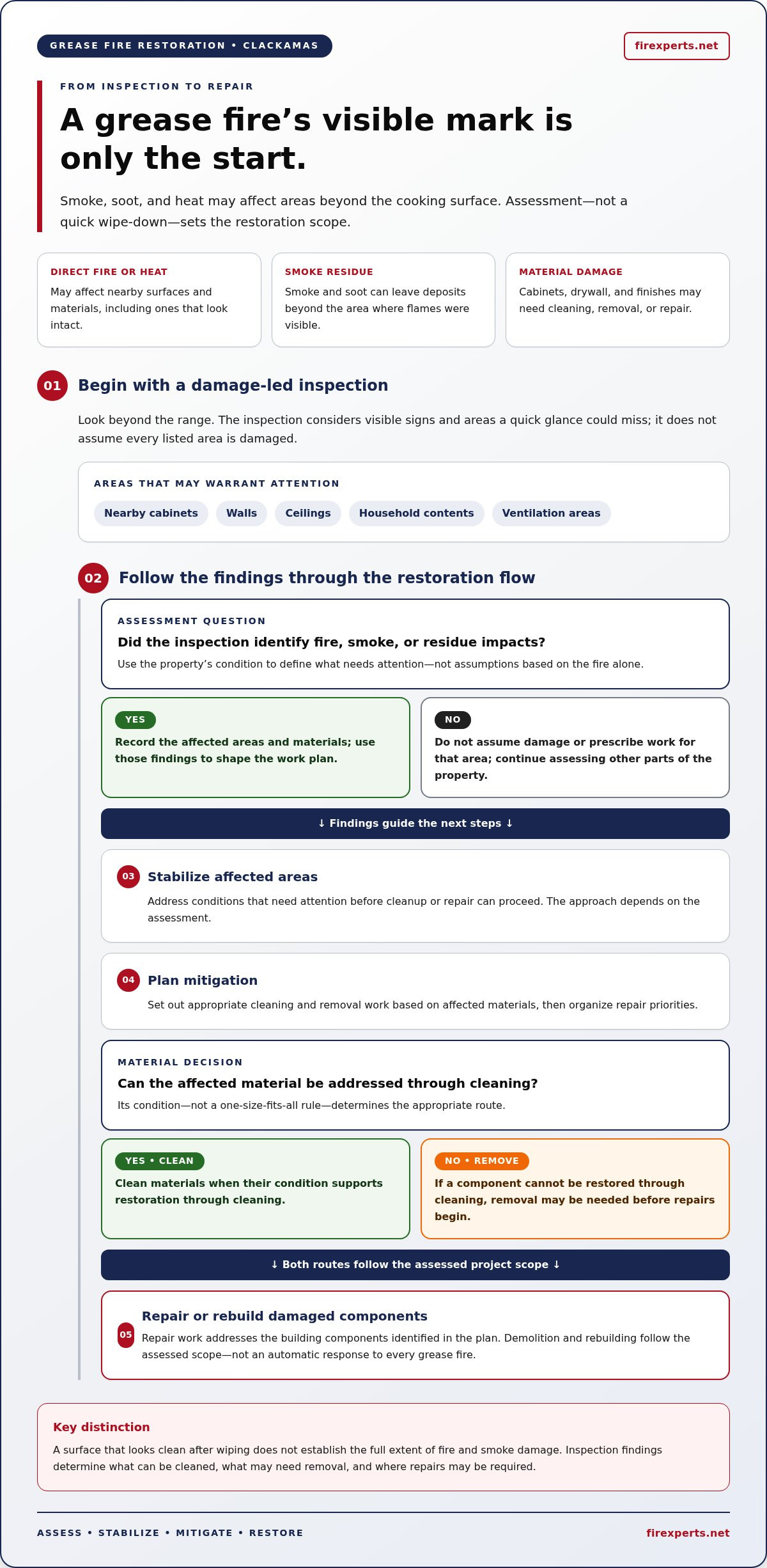
Once the affected areas are understood, restoration can move forward in a clear order. An inspection does more than record visible damage. It helps establish which surfaces need cleaning, whether building materials require removal, and what repairs belong in the project scope. This ties decisions to the property’s condition rather than assumptions about what every grease fire leaves behind.
Grease fire restoration moves from assessing and stabilizing damage to planning mitigation, cleaning or removing affected materials, and repairing the property according to the established scope. Each stage informs the next, and the work depends on what the assessment finds.
- Assess the damage. Review visible fire, smoke, and residue impacts across affected parts of the property. The findings help identify surfaces and building components that need closer attention.
- Stabilize affected areas. Address conditions that need attention before cleanup or repair can proceed. The approach depends on the assessment.
- Plan mitigation. Set out appropriate cleanup and removal work based on the affected materials. The plan also helps organize repair priorities.
- Clean, remove, and repair. Clean materials that can be addressed through restoration. Remove materials when their condition calls for it, then repair or rebuild damaged building components within the project scope.
What the initial damage review helps establish
The initial review connects observations to practical work decisions. It identifies where fire, smoke, and residue impacts are present, then helps determine which areas need cleaning, which materials may need removal, and which building components require repair. That distinction gives the work plan a clear foundation. For a broader industry perspective, the Insurance Loss Control Association focuses on loss prevention and control, including the role of damage assessment.
When cleanup leads to material removal or rebuilding
Cleaning is appropriate only when the material’s condition supports it. If an affected component cannot be restored through cleaning, removal may be needed before repairs can begin. Demolition should follow the assessed scope, not happen automatically. After mitigation, repair work addresses the damaged components identified in the plan. The structural damage repair after fire guide explains how repair decisions fit into recovery.
This sequence gives property owners useful checkpoints: findings shape the work plan, and the plan guides cleanup and rebuilding. It also creates a shared understanding of what the restoration is intended to address. The scope can be adjusted if work reveals conditions that need further attention.
Fire Industry Restoration Experts coordinates damage assessment, mitigation, demolition, and rebuilding for Clackamas-area property owners. Learn about grease fire restoration support from the initial review through structural repairs.
Is Wiping Down the Kitchen Enough After a Grease Fire?
Not necessarily. A surface that looks clean after wiping tells you about that surface, not the condition of the whole room or property. It does not establish whether smoke residue reached nearby cabinets, walls, ceilings, contents, or ventilation areas. A grease fire also does not automatically mean every room needs extensive cleaning or that materials must be removed. The right next step depends on a review of the property.
Routine wiping and a restoration assessment serve different purposes. Wiping can remove visible material from the area you clean. An assessment helps determine whether the impact extends beyond that area and whether cleaning, material removal, or repair may be needed. This distinction helps property owners avoid treating a small visible spot as proof that everything is fine, or assuming the whole home is affected without evidence.
What a surface-only cleanup can and cannot tell you
Wiping addresses material on the surface you clean. It does not show whether residue settled on the other side of an appliance, on a nearby cabinet, or elsewhere in the room. A clean appearance also does not confirm that every affected material has been reviewed. Keep the conclusion narrow: the surface looks cleaner. A broader decision about restoration requires a broader assessment.
Signs the damage may extend beyond the cooking area
Persistent smoke odor, visible soot, or residue on nearby surfaces are useful cues to have the property reviewed. Ventilation areas may also be considered because smoke residue can reach beyond the cooking surface. These signs do not determine the scope on their own, and they do not mean every room needs treatment. They help identify areas that may warrant closer attention.
Note what you can observe without treating it as a final diagnosis: where residue is visible, whether odor remains, and which nearby areas appear affected. Share those observations during a review. They give the restoration team useful context while keeping cleaning and repair decisions grounded in the property’s condition. For grease fire restoration Clackamas homeowners need, a careful assessment helps distinguish a limited cleanup from damage that calls for broader restoration.
Planning Grease Fire Restoration and Insurance Coordination in Clackamas
After a grease fire, coordinating cleanup, repairs, and an insurance claim can feel like several problems at once. A documented restoration scope helps put the work in order: the property owner shares what they know, the restoration team records observed damage and outlines the work, and the insurer reviews the claim under the policy. These roles support coordination, but they do not make coverage automatic.
Policy terms differ, and the insurer determines what the policy covers. A restoration team can document damage and coordinate its work with the insurer, but it cannot promise claim approval or decide coverage. Keeping the damage record and proposed work scope organized helps everyone discuss the same conditions and planned steps.
How documentation supports a clearer restoration scope
Notes and photographs can help preserve a record of affected rooms, visible damage, and changes observed during recovery. Keep relevant project records and claim communications together when available. The restoration team can use documented conditions to connect mitigation, any necessary demolition, and repair planning. This gives the work scope a practical basis, while coverage decisions remain with the insurer and subject to the policy.
A few simple steps can make information easier to find as discussions move forward:
- Note which rooms and areas appear affected, including nearby spaces you want reviewed.
- Keep photographs, damage notes, and relevant project records together.
- Organize claim communications so you can refer back to questions, responses, and decisions.
Questions that help organize the recovery plan
As you review the proposed work, ask which areas and materials the scope addresses and how the documented conditions connect to the planned tasks. Clarify the order of mitigation, material removal if needed, and rebuilding. These conversations help you understand what happens next without assuming every part of the property needs the same treatment. Clear communication also gives you a chance to raise concerns before work moves into another phase.
The restoration plan and insurance review may proceed alongside one another, but they serve different purposes. The restoration scope describes work tied to observed conditions; the insurer reviews coverage according to the policy. If new damage becomes apparent during the project, document the finding and discuss how it affects the planned work and claim records. Keep explanations and decisions easy to follow.
Fire Industry Restoration Experts coordinates damage assessment, mitigation, demolition, rebuilding, and communication with insurance companies for property owners in Clackamas. To organize grease fire restoration Clackamas from documented damage through repair planning, learn more about working with Fire Industry Restoration Experts.
Choose a Clackamas Grease Fire Restoration Team for the Full Recovery
After a grease fire, choosing a restoration partner is about more than cleaning visible residue. Depending on the assessment, the property may need mitigation, selective demolition, structural repair, or rebuilding. Fire Industry Restoration Experts serves property owners in Clackamas, Portland, and Gresham with a coordinated path through these stages. The work is based on the damage found, not on an assumption that every home needs the same scope.
The company was founded by Greg Philo, a volunteer firefighter and contractor. That background brings both firsthand fire response experience and practical construction expertise to restoration work. The repair plan still needs to reflect the damage found at your property.
What coordinated restoration can mean for a property owner
Damage assessment helps establish what the property needs. Mitigation addresses affected areas, demolition removes materials when required, and rebuilding repairs damaged components within the project scope. Coordinating these stages can ease the burden of organizing separate parts of recovery. It also helps property owners follow how findings inform the work, with the scope specific to the home.
Insurance coordination can be part of that process. Fire Industry Restoration Experts works with insurance companies around restoration work and documented damage. The insurer reviews the claim and determines coverage under the policy. Keeping those roles clear helps set practical expectations as you plan repairs.
As you consider next steps, it can help to have a few details ready for a discussion:
- Describe where the fire occurred and which areas appear affected.
- Share your main concerns, such as visible residue, smoke odor, or damage to building materials.
- Gather any photographs, notes, or claim records you already have.
These details can help focus an initial conversation. They do not need to answer every question; the property’s condition guides the restoration scope. For broader context on fire recovery, the Portland fire damage restoration property guide covers considerations that can help owners understand the process.
A practical next step for Clackamas property owners
A fire can leave you managing uncertainty while trying to make sound decisions about your home. You do not have to map out every repair before asking for help. Start by describing what happened, which areas concern you, and what questions you have about cleanup or rebuilding. A property-specific assessment can help clarify the work ahead.
If you’re ready to discuss grease fire damage at your Clackamas property, talk with Fire Industry Restoration Experts. A straightforward conversation can help you take the next step toward recovery.
Take the Next Step Toward a Clear Recovery Plan
After a kitchen fire, it’s natural to want the disruption behind you. Make the next decision based on what the property needs, not on guesswork or pressure to solve everything at once. A clear starting point can be as simple as describing what happened and identifying the areas that still concern you.
With grease fire restoration Clackamas property owners can move toward recovery one practical decision at a time. You do not need every detail figured out before beginning a conversation. Sharing what you have noticed can help set the stage for a closer look and a plan shaped around the property.
Fire Industry Restoration Experts brings firefighting and contracting experience to restoration work, with support that can extend from mitigation through structural rebuilding and include coordination with insurance companies. To discuss your property and possible next steps, talk with a restoration expert about grease fire recovery.
The damage may feel overwhelming now, but you can take recovery one step at a time, with a clearer path ahead.
Frequently Asked Questions
Can grease fire damage spread beyond the kitchen?
Yes. Smoke and residue can travel beyond the cooking area, depending on how the fire and smoke moved through the home. In an open-plan layout, nearby living spaces or a hallway may warrant attention, even if the flames stayed at the stove. Note visible signs in adjoining areas and share what you notice during an assessment. The review can help determine whether those spaces need work.
Is smoke odor after a grease fire a sign of hidden damage?
It can be a clue, but odor alone does not confirm how much damage is present or where it settled. Smoke odor may linger in furnishings or other contents even when nearby hard surfaces look clean. Note which rooms have an odor and whether it changes from one area to another. That information can help direct an assessment without treating smell as proof that a particular material needs removal.
How much of a kitchen may need restoration after a grease fire?
There is no fixed portion of a kitchen that always needs restoration. A contained event may affect a limited area, while heat or smoke may affect other surfaces or contents. For example, the range area, an adjacent cabinet, and a nearby ceiling could each have different conditions and require different decisions. A property-specific assessment establishes the scope; the visible burn area alone cannot determine it.
Can I clean grease-fire soot myself?
It’s best not to treat fire-related soot as ordinary cooking grime. Wiping a small, clearly unaffected surface may seem straightforward, but disturbing soot can spread residue and will not reveal whether nearby materials are affected. Avoid blowing or sweeping fire debris, which can put particles into the air. If soot is visible after a fire, have the affected area reviewed before deciding what cleaning or removal is appropriate.
How long does grease fire restoration usually take?
There is no single reliable duration for every restoration project. The work depends on the affected areas, the materials involved, and whether the scope calls for cleaning alone or also removal and structural repairs. A contained cleanup and a project that includes rebuilding are different kinds of work. Once the damage has been assessed and the scope established, the restoration team can discuss the sequence for your property without guessing at a one-size-fits-all timeline.
Does homeowners insurance cover grease fire restoration in Oregon?
Coverage depends on the specific policy and the insurer’s review, so it cannot be guaranteed in advance. Homeowners policies generally cover fire-related losses, but terms, exclusions, deductibles, and circumstances matter. Notify your insurer promptly, keep photographs and relevant receipts, and save claim communications with your project records. A restoration team can coordinate around documented damage, while the insurer makes coverage decisions under your policy.
What happens if grease-fire residue reaches the ventilation system?
If residue may have reached ventilation areas, include them in the damage review rather than assuming the visible hood is the only area involved. The system’s condition and the fire’s path help determine what needs attention. Note visible residue near vents or changes in odor around them, then share those observations with the restoration team. An assessment can establish the appropriate next step for the property.