
What if the smoke damage you can’t see matters as much as the room where the fire started? Smoke can travel through a home, settling in porous materials and reaching areas beyond visible soot. If you’re comparing providers for smoke damage cleanup Portland OR, look for an assessment that checks beyond the obvious damage before anyone decides what to clean or remove.
It’s understandable to feel unsure about what comes next. Odor may linger, cleanup and repairs may need coordination, and insurance questions can add stress. A dependable restoration approach starts with a clear scope, explains the work in plain language, and keeps you informed as conditions are uncovered.
This guide explains what a thorough smoke cleanup assessment can cover, how to compare restoration approaches, and what to ask before work begins. You’ll also find practical steps for documenting damage and coordinating with your insurer. A clear plan can help you make informed decisions about cleanup, removal, and rebuilding without guessing your way through the process.
Key Takeaways
- Smoke damage cleanup Portland OR should begin with an assessment that checks for residue and odor beyond the visibly affected room.
- Ask how the proposed work will move from scope planning to mitigation, any needed demolition, and restoration. The sequence depends on the property and extent of damage.
- For extensive, persistent, or unclear damage, compare a professional scope review with limited owner-led tidying before deciding what can be cleaned or may need removal.
- Compare providers by the clarity of their written scope, communication, rebuilding capability, and willingness to coordinate with your insurer. Coverage and claim decisions depend on your policy and insurer.
- When damage goes beyond surface cleanup, a provider able to coordinate assessment, mitigation, demolition, and structural rebuilding may help keep the work connected.
Smoke Damage Cleanup in Portland, OR: What the Service Should Address
Smoke damage cleanup identifies and addresses smoke residue and odor on affected surfaces, contents, and materials. It’s different from structural rebuilding, which repairs or replaces parts of the building when damage goes beyond cleanup. An assessment helps establish whether careful cleaning may be suitable or whether materials need removal before restoration can proceed.
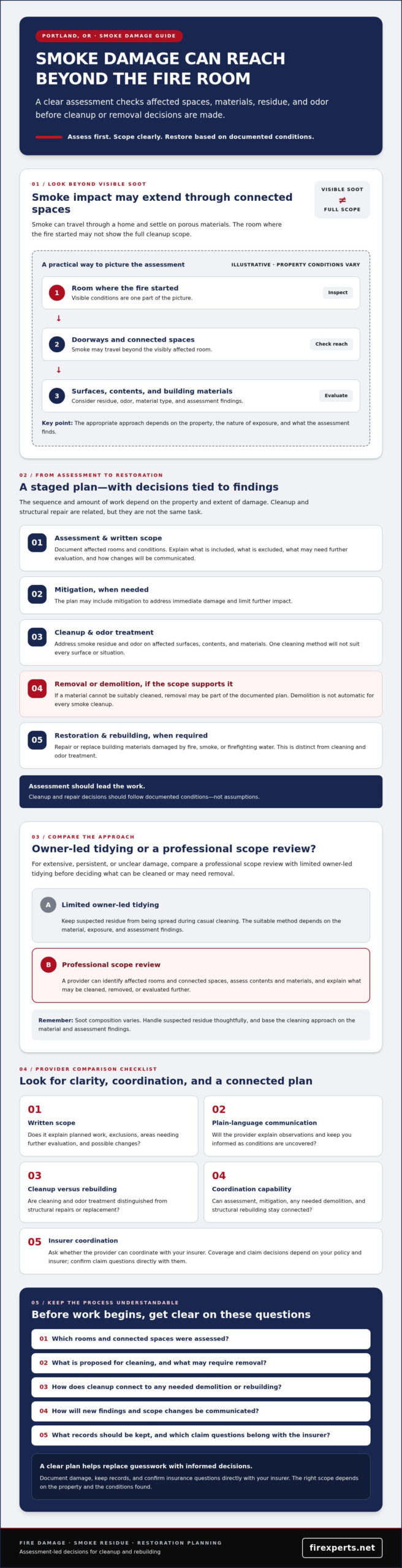
Damage isn’t always confined to the room where a fire started. Smoke can travel through doorways and other connected spaces, leaving residue or odor where soot isn’t obvious. In Portland homes, the layout and pathways between rooms can shape what needs closer inspection. The full scope depends on the property and the nature of the exposure.
How smoke and soot affect Portland properties
Visible soot is one sign of smoke impact, but lingering odor may prompt questions about porous materials or spaces without visible marks. Soot composition varies, and the hazardous properties of soot are one reason to handle suspected residue thoughtfully rather than spread it during casual cleaning. The appropriate approach depends on the material, extent of exposure, and assessment findings. One cleaning method won’t suit every surface or situation.
What a smoke damage cleanup provider should assess
A useful initial assessment identifies affected rooms and connected spaces, then considers contents, surfaces, and building materials individually. Ask the provider to explain what they observed, what they propose to clean, and what may require removal. The written scope should describe planned work in plain language, identify areas needing further evaluation, and explain how cleanup relates to any needed demolition or rebuilding.
Visible damage alone can’t show the full smoke cleanup scope. The assessment must also consider affected materials and connected spaces.
Before work begins, ask how the provider will communicate changes if opening or removing material reveals additional impact. A clear scope gives you a practical basis for comparing providers and discussing the work with your insurer. Coverage and claim decisions depend on your policy and insurer, so keep records and confirm claim questions directly with them.
For smoke damage cleanup Portland OR, look beyond promises of odor removal. Choose a provider who can explain the assessment, distinguish cleanup from structural repairs, and outline how the proposed work supports the property’s recovery.
How Professional Smoke Damage Cleanup Moves from Assessment to Restoration
A sound restoration plan moves in stages, but the order and amount of work depend on the assessment. Smoke cleanup addresses residue and odor. Restoration repairs building materials damaged by fire, smoke, or firefighting water. Keeping those tasks distinct helps you understand what each part of the proposed work is meant to accomplish.
What happens during assessment and scope planning
The provider documents affected areas and visible conditions, then outlines recommended work. Ask for a written scope that explains what’s included, what’s excluded, and what may change if further damage appears. The plan should distinguish surface cleaning and odor treatment from repairs to walls, ceilings, or other building materials. It should also explain how updates will be communicated before the work changes where practical.
Once the scope is clear, the process may include mitigation to address immediate damage and limit further impact. The team can then carry out the agreed cleanup. Conditions vary: a contained area may need a different approach from a loss involving several rooms or materials that cannot be cleaned effectively.
Assessment should lead the work. Cleanup and repair decisions should follow documented conditions, not assumptions.
When cleanup leads to demolition and rebuilding
If the assessment shows that a material can’t be suitably cleaned, removal may be part of the documented scope. Demolition should connect to identified damage and the agreed project plan, not be treated as an automatic step in every smoke cleanup. Rebuilding follows when damaged building materials need repair or replacement, while cleaning and odor treatment address affected surfaces and contents.
Fire Industry Restoration Experts handles damage assessment, mitigation, demolition, and structural rebuilding. This may help connect cleanup with repairs when the loss extends beyond surface work. The company also coordinates with insurance companies, but coverage and claim decisions remain with the policyholder’s insurer. Ask how proposed changes will be explained and documented.
For smoke damage cleanup Portland OR, request a step-by-step scope and ask who will communicate if conditions change. The U.S. Fire Administration’s After the Fire guide offers additional direction on steps after a fire, including insurance and securing a property. If you’re weighing cleanup and rebuilding needs, you can review Fire Industry Restoration Experts’ smoke restoration services as one point of comparison.
DIY or Professional Smoke Damage Cleanup in Portland: How to Compare
Not every sign of smoke calls for the same response. If damage appears limited to a small, accessible surface, an owner may choose to handle simple tidying once the property is safe to enter. Consider a professional scope review when residue covers multiple areas, odor persists, or you’re unsure whether a material can be cleaned. The goal isn’t to assume the worst. It’s to base decisions on what’s actually affected.
When should Portland property owners seek professional assessment?
The size of the affected area, visible residue, lingering odor, and uncertainty about walls, ceilings, or contents can all be reasons to speak with a restoration provider. Don’t re-enter or handle areas that are unsafe or restricted until the appropriate authorities say access is permitted. If you have health concerns, speak with a qualified medical or public-health professional rather than relying on a cleanup estimate to answer them.
Limited tidying can’t establish whether smoke has reached materials beyond the surfaces you can see. A professional assessment can clarify which conditions call for cleaning, further investigation, removal, or repair. Ask for an explanation tied to your property, not a one-size-fits-all recommendation. Understanding what separates common assumptions from documented findings is easier when you review what a smoke damage repair company actually assesses and why professional evaluation differs from surface-level tidying.
Questions that reveal whether a cleanup plan is clear
A useful proposal gives you enough detail to understand why each task appears in the plan. Ask the provider:
- What did you observe that supports the recommended cleaning, removal, or repair?
- Which rooms, surfaces, contents, or building materials are included, and what is outside the current scope?
- What conditions could change the plan once work begins?
- How will changes be documented, explained, and discussed with me before proceeding where practical?
A useful proposal connects each task to an observed condition and explains what the work is intended to address. This makes it easier to compare written plans beyond their bottom-line scope. Look for clear descriptions, thoughtful answers to questions, and a process for handling new findings. If two recommendations differ, ask each provider to explain the observations behind its approach.
For smoke damage cleanup Portland OR, a written assessment can help you weigh limited owner-led tidying against broader professional work without guessing about hidden conditions. Keep your notes and the proposed scope together, and share relevant documentation with your insurer. Your policy and insurer determine coverage and claim decisions, so confirm those questions directly with them.
Choosing Smoke Damage Cleanup in Portland: Scope, Insurance, and Local Planning
Choosing a restoration provider is easier when you can compare what each team observed and what it proposes to do. For smoke damage cleanup Portland OR, look for a clear assessment, a written scope, and a communication plan you can follow. If the work may extend beyond cleaning, ask how the provider will coordinate mitigation, demolition, and rebuilding.
How to compare Portland smoke cleanup contractors
Review each proposal for documented findings, the areas and materials included, the work sequence, and how the provider will discuss changes. Use this checklist:
- Assessment detail: Does the plan connect recommended work to conditions found at the property?
- Scope clarity: Does it state what is included, excluded, or subject to further findings?
- Communication: Who will explain progress and raise questions about changes?
- Recovery capability: If needed, who will coordinate mitigation, demolition, and structural rebuilding?
Ask who is responsible for each stage if cleanup reveals damage that requires repairs. Confirm the provider’s service coverage directly rather than assuming a nearby community is included. Fire Industry Restoration Experts serves Portland, Gresham, Clackamas, and Gladstone. If your project involves rebuilding, ask the provider what local permits or code questions may apply and who can confirm the requirements for your property. Don’t assume every project follows the same path.
What to prepare for an insurance conversation
Keep claim-related information together so you can answer questions and refer to the same records throughout the process. Gather available photographs, incident details, insurer and claim contact information, contractor assessments, written scopes, and updates. Save important communications, too. Organized records can make discussions clearer, but they don’t determine what your policy covers.
Ask your insurer about policy terms, documentation needs, claim procedures, and how to handle proposed changes to the work. Coverage and claim decisions depend on your individual policy and insurer. A restoration provider may coordinate with insurance companies, but that coordination doesn’t guarantee coverage, approval, or a particular payment.
For a grounded comparison, ask each provider to explain the reasoning behind its scope and identify who will keep you informed from assessment through any rebuilding. To discuss your property’s restoration needs, contact Fire Industry Restoration Experts.
Working with a Portland Smoke Damage Restoration Team: Practical Next Steps
After a fire, the work may extend from assessing smoke impact to mitigation, demolition, and structural rebuilding. If several stages are needed, having one restoration provider coordinate them may reduce handoffs and help keep the project scope and updates connected. You’ll still need to review decisions, but one point of contact can make it easier to follow the work as it develops.
What to expect from a restoration partner
A dependable partner should explain findings in plain language, document agreed decisions, and keep you informed about proposed changes. Ask how the team will coordinate with you and, where relevant, your insurer. If cleanup reveals repair needs, construction experience can help connect the restoration plan to the building’s condition rather than treating surface cleaning as the whole job.
Fire Industry Restoration Experts provides damage assessment, mitigation, demolition, and structural rebuilding, along with fire and smoke restoration. Founded in 2013 by volunteer firefighter and contractor Greg Philo, the company brings emergency response and construction experience to restoration work. It serves Portland and nearby communities including Gresham, Clackamas, and Gladstone. Confirm directly that your property is within its current service coverage and ask which steps fit your specific loss.
A low-pressure first conversation about smoke damage
You don’t need to have every answer ready. For a first discussion about smoke damage cleanup Portland OR, share the property location, what you know about the affected areas, and any photographs or assessment documents you have. Include instructions from your insurer if available. These details give the team a starting point for discussing possible next steps without settling the scope before the damage is assessed.
Fire Industry Restoration Experts also coordinates with insurance companies. That can support communication around the restoration work, but your insurer and policy determine coverage and claim decisions. Keep your own records and ask both parties how they’ll share updates or document changes.
If you’re ready to discuss the damage and appropriate next steps, Talk with Fire Industry Restoration Experts. A clear conversation can help you understand what information to gather and how assessment and restoration may proceed.
Choose a Clear Path from Cleanup to Recovery
Smoke damage can reach beyond visible soot, so a careful assessment is the starting point for deciding what can be cleaned and what may need removal or repair. Compare providers by the clarity of their written scope, how they communicate changes, and whether they can coordinate the work if restoration extends beyond surface cleanup.
For smoke damage cleanup Portland OR, Fire Industry Restoration Experts brings together assessment, mitigation, demolition, and rebuilding. Founded by volunteer firefighter and contractor Greg Philo, the company serves Portland and nearby communities including Gresham and Clackamas. Insurance coverage and claim decisions depend on your policy and insurer, so keep records organized and confirm coverage questions directly with them.
If you’re ready to discuss your property, known damage, and possible next steps, Talk with Fire Industry Restoration Experts. A clear conversation can help you move forward one decision at a time, with a steadier plan for recovery.
Frequently Asked Questions
What does smoke damage cleanup include?
Smoke damage cleanup usually starts with assessing affected rooms, contents, surfaces, and building materials. The proposed work may include cleaning residue and addressing odor, with the approach guided by the materials and exposure. If the assessment shows that some materials can’t be suitably cleaned, the scope may also include removal and related restoration work. Ask for a written explanation of what’s included, what’s excluded, and what could change if more damage is found.
Can smoke damage affect rooms that were not directly burned?
Yes. Smoke can move beyond the room where a fire began and leave residue or odor in connected spaces. The extent depends on the property layout and the conditions of the fire. Areas without visible soot may still merit assessment, particularly if odor persists or you’re unsure about affected materials. A restoration professional can inspect and document areas of concern rather than relying only on what’s obvious at first glance.
Should I clean smoke damage myself or hire a professional?
Limited tidying on a safe, accessible surface may be manageable, but it won’t establish whether smoke has affected other rooms or materials. Consider a professional assessment if residue covers multiple areas, odor persists, or the condition of building materials is unclear. Don’t enter areas that are unsafe or restricted until appropriate authorities permit access. For health concerns, seek guidance from a qualified medical or public-health professional.
How do I choose a smoke damage cleanup company in Portland?
Compare written scopes, documented findings, communication practices, and the sequence of proposed work. Ask what observations support cleaning, removal, or repairs, and who would coordinate mitigation and rebuilding if needed. Confirm the company serves your specific location instead of assuming nearby coverage. For smoke damage cleanup Portland OR, prioritize a provider that explains recommendations plainly and documents proposed changes for your review.
Will homeowners insurance cover smoke damage cleanup in Oregon?
Some homeowners policies cover fire and smoke damage, but coverage depends on your policy, the circumstances, and the insurer’s claim decision. Contact your insurer to confirm policy terms, claim procedures, and required documentation. Keep available photographs, incident details, written scopes, and related communications organized. A restoration provider may coordinate with insurance companies, but no provider can promise coverage, claim approval, or a particular payment outcome.
How long does smoke damage cleanup take?
There isn’t one timeline for every property. Duration depends on the affected area, materials involved, work identified in the assessment, and whether the project requires removal or structural repairs. Cleaning alone may follow a different schedule from a broader restoration project. Ask the provider to explain the expected sequence and when they’ll update you if new findings affect the scope or timing.
Can smoke odor be removed without replacing building materials?
Sometimes, but it depends on how smoke affected the materials and what the assessment finds. Some surfaces or contents may be suitable for cleaning and odor treatment, while other materials may require removal if cleaning isn’t appropriate. No single method applies to every property, and odor alone doesn’t establish what must be replaced. Ask the restoration provider to connect each recommended task to an observed condition and explain the alternatives.