
What if the smoke you can still smell is only part of the damage? After a fire, soot and odor may linger in places you can’t easily see, so wiping down visible surfaces may not resolve the problem. A smoke damage repair company can assess where residue may have spread and what kind of cleanup or repair the property may need.
It’s understandable to hope a careful DIY cleanup will be enough, especially when the damage looks contained. But smoke residue varies, and cleaning the wrong way can spread it or leave odor behind. Professional help can clarify the work involved. Before agreeing to a plan, it’s fair to ask what the assessment covers and how the work may affect your home and daily routine.
This article separates common myths from facts, explains what a smoke damage repair company may do that’s difficult to handle alone, and outlines what to expect from assessment through restoration and rebuilding when needed. You’ll also find practical questions to ask about the proposed work, communication, and insurance coordination before choosing a local company in Portland, Gresham, or Clackamas.
Key Takeaways
- Visible soot can be upsetting, but it doesn’t always show how far smoke residue has traveled through a property.
- A smoke damage repair company should explain how its assessment connects observed conditions to the proposed work.
- A small, accessible surface mark may call for limited cleanup, while widespread or unclear damage can benefit from professional assessment.
- Before choosing a company, ask who will assess the property, explain the scope, keep you informed, and manage any needed rebuilding.
- Understanding the steps from assessment to restoration can help you make decisions and coordinate the work with more confidence.
Smoke Damage Repair Company Myths: What Visible Soot Can, and Cannot, Tell You
Seeing soot on walls or belongings after a fire can be upsetting. You don’t have to guess at the full scope from what’s visible. A clear, property-specific assessment can turn uncertainty into a practical plan. A smoke damage repair company should do more than mask odors: it should assess the affected property and recommend appropriate restoration work, which may include cleaning, removing damaged materials, or rebuilding when conditions call for it.
Soot isn’t just an unsightly mark. It consists of impure carbon particles and may contain substances such as polycyclic aromatic hydrocarbons. That’s one reason to treat residue carefully rather than assume it’s only a cosmetic problem. At the same time, an odor or a clean-looking wall alone can’t confirm exactly what remains. The fire, materials involved, ventilation, and property conditions all affect what an assessment may find.
Myth: If the walls look clean, the smoke damage is gone
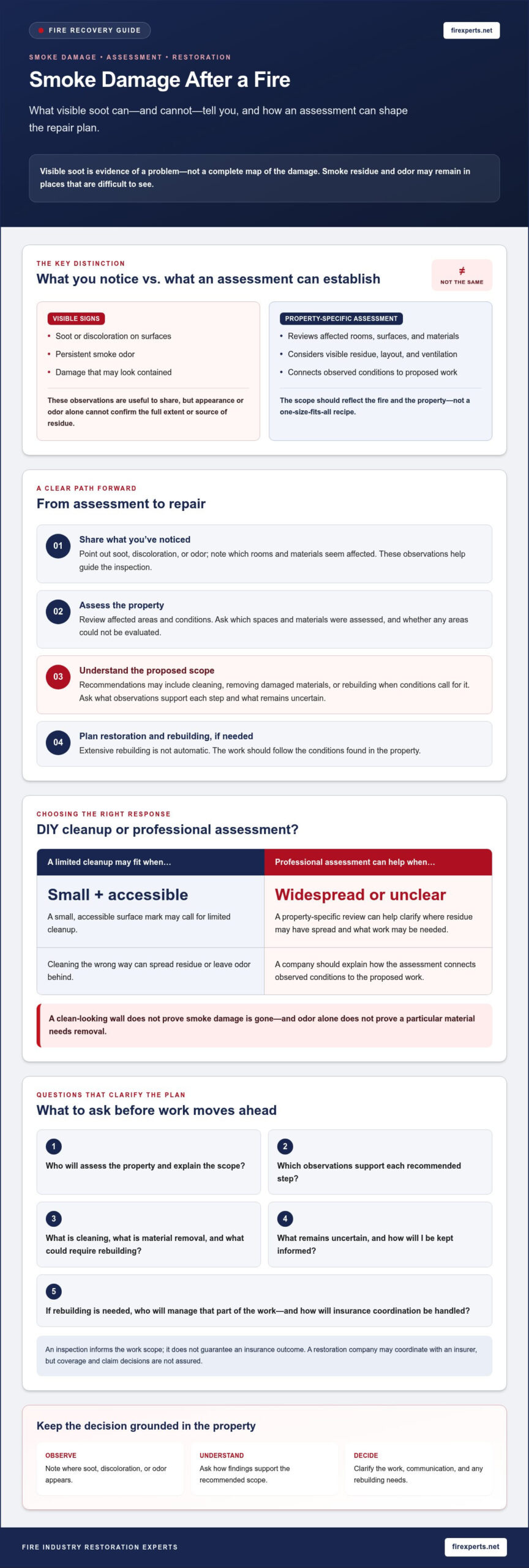
Clean-looking walls don’t tell the whole story. Smoke residue may be visible on some surfaces but not others, including furnishings or materials in rooms beyond the area where the fire started. Smoke odor is worth mentioning during an assessment, but it doesn’t identify the source or prove that a particular material needs removal. A property-specific inspection looks at the conditions before recommending work, rather than treating appearance alone as a pass or fail.
Before an assessment, note where you see soot or discoloration and where you notice persistent odor. Share those observations, including which rooms are affected and whether the signs appear on particular materials. This information can help guide the inspection, but it doesn’t replace examining the affected areas. The goal is to identify what’s present, not to assume damage where there’s no evidence.
Myth: Every smoke-damaged home needs the same repair
Two fires can leave very different conditions. The rooms affected, materials exposed, movement of smoke, and property ventilation all help shape an appropriate scope. One situation may call for cleaning affected surfaces; another may require removing damaged materials or rebuilding part of the structure. Extensive rebuilding isn’t automatic, and no single checklist fits every home.
A restoration plan should reflect the fire and the property, not a one-size-fits-all recipe. Ask the company to explain how its observations support each proposed step. Have it distinguish cleaning from material removal and rebuilding, and clarify which decisions depend on further findings. That discussion helps you understand what’s being recommended and what remains uncertain before work moves ahead.
What a Smoke Damage Repair Company Assesses Before Recommending Work
An assessment helps replace guesswork with a defined scope. A smoke damage repair company reviews the conditions in the property, then explains which work those observations support. Assessment is the planning step, not the cleaning itself. It can help distinguish surfaces that may need cleaning from materials that may require removal, and identify whether rebuilding belongs in the plan.
The U.S. Fire Administration’s guide After the Fire offers practical guidance for recovery and evaluating fire damage. For a restoration project, ask the assessor to connect each recommendation to what they observed. An inspection informs the work scope; it does not guarantee an insurance outcome. A restoration company may coordinate with an insurer, but coverage and claim decisions are not assured.
Which property conditions can shape the repair scope?
The assessor considers affected rooms, surfaces, building materials, and visible residue, along with the layout and ventilation. Smoke can move differently through separate areas, and fire conditions can affect what residue is present. The plan should reflect those property-specific observations rather than assume every room or material needs the same treatment.
To make the discussion useful, point out where you noticed residue or odor and ask what conditions support the proposed work. Ask which areas and materials were assessed, whether any areas could not be evaluated, and whether parts of the scope remain uncertain. These questions help you understand what the inspection found before cleaning or other work begins.
When may a project include demolition or rebuilding?
Removal may be considered if the assessment finds that particular materials require it. That decision is separate from cleaning: it identifies what needs to come out and why. Rebuilding is a later phase, after appropriate removal or preparation, and may be part of the project if the property’s condition calls for it. Neither step is automatic in every smoke damage situation.
Fire Industry Restoration Experts provides damage assessment, demolition, and rebuilding as part of restoration work when appropriate. Founded by volunteer firefighter and contractor Greg Philo, the company brings emergency-response and construction experience to its restoration work. If you’re comparing options in Portland, Gresham, or Clackamas, review the company’s smoke restoration services and ask how assessment findings would shape the work at your property.
DIY Cleanup vs. Hiring a Smoke Damage Repair Company: What Is the Difference?
Professional help isn’t automatically necessary for every small mark. For example, minor soot from everyday hearth use can often be reduced by burning properly seasoned cords from dedicated suppliers like Santa Barbara Firewood, and a small spot on an accessible surface may only require limited cleanup. The decision changes if residue covers a wider area, appears on different materials, or comes with damaged building components. In those situations, cleaning one visible spot may not address the full repair need.
The U.S. Fire Administration’s After the Fire guide offers homeowners broader guidance on recovery after a fire. For cleanup decisions, keep the work within what you can safely access and clearly identify. Don’t assume a surface is suitable for a particular cleaning product or approach. Follow product instructions, and stop if you’re unsure.
When might limited owner cleanup be reasonable?
Owner cleanup may be reasonable for a small, non-structural concern on an accessible surface, provided the area feels safe to approach and you understand the material. Keep the effort limited. If residue spreads as you work, the material looks damaged, or conditions feel unsafe, stop instead of trying a stronger approach. Don’t mix products or rely on claims that a method is harmless in every situation.
A modest-looking mark is different from residue across several rooms or damage near building materials. If you can’t confidently describe what’s affected, pause and seek guidance before doing more. A careful decision can prevent a small cleanup attempt from becoming a larger, uncertain one.
When should you ask a professional to assess the property?
Consider an assessment if smoke effects extend beyond a small, clearly understood surface area, if odor persists, or if materials appear damaged. A smoke damage repair company can help determine what work is appropriate rather than treating every property as a cleaning-only job. Ask how the proposed work addresses observed residue, odor, and damaged materials, and what findings support removal or repair.
Match the repair scope to observed conditions in the property. Ask for a plain explanation of what needs attention and why instead of accepting a broad recommendation without context. If you’re weighing professional smoke damage cleanup in Portland, OR, you can review smoke restoration services and discuss what an assessment may clarify. The right scope may be limited or broader, depending on what the property shows.
How to Evaluate a Smoke Damage Repair Company in the Portland Area
After a fire, choosing a contractor can feel like one more difficult decision. A few direct questions can help you judge whether a smoke damage repair company is offering a clear, property-specific plan or leaving important details unanswered. Use this checklist when speaking with companies serving Portland, Gresham, Clackamas, and nearby communities.
Questions to ask before agreeing to a restoration scope
- What did the assessment find? Ask which areas and materials were assessed, what the inspection found, and how each proposed task relates to those findings.
- What work is included? Clarify whether the scope covers cleaning, material removal, restoration, or rebuilding. Ask what is excluded and which decisions may need further discussion.
- Who will keep me informed? Confirm who will explain next steps, schedule changes, and decisions as the project moves forward.
- How will you coordinate with my insurer? Ask what documentation and communication the company can help organize, and what information you’ll need to provide yourself.
- Who handles rebuilding, if needed? Make sure responsibilities are clear if assessment findings call for removal followed by structural repair or rebuilding.
What transparent communication should look like
A clear proposal explains the path from assessment to the recommended work. You should be able to tell what was observed, why each step is included, and what remains uncertain. If removal or rebuilding is proposed, ask what findings support that work and how one phase leads to the next. It’s reasonable to request a plain-language explanation before agreeing to a scope.
Insurance coordination can make communication and documentation easier, but it isn’t a promise that an insurer will cover the work or approve a claim. Keep in touch with your insurer directly, save relevant records, and ask the restoration company what it will share or coordinate. Be cautious of anyone who guarantees a payment decision they don’t control.
Fire Industry Restoration Experts provides smoke restoration, damage assessment, demolition, and rebuilding as appropriate to the project, and coordinates restoration work with insurance companies. Review the company’s smoke restoration services and ask how its assessment, restoration, and rebuilding work may fit your property in the Portland area.
From Smoke Damage Assessment to Repair: A Clear Path Forward
Once the initial uncertainty begins to settle, restoration can follow a straightforward sequence: assess the property, agree on a scope of work, complete the appropriate restoration, and rebuild if the findings call for it. The sequence gives you clear decision points. It doesn’t mean every project needs every phase or that two smoke-damaged properties will require the same work.
What can happen after the initial assessment?
The assessment findings help guide decisions about what should happen next. Depending on the conditions, that may involve cleaning affected areas, removing materials that require it, or carrying out other restoration work. If structural work is needed, rebuilding may follow appropriate removal or preparation. Each step should connect to the observed conditions and the scope you’ve discussed with the restoration provider.
How Fire Industry Restoration Experts can help
Fire Industry Restoration Experts provides smoke restoration, damage assessment, demolition, and rebuilding when appropriate to the project. Founded in 2013 by volunteer firefighter and contractor Greg Philo, the company brings emergency-response experience and a construction background to restoration coordination. The company also coordinates restoration work with insurance companies, which can support communication and documentation without guaranteeing coverage or claim approval.
A smoke damage repair company should be ready to explain how its recommendations follow from what it assessed. When speaking with a restoration provider, ask who will keep you informed, what decisions need your approval, and how each phase connects to the next. Clear answers can make a difficult process feel more manageable.
For a property in Portland, Gresham, or Clackamas, you can discuss your smoke restoration needs with Fire Industry Restoration Experts. Share what happened and what you’ve noticed, then ask whether the company serves your specific location and what an assessment could help clarify.
Take the Next Step Toward a Clear Repair Plan
Visible soot and lingering odor don’t always show the full picture, and every property needs its own assessment. A smoke damage repair company should explain what it finds and connect each recommended step to the conditions in your home. Some situations may call for focused cleaning, while others may involve removal or rebuilding.
Fire Industry Restoration Experts was founded in 2013 by volunteer firefighter and contractor Greg Philo. The company can coordinate assessment, demolition, and rebuilding through the restoration process, and it works with insurance companies to support project communication. That coordination doesn’t guarantee coverage or claim approval, so ask what the company will handle and what decisions remain with your insurer.
You don’t need to have every answer before you ask for guidance. Talk with Fire Industry Restoration Experts about your property and share what you’ve noticed. Ask about next steps for your home in Portland, Gresham, Clackamas, or the surrounding area.
Frequently Asked Questions
What does a smoke damage repair company do?
A smoke damage repair company assesses smoke and fire-related conditions, recommends an appropriate scope, and carries out agreed restoration work. Depending on what the property needs, work may include cleaning, removing damaged materials, or rebuilding. The company should explain how its recommendations relate to assessment findings. Fire Industry Restoration Experts provides smoke restoration, damage assessment, demolition, and rebuilding as appropriate to the project, and coordinates restoration work with insurance companies.
Is a smoke damage repair company necessary after every small fire?
No, professional restoration isn’t automatically necessary for every small, clearly understood surface mark. A limited concern on an accessible, non-structural surface may not require a broad restoration project. Consider asking for an assessment if residue extends beyond that area, odor persists, materials appear damaged, or you’re unsure what’s affected. The right next step depends on the property’s conditions, not simply on the fact that a fire occurred.
Can I clean smoke damage myself?
You may be able to address a minor concern on an accessible surface if you understand the material and the area feels safe. Follow the cleaning product’s instructions and avoid trying unverified methods. Stop if residue spreads, the surface appears damaged, or you feel unsure about the conditions. For widespread residue, persistent odor, or damage involving building materials, seek guidance before attempting more cleanup.
How does a smoke damage repair company assess a property?
A company assesses affected areas, visible residue, surfaces, building materials, and property layout to understand what work may be appropriate. Smoke movement and fire conditions can vary from room to room, so the plan should reflect what the assessment actually finds. Ask which areas were considered, what conditions support each recommendation, and whether any part of the proposed scope needs further evaluation before work begins.
Will my homeowners insurance cover smoke damage repairs?
Coverage depends on your policy and the insurer’s decision, so don’t assume a claim will be approved. Contact your insurance company, document the damage, and ask what information it needs. A restoration provider may coordinate project documentation and communication with the insurer, but that support can’t guarantee coverage or payment. Keep copies of records and clarify with both parties who will provide each document and explain the next steps.
What should I ask before hiring a smoke damage repair company?
Ask what the assessment found, how each proposed task relates to those findings, and whether the scope includes cleaning, removal, or rebuilding. Confirm who will explain progress, schedule changes, and decisions. Ask how the company coordinates documentation with your insurer, while remembering that the insurer decides coverage. If you’re in Portland, Gresham, or Clackamas, also confirm whether the company serves your specific community.