
The most chaotic phase of a residential fire often begins the moment the fire trucks pack up and drive away. Standing outside your damaged home leaves you in sudden shock, facing displacement and wondering what to do right now. Taking the right first steps after house fire incidents is essential to protect your physical safety, preserve your personal property, and safeguard your financial rights before hasty assumptions cost you dearly down the road.
You shouldn’t have to guess your way through hazardous building conditions, worry about unauthorized site access, or decipher complicated insurance fine print while managing an emotional crisis. We built this recovery checklist to give Oregon property owners a steady, prioritized blueprint for the critical hours and days ahead. From confirming official reentry permissions to securing the structure and methodically documenting damage, here is the exact sequence you need to protect your home and move forward with confidence.
Key Takeaways
- Confirm municipal and fire department clearance before re-entering your property to avoid toxic residues and hidden collapse hazards.
- Master the essential first steps after house fire damage to secure exposed entry points, satisfy insurer mitigation duties, and prevent secondary weather loss.
- Protect your claim value by recognizing the critical difference between insurance company adjusters and independent structural advocates.
- Create a comprehensive photographic evidence file documenting framing char, finishes, and personal belongings before cleanup begins.
- Ensure your home’s long-term safety by prioritizing deep structural framing restoration over quick, superficial cosmetic fixes.
Immediate Safety: What to Do After Firefighters Leave
The quiet that follows emergency sirens can feel completely disorienting. Once emergency crews begin rolling up hoses, your instincts might tell you to run inside and grab heirlooms or assess the damage yourself. Don’t do it. A residential structure fire leaves behind invisible structural weaknesses and toxic atmospheres that remain dangerous long after open flames disappear. Managing these initial safety risks forms the baseline of all first steps after house fire events.
Securing Official Clearance from Local Fire Officials
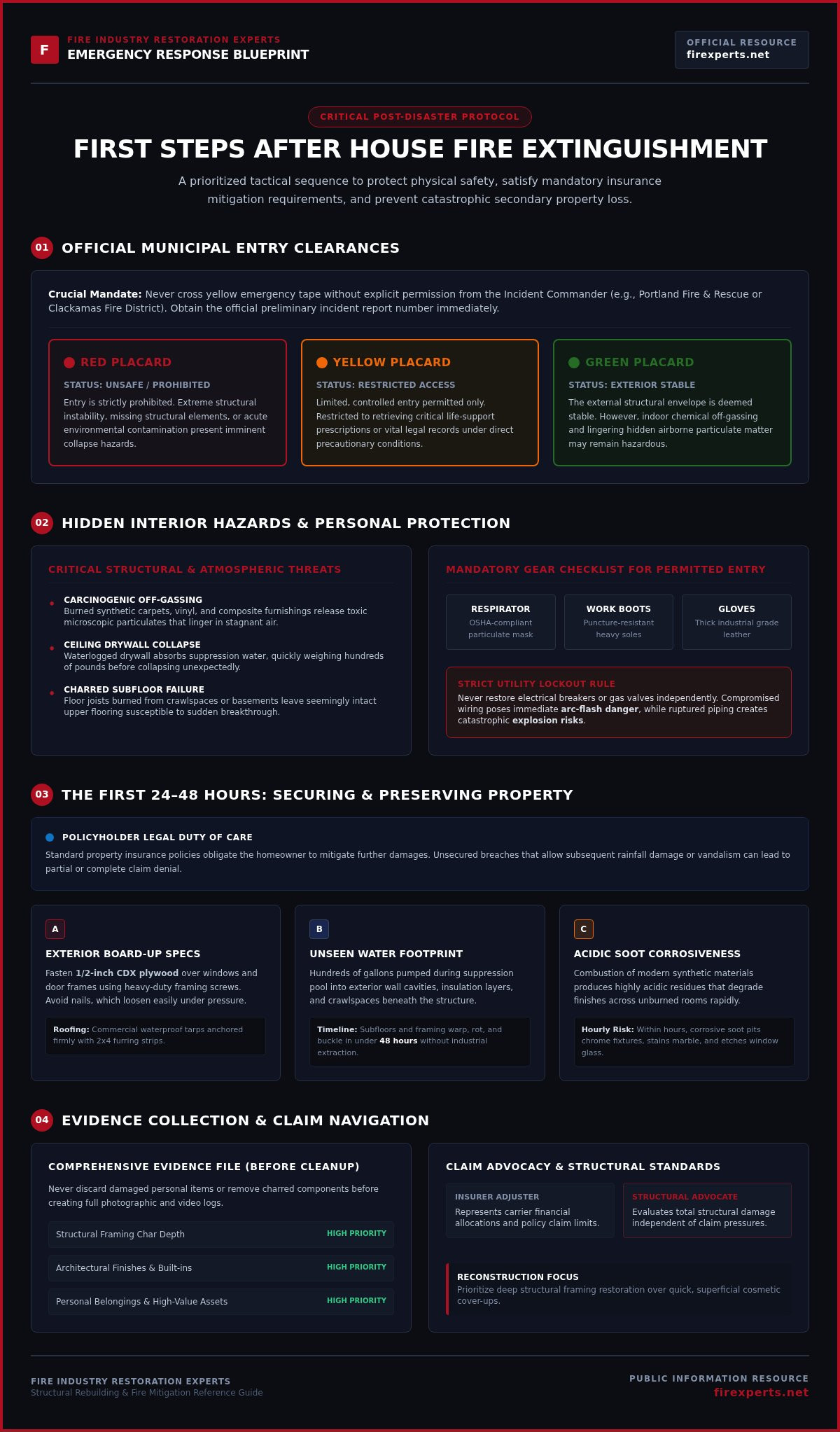
Never cross yellow emergency tape until the municipal authority in charge issues explicit permission. Ask the incident commander directly from agencies like Portland Fire & Rescue or Clackamas Fire District whether the building is cleared for temporary entry, and request their preliminary incident report number. Pay strict attention to posted municipal placards:
- Red Placards (Unsafe): Entry is strictly prohibited due to severe structural instability or environmental hazards.
- Yellow Placards (Restricted Use): Limited access is permitted only to retrieve essential prescriptions or vital records under controlled conditions.
- Green Placards: The exterior envelope is stable, though interior environmental hazards may still linger.
Immediate Health Hazards in Fire-Damaged Interiors
Smoke doesn’t simply vanish when the fire goes out. Synthetic carpet, vinyl flooring, and modern furniture produce dense, carcinogenic chemical off-gassing and microscopic particulates that stay suspended in stagnant air. If officials grant brief entry, wear an OSHA-compliant particulate respirator, heavy work boots with puncture-resistant soles, and thick leather gloves. Watch overhead constantly. Waterlogged ceiling drywall can weigh hundreds of pounds before suddenly collapsing, while burned floor joists hide beneath seemingly intact subfloors.
Emergency Utility Shutoffs and Hazard Control
Fire crews routinely cut primary utility feeds during suppression efforts. Confirm with responders that electrical meters, municipal gas supplies, and main water valves are completely locked out. Never attempt to flip circuit breakers or turn gas valves back on yourself. Compromised wiring inside charred wall cavities poses an immediate arc-flash danger, and cracked gas piping creates catastrophic explosion risks. If extended utility shutoffs jeopardize perishable inventory for home-based businesses or event spaces on the property, arranging portable cold storage through KC Frost Wagon can help safeguard valuable goods until power is safely restored. Before departing the site for secure temporary lodging through local disaster resources like the American Red Cross or 211info, clearly identify and flag exposed exterior hazards for incoming restoration teams.
The First 24 to 48 Hours: Securing the Property and Mitigating Loss
Almost every standard property insurance policy includes a clause requiring the owner to protect the premises from secondary damage. Failing to close the building envelope can jeopardize coverage if subsequent rain or vandalism ruins your remaining assets. Taking prompt control of the site is one of the most urgent first steps after house fire incidents. As federal authorities point out in After the Fire! Returning to Normal, securing the site and mitigating loss immediately after an emergency preserves both your property and your insurance rights.
Weatherproofing and Structural Board-Up Priorities
Broken windows, compromised entry doors, and burned roof decks leave framing exposed to Pacific Northwest rainfall and unauthorized entry. Fasten half-inch CDX plywood over all breached exterior portals using heavy-duty framing screws rather than light nails, which pry loose easily. For compromised roof sheathing, install commercial-grade waterproof containment tarps anchored with 2×4 furring strips. This prevents unburned ceiling joists and wall assemblies from absorbing rain and losing structural integrity.
Addressing the Unseen Water Footprint from Firefighting
Fire crews often pump hundreds of gallons of water into a home to extinguish deep framing embers. That moisture pools in exterior wall cavities, insulation, and crawlspaces. Subfloors and framing lumber can warp, rot, and buckle in under forty-eight hours under these conditions. Professional water restoration services eliminate this threat through industrial moisture extraction and balanced dehumidification, drawing water out of heavy dimensional timber before wood fibers lose their load-bearing strength.
Stopping Acidic Soot and Smoke Etching
When synthetic household items burn, they release highly corrosive soot and chemical residues. Within hours, these acidic residues begin pitting chrome fixtures, staining marble, and permanently clouding glass windows. Avoid using off-the-shelf household cleansers, as scrubbing oily soot into dry surfaces drives carbon particles deep into porous wood grain. Bringing in professional smoke restoration services ensures proper chemical neutralizing agents are applied quickly to save salvageable surfaces. If you need assistance stabilizing your home framing, connecting with Fire Industry Restoration Experts ensures experienced builders protect your structure from secondary damage.
Navigating Your Homeowners Insurance Claim Without Costly Mistakes
Filing a property loss claim after a disaster can feel overwhelming. Many owners assume the insurer’s assigned adjuster will catalog every bit of hidden destruction automatically. That assumption is risky. Taking deliberate charge of your claim ranks among the most financially critical first steps after house fire losses. By leaning on established federal resources like the official After the Fire checklist, you can systematically manage your communications, secure immediate funds, and avoid signing away your coverage rights prematurely.
Notifying Your Carrier and Accessing Emergency Funds
Contact your carrier immediately to open the claim and secure your official tracking number. During that very first call, request an immediate advance under your policy’s Loss of Use or Additional Living Expense (ALE) provisions. This upfront payment covers initial hotel stays, emergency clothing, restaurant meals, and basic essentials without forcing you to empty your personal checking account. For families seeking emergency aid during sudden displacement, discover Blue Line Relief to explore charitable support and assistance available to disaster victims. Keep a dedicated notebook or digital folder for recovery expenses:
- Log every adjuster phone call with timestamps, representative names, and agreed next steps.
- Save every hotel receipt, meal invoice, and purchase record related to your displacement.
- Request all coverage limit explanations and policy timelines in writing.
The Crucial Difference Between Claims Adjusters and Restoration Contractors
Who is truly representing your property’s best interests? Company adjusters and third-party independent adjusters are hired by the insurance carrier to quantify loss according to carrier parameters. In contrast, an independent structural restoration contractor serves as your advocate, evaluating the structure through a builder’s lens. To prevent disputed line items, ensure your restoration partner builds estimates using standardized industry property loss scoping platforms, creating an apples-to-apples basis that carrier adjusters must acknowledge.
Avoiding Rushed Signatures and Incomplete Initial Settlements
Never rush to sign a full settlement release or cash a final payout check within the first few weeks. Visual inspections only scratch the surface. Blistered paint and intact sheetrock often conceal deeply charred 2×6 framing studs, weakened trusses, and blistered subflooring beneath floor assemblies. A quick cosmetic fix that merely encapsulates burned framing leaves persistent odors and compromised load capacity. Bring in seasoned trade contractors who specialize in structural framing recovery to inspect wall cavities thoroughly before agreeing to closed settlement figures. Understanding what a thorough fire damage assessment Oregon inspectors perform can help you verify that no hidden structural concerns are overlooked before you accept any settlement.
Step-by-Step Documentation: Building an Unshakeable Evidence File
Memory fades quickly during a personal crisis. Trying to recall every possession, fixture, and material grade after the site is cleared will only lead to disputes with your insurance carrier. Methodical documentation is one of the most empowering first steps after house fire destruction. By assembling indisputable visual and written proof before anything gets hauled to a landfill, you protect your policy rights and establish a firm foundation for your financial recovery.
Systematic Photo and Video Walkthrough Techniques
Once you have confirmed official municipal clearance to walk the perimeter and interior, start recording slow, high-resolution video walk-throughs. Narrate as you move through each room, describing what was there before the flames spread. Follow video sweeps with comprehensive still photography:
- Capture wide-angle, four-corner shots of every room to show overall structural context.
- Photograph appliance nameplates, electronics model numbers, and serial tags clearly.
- Take close-up photos of burned structural assemblies, specifically framing connection points, load-bearing header char, and sagging ceiling joists.
Cataloging Personal Property and Structural Finishes
Organize your possessions by room in a digital spreadsheet rather than compiling an unorganized master list. Note the estimated purchase date, brand name, model number, and original cost for each item. Whenever possible, dig up digital receipts, credit card statements, and past family photos that show your home’s pre-loss condition. Don’t overlook building finishes either. Document custom millwork, hardwood flooring species, stone countertops, and cabinet construction so your carrier scopes like-kind-and-quality building materials.
Securing and Preserving Physical Evidence On-Site
Well-meaning friends and neighbors often want to jump in with brooms and dumpsters right away. Tell them to wait. Discarding damaged materials before an adjuster completes their formal field inspection gives carriers grounds to reduce or deny allowances. Designate a covered, dry staging zone for salvageable personal items, and leave scorched electrical panels, burned wiring runs, and damaged plumbing manifolds exactly where they sit. Preserving these items allows investigators and trade experts to confirm failure points and fire travel. If you want a builder’s perspective during this critical documentation phase, schedule a structural damage assessment with our team so every damaged rafter and stud gets documented accurately.
Transitioning from Immediate Crisis to Professional Structural Rebuilding
Surviving the initial shock and completing your preliminary documentation brings you to a major turning point. True property recovery demands much more than wiping soot off drywall and applying fresh paint. When high heat penetrates a building envelope, the thermal exposure permanently weakens the load-bearing capacity of dimensional lumber. Navigating this transition represents one of the most defining first steps after house fire crises, determining whether your home is merely patched over or truly restored to its sound, original state.
Assessing Hidden Structural Framing and Rafter Damage
Extreme thermal updrafts often bake roof trusses, rafters, and ceiling joists long after flames are suppressed. This intense heat causes wood fibers to calcify, reducing their structural shear strength even where visible charring appears minimal. Seasoned builders install temporary shoring and engineered cribbing posts to support upper stories before removing damaged framing. Every compromised stud and structural truss must be evaluated against the strict standards of the Oregon Residential Specialty Code to guarantee the home remains code-compliant and secure.
Selecting a Contractor Who Advocates for Your Pre-Loss Condition
Never settle for national cleaning crews that focus strictly on surface cosmetics while ignoring foundational woodwork. You need a partner with deep construction expertise and active field awareness. Look for a licensed Oregon builder who bills insurance carriers directly using standardized industry loss-scoping platforms. Founded in 2013 by volunteer firefighter and licensed general contractor Greg Philo, Fire Industry Restoration Experts brings the combined perspective of emergency response tactics and master structural carpentry. Serving Portland, Gresham, and Clackamas, our team stands firmly with property owners to advocate for full structure restoration services instead of compromised insurer allowances.
Creating a Clear Timeline from Demolition to Handover
Orderly recovery follows a transparent, phased plan rather than chaotic demolition. A proper rebuild unfolds across predictable stages:
- Targeted Demolition: Crews strip away fire-damaged drywall, compromised insulation, and incinerated subfloors without disturbing sound structural elements.
- Framing Rebuild and Inspections: Master carpenters sister or replace charred joists, headers, and rafters, coordinating with municipal inspectors before closing cavities.
- Mechanical Rough-Ins and Enclosure: Certified trades complete rough wiring, ductwork, and plumbing runs, setting the stage for complete structural finishes.
Reclaim Your Home with an Experienced Oregon Ally
Recovering from a residential disaster is a steady marathon, not a frantic sprint. Managing the initial first steps after house fire damage means respecting municipal safety clearances, securing exposed structural portals against rain, and gathering photographic evidence before adjusters arrive. Taking these disciplined actions puts you in control, protecting your insurance rights and preventing costly rebuild shortcuts.
You don’t have to carry the burden of navigating this recovery alone. Founded by volunteer firefighter and licensed general contractor Greg Philo, our team brings decades of structural framing and insurance-billed restoration experience to property owners throughout Oregon. We act as your dedicated advocate from initial board-up protection through complete structural framing rebuilds. When you’re ready to stabilize your property and move forward, connect with an Oregon fire restoration specialist at Fire Industry Restoration Experts to restore the strength, security, and comfort of your home.
Frequently Asked Questions
How long after a house fire can I safely reenter my home?
You can’t reenter until municipal fire marshals or building officials from jurisdictions like Portland or Clackamas explicitly clear the structure. Even after flames are out, dangerous structural weakness and toxic off-gassing persist for days. Waiting for an official green or yellow placard ensures ceiling drywall won’t collapse overhead and floors won’t give way beneath your boots. Never rush back inside before receiving that formal clearance.
What items should I immediately look for once cleared to enter?
Focus strictly on critical personal documents, essential medications, and high-value portable heirlooms. Prioritize government identification, passports, insurance policies, checkbooks, and prescription drugs. Avoid sorting through clothing or general household goods on your initial trip. Pack these essentials into clean containers, keeping your time inside minimal to avoid unnecessary inhalation of lingering particulate smoke and airborne residues.
Can I clean fire and smoke damage myself using regular cleaners?
No, standard household cleaners will make soot damage worse. Synthetic materials generate oily, acidic residues that smear across walls when scrubbed with grocery store cleansers, driving carbon deep into porous paint and woodwork. Professional smoke restoration requires specialized dry chemical sponges and neutralizing degreasers. Attempting DIY wiping often causes permanent staining and embeds stubborn smoke odors permanently into your interior trim and drywall.
What is the very first phone call I should make after a house fire?
Call your homeowners insurance carrier immediately after confirming that your family and pets are safe. Establishing your formal claim tracking number is one of the foundational first steps after house fire events across Gresham, Clackamas, and Portland. This initial contact triggers critical Loss of Use coverage, providing immediate emergency funds for temporary hotel lodging, clean clothes, toiletries, and food while you begin coordinating the recovery effort.
How does insurance billing work with a professional restoration contractor?
Reputable restoration builders bill your insurance carrier directly using standardized property loss scopes recognized across the insurance industry. After evaluating the damaged framing, finishes, and moisture footprint, your contractor submits a detailed, line-item scope directly to your claims adjuster. You’re typically only responsible for paying your agreed policy deductible, while the carrier disburses payments directly to cover approved structural restoration and cleanup phases.
Will suppression water cause structural rot if not dried immediately?
Yes, firefighting water penetrates deep into wall cavities, subflooring, and framing within minutes of application. If not extracted quickly, dimensional lumber absorbs moisture, leading to warped floor joists, buckling subfloors, and long-term dry rot. High-capacity extraction and commercial dehumidification must start within forty-eight hours to protect the load-bearing integrity of your Oregon home before structural framing fibers suffer permanent moisture degradation.
What happens if my insurance adjuster underestimates the cost of structural repairs?
Adjusters frequently overlook concealed structural charring behind intact sheetrock. If their initial estimate falls short, your restoration contractor steps in as your structural advocate. As part of your first steps after house fire recovery, have an experienced builder document hidden truss deflection and write a supplemental claim. Contractors submit these engineering-backed revisions directly to your carrier to secure the full coverage necessary for sound structural rebuilding.