
What if “back to normal” doesn’t mean replacing every damaged item with an identical one? After a fire, leak, or storm, it’s natural to expect your property to look as it did before. But pre-loss condition restoration Oregon property owners should understand is a documented effort to return the property to its prior function and condition, not an automatic promise of identical replacements or upgrades.
It’s also understandable to worry about hidden damage or whether the repair plan aligns with the insurance records. A clear scope can help bring order to those questions. It records observed damage, planned work, and any newly identified conditions as restoration progresses. Insurance coordination can support the process, but coverage decisions remain with the insurer.
This guide explains what restoration can involve beyond cleanup and mitigation, how damage assessment shapes the scope, and what to expect as work moves into rebuilding. You’ll also see how restoration and reconstruction can connect as one coordinated process, from the initial assessment toward a usable property.
Key Takeaways
- Learn what pre-loss condition restoration Oregon property owners can expect, and why it doesn’t automatically mean identical replacements or upgrades.
- See how observed damage informs a repair scope, and why newly discovered conditions may need to be documented as work progresses.
- Understand the distinct roles of stabilization, demolition, restoration, and rebuilding after fire, smoke, water, or storm damage.
- Use a simple project record to organize photos, damage notes, scope versions, questions, and decisions.
- Discover how one coordinated restoration and rebuild process can carry a project from boarding up and assessment through structural rebuilding.
What Does Pre-Loss Condition Restoration Mean for an Oregon Property?
After damage, it’s natural to wonder what “back to normal” will look like. Pre-loss condition refers to the property’s documented state before the event, based on available records and the damage assessment. In practical terms, pre-loss condition is the property’s documented condition and function before the damage occurred. Restoration addresses documented damage, but doesn’t promise an identical result in every detail.
For homeowners in Portland, Gresham, and Clackamas, pre-loss condition restoration Oregon involves more than cleanup. Mitigation limits ongoing damage, such as by addressing water intrusion or securing an affected area. Repairs and rebuilding follow, restoring damaged parts of the home based on the assessment and agreed scope. The work depends on whether fire, smoke, water, or storm damage affected the property.
The restoration objective is separate from an insurer’s coverage decision. General property insurance principles provide useful background, but the policy, claim review, documented damage, and agreed project scope shape what work proceeds.
Which parts of the property’s condition matter?
The assessment focuses on what the loss affected: structure, finishes, fixtures, and how the space functioned. A damaged ceiling, for example, may involve more than the visible surface if the assessment identifies related damage in nearby materials. The repair plan should reflect observed conditions, not assumptions about areas that haven’t been assessed.
Records can help establish context. Before-and-after photos, maintenance records, and details about the home’s materials or layout may help show what was there before the damage. Keep these records with the damage documentation if available. They can help distinguish the property’s prior condition from changes made during repairs.
The type of damage matters, too. Smoke may affect surfaces beyond where a fire began, and water may affect materials beyond the visible leak. These are possibilities to assess, not automatic findings. Documented conditions guide the scope, and new observations can be recorded as work progresses.
Does pre-loss condition mean an exact replica?
Not necessarily. Restoring a home’s documented condition and function doesn’t automatically mean replacing every item with an identical product or recreating every detail. The repair approach depends on what was damaged, what the documentation supports, and what work is agreed for the project.
Keep three questions distinct: What condition is documented? What work is included in the approved scope? What requirements apply to this project? Policy terms and claim decisions affect coverage, while local requirements may depend on the work and jurisdiction. Oregon and local building requirements should be considered in relation to the specific property and work.
This distinction helps set clear expectations. The goal is a documented path from observed damage to agreed repairs, with changes recorded when new conditions come to light. It gives property owners a practical way to understand the finished scope without treating “pre-loss” as a guarantee of an exact replica.
How Oregon Restoration Teams Turn Damage Records Into a Rebuild Scope
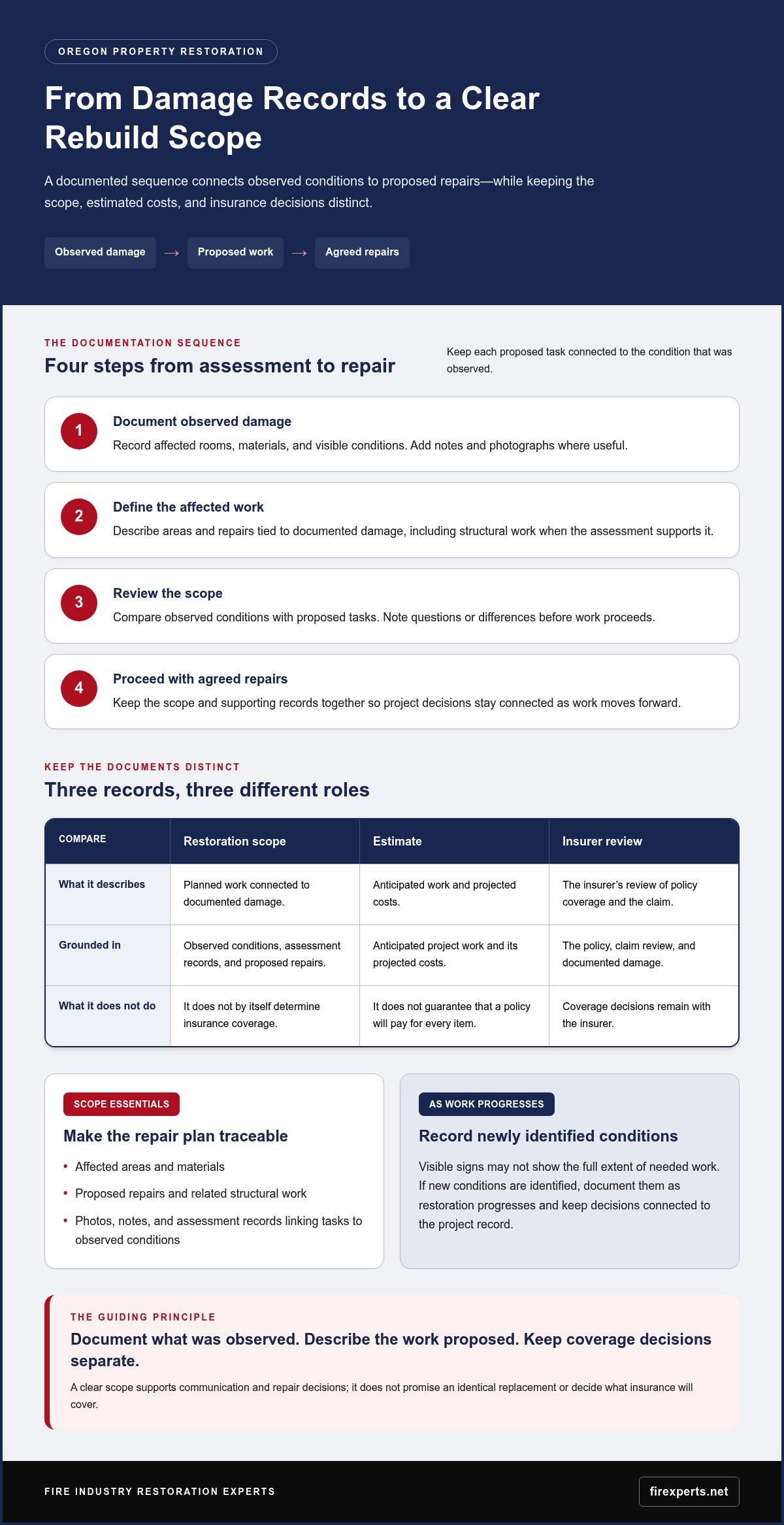
A repair plan should be traceable: you should be able to see what damage was observed, what work is proposed, and how the repairs relate to the records. In pre-loss condition restoration Oregon projects, this connection matters because visible signs may not show the full extent of the work needed. A written scope provides a clearer starting point and helps distinguish documented findings from assumptions.
The process generally follows a practical sequence:
- Document observed damage. Record affected rooms, materials, and visible conditions with notes and photographs where useful.
- Define the affected work. Describe the areas and repairs connected to the documented damage, including structural work when the assessment supports it.
- Review the scope. Compare observed conditions with proposed tasks, and note questions or differences before work proceeds.
- Proceed with agreed repairs. Keep the scope and supporting records together so decisions remain connected as work moves forward.
A documented scope turns damage observations into a shared reference for repair decisions, project changes, and insurance discussions. It supports clear communication, but it doesn’t decide coverage. The restoration team can coordinate with the insurer and provide project documentation; the insurer makes its own coverage and claim decisions. Estimates describe anticipated work and costs, not a guarantee that a policy will pay for every item. For more on the process, see this guide to an insurance restoration contractor in Portland.
What belongs in a restoration scope?
A useful scope describes affected areas, materials, proposed repairs, and structural work in project-specific terms. Photos, notes, and assessment records connect each proposed task to an observed condition. For example, the documentation can identify the affected room or surface and describe the repair being considered. Trade groups such as the Restoration Industry Association offer a broader reference for restoration practices, while the property’s own records guide its scope.
Keep the scope, estimate, and insurance determination distinct. The scope outlines planned work, an estimate sets out projected costs, and the insurer’s review concerns policy coverage. These documents may inform one another, but they serve different purposes. Reviewing them side by side can help identify unanswered questions without treating a proposed repair as an approved claim item.
How are newly discovered conditions handled?
Demolition or repairs can expose conditions that weren’t visible during the first assessment. Don’t assume damage in advance. Document newly observed areas, then review them so the work plan and scope can be adjusted as appropriate. For fire-related structural work, the structural damage repair after fire guide explains what property owners may encounter.
Keep a dated record of scope versions, new findings, questions, and decisions. If a proposed change affects the work, ask that the reason and supporting observations be recorded clearly. This makes it easier to follow what changed and why, without confusing new findings with the original assessment.
Fire Industry Restoration Experts coordinates restoration and rebuilding work with insurance companies, helping keep project records connected to the work underway. For property owners in Portland, Gresham, or Clackamas, restoration and rebuild support can help clarify the next steps.
Restoration, Repair, and Rebuilding: What Each Stage Does
Damage recovery is easier to follow when each type of work has a clear purpose. Some tasks limit further exposure, others remove damaged materials or restore affected surfaces, and rebuilding puts documented components back in place. These stages can overlap or happen in a different order. For pre-loss condition restoration Oregon property owners should expect a plan shaped by observed damage and the agreed scope, not a fixed sequence or timeline.
| Stage | What it does | Example work |
|---|---|---|
| Stabilization | Limits continued exposure or damage while the property is assessed. | Boarding up an exposed opening after storm or fire damage. |
| Demolition | Removes materials identified for removal in the project scope. | Taking out damaged drywall or flooring when assessment supports it. |
| Restoration | Addresses damage and restores affected areas through the work defined for the project. | Cleaning or repairing affected surfaces after smoke or water damage, as scoped. |
| Rebuilding | Reconstructs documented components that were removed or damaged. | Replacing affected framing, drywall, cabinets, flooring, or trim. |
Not every loss calls for every stage. A storm-damaged opening may need to be secured, assessed, and repaired. Water damage may involve limiting ongoing exposure, removing affected materials, and repairing areas identified in the scope. Fire and smoke may call for different combinations of assessment, demolition, restoration, and rebuilding. The damage findings, property conditions, and project scope determine what applies.
What happens before rebuilding begins?
Before reconstruction, the team can board up exposed areas, assess the damage, and carry out necessary demolition. These steps help secure the property and address affected materials identified for removal, preparing for the next work in the scope. Demolition isn’t automatically required everywhere; it should relate to observed conditions and planned repairs. For broader fire-recovery context, see this Oregon fire damage restoration property guide.
Connecting assessment and removal to the rebuild plan matters. If work reveals a condition that wasn’t visible earlier, document it and consider it before changing the plan. This keeps repair decisions grounded in what’s found, rather than treating every damaged property as if it needs the same work.
What can structural and interior rebuilding include?
Rebuilding may involve structural components such as framing or interior finishes such as drywall, flooring, cabinets, and trim, when affected and included in the scope. It isn’t automatically a remodel of unaffected rooms, though property owners seeking comprehensive upgrades beyond insurance restoration often consult design-build firms like Elite Contractor Services. The work plan reflects documented damage and the components that need repair or replacement to complete the agreed restoration work.
Materials and project-specific requirements can shape repair choices. A clear plan records which components are being addressed and connects restoration to rebuilding. Fire Industry Restoration Experts carries projects from boarding up and demolition through damage assessment and structural rebuilding, supporting continuity between stages without assuming every property needs the same path.
How Property Owners Can Keep Oregon Restoration Decisions Clear
Damage repairs can involve many records and decisions, especially if the work plan changes as the property is assessed. A simple project file helps you see what was documented, what work was proposed, and which questions remain. For pre-loss condition restoration Oregon homeowners can make the process easier to follow by keeping key information together and updating it as the project develops.
Choose one accessible place, such as a folder or digital file, and keep these records there:
- Available pre-loss photos, property details, and records related to affected rooms or materials.
- Dated damage notes and photos from assessments or newly observed conditions.
- Each scope version, with the date received and any changes clearly identified.
- Open questions, decisions, and notes about who provided an update.
Keep original records where possible, and add new notes rather than overwriting earlier versions. This gives you a straightforward way to track how the project’s understanding changes over time. Clear communication won’t guarantee faster completion, but it can help you understand which work is underway and what decisions remain. On complex rebuilds or large commercial restorations where independent oversight is beneficial, consulting resources such as hodgecmc.com show how owner’s representative services can help navigate project coordination and contractor scopes.
What should owners document during the project?
Start with what you already have. Photos from before the damage, maintenance records, and details about affected areas can provide useful context. Add dated notes as the assessment and work proceed, including descriptions of newly observed damage and the document or conversation related to it. A consistent record makes it easier to revisit facts without relying on memory during a stressful project.
How can owners follow scope changes?
Compare each proposed update with the documented condition and the work already described. Ask for a plain-language explanation of what changed, what newly observed condition supports the revision, and which tasks are being added or adjusted. Keep the response with the relevant scope version. For claim-specific questions, the Oregon insurance claim guidance for fire damage offers related context.
Keep project decisions separate from insurance determinations. A restoration scope describes proposed or agreed work, while the insurer makes coverage decisions under the policy. If the documentation and claim information seem out of step, record the question and response so you can follow up with the relevant information. Fire Industry Restoration Experts coordinates with insurance companies during restoration projects, supporting communication without promising coverage or claim approval.
Good records give everyone a steadier reference point, but you don’t have to manage restoration and rebuilding alone. Connect with Fire Industry Restoration Experts about restoration and rebuilding in Portland, Gresham, or Clackamas to discuss how coordinated project work can carry through from damage assessment to reconstruction.
Restore Your Property With One Coordinated Oregon Team
After property damage, it helps to understand how work connects from initial assessment to rebuilding. Fire Industry Restoration Experts provides fire, smoke, water, and storm restoration and rebuild services for Oregon property owners. The work can include boarding up, damage assessment, demolition, and structural rebuilding, keeping restoration and reconstruction within a coordinated project process.
That continuity matters because information gathered during assessment helps shape the work that follows. As conditions are documented and the scope is developed, owners can see how mitigation, removal of affected materials, and rebuilding relate to the damage found. If work reveals additional conditions, those observations can be documented and considered as the plan moves forward. The goal is a clear path through the project, not a promise of a particular timeline or identical results in every detail.
What does a coordinated restoration process look like?
Each property needs a plan suited to its damage and agreed work. Depending on the findings, a project may connect these steps:
- Assessment: Review and document observed damage to help define the work.
- Mitigation and securing: Address ongoing exposure and, where needed, board up affected areas.
- Demolition: Remove materials identified for removal within the project scope.
- Restoration and rebuilding: Repair affected areas and reconstruct documented components as the plan calls for.
These stages aren’t a fixed formula. Their order and combination depend on the property, damage findings, and project scope. A clear scope and ongoing documentation help owners follow what’s planned, what has changed, and how the work relates to observed conditions. Fire Industry Restoration Experts serves property owners in Portland, Gresham, and Clackamas, coordinating with insurance companies as part of the restoration process. That coordination does not determine coverage or guarantee a claim outcome.
Who is guiding the work?
Fire Industry Restoration Experts was founded in 2013 by Greg Philo, a volunteer firefighter and contractor. That background brings emergency-response experience and construction knowledge to restoration work. It supports a practical understanding of how property damage and rebuilding decisions connect, without promising a specific result for every project.
For property owners considering pre-loss condition restoration Oregon, a coordinated process can make the steps easier to understand, from documented damage through structural rebuilding. Bring questions about your property, observed damage, and the next stage of work into the conversation. A straightforward discussion can help clarify where the project stands and what information will guide the restoration plan.
Talk with Fire Industry Restoration Experts about your property’s damage and possible next restoration steps.
Take the Next Step Toward a Clear Restoration Plan
After property damage, it can be hard to know which question to tackle first. Start with the immediate concern affecting your household, then note what you need clarified about the property or the work ahead. That gives the next conversation a practical starting point.
With pre-loss condition restoration Oregon, progress comes from understanding the decisions in front of you, not solving the entire project at once. You deserve a chance to discuss your property’s situation, ask questions, and get a clearer sense of possible next steps. No two damage situations are exactly alike, so a useful conversation starts with what you’ve observed and what matters most to you.
Talk with Fire Industry Restoration Experts about your property’s restoration next steps. A clear conversation can help you move forward with greater confidence.
Frequently Asked Questions
What does restoring a property to pre-loss condition mean?
It means repairing documented damage so affected areas can serve the purposes they did before the loss. In pre-loss condition restoration Oregon, the assessment may consider how a space was used as well as its visible materials. For example, damage to a kitchen cabinet used for storage differs from damage to a decorative feature. Room-specific photos and descriptions can help show the property’s prior condition and function.
Does pre-loss condition restoration mean my home will look exactly the same?
No. Restoration aims to address documented damage, but it doesn’t guarantee an exact visual match or identical replacement of every item. The repair approach can depend on the affected material, documented scope, policy decisions, and project requirements. If a finish or fixture looks different after repairs, note the concern and identify the affected area so it can be discussed against the project documentation.
How do restoration contractors determine the scope of repairs?
Restoration teams use the damage assessment and available property records to identify affected areas and describe proposed work. A useful scope makes the connection specific, such as naming the room, affected component, and planned repair. Owners in Portland, Gresham, and Clackamas can note questions beside the relevant scope item, making it easier to discuss a particular repair rather than a broad, unclear concern.
What happens if hidden damage is found during restoration?
If work exposes a condition that wasn’t visible earlier, it can be recorded and reviewed before the plan is revised. For example, removing a damaged finish may reveal another affected surface behind it. Ask for the new finding to be described and tied to the proposed change. Keeping the earlier scope version, updated notes, and related photos together helps preserve a clear record of why the work changed.
Can a restoration contractor coordinate with my insurance company?
Yes. A restoration contractor can coordinate project information and documentation with an insurance company as part of the restoration process. This can help keep records about observed damage and planned work connected during discussions. For details on what to expect from an insurance restoration contractor in Portland, see the related guide. Coordination doesn’t determine what a policy covers or guarantee claim approval. Keep coverage questions distinct from repair questions and direct them to the insurer handling your claim.
How is mitigation different from restoration and rebuilding?
Mitigation focuses on limiting ongoing damage after an event. Restoration addresses damage in affected areas, while rebuilding reconstructs components that were damaged or removed. A water loss, for instance, may involve initial steps to limit further impact, followed by repairs to affected interior materials. A storm-damaged opening may call for securing the area and then repairing the parts included in the project scope.
How long does pre-loss condition restoration take in Oregon?
There isn’t one reliable duration for every Oregon property. Timing depends on the damage found, the work included in the scope, the sequence of repairs, and whether new conditions require review. Project decisions and insurance discussions can also affect how work proceeds. Ask for updates that explain the current stage, outstanding decisions, and any changes to the work plan, rather than relying on a general estimate for all projects.