
What if the water you can see is only part of the damage? Moisture can spread behind floors, walls, and finishes, leaving structural problems hidden even after the surface looks dry. If you’re looking for a water remediation contractor Oregon property owners can trust, focus on how the work will be assessed, documented, and carried through to repairs.
It’s reasonable to want drying handled promptly and to understand what happens to materials that may still be affected. This guide explains what water remediation covers, how to review a proposed scope, and what clear communication and project documentation look like. You’ll also learn why a coordinated process matters when mitigation leads to demolition, structural restoration, and rebuilding, and how insurance coordination can fit into the work without guaranteeing claim approval.
Fire Industry Restoration Experts brings restoration and construction experience to projects, guiding work from damage assessment through rebuilding. Read on to learn what to expect at each stage and how a connected approach can help you make informed decisions about your Oregon property’s recovery.
Key Takeaways
- A water remediation contractor Oregon property owners choose should explain how assessment, water removal, drying, and restoration planning fit together.
- Clear moisture records and a defined work scope help you understand what’s affected and which steps are proposed.
- Compare how contractors explain damaged materials, structural repairs, and the path from mitigation to rebuilding.
- Oregon’s rainy seasons make it useful to understand how water intrusion will be assessed and documented, including when discussing the project with your insurer.
- Fire Industry Restoration Experts connects mitigation, demolition, structural restoration, and rebuilding, drawing on experience founded in 2013 by volunteer firefighter and contractor Greg Philo.
What a Water Remediation Contractor in Oregon Does After Property Damage
Water remediation includes the assessment and mitigation work needed to address water damage and support a property’s recovery. A water remediation contractor Oregon property owners work with should look beyond visible puddles to determine where water traveled, which materials it reached, and what conditions are present. The appropriate plan depends on the source and spread of the water, the affected building materials, and the findings from an inspection.
Water extraction is one part of the process, not the finish line. A pump or another extraction method can remove standing water, but it can’t dry damp materials by itself, resolve damage behind finishes, or restore affected structural components. The overview What is Water Damage? explains how water intrusion can affect buildings in different ways. For property recovery, next steps should follow an assessment rather than guesswork.
How water remediation differs from extraction and restoration
After standing water is removed, mitigation focuses on the affected areas. This may mean drying materials that can be retained and removing materials that the assessment shows are too damaged to remain. The work should respond to the conditions found in the property, rather than assume every wet surface needs the same treatment. For a breakdown of the stages involved, see what water damage restoration services include.
Repairs and rebuilding follow when damaged materials or structures need replacement. Connecting these stages helps clarify what’s being done now, what additional work may be needed, and how the property can move from mitigation toward restoration.
Which signs can point to hidden water damage?
Watch for recurring stains, lifted finishes, damp materials, or flooring changes such as buckling or soft spots. These signs can appear away from the original leak because water may travel through or beneath building materials. A ceiling mark or raised floor edge can indicate a larger affected area, but visible symptoms alone don’t establish its full extent.
Take photos and note when and where you observe changes. Avoid pulling up flooring, opening walls, or otherwise disturbing the area before it’s assessed. This preserves a useful record of what you found and leaves the extent and condition of the materials for closer evaluation.
For Oregon property owners, the distinction is important: removing water addresses what’s visible, while remediation considers affected materials and conditions that can shape recovery. A careful assessment gives the work a clear basis, including whether drying is appropriate or damaged materials need removal and structural restoration.
How the Oregon Water Remediation Process Moves from Assessment to Drying
A clear process turns water damage into a series of manageable decisions. A water remediation contractor Oregon property owners work with should explain what’s known, what needs attention, and how mitigation connects to repairs. The exact scope depends on the source of the water, where it traveled, and the condition of the affected materials.
Assessment, water removal, and affected materials
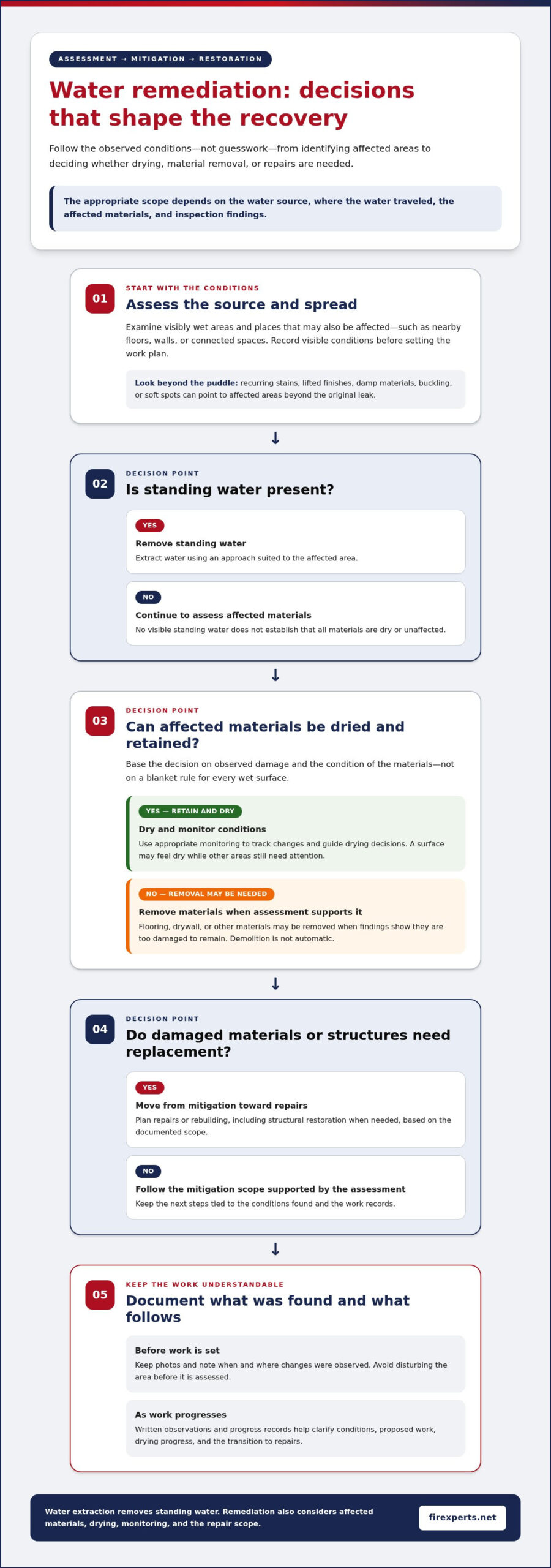
The work begins by identifying the water source and examining areas that are visibly wet or may have been affected. That can mean looking beyond the room where water collected to nearby floors, walls, or connected spaces. The inspection helps establish the conditions at the property before a work plan is set.
From there, the sequence generally moves through these stages:
- Assess: Record visible conditions and identify areas that may need closer attention.
- Remove water: Extract standing water using an approach suited to the affected area.
- Decide on materials: Determine which materials can be dried and which may need removal based on observed damage.
- Dry and monitor: Use appropriate monitoring to track conditions and guide drying decisions.
- Plan restoration: Identify repair or rebuilding needs after mitigation and assessment clarify the scope.
Demolition isn’t a standard step in every project. Removing flooring, drywall, or other materials should be based on the conditions found and the restoration scope, not a blanket checklist. Written observations and a clear explanation of proposed work help property owners understand why each step is included.
Drying, monitoring, and the transition to repairs
Drying decisions should reflect measured conditions and the materials involved. A surface may feel dry while other areas still need attention, so monitoring helps track changes instead of relying on appearance alone. Progress records also give the property owner a clearer account of what was observed and how the work is advancing.
Mitigation focuses on addressing water and drying affected areas. Reconstruction is a separate stage. When assessment and progress records support the transition, the project can move toward repairing or replacing damaged materials, structural restoration, and rebuilding as needed. This connection matters when mitigation uncovers damage requiring construction work, because the next steps should follow the documented scope.
Fire Industry Restoration Experts coordinates water mitigation with demolition, structural restoration, and rebuilding. Learn more about the water remediation and restoration process and how these stages can fit together for your property.
How to Compare Water Remediation Contractors in Oregon
Choosing a water remediation contractor Oregon property owners can work with involves more than comparing water removal. Look at how the assessment supports the proposed work, which records explain the conditions, and whether the plan addresses recovery beyond drying. A clear scope can also help address concerns about unnecessary demolition by tying material removal to observed damage.
| What to compare | What clear project information looks like |
|---|---|
| Assessment | Identifies the water source, affected areas, and conditions observed during inspection. |
| Moisture documentation | Records relevant readings and monitoring so progress and drying decisions can be understood. |
| Work scope | Separates planned water removal and drying from material removal or other work that depends on further findings. |
| Repairs | Shows how mitigation may lead to structural restoration and rebuilding when damage calls for it. |
| Communication | Sets out understandable next steps and explains changes if opening an area reveals new conditions. |
What a clear remediation scope should explain
A well-organized scope describes the affected areas, proposed mitigation, materials being considered for removal, and expected restoration phases. It should distinguish documented observations from estimates or assumptions and identify work that depends on further assessment. If concealed damage becomes visible during the project, an explanation of the changed conditions and revised work helps keep decisions grounded in what was found.
That level of detail matters. For example, a scope should connect proposed flooring or wall removal to an observed condition rather than list demolition without explaining its purpose. Records and plain-language explanations make it easier to understand the work and discuss it with an insurer, without implying that coverage or claim approval is assured.
Compare the path beyond initial water removal
Drying is one phase of recovery. Consider whether the project plan also connects mitigation with structural restoration and rebuilding if the assessment identifies damage that requires repairs. Fire Industry Restoration Experts coordinates water remediation with demolition, structural restoration, and rebuilding, connecting those stages within a broader restoration process.
Communication should remain consistent as the work progresses. Written observations, understandable updates, and clear next steps help distinguish what’s complete from what remains. For Oregon contractor-registration details, consult the Oregon Construction Contractors Board and review the applicable information for the business and work involved.
Oregon Property, Insurance, and Project Considerations for Water Remediation
Oregon’s rainy seasons can bring ongoing wet weather, so water intrusion deserves careful assessment before moisture has more time to affect building materials. Start with practical questions: where did water enter, which areas are affected, and what access will the work require? A water remediation contractor Oregon property owners work with should use those site conditions to shape the project plan, not rely on a one-size-fits-all approach.
Planning a water-damage project in the Portland-area region
Property needs can differ from one building to another in Portland, Gresham, and Clackamas. A leak affecting an accessible room may call for a different plan than water that has reached enclosed wall or floor areas. The extent of affected materials, the route crews need to reach them, and any damage uncovered during assessment all help determine the practical sequence of mitigation and restoration.
Focus on the specific property rather than assumptions about a city or neighborhood. Clear findings help explain which areas are included, what work is proposed, and whether the scope may need to change if concealed conditions become visible.
Working through scope and insurance communication
Insurance coverage and claim decisions depend on the policy and the circumstances of the damage. Keep relevant records together, including photographs, notes about when you observed the damage, and communications with your insurer. These details can help you describe the property’s condition and compare that information with the proposed work.
Restoration records can clarify what was observed, which mitigation work was completed, and what repairs are proposed. A contractor can coordinate project information with an insurance company, but that coordination doesn’t guarantee coverage or claim approval. Ask for changes in scope to be explained and documented, especially if assessment or mitigation reveals additional affected materials. That gives everyone a clearer record to work from.
Fire Industry Restoration Experts coordinates water restoration work with insurance companies and connects mitigation with structural restoration and rebuilding when the project calls for it. For a grounded discussion of your property’s damage, scope, and next steps, talk through your water-damage restoration needs.
From Water Mitigation to Rebuilding: Working with Fire Industry Restoration Experts
Water damage can leave property owners facing two problems at once: addressing the damage and determining what needs repair. Fire Industry Restoration Experts connects water remediation with damage mitigation, demolition, structural restoration, and rebuilding. This treats recovery as a connected process rather than making drying the only step.
One coordinated path from damage assessment to structural repair
Assessment helps establish where water has affected the property and which conditions need attention. Those findings guide mitigation and inform whether damaged materials should be removed. Demolition decisions should follow observed conditions and the project scope, while structural restoration and rebuilding address repair needs identified during the work.
Coordinating these stages can reduce handoffs between mitigation and structural repairs. It also gives property owners a clearer path from documented damage to proposed restoration work. The scope still depends on the conditions found at the property, and no process can promise a particular outcome before that assessment.
Founded in 2013 by Greg Philo, a volunteer firefighter and contractor, Fire Industry Restoration Experts brings emergency-response and construction experience to restoration projects. That background informs a practical approach to moving from damage assessment and mitigation toward structural work when the documented scope calls for it.
What property owners can expect from the next conversation
A helpful first discussion can start with what you know: the source of the water, which rooms or materials appear affected, and any concerns about hidden damage or structural repairs. Photos, notes, and insurer communications can also help explain the situation. You don’t need to have every answer before describing what you’ve observed.
The conversation can focus on understanding the damage, explaining how assessment informs the scope, and outlining possible next steps. If mitigation reveals new conditions, those findings can inform project planning. For property owners comparing a water remediation contractor Oregon option, clear, steady communication can make a disruptive process easier to follow.
Fire Industry Restoration Experts works with property owners and managers in Portland, Gresham, and Clackamas, Oregon, coordinating restoration work from mitigation through rebuilding. To discuss your situation and the path from water damage to restoration, discuss your property’s water restoration project.
Choose a Clear Path from Water Damage to Recovery
Choosing a water remediation contractor Oregon property owners can rely on means looking beyond water removal. A sound plan explains what the assessment found, how drying and mitigation will be tracked, and whether damaged materials may need structural repair or rebuilding. Clear records also help you understand the proposed scope and discuss the work with your insurer, though coverage depends on your policy and circumstances.
Fire Industry Restoration Experts connects water remediation and mitigation with structural restoration and rebuilding, helping property owners follow the project through its next stages. Founded in 2013 by volunteer firefighter and contractor Greg Philo, the company serves property owners and managers in Portland, Gresham, and Clackamas, Oregon.
You don’t have to sort through every decision at once. Start with what you’ve observed and what concerns you most. Talk with Fire Industry Restoration Experts about your water-damage project and take a steady next step toward recovery.
Frequently Asked Questions
What does a water remediation contractor do?
A water remediation contractor assesses water damage and carries out mitigation work to support a property’s recovery. Depending on the conditions, work may include removing standing water, drying affected areas, removing damaged materials, and coordinating restoration or rebuilding. The scope depends on the water source, which materials were affected, and what the property assessment finds. Remediation covers more than extraction because it also considers affected areas and next steps toward recovery.
How long does water remediation take in Oregon?
There’s no single timeline for every water-damage project in Oregon. Duration depends on how much of the property is affected, which materials are involved, and what assessment and drying reveal. Repairs or rebuilding may continue after mitigation is complete. Ask for an explanation of the project stages and how progress will be communicated. If new findings change the scope, the contractor should explain how those conditions affect the work ahead.
Does homeowners insurance cover water remediation?
Coverage depends on your policy, the source of the water, and the circumstances of the damage. A restoration contractor can document observed conditions and coordinate project information with the insurance process, but can’t promise claim approval. Keep photographs, notes, and project records together, and communicate directly with your insurer about coverage, deductibles, and claim steps. Your insurer can explain how the terms of your specific policy apply to the loss.
What should I look for when comparing water remediation contractors in Oregon?
Compare how each contractor assesses the damage, records affected areas, explains the proposed scope, and communicates changes. Look for a plan that addresses mitigation and explains how necessary structural repairs or rebuilding fit into recovery. If you’re comparing a water remediation contractor Oregon property owners may hire, clear records can help you understand what work is proposed and why. You can also review applicable contractor-registration information through the Oregon Construction Contractors Board.
Can water damage be hidden behind walls or under flooring?
Yes. Water can affect building materials beyond visible stains or standing water. Recurring marks, damp materials, lifted finishes, or flooring changes can point to a wider affected area, but visible symptoms don’t show the full extent on their own. Document what you notice with photos and avoid disturbing the area before it’s assessed. An inspection can help determine which materials need attention and inform decisions about drying, removal, or repair.
Is water extraction the same as water remediation?
No. Water extraction removes standing water, while remediation is a broader response to water damage. Depending on the property’s condition, that work may also include assessing affected areas, drying materials, documenting conditions, and planning repairs or rebuilding. Extraction can be an early step, but it doesn’t establish whether damp materials remain or structural work is needed. The assessment findings help shape the rest of the recovery plan.
What happens after water-damaged materials are removed?
After damaged materials are removed, next steps depend on the exposed structure and documented project scope. The team may continue drying, assess areas that were previously concealed, and plan structural repairs or rebuilding if needed. Ask for clear communication if new findings change the work. Keep relevant project records available when discussing the scope with your insurer, since coverage and claim decisions depend on your policy and circumstances.