
What if the first step after a leak or flood isn’t rebuilding, but determining what can be dried, what must be removed, and what needs repair? Water damage restoration services can cover several distinct stages. The right scope depends on the water source, the materials it reached, and how far the damage has spread.
It’s understandable to feel unsure whether you need cleanup, mitigation, demolition, repairs, or a full rebuild. Each step has a different purpose, and not every damaged room needs the same response. A clear assessment helps turn a disruptive situation into a practical plan.
This guide explains what each stage can include, how the water source and affected materials may shape the work, and what documentation can help as you coordinate with your insurer. You’ll also see how assessment, mitigation, material removal, structural restoration, and rebuilding fit together. Fire Industry Restoration Experts carries restoration work from assessment through rebuilding and coordinates with property owners and insurance companies in Portland, Gresham, and Clackamas.
Key Takeaways
- Water damage restoration services can include assessment, mitigation, removal of damaged materials, structural work, and rebuilding. The documented damage determines which steps are needed.
- A plumbing leak, appliance overflow, and storm intrusion can affect different parts of a property. The source and the materials affected help shape the restoration plan.
- Keep a record of when you discovered the damage, which rooms are affected, and what you can safely see. Organized notes can make project and insurance discussions easier.
- Assessment, mitigation, demolition, and rebuilding have distinct roles. Knowing the difference can help you follow the work as it progresses.
- Fire Industry Restoration Experts coordinates restoration from assessment through rebuilding in Portland, Gresham, and Clackamas, working with property owners and insurance companies along the way.
What water damage restoration services cover from first assessment to recovery
After a leak or flood, visible water is only part of the picture. Water damage restoration services follow a considered sequence: assess what has been affected, limit further damage, remove materials that cannot be restored, and repair or rebuild damaged parts of the property. The exact scope depends on where the water came from, which rooms and materials it reached, and what an inspection reveals.
Water damage restoration is the coordinated process of assessing damage, limiting its spread, and restoring affected parts of a property, not simply wiping up visible water. Moisture can move beneath flooring, behind walls, or into other building materials. A surface may look dry while concealed areas still need attention. For a broad overview of water damage restoration and related considerations, see Wikipedia’s water damage reference.
How restoration differs from cleanup and repair
Cleanup removes visible water, debris, or residue from accessible areas. It’s a useful first step, but it doesn’t necessarily reveal or address moisture inside building materials. Mitigation focuses on limiting additional property damage while the recovery plan takes shape. Depending on the conditions, it may involve water removal, drying, or removing materials that cannot be retained.
Repair and rebuilding come later. They address damaged components, such as sections of flooring, drywall, or framing, after the affected area has been assessed and necessary mitigation is complete. The stages connect, but they aren’t interchangeable. A property may need some stages without needing all of them.
Which water damage situations may need professional restoration
A supply-line leak may wet a cabinet, wall, or floor near the break. An appliance overflow can spread across a kitchen or laundry room and reach flooring or nearby finishes. Storm-related water intrusion may enter through a roof, opening, or lower level and affect several areas. These are examples, not fixed outcomes. The same type of incident can cause different damage depending on how long water was present and what it contacted.
Materials also shape the response. Water on a hard surface is different from moisture absorbed by carpet, insulation, drywall, or wood. An assessment helps identify visible and concealed impacts and define a practical scope of work. It can also distinguish immediate damage control from later structural restoration or rebuilding, so property owners understand what needs attention now and what recovery may involve next.
How the water source and affected materials shape restoration work
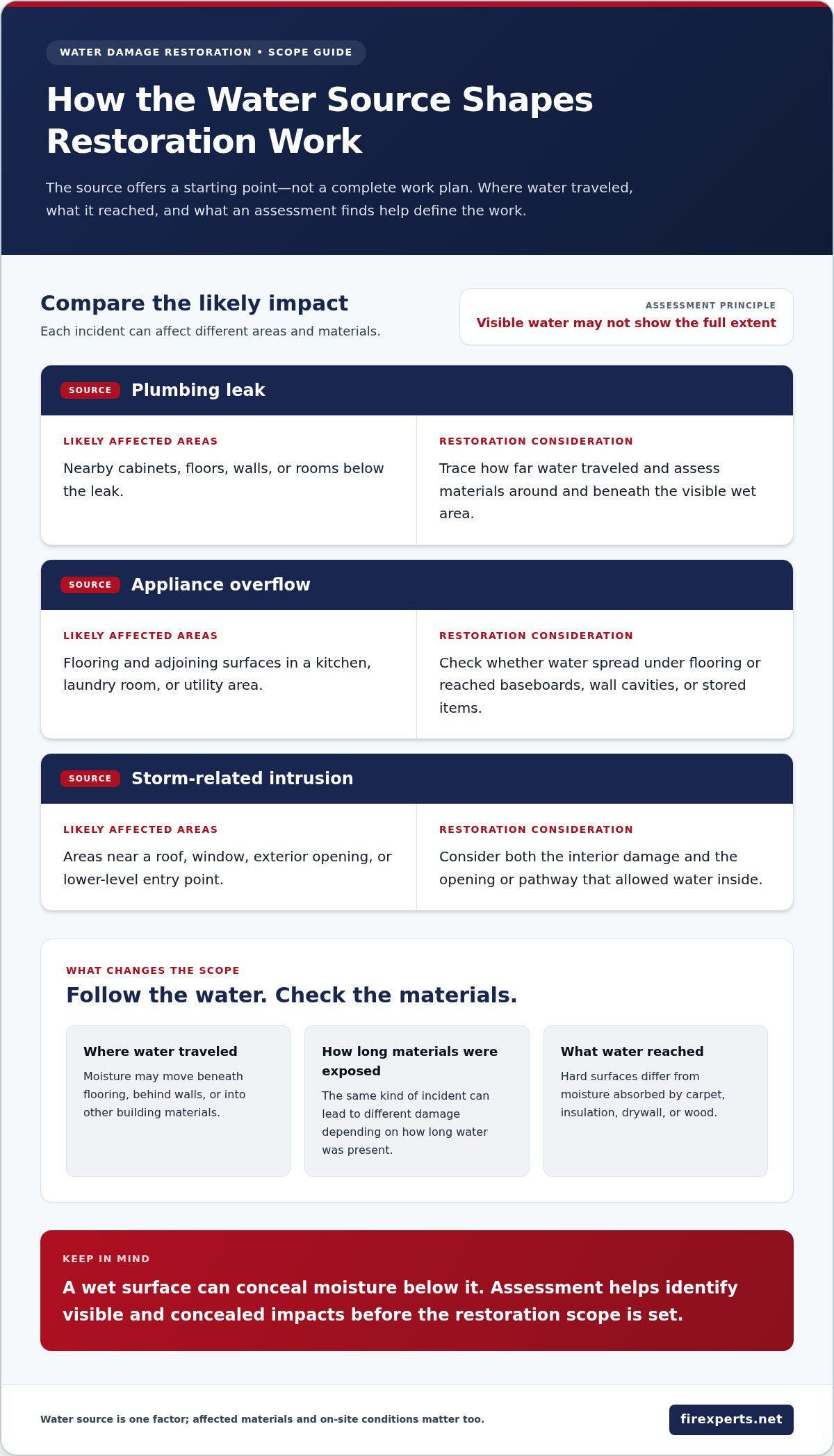
The origin of water offers a starting point, not a complete work plan. The water source alone cannot determine the full restoration scope; the affected materials and conditions found on site matter too. Water damage restoration services are shaped by where water traveled, how long materials were exposed, and whether flooring, framing, or wall cavities were affected.
| Source | Likely affected areas | Restoration considerations |
|---|---|---|
| Plumbing leak | Nearby cabinets, floors, walls, or rooms below the leak | Trace how far water traveled and assess materials around and beneath the visible wet area. |
| Appliance overflow | Flooring and adjoining surfaces in a kitchen, laundry room, or utility area | Check whether water spread under flooring or reached baseboards, wall cavities, or stored items. |
| Storm-related intrusion | Areas near a roof, window, exterior opening, or lower-level entry point | Consider both the interior damage and the opening or pathway that allowed water inside. |
Leaks and appliance overflows inside a property
A leak near a cabinet or appliance may leave a visible puddle while water also moves under the floor or behind a wall. Flooring can conceal moisture below its surface, and a damp baseboard may indicate that water reached the wall cavity. The visible outline of a wet area doesn’t always show the full extent of affected materials. Assessment helps establish what needs attention before setting a repair scope.
Storm-related water intrusion in the Portland area
In Portland, Gresham, and Clackamas, storm water may enter through a damaged roof, window, or another building opening. The resulting work can involve both the wet interior materials and the entry point that needs attention as part of recovery. The response depends on observed conditions, not simply on the fact that a storm occurred. For general safety information after flooding, the EPA provides official cleanup guidance.
Water that reaches framing, flooring, or enclosed wall spaces can change what needs to be assessed, removed, dried, or repaired. Surface cleanup alone may not address concealed areas. Fire Industry Restoration Experts provides water damage restoration support in the Portland area, from assessment and mitigation through restoration and rebuilding.
Mitigation, demolition, and rebuilding compared: what each stage accomplishes
These stages form a connected recovery plan, but they do different jobs. Assessment identifies affected areas and materials. Mitigation works to limit further damage. Necessary demolition removes damaged materials that cannot remain, while structural restoration and rebuilding repair the property. Not every water loss calls for every stage. The scope should follow the damage documented during assessment, not an automatic checklist.
Water extraction means removing standing water. Remediation is broader work to address water-related conditions and reduce further damage. Extraction may be one part of mitigation, but it does not by itself determine what repairs a property needs. For additional local context, see Water Damage Restoration in Portland: Complete Property Guide.
What mitigation and demolition are meant to address
Assessment helps establish where water traveled, which materials were affected, and what should happen next. Mitigation responds to those findings by limiting additional damage. If inspection shows that a material cannot be retained, removal or demolition may be included in the documented plan. A wet surface doesn’t automatically mean a wall or floor must be torn out. Decisions should reflect the material’s condition and the work needed to restore the property. The EPA flood cleanup guidance also offers general information about flood cleanup and material safety.
When structural restoration and rebuilding enter the picture
If water has affected framing, a subfloor, or another building component, the recovery plan may need structural restoration and rebuilding after water damage. Rebuilding follows mitigation and any necessary removal when the documented scope calls for it. It restores affected parts of the property rather than adding unrelated upgrades.
- Assess: Identify visible and affected areas and document the damage.
- Mitigate: Limit further damage based on the conditions found.
- Remove, if needed: Take out materials the restoration plan identifies as damaged beyond retention.
- Restore and rebuild, if needed: Repair affected structural components and return damaged areas to usable condition.
This sequence can make water damage restoration services easier to understand, but the work varies with the property and the findings. Having one team carry the project from assessment through rebuilding can help keep the stages connected and clarify how each step relates to the next.
What property owners can document and expect during water restoration
A water loss can leave you juggling cleanup, repair decisions, and insurance conversations at once. A few clear records can help keep the facts straight as the restoration plan develops. Don’t put yourself at risk to collect them. Your safety comes first.
Useful information to gather before and during the work
When it’s safe, record what you can see and note what you know. You don’t need a perfect file. Useful details can help explain what happened and how the project progresses.
- Photograph visible damage: If it’s safe, take photos of affected rooms, materials, and belongings before cleanup or removal changes what’s visible.
- List the affected areas: Note each room or part of the property where you see water or damage. Add observations as the work reveals more.
- Record the incident details: Write down the known water source, when you discovered the problem, and relevant timing, such as when the leak was stopped.
- Keep project and insurance records together: Save estimates, work records, photos, policy information, claim details, and messages from your insurer in one place.
Organized records can make conversations easier, but they don’t establish what a policy covers. For fire-related documentation context, Navigating Insurance Claims for Fire Damage in Oregon discusses a different type of loss. Its guidance is specific to fire damage, not water claims.
How a restoration contractor can coordinate with an insurance claim
A restoration team can document observed damage and coordinate project information with you and your insurance company. That support can help keep the work scope and related records clear as the project moves forward. Water damage restoration services involve property assessment and restoration work. The insurance company, not the restoration team, determines coverage under the policy. Documentation can support project discussions, but it can’t guarantee claim approval, reimbursement, or a particular payment arrangement.
Keep copies of the information you share and note the date and subject of important conversations. If the restoration scope changes as more damage is identified, make sure the project records reflect the updated work. Clear communication helps everyone stay aligned without confusing restoration decisions with the insurer’s coverage decision.
Fire Industry Restoration Experts helps organize water damage restoration work and coordinate project information with property owners and insurance companies. Learn about restoration services.
How Fire Industry Restoration Experts guide water damage recovery in Portland
After water damage, property owners need a clear view of what’s affected and what should happen next. Fire Industry Restoration Experts provides water damage restoration in Portland, Gresham, and Clackamas, carrying work from assessment and mitigation through necessary demolition, structural restoration, and rebuilding. The scope depends on the property’s documented damage, so the plan focuses on the work the building needs.
One coordinated path from damage assessment to rebuilding
Assessment helps identify affected materials and establish the next steps. Mitigation addresses further damage, while demolition removes materials that need to be taken out. If the findings show that framing, flooring, or other building components need repair, structural restoration and rebuilding can follow. Keeping these stages connected helps property owners understand how the work progresses and why each part is included.
Founder Greg Philo brings a background as both a volunteer firefighter and contractor. That experience informs the company’s practical approach to property damage and construction work. Fire Industry Restoration Experts also coordinates project information with property owners and insurance companies. This supports clear communication about restoration work, while the insurer remains responsible for determining policy coverage.
There isn’t one fixed scope for every water loss. A contained leak may call for different work than water that has affected multiple rooms or structural materials. As assessment findings shape the plan, the team explains how mitigation, removal, repair, and rebuilding relate to the property’s needs. That gives owners a clearer way to follow the work without assuming every stage applies.
Start a practical conversation about your damaged property
If you’re sorting through what happened, begin with the basics: describe the water event, which rooms or materials appear affected, and what concerns you most right now. Photos and notes about when you discovered the damage can also help explain the situation. You don’t need to have the entire restoration plan figured out before discussing it.
The next steps depend on what assessment shows and how extensive the restoration scope needs to be. Questions about damaged materials, the work sequence, or coordination with an insurer are reasonable. A conversation can help clarify the situation and identify a practical path forward. Fire Industry Restoration Experts provides water damage restoration services in Portland, Gresham, and Clackamas and can discuss the next steps for your property.
Take the next step toward restoring your property
The right recovery plan starts with understanding what the water reached and how the affected materials need to be handled. Water damage restoration services may include assessment, mitigation, necessary demolition, structural restoration, and rebuilding, but not every property needs every stage. Keeping photos, incident details, and project communications organized can help you follow the work and discuss it with your insurer.
Fire Industry Restoration Experts carries restoration work from assessment through rebuilding and coordinates project information with property owners and insurance companies. The insurer makes coverage decisions, while clear communication can help keep restoration discussions grounded in the documented work.
If water has damaged your property in Portland, Gresham, or Clackamas, talk with Fire Industry Restoration Experts about your water damage restoration needs.
Frequently Asked Questions
What do water damage restoration services include?
Water damage restoration services can include assessment, water extraction, mitigation, removal of damaged materials, structural repairs, and rebuilding, depending on the property’s condition. Extraction removes standing water, while mitigation aims to limit further damage. Restoration addresses the broader recovery, from identifying affected areas to repairing building components. A plumbing leak affecting one floor may need a different scope than water that has reached walls, flooring, or framing in several rooms.
What is the difference between water damage mitigation and restoration?
Mitigation focuses on limiting additional property damage after water intrusion. Depending on the conditions, it may involve removing standing water, drying affected areas, or taking out materials that cannot be retained. Restoration is the larger recovery process, which may include assessment, necessary demolition, structural repairs, and rebuilding. Mitigation can be one stage within restoration, but completing mitigation doesn’t automatically mean all repairs are finished.
Can water damage affect walls or floors even when they look dry?
Yes. Water can move beneath flooring, behind baseboards, or into wall cavities, where it may not be visible from the room. A dry-looking surface doesn’t confirm that the materials below or behind it are dry or undamaged. The affected area may need closer assessment to understand the scope. If you notice a stain, warped flooring, or a musty odor, include it in your notes about the damage.
How does the water source affect the restoration process?
The water source helps guide assessment, but the affected materials and conditions determine the work needed. A plumbing leak may affect a nearby cabinet, floor, or wall; an appliance overflow can spread across a room; storm intrusion may enter through a roof or exterior opening. These events don’t have identical outcomes. For homes in Portland, Gresham, and Clackamas, the restoration plan is shaped by what inspection finds, not the source alone.
How long does water damage restoration usually take?
There isn’t one timeline that fits every water loss. The duration depends on how much of the property is affected, which materials need attention, and whether the work involves only mitigation or also demolition, structural repairs, and rebuilding. A contained area may require a different sequence from damage spread across multiple rooms. Assessment helps define the scope and clarify the stages ahead, but discoveries during the work can affect the plan.
Does homeowners insurance cover water damage restoration?
Coverage depends on the policy and the cause of the damage. Homeowners insurance typically covers some sudden, accidental water damage from inside the home, such as a burst pipe, but generally excludes flooding from external sources. Flood damage usually requires separate flood insurance. Review your policy and discuss the specific incident with your insurer. A restoration team can document project information and coordinate with the insurer, but the insurer decides coverage.
What should I document before water damage restoration begins?
If it’s safe, photograph visible damage before cleanup or removal changes the scene. Note when you discovered the water, the suspected source, and which rooms or belongings appear affected. Keep those records with estimates, work documents, policy details, claim information, and insurer communications. Don’t enter an unsafe area or delay necessary action just to collect photos. These details can help explain the incident and support conversations about the restoration work.