
Insurance is not a universal requirement for commercial water damage repair in Clackamas. Whether a loss is covered depends on your policy and the cause of the damage. Commercial policies often cover sudden, accidental water damage, such as a pipe failure or water heater leak, subject to policy terms.
A burst pipe, roof leak, or failed piece of equipment can interrupt work and put building materials, inventory, and equipment at risk. It’s understandable to want clear answers about what happens next and what repairs may involve.
This guide explains how insurance typically applies, what affects restoration costs, and how professionals approach water removal, flood cleanup, drying, and repairs. You’ll also learn what to expect when damage reaches more than one area of a commercial property, so you can make informed decisions and move toward recovery with a clearer plan.
Key Takeaways
- Learn how the cause of water damage can affect whether a commercial insurance policy applies.
- See how restoration work can be organized around the needs of industrial, retail, and municipal properties.
- Understand the main steps professionals use to extract water and limit further damage after a leak or equipment failure.
- Find out when Fire Industry Restoration Experts’ water restoration and remediation services can help move a damaged property toward recovery.
Emergency restoration services
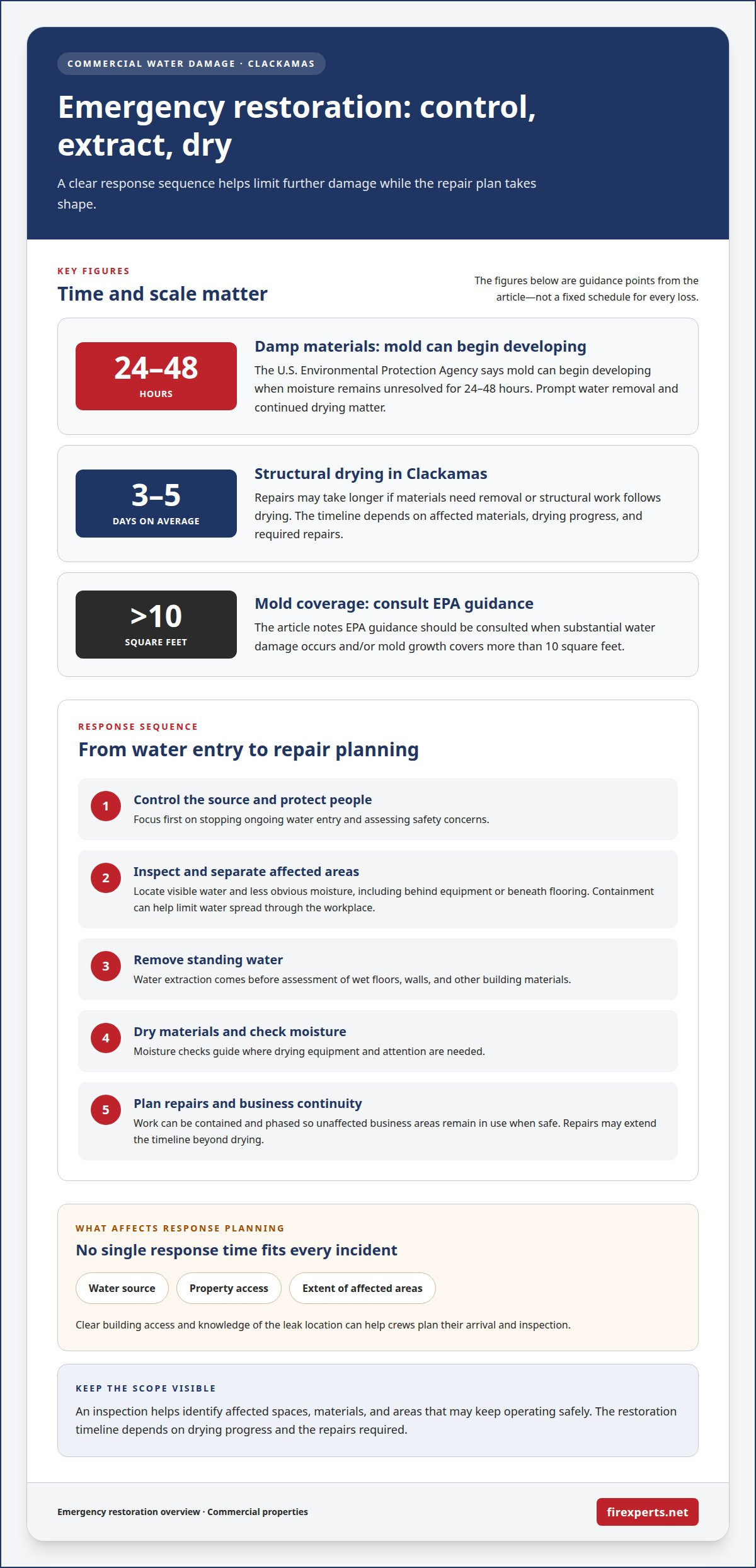
Emergency restoration begins by controlling the water source, protecting people, and assessing affected areas. In Clackamas, water extraction and drying help limit further damage while the repair plan takes shape.
Emergency Extraction and Structural Drying
Standing water is removed before crews assess wet floors, walls, and other building materials. Extraction is followed by structural drying, with moisture checks guiding where equipment and attention are needed. The U.S. Environmental Protection Agency says mold can begin developing on damp materials when moisture remains unresolved for 24-48 hours. That makes prompt water removal and continued drying important parts of damage restoration.
Water Damage Response and Mitigation
Mitigation begins with identifying the water source and separating affected areas from spaces that remain dry. An inspection helps locate visible water and moisture in less obvious places, such as behind equipment or beneath flooring. Containment can help limit the spread of water through a workplace. The U.S. Environmental Protection Agency recommends consulting its guidance when substantial water damage occurs and/or mold growth covers more than 10 square feet.
Response Time and Emergency Services
Commercial water damage restoration response time in Clackamas depends on the water source, property access, and the extent of affected areas. Emergency services focus first on stopping ongoing water entry, assessing safety concerns, and beginning extraction where conditions allow. For properties along the I-205 corridor, clear access to the affected building and knowledge of the leak location can help crews plan their arrival and inspection. No fixed response time applies to every incident.
Restoration Timeline and Business Interruption
Structural drying in Clackamas takes 3 to 5 days on average. Repairs may take longer when materials need removal or structural work follows drying. Work can be contained and phased so unaffected business areas remain in use when safe. The restoration timeline therefore depends on the affected materials, the drying progress, and the repairs required. Early inspection helps identify which areas can keep operating and which need temporary restrictions.
Need a pro for your water and smoke damage repair project in Clackamas, OR?
Commercial water damage restoration must reflect how each property operates. Industrial, retail, municipal, and multi-unit buildings need plans that protect people, limit disruption, and guide repairs.
Restoration for Commercial Property Types
Industrial properties may have equipment, stored materials, and work areas affected at once. Retail spaces require planning around inventory, customer access, and areas that can remain open. Municipal buildings may serve the public, so restoration plans should identify safe routes and areas to restrict. In Clackamas-area communities, an inspection helps map water intrusion and prioritize water removal, structural drying, and remediation.
In a multi-unit property, water can travel through shared walls, floors, or ceilings. The assessment should include adjoining units, not just the area where the leak first appeared. Separating affected areas helps clarify the repair scope and coordinate access in residential and commercial properties.
Coordination With Property Stakeholders
Owners, property managers, and tenants need clear information about affected spaces, access, and work sequencing. A shared update plan helps managers coordinate entry and lets tenants know which areas are restricted. Insurers also need a clear record of observed damage and completed work. Commercial policies often cover sudden, accidental water damage, such as pipe failures or water heater leaks, subject to policy terms.
Good coordination makes decisions easier. Decide who receives inspection updates, who approves access, and how repair records are organized. These steps help teams manage remediation efficiently while keeping tenant needs and insurance documentation in view.
Contractor Selection and Company Comparisons
When evaluating restoration work in Oregon, review the proposed scope, inspection process, and communication plan, along with licensing and insurance details. Reviews can provide context, but focus on how clearly the company explains water removal, structural work, and restoration steps. For Clackamas properties, compare plans against the specific damage, not ratings alone. Request a written scope that separates immediate mitigation from later repairs.
Permits, Codes, and Mold Prevention
Permit needs depend on the repair scope and applicable local requirements. Structural changes may involve different considerations from drying or replacing finishes, so include code compliance in repair planning. Address wet materials and hidden moisture promptly. Thorough drying and follow-up inspection help reduce lingering dampness and mold risk.
For a clearer plan for commercial water restoration work, organize property access, damage records, and stakeholder updates early.
Need Commercial Water Removal or Flood Cleanup in Portland, OR?
Commercial water extraction and cleanup follow a clear sequence: inspect affected areas, remove water, dry building materials, then plan repairs. In Clackamas County and Portland, the work depends on the water source, affected spaces, and building materials.
Commercial Extraction and Flood Cleanup
An inspection identifies where water entered and which rooms, equipment, or materials are affected. Crews then remove standing water and wet debris that could obstruct cleanup. A flooded retail stockroom, for example, may need separate attention to flooring, shelving, and stored goods. Mitigation also involves restricting access to unsafe areas and recording visible damage before repairs begin.
Structural Drying After Extraction
Water extraction removes pooled water, but moisture can remain inside walls, floors, and other structural materials. Drying addresses these hidden damp areas, not just surfaces that look wet. Crews assess moisture, position drying equipment, and monitor affected materials as conditions change. In an office, that may mean checking both the carpet and the floor beneath it before planning repairs.
Water Containment and Removal
Containment helps keep water and cleanup activity within the affected area. For example, crews can establish work boundaries around a leaking utility room and protect nearby corridors from foot traffic. Removal then addresses standing water and materials that cannot be dried in place. When significant demolition or tear-out of ruined building materials is required, bringing in roll-off containers from Rapid Rolloff Dumpsters LLC helps keep job sites organized and debris safely contained. The inspection should include adjoining rooms, since water may travel beneath finishes or through openings in walls.
Inspection Through Reconstruction
Commercial water damage repair begins with an inspection to map visible damage and identify work areas. Next come extraction, structural drying, and a review of materials that need repair or removal. Reconstruction starts when affected areas are ready. A damaged ceiling, for example, may need to be removed, followed by drying the surrounding structure and replacing the affected finish. Clear documentation connects each step to observed damage.
Extraction and drying typically begin on the first visit after the water source is secured and moisture is mapped. The company advertises a 60-minute response and 24/7 emergency response for commercial water damage in Portland, Oregon. Water and smoke damage repair projects in Clackamas typically take 1-8 weeks.
Commercial water damage from burst pipes, roof leaks, and equipment failures
Commercial water damage repair in Clackamas often starts by tracing the source and identifying affected spaces. A burst pipe, roof leak, or equipment failure can send water into work areas with little warning. The source shapes the response: a pipe may keep feeding water, while a roof leak can affect ceilings and areas below. Standing water can begin damaging commercial inventory, equipment, flooring, walls, and other building materials within 24 hours.
With a burst pipe, the first priority is safely stopping the water flow. Teams then assess the pipe’s location and trace water beyond the room where it appeared. A wet patch near a breakroom, for example, may also affect a neighboring office or stored supplies. Mapping affected areas separates immediate water removal from later construction repairs and ties the work plan to observed damage.
Roof leaks require a different inspection approach. Water may travel from a ceiling opening along framing before appearing elsewhere. Crews assess the entry point, ceiling materials, and nearby spaces, then document affected areas for the repair plan. A stain in one office does not show the full extent of moisture. Checking adjoining surfaces helps identify where drying or material removal is needed.
Equipment failures can affect areas around boilers, commercial appliances, or process equipment. An inspection records the equipment involved, the water’s path, and nearby flooring, walls, and contents. Once the source is controlled, extraction and drying address immediate damage. The repair plan can distinguish water-damaged building materials from equipment concerns, helping owners organize restoration work and business operations.
For commercial water damage repair in Clackamas, a clear sequence matters: assess the source, identify affected spaces, remove standing water, and plan repairs based on documented damage. Request help with commercial water restoration when a leak or equipment failure affects your property.
Fire Industry Restoration Experts
Fire Industry Restoration Experts helps commercial property owners move from water damage assessment toward repair and recovery. The team handles restoration work that can include damage assessment, demolition, and rebuilding, while coordinating with insurance companies. This support can help when a leak, burst pipe, or equipment failure damages building materials and disrupts business operations.
Water Restoration Services and Water Remediation Services address water damage during recovery. The next step is a clear assessment of affected areas, required work, and how restoration should proceed. Contact Fire Industry Restoration Experts to discuss your commercial property’s water damage and repair needs.
Take the Next Step Toward Restoring Your Property
A water loss can leave owners weighing repairs, insurance questions, and how to keep work moving. Bring those decisions into one clear conversation: what happened, which spaces are affected, and what needs attention first. This context helps shape a practical path forward for commercial water damage repair in Clackamas while keeping your building’s day-to-day needs in view.
Fire Industry Restoration Experts provides Fire Restoration Services, Smoke Restoration Services, and Water Restoration Services. The team assesses damage, manages restoration work, and coordinates with insurance companies as the property moves toward recovery. Since every building and loss is different, a direct discussion can clarify the next steps for your situation.
Contact Fire Industry Restoration Experts to discuss your property and its restoration needs. A steady plan can help you move ahead with greater clarity.
Frequently Asked Questions
Is insurance usually required for these types of services?
Insurance is not the restoration service itself, and whether it is required depends on your contract and circumstances. Businesses may pay for restoration directly or use a commercial property insurance claim. Before work begins, clarify who is responsible for authorizing it and how payment will be handled. Keep records of the damage and restoration activity to support discussions with your insurer.
How do commercial water damage insurance claims and coverage work in Oregon?
Commercial policies often cover sudden, accidental water damage, such as a pipe failure or water heater leak, but coverage depends on the policy and cause. If your business files a claim, document the incident, affected property, and restoration work, then share those details with your insurer. For example, a sudden equipment leak may be treated differently from damage linked to an ongoing maintenance issue; partnering with professional drainage and facility management providers like CH Enviro helps ensure commercial plumbing systems are properly maintained to reduce the risk of preventable failures.