
Storm damage roof repair in Clackamas may start with temporary protection over an opening to help limit water entering your home before permanent restoration. The response plan depends on the damage, safe access, and conditions after the storm. Temporary protection does not replace permanent roof repairs.
A damaged roof can leave you worried about leaks and uncertain about what to do next. Even damage that is difficult to see from the ground can allow moisture inside. This guide explains how temporary protection helps limit further damage, what affects the assessment, and what records can help you organize information for an insurance claim.
You’ll also learn what a post-storm assessment considers, from missing shingles to damaged flashing and exposed areas. Documenting the damage and understanding the steps from initial protection to restoration can help you make informed decisions as the situation unfolds.
Key Takeaways
- Emergency tarping can cover a roof opening and help limit water intrusion while permanent repairs are planned.
- Storm damage, roof access, and conditions after the storm all affect how quickly a crew can respond.
- A thorough assessment looks beyond missing shingles to areas such as flashing, valleys, and other roof transitions.
- Clear photos and damage records can help support an insurance claim and keep repair discussions organized.
Emergency roof tarping
Temporary roof protection covers an opening while the damaged area awaits permanent restoration. For storm damage roof repair in Clackamas, covering exposed areas can help limit water entering the property. Permit and inspection requirements depend on the scope of permanent roof work, so distinguish temporary protection from repair or rebuilding.
Temporary Tarping and Patching
A tarp can cover missing shingles, a cracked section, or an opening caused by storm debris. A patch may cover a small exposed area, while temporary leak control helps limit water entry until restoration work can begin. During storm damage roof repair in Clackamas, an assessment should also consider flashing, valleys, and damaged shingle seals. These areas can be difficult to see from the ground, especially near chimneys.
Property Stabilization
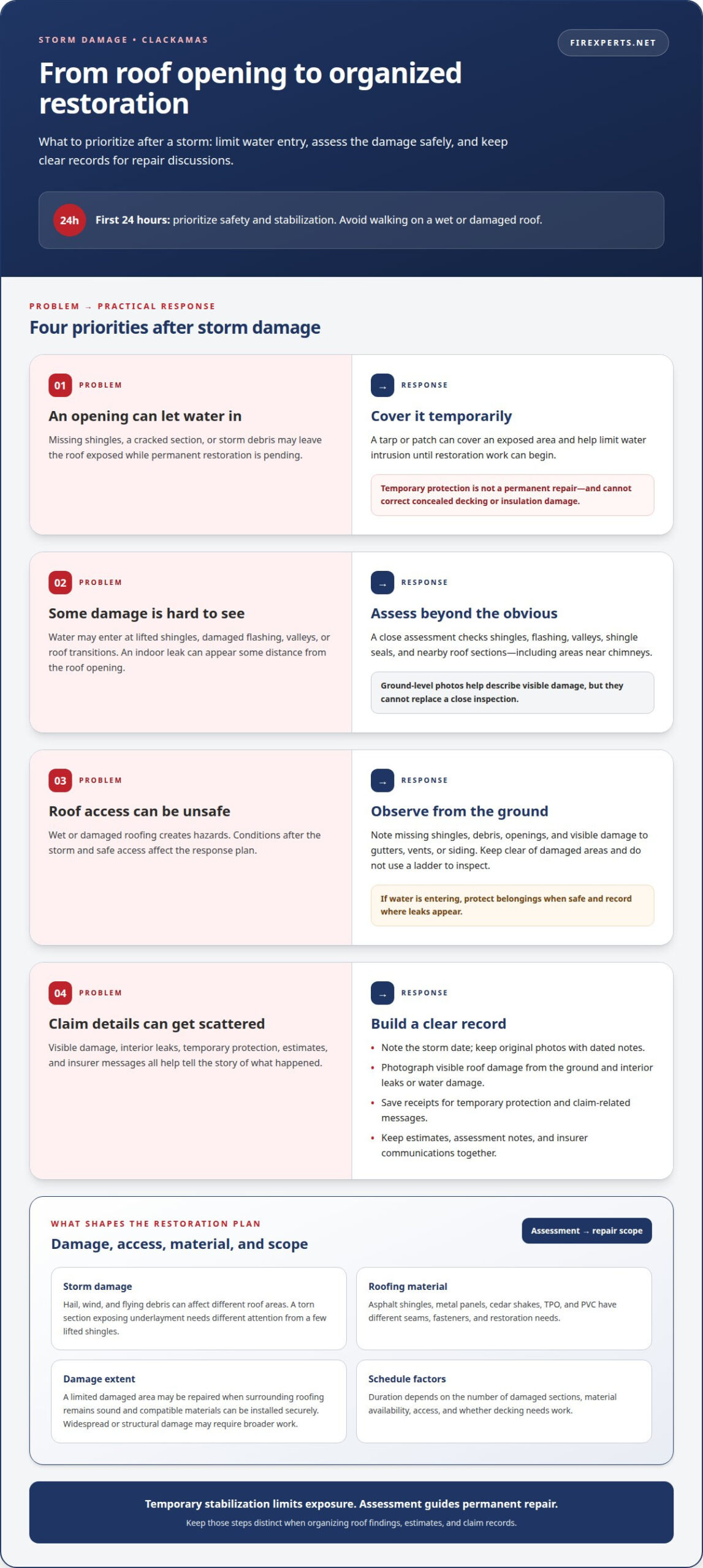
Covering an exposed roof area helps limit further water intrusion into the home. That matters when wind has removed shingles or debris has damaged the roofing surface. A tarp is temporary protection, not a permanent repair, and it can’t correct concealed damage to decking or insulation. An assessment considers the opening and nearby roof sections, helping identify what needs repair after stabilization. This separates immediate leak control from the work needed to restore the roof.
Preventing Further Roof Damage
After a storm, inspect visible areas from the ground without using a ladder. Note missing shingles, roof debris, or an opening, and keep clear of damaged areas. If water is entering the home, protect belongings when safe and record where leaks appear. A professional assessment should examine flashing, valleys, and broken shingle seals, including damage hidden from ground view. During the first 24 hours after a storm, prioritize safety and stabilization. Avoid walking on a wet or damaged roof; document visible damage and arrange an assessment to guide the next repair steps.
How Quickly Can You Get to My Roof After a Storm?
The response plan depends on the damage, safe roof access, and conditions after the storm. A torn section exposing underlayment needs different attention from a few lifted shingles. Hail, wind, and flying debris can affect multiple roof areas, so the assessment also considers the extent of the damage. Clear descriptions of visible damage and active leaks help establish priorities for a careful inspection.
Hail can crack shingles or tiles, loosen their edges, and strip protective granules. From the ground, also look for damage to gutters, vents, or siding. Wind can pull shingles away, bend flashing, or expose underlayment. Missing shingles need attention, but lifted edges and damaged flashing can also allow water beneath the roof covering. An indoor leak may appear some distance from the roof opening.
Roofing material affects the restoration approach. Asphalt shingles may need individual replacement when damage is limited; broader damage can involve nearby sections or decking. Metal panels, cedar shakes, TPO, and PVC have different seams, fasteners, and restoration needs. In Clackamas, changing temperatures can stress shingles and sealant over time. Material type, roof condition, and damage location help determine the scope of work.
Restoration may focus on a small damaged area when surrounding roofing remains sound and compatible materials can be installed securely. Broader work may be needed when damage is widespread or affects the roof structure. The duration depends on the number of damaged sections, material availability, access, and whether decking needs work. Replacing a few shingles differs from addressing multiple damaged areas, so the scope guides the schedule.
A safe assessment identifies active leaks and exposed areas, then checks shingles, flashing, and roof transitions. Ground-level photos can help describe visible damage, but they can’t replace a close inspection. To understand restoration steps after storm damage, review next steps after roof damage.
Insurance claim documentation and adjuster coordination
A clear claim file connects visible storm damage with repair needs. In Oregon, homeowners’ policies usually cover roof repairs caused by wind, hail, and fallen debris.
Insurance Claim Documentation
Create a consistent record: note the storm date, photograph visible roof damage from the ground, and save images of interior leaks or water damage. Include close views of missing shingles, damaged flashing, and affected rooms when visible. Keep receipts for temporary protective measures and save claim-related messages. These records help show what happened and how the problem developed.
Keep original photos with dated notes. A picture of a ceiling stain can document interior effects, while an exterior image may show the damaged roof area. Avoid altering images or treating a ground-level view as proof of concealed damage. A useful record is clear, organized, and tied to specific observations rather than assumptions.
Estimates and Adjuster Coordination
A restoration estimate should describe observed damage, proposed work, and the materials involved. It can help an adjuster compare roof findings with the reported storm event. If an assessment uncovers damage that was not initially visible, document the finding and share it through the claim process. Keep estimates, assessment notes, and insurer communications together.
For a Clackamas roof, repair cost depends on damage location, storm type, roofing material, and scope. The price is provided after a quote request. These same details shape the estimate, so separate temporary stabilization from permanent repair work when reviewing the document.
Contractor Credentials and Insurance
Roofing contractors that handle storm repairs in Clackamas can document damage, prepare estimates, and coordinate information with insurers. Licensing, insurance, and relevant certifications are useful credentials to review for work involving roof access and structural repairs. Check that documents identify the business performing the work and apply to the repair being discussed.
Ask for a written scope that connects each task to observed damage, such as replacing missing shingles or restoring flashing. This makes it easier to discuss differences between an estimate and an adjuster’s assessment without confusing roof work with unrelated restoration.
Emergency storm-damage response
After a storm in Clackamas, prioritize safety and limit further damage before planning permanent repairs. Disaster Response recommends rapid safety and stabilization measures during the first 24 hours after a storm. Start by keeping people away from damaged roof areas, fallen branches, and rooms with ceiling damage. If water is entering the interior, move belongings away from the leak when it’s safe and record what you see.
You can inspect visible roof areas from the ground without climbing a ladder. Look for missing shingles, debris, damaged gutters, or openings, and take photos from a safe distance. Don’t touch downed wires or enter areas where storm damage creates an immediate hazard. If water is spreading indoors, note the affected rooms and protect undamaged belongings from the leak, if it is safe to do so.
Next, report the storm damage to your insurer promptly. Some insurers may require reporting within days, so note when the storm happened and keep copies of claim communications. Share clear photos and describe changes such as a new ceiling stain or water entering near a window. A short written timeline helps connect the storm, visible roof damage, and interior effects without guessing about damage you can’t see.
Stabilization should address the opening letting water in, rather than conceal a larger problem. An assessment can identify whether shingles, flashing, or another roof section needs temporary protection and outline the restoration work required. If conditions prevent safe roof access, the plan must account for that before work proceeds. Record each action and any new signs of leaks as the property moves from emergency protection to restoration.
For help organizing storm-damage response and restoration, request storm restoration support.
Fire Industry Restoration Experts: Storm Restoration Services
Fire Industry Restoration Experts provides Storm Restoration Services when roof damage leads to leaks or wider property damage. The team assesses affected areas, boards up exposed openings, and manages restoration through rebuilding. If rain has damaged rooms below the roof, Water Restoration Services can address the resulting property damage.
Storm recovery can involve more than restoring roofing materials. A damage assessment helps identify affected parts of the structure and plan the work in order. The team also coordinates with insurance companies, helping keep restoration information and next steps organized.
If storm damage has disrupted your home in Clackamas, contact Fire Industry Restoration Experts to discuss assessment and restoration.
Take the Next Step Toward a Sound Roof
Once the immediate disruption settles, turn the damage record into a clear restoration plan. An organized account of what happened, which areas are affected, and what work remains can help you discuss next steps with confidence. For storm damage roof repair in Clackamas, focus on a plan that addresses the roof and resulting property damage, rather than treating visible symptoms alone.
Fire Industry Restoration Experts offers Storm Restoration Services, along with Fire Restoration Services, Smoke Restoration Services, and Water Restoration Services. If you’re ready to discuss the storm damage and the restoration work your property needs, contact Fire Industry Restoration Experts. A calm, practical conversation can help you take the next step and move your home toward recovery.
Frequently Asked Questions
Do You Do Temporary Fixes to Stop a Leak Before the Full Repair?
Yes. Temporary protection can cover an exposed roof area while permanent restoration is arranged. If water is coming through a ceiling, keep people clear of the affected spot and move belongings only when it is safe. Don’t climb onto a wet or damaged roof to apply a cover yourself. Temporary protection limits exposure but does not repair hidden damage or replace permanent roof work.
How do I document roof storm damage for an insurance claim?
Save clear photos, dated notes, and receipts related to the storm and temporary protection. For example, photograph a ceiling stain and note when you first noticed it, then keep that record with roof-damage images and insurer messages. Organize files by room or damage area so each image has context. Keep original photos unchanged and distinguish visible damage from areas that still need assessment.
How can I find a licensed and insured roofing contractor in Clackamas County?
Look for a restoration company that provides a written scope and clearly describes the damage each task addresses. Fire Industry Restoration Experts uses licensed, bonded, and insured contractors and provides Storm Restoration Services in Clackamas and the Portland, Gresham, and Clackamas area. A written scope can help you understand how the proposed work addresses storm damage and its effects before restoration proceeds.
What are the risks of delaying storm damage roof repairs?
Leaving an opening or damaged roof area exposed can allow more rain inside, turning roof damage into interior water damage. Moisture reaching insulation or ceiling materials can affect areas beyond the original leak. Wind may also lift already-loose roofing further. Keep people away from unsafe areas, document new signs of water, and arrange assessment and stabilization so the damage can be addressed.
What is the average cost of storm damage roof repair in Clackamas?
The total out-of-pocket amount homeowners pay for storm damage repair varies depending on insurance coverage and deductibles. Actual costs depend on damage location, storm type, roofing material, and repair scope.
How long does storm damage roof repair typically take?
Restoration time depends on the number of damaged sections, material availability, roof access, and whether decking needs work. Replacing a few shingles is a smaller task than restoring multiple areas or damaged decking.