
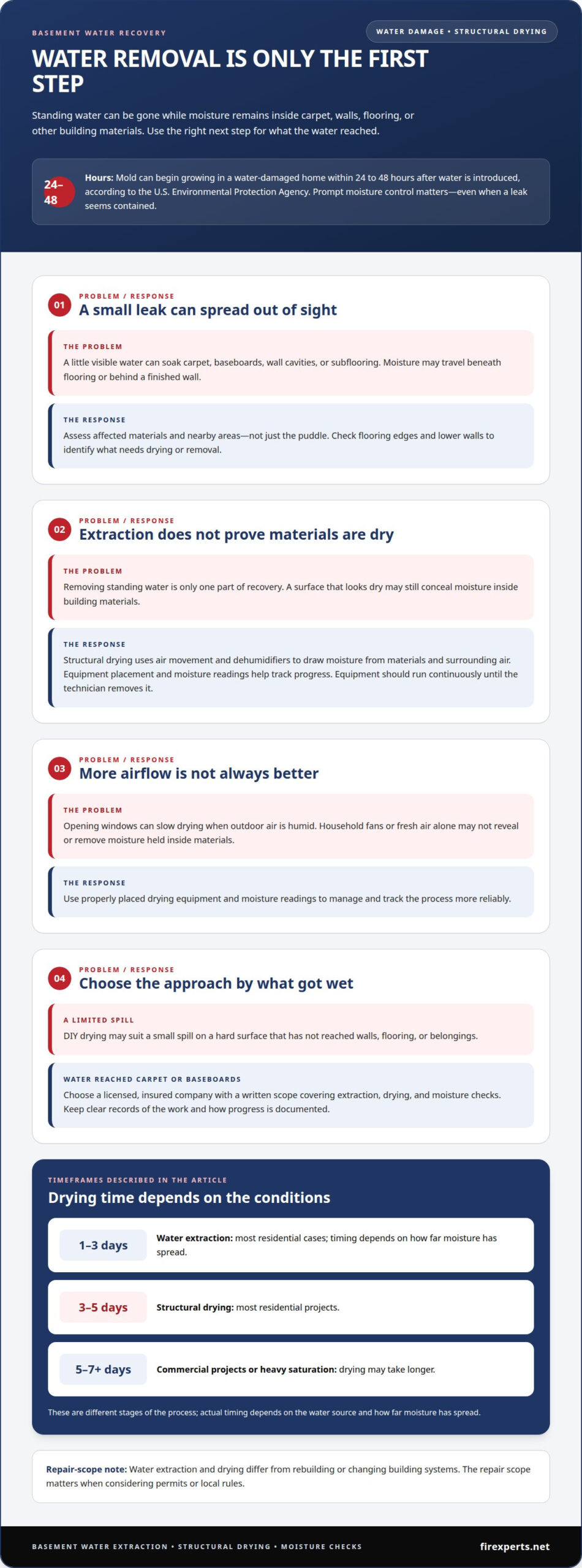
Mold can begin growing in a water-damaged home within 24 to 48 hours after water is introduced, according to the U.S. Environmental Protection Agency. Basement water extraction in Gresham removes standing water, but wet building materials may also need structural drying. Most residential structural drying projects take 3-5 days. The right response depends on the water source and how far moisture has spread.
A flooded basement in Gresham can leave you facing several decisions at once. What needs attention first, how should you document damaged property, and what happens after the water is removed? This guide explains practical next steps for basement water extraction, water intrusion in crawl spaces, insurance records, and the transition from cleanup to repairs. Knowing how the process works can help you keep track of the details and make informed decisions about your home’s recovery.
Key Takeaways
- Even a small leak can leave moisture inside floors, walls, or other building materials, so extraction alone may not be enough.
- Learn what can help limit mold risk and why damp areas need prompt attention and thorough drying.
- Clear photos, damage notes, and records of restoration work can help organize information for an insurance claim.
- Trace basement or crawl-space water to its likely entry point, such as a sump pit, seepage, or plumbing issue, to guide the next steps.
Is structural drying needed after a small leak?
Sometimes. A small leak can soak carpet, baseboards, wall cavities, or subflooring even when only a little water is visible. In Gresham, most residential structural drying projects take 3-5 days. Water extraction in most residential cases takes one to three days, depending on how far moisture has spread.
Basement water extraction starts with removing standing water. The affected materials and nearby areas then need assessment, including flooring edges and lower walls, where moisture can spread out of sight. For example, a damp patch beside a basement pipe may extend under flooring or behind a finished wall. Identifying the affected areas helps determine what needs drying or removal.
Structural drying uses air movement and dehumidifiers to draw moisture from building materials and surrounding air. Equipment placement and readings help track progress; a surface that looks dry may conceal moisture inside. Professional drying equipment should keep running continuously until the technician removes it. Commercial projects or heavy saturation may take 5-7+ days.
Opening windows isn’t always helpful. When outside air is humid, ventilation can slow drying. Moisture readings and properly placed drying equipment provide a more controlled way to track progress than household fans or fresh air alone.
DIY drying may suit a small spill on a hard surface that hasn’t reached walls, flooring, or belongings. For a leak that wets carpet or baseboards, choose a licensed, insured company with a written scope covering extraction, drying, and moisture checks. Clear records of the work also help explain what was done.
A basement flood alone doesn’t determine whether permits are relevant. The repair scope matters: water extraction and drying differ from rebuilding or changing building systems. Describe the planned work before drawing conclusions about permits or local rules.
Water-damage restoration companies serving Gresham provide basement extraction and structural drying. To compare the work proposed, focus on the affected materials, moisture readings, equipment plan, and how progress will be documented.
After water damage, how long does it take for mold to grow?
Mold growth in a water-damaged home can begin within 24 to 48 hours after water is introduced, according to the U.S. Environmental Protection Agency. That window makes early moisture control important, even when a basement leak seems contained. Water behind drywall, beneath flooring, or around a water heater can remain after visible puddles are gone.
Before restoration begins, note where the water appeared and when you found it. Photograph the affected room, wet belongings, and any visible leak source. If you can safely stop the source, such as a leaking appliance connection, do so. Keep people away from wet areas where electrical equipment may be affected, and don’t disturb materials showing visible mold.
The first step is assessing the water source, affected materials, and areas where moisture may have spread. Water Restoration includes removing standing water and addressing moisture retained in building materials. For example, water around a water heater may travel under nearby flooring or soak the bottom edge of drywall. An assessment can help identify damage beyond the visible water.
Emergency response and dispatch refer to arranging assessment and extraction after water intrusion. Timing depends on the situation and the response schedule available. A 24/7 emergency response claim describes round-the-clock availability, but it should not be assumed for every restoration provider. Promptly sharing the water source, affected rooms, and whether the leak continues helps the responding team understand the immediate scope.
Standing water and mold raise concerns about exposure in affected rooms. The EPA’s 24 to 48-hour window is a reason to address moisture promptly, rather than waiting for visible growth. If the basement remains damp, avoid disturbing affected materials while the source and drying needs are assessed. A focused water damage restoration response can help move the process from water removal toward drying and damage assessment.
Insurance documentation and direct billing
Homeowners insurance coverage for basement water extraction in Oregon depends on the policy and the cause of the water. A plumbing leak, seepage, or water entering from outside may be treated differently under policy terms. Review the sections on water damage, exclusions, deductibles, and claim reporting to understand what applies to your situation.
Keep a simple event log as the claim develops. Record when you discovered the water, when the source stopped, and when restoration work began. Note which rooms were affected and list damaged belongings by room. For example, separate basement storage items from damaged flooring or wall materials. A clear timeline can make later conversations easier to follow.
Save estimates, invoices, work descriptions, and messages with the insurer in one organized file. If the scope changes during cleanup, keep the updated description alongside the earlier one. This helps distinguish the initial damage assessment from later work, such as removing damaged materials or repairing an affected area. Keep copies of submitted records for your own reference.
Direct billing generally means a restoration provider sends charges to an insurer instead of collecting the full amount directly from the homeowner at the outset. It doesn’t determine whether the policy covers the work or remove your responsibilities under the policy. Clarify how billing will be handled, what the insurer has approved, and whether a deductible or uncovered work remains your responsibility.
Before restoration work moves forward, make sure you understand the proposed scope and how it will be recorded. Ask for written estimates and itemized invoices that distinguish water removal, drying, and repairs. If the work involves several rooms, clear room-by-room descriptions can help connect each task to the damage. The restoration team can coordinate with insurance companies, while the insurer makes coverage decisions under the policy.
Basement and crawl-space water intrusion
Water can enter a basement through plumbing leaks, seepage, or a sump pump that isn’t removing water as it accumulates. A sump pump is often placed in a basement or crawl space to remove water from a sump pit. If standing water remains near the pit, both the source and the pump’s operation need attention.
Trace the visible water before cleanup changes the scene. Note whether moisture appears beside an exterior wall, beneath a window, around a floor drain, or near a washing machine. Water appearing after rain may point to outside entry, while a wet patch beside a water heater may indicate a plumbing source. These clues help focus an inspection.
In a crawl space, check for damp soil, wet insulation, and moisture on floor framing. In a basement, inspect floors, wall edges, stored items, and the foundation for visible water or staining. Water can spread beyond the first puddle, so photograph affected areas before moving belongings or beginning cleanup.
Keep people away from standing water if electrical equipment, outlets, or cords are nearby. Don’t enter a flooded crawl space to inspect it. Once access is safe, note where water levels are highest and whether they change after the source is stopped. This record can help explain the sequence of events during an insurance claim.
Effective water removal addresses both pooled water and moisture left in affected materials. A shallow puddle on concrete differs from water that has soaked insulation, flooring, or framing. An assessment should identify the affected materials and guide extraction and drying, rather than relying only on the visible water line.
If water is entering from outside or returning after removal, the source still needs attention alongside cleanup. For standing water or soaked building materials, request water intrusion restoration help to assess the affected areas and plan the next steps.
Fire Industry Restoration Experts
Fire Industry Restoration Experts helps homeowners manage water damage from initial assessment through restoration. When a basement leak has spread beyond standing water, the team can assess affected materials, provide Water Restoration and Water Remediation, and document damage for insurance discussions.
This support can help organize decisions about cleanup, damaged building materials, and repairs. Fire Industry Restoration Experts also coordinates with insurance companies and keeps restoration records organized as the work moves forward. Every water intrusion is different, so the next steps depend on the source and the areas affected.
If water has entered your basement or crawl space in Gresham, contact Fire Industry Restoration Experts to discuss the damage and restoration process.
Take the next step toward a dry, stable basement
Once the water is removed, the next step is moving from immediate cleanup to a well-documented recovery. Keep your photos, notes, and restoration records together. A clear timeline of the water intrusion and work completed can make conversations about the property and an insurance claim more organized.
For basement water extraction in Gresham, a steady plan should address the source, affected materials, and what needs attention next. Fire Industry Restoration Experts provides Water Restoration Services, along with Fire Restoration Services and Smoke Restoration Services. The team can assess damage, handle restoration work, and coordinate with insurance companies as the property moves toward repair.
If you’re ready to discuss what happened in your basement, contact Fire Industry Restoration Experts. You can take the next step with a clearer understanding of the damage and the work ahead.
Frequently Asked Questions
After water removal, how long does it take to dry out a home?
Most residential structural drying projects in Gresham take 3-5 days. The time depends on how much water entered, which materials became wet, and whether moisture reached concealed spaces. A damp carpet over a dry concrete floor differs from water trapped beneath flooring or inside a wall. Drying progress is assessed by checking affected materials, not simply by looking for puddles.
How fast will a crew reach my Gresham address?
A crew’s arrival depends on the current schedule, the job details, and access to the property. When arranging a response, share your Gresham address, the water source, whether it is still active, and which areas are affected. Mention access limits such as a locked gate or flooded stairwell. These details help the team understand the situation and plan the visit.
Once everything is dry, who fixes the drywall, paint, and flooring?
F.I.R.E. Restoration handles restoration work that can include demolition and rebuilding after property damage. The repair plan depends on which materials were affected and what needs replacement. For example, damaged drywall and soaked flooring may require different repair steps. The team also coordinates with insurance companies, helping organize the transition from damage assessment to rebuilding.
How quickly should water be removed from a flooded basement?
Once the water source is controlled and the area is safe to access, remove standing water promptly. Water left on basement floors can continue soaking nearby materials and belongings. If water is near electrical equipment, don’t enter the flooded area. Share where the water came from and whether the level is still changing, so the response accounts for ongoing intrusion.
What steps are involved in basement water extraction and drying?
The work starts by identifying the water source and assessing affected rooms and materials. Standing water is then extracted, and wet areas are evaluated for moisture beyond visible surfaces. Drying equipment is positioned to address damp materials, with progress checked during the process. The repair scope follows the assessment, since damaged flooring, walls, or stored items may need separate attention.
How long does basement water extraction and structural drying take?
Water extraction in most residential cases takes one to three days, while most residential structural drying projects in Gresham take 3-5 days. These are separate stages, and project conditions affect how long each takes. Heavy saturation or commercial work may require 5-7+ days of structural drying. The amount of water and the materials it reached shape the work involved.