
Water heater leak restoration in Clackamas starts with stopping the leak, extracting water, and drying affected materials before damaged areas are rebuilt. Structural drying typically takes 3 to 5 days. If it’s safe, shut off the water at its source while you keep clear of standing water and nearby electrical hazards.
Finding water spreading from a water heater is unsettling, especially when it reaches rooms beyond the utility area. Drying is only part of the job: you also need to know whether damaged floors, walls, and other parts of your home can be restored.
This guide explains how emergency steps, water extraction, structural drying, insurance documentation, and rebuilding fit together. You’ll learn what to do first, why hidden moisture matters, and how a water heater leak can affect multiple rooms. A clear sequence can make a difficult situation easier to manage.
Key Takeaways
- Ask your insurer how your policy treats sudden, accidental water damage and what documentation is needed for a claim.
- Water can travel beyond the visible puddle, so assessment should include affected floors, walls, and nearby rooms.
- Restoration can extend beyond drying: damaged building materials may need removal and the structure may need rebuilding.
- A water heater leak can affect multiple spaces, such as a kitchen and garage, making it important to assess the full area before repairs begin.
Leaking water heater emergency repair
If a water heater starts leaking, shut off the incoming water at its valve if it’s safe. This can limit further damage while you arrange plumbing help. If you smell gas, leave the building, avoid switches, phones, and flames inside, and call the gas utility from outdoors. Don’t enter standing water near electrical outlets.
Note where the water has spread, such as into a hallway, kitchen, or garage. Keep people away from affected areas, and move belongings only if it’s safe. Take clear photos of visible damage for your insurance claim, but don’t touch wet wiring or electrical equipment.
A plumber must identify the source, such as a connection, valve, tank, or another component, before deciding on a repair. Whether the issue can be addressed promptly depends on the diagnosis, appointment availability, and whether parts are needed.
Clackamas County requires a plumbing permit and inspection for water-heater replacement. Oregon Plumbing Specialty Code Section 507.2 requires water heaters to be anchored or strapped against seismic movement. Include these requirements in replacement planning, rather than treating the work as a simple tank swap.
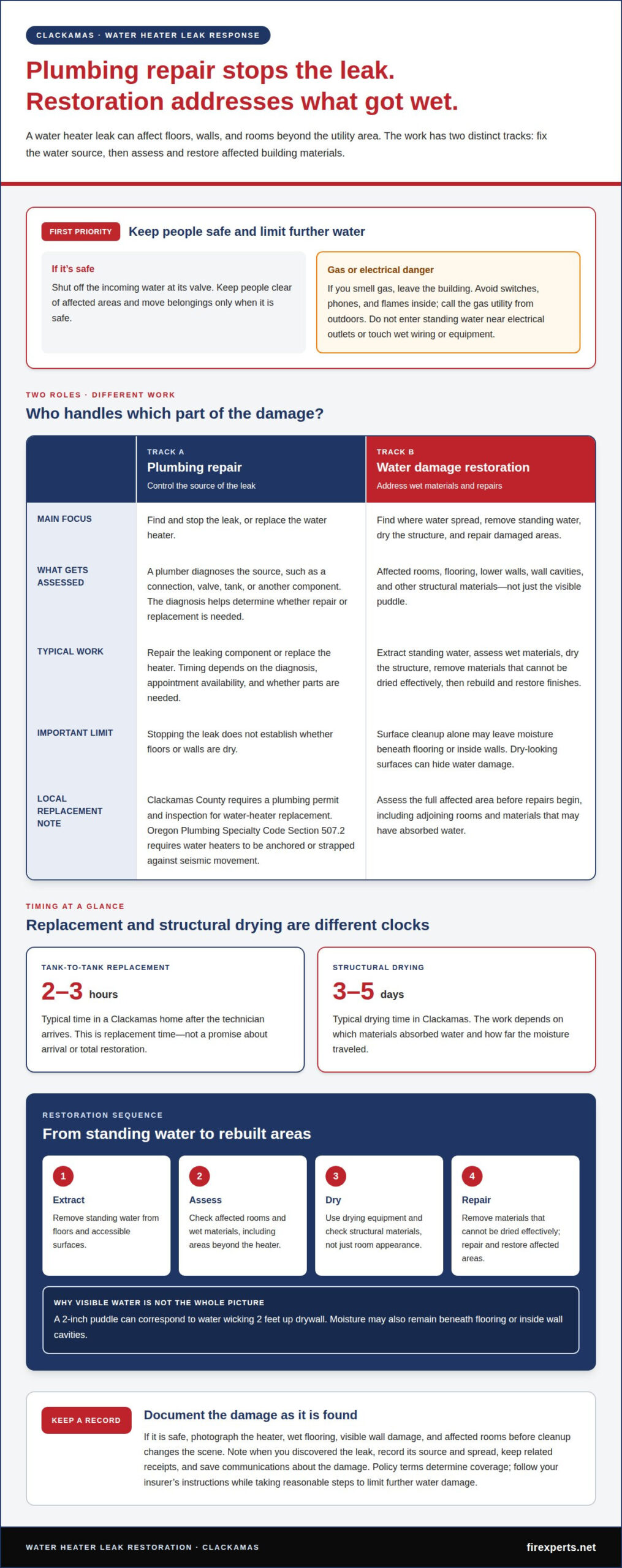
Plumbing repair and restoration address different parts of the problem. A plumber works to stop the leak or replace the heater; restoration workers assess wet building materials, extract water, and dry the structure. If water has reached flooring or wall cavities, surface cleanup alone may leave hidden moisture behind.
For insurance documentation, record the leak’s source, affected rooms, and visible damage before cleanup changes the scene, if it’s safe. Keep receipts for immediate protective purchases and save communications about the damage. Policy terms determine coverage, so describe what happened accurately and document the damage clearly.
A standard tank-to-tank replacement in a Clackamas home typically takes 2-3 hours after the technician arrives. That is replacement time, not a promise about arrival or total restoration. Once the leak is controlled, a separate assessment can establish whether extraction and structural drying are needed.
Does insurance usually cover the cost of water damage restoration?
Most homeowners and commercial policies cover sudden, accidental water damage, including a water heater leak. Coverage depends on policy terms and the documented cause. Contact your insurer promptly, describe what happened, and photograph affected rooms before cleanup changes the scene.
Build a clear record as restoration begins. Photograph the heater, wet flooring, and visible wall damage. Note when you discovered the leak and keep receipts for related expenses. An itemized account connects the leak to damaged materials and gives the insurer useful details for reviewing the claim. Follow the insurer’s instructions while taking reasonable steps to limit further water damage.
Repair or replacement depends on the leak’s source, the heater’s condition, and whether the tank itself has failed. Homeowners are advised to consider replacing a water heater over 10 years old rather than repairing it. Replacement cost depends on the heater, installation changes, access, and required plumbing or electrical work; the price is provided after a quote request.
Drying and removal address separate parts of water damage restoration. Crews extract standing water, then assess flooring, wall cavities, and other structural materials. A 2-inch puddle can correspond to water wicking 2 feet up drywall, so a dry-looking surface may hide moisture. Structural drying in Clackamas typically takes 3 to 5 days. Wet materials that cannot be dried effectively may need removal before rebuilding.
A drain pan beneath a water heater can collect water from a leak and direct it toward a drain, helping limit its spread. It doesn’t replace prompt leak control or assessment of affected rooms. Clackamas homeowners can use water damage restoration for extraction, structural drying, removal of damaged materials, and rebuilding. A coordinated process can keep the response organized from assessment through repairs.
Water extraction and structural drying
After the leak is controlled, the restoration sequence is to extract standing water, assess wet materials, dry the structure, and repair damaged areas. With water heater leak restoration in Clackamas, the visible spill is only part of the cleanup: moisture may remain beneath flooring or inside walls.
Water Extraction
Extraction removes standing water from floors and other accessible surfaces before drying equipment is set up. Workers assess affected rooms, including areas beyond the water heater, and note wet or stained materials. For example, a leak near a laundry room may also affect an adjoining hallway or the ceiling below.
Fast assessment matters because sill plates and framing can be critically wet within the first hour of water exposure. Homeowners should keep clear of wet areas near electrical outlets and avoid walking through standing water. Household fans and a wet-vac alone may leave moisture in subfloors and wall cavities, so surface cleanup is not proof that the structure is dry.
Drying and Repair Steps
Once extraction is complete, drying equipment circulates air and removes moisture from the affected space. Structural drying in Clackamas typically takes 3 to 5 days. The exact work depends on which materials absorbed water and how far it traveled. Drying may include checking flooring, lower wall sections, and structural materials rather than relying on how the room looks.
After drying, assess which materials can be repaired and which need removal. Water-damaged drywall or flooring may need to come out if it cannot be dried and restored; sound materials can remain. Then repair opened areas and restore finishes, rather than covering damp materials. In Happy Valley and throughout Clackamas County, a restoration plan can track affected rooms and completed drying steps.
Before closing walls or replacing flooring, make sure moisture checks include concealed areas. This connects extraction with structural drying and helps ensure repairs address the full path of the leak, not just the visible mark.
Customer experiences with water leak remediation
When choosing a restoration company in Clackamas, look for a clear process that covers assessment, water removal, drying, and rebuilding. Ask how the team documents affected rooms and concealed moisture, explains next steps, and coordinates with your insurer. These details matter more than general claims about the service.
One Clackamas customer reported that a water heater leak damaged both a kitchen and a garage. That example shows why the first visible puddle may not describe the full job. Ask whether the assessment records each affected room, including a basement if water traveled below the heater. A useful account explains what was wet, what was removed, and how the structure was restored.
When reviewing customer feedback, look for details about communication, documented damage, and the transition from water removal to repairs. A mention of emergency service alone doesn’t explain the work completed. Specific examples of how a team handled standing water or explained repairs provide more useful context.
For certifications, check that the credential names its issuing organization and applies to the work being discussed. “Certified” without that context tells you little about restoration qualifications. Warranty terms deserve the same close reading: understand what work is covered, what remedy applies, and which conditions or materials are excluded. Written terms make expectations clearer than a broad verbal assurance.
Homes around Portland, Gresham, and Clackamas have different layouts and potential paths for water to travel, so compare restoration plans by their scope rather than expecting identical outcomes. Check whether the plan addresses drying and structural repairs as well as cleanup. This helps distinguish water removal from a process that continues through rebuilding.
For a leak that has spread into multiple rooms, discuss water damage restoration and the steps from assessment through rebuilding. A clear account of the affected areas helps establish what needs attention first.
Fire Industry Restoration Experts: Fire Restoration Services
Fire Industry Restoration Experts helps Clackamas property owners move from water damage assessment through restoration and rebuilding. If a water heater leak has affected floors, walls, or other parts of the structure, the company’s Water Restoration Services and Water Remediation Services address damage beyond the plumbing repair.
The work can include damage assessment, water extraction, drying, removal of damaged materials, and rebuilding. Fire Industry Restoration Experts also coordinates with insurance companies, keeping restoration steps connected as the property is repaired. This can help when a leak reaches multiple rooms or causes damage that needs more than surface cleanup.
When you’re ready to discuss restoration for your home, contact Fire Industry Restoration Experts or visit firexperts.net.
Move from disruption toward a sound repair
Once immediate danger has passed, decide how damaged areas should be restored, not just how they look today. A careful plan provides a clearer path through material repairs, rebuilding, and insurance discussions. For water heater leak restoration in Clackamas, keep photos and damage notes together so decisions reflect what your home actually needs.
Fire Industry Restoration Experts can carry the restoration forward through assessment, demolition, rebuilding, and coordination with insurance companies. Its Fire & Smoke Restoration services address fire and smoke damage, while Water Restoration Services support recovery after a leak. Each service addresses a different type of property damage, with work focused on restoring affected areas.
When you’re ready to talk through the damage and a practical next step, contact Fire Industry Restoration Experts. You can move ahead one clear decision at a time.
Frequently Asked Questions
Do you handle the rebuilding part, or just the drying?
Fire Industry Restoration Experts handles rebuilding as part of restoration, not just drying. After assessing water-damaged materials and removing them where needed, the team can move on to structural repairs and rebuilding. If a leak damages flooring and part of a wall, for example, the work can continue beyond moisture control to restore those areas. The company also coordinates with insurance companies during the process.
How fast can a restoration crew reach my home in Clackamas?
A restoration technician may reach a Clackamas home in about an hour, though actual arrival depends on dispatch conditions and availability. While waiting, keep clear of standing water near electrical outlets and avoid entering unsafe areas. If you smell gas, leave the building and call the gas utility from outside. These steps help reduce immediate risks while you arrange a response.
How long will it take for my property in Clackamas to be completely dry?
The drying timeline depends on how far the moisture traveled and which materials absorbed it, such as subflooring, framing, or drywall. A room that looks dry may still hold moisture behind a baseboard or beneath flooring. Have affected areas checked before repairs conceal them, especially if the leak spread beyond one room.
Is it okay to just use house fans and a wet-vac for cleanup?
Household fans and a wet-vac can help remove surface water, but they may not dry moisture inside subfloors or wall cavities. A dry hallway floor, for example, can conceal damp material underneath. Keep electrical equipment away from wet areas, and don’t treat a clean-looking surface as proof that the structure is dry. A broader moisture assessment can identify where additional drying is needed.
What should I do immediately after a water heater leak in Clackamas?
If it’s safe, shut off the water at its source and keep people away from standing water, especially near outlets or appliances. If you smell gas, leave the building without operating switches or using a phone inside, then call the gas utility from outdoors. Photograph visible damage and note affected rooms, but don’t enter an unsafe space to document it.
Does homeowners insurance cover water heater leaks and resulting water damage in Oregon?
Some homeowners and commercial policies cover sudden, accidental water damage, including water heater leaks, but policy terms determine what applies. A sudden tank failure may be treated differently from damage associated with an ongoing leak or maintenance issue. Describe the cause accurately, keep photos and related receipts, and share the timeline with your insurer. Coverage depends on the specific policy and circumstances.