
A refrigerator water line leak can spread beneath flooring or behind cabinets before you notice the damage. For refrigerator water line leak cleanup in Portland, shut off the water supply and start cleanup promptly. Puddles, damp flooring, or water behind the refrigerator can all signal a leak.
Finding water where it shouldn’t be is unsettling, especially when the source is hidden. A musty smell, spreading discoloration, or flooring that feels cool or looks raised can indicate moisture has traveled beyond the visible spill.
This guide covers what to look for, what to do first, and how to recognize when water may have reached materials that need more than surface cleanup. It also explains why thorough drying and dehumidification matter when moisture has spread beyond the spill.
Key Takeaways
- Shut off the refrigerator’s water supply and start cleanup promptly to limit how far moisture can spread.
- Photograph the leak, its path, and affected materials before moving items or beginning repairs.
- Look beyond visible puddles: damp or raised flooring and musty odors can point to moisture hidden underneath or behind surfaces.
- Learn how inspection, airflow, and dehumidification help determine whether the area is drying fully or needs deeper restoration.
How quickly should appliance leaks be cleaned up?
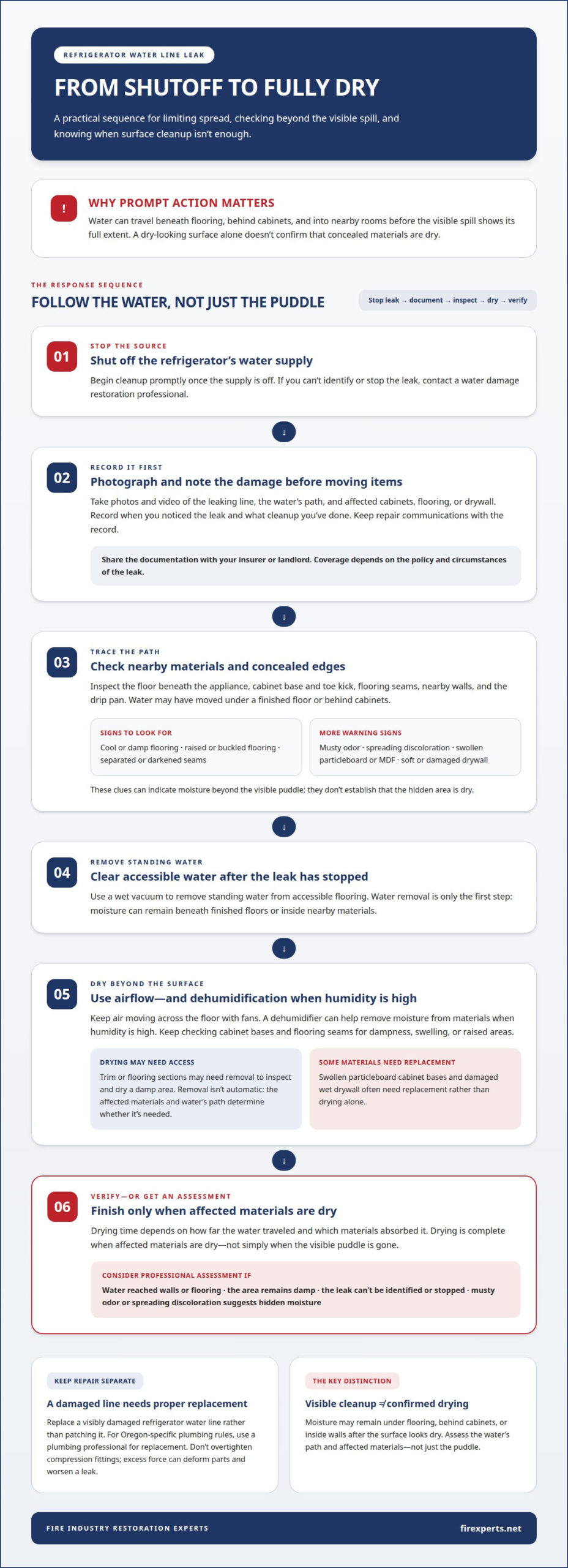
Once you’ve shut off the refrigerator’s water supply, begin cleanup promptly. Water can spread beneath flooring, behind cabinets, and into nearby rooms before the visible spill reveals its full extent.
Damage to Cabinets, Floors, and Drywall
Check the cabinet base, toe kick, flooring seams, and drywall near the refrigerator. Swollen particleboard or MDF, buckled laminate, and soft or damaged drywall can indicate materials that may need replacement. Check the subfloor, too: a cool, damp floor or separated flooring seams can point to water beneath the finished surface. These signs help establish whether damage extends beyond the spill.
Hidden Moisture and Secondary Damage
Water can travel into wall cavities and under floors, beyond the reach of a surface towel. A musty odor or spreading discoloration can indicate trapped moisture. Damp building materials can contribute to mold or mildew. Keep air moving across the floor with fans, and use a dehumidifier when humidity is high. If you can’t confidently dry the area, have a professional assess the moisture.
Replace a refrigerator water line that is visibly damaged rather than patching it. For Oregon-specific plumbing rules, separate line repair from water cleanup and use a plumbing professional to handle replacement. Don’t overtighten compression fittings; excess force can deform parts and worsen a leak.
Document the damage before moving items or starting repairs. Take photos and video of the leaking line, the water’s path, and affected cabinets, flooring, or drywall. Record when you noticed the leak and what cleanup you’ve done. Share the record with your insurer or landlord, and keep repair-related communications with your other documentation.
Contact a water damage restoration professional if water has reached walls or flooring, the area remains damp, or you can’t identify or stop the leak. A musty smell or spreading discoloration is another reason to seek help, especially if moisture may remain hidden.
Homeowners insurance coverage depends on the policy and circumstances of the leak. Document the damage and contact your insurer to understand how your policy applies.
Cleanup and drying time depend on how far the water traveled and which materials absorbed it. Drying is complete when affected materials are dry, not just when the visible puddle is gone.
Drying and dehumidification to prevent mold and mildew
Drying needs to address moisture beyond the visible spill, not just the floor’s surface. The right approach depends on where the water traveled and which materials absorbed it.
Drying Behind Cabinets and Inside Walls
Water from an ice maker line can travel behind cabinets or into wall cavities. A musty odor, spreading discoloration, or dampness near the refrigerator can indicate hidden moisture. Drying these spaces may require access beyond open surfaces, followed by airflow and dehumidification. Stop the plumbing leak as well, or wet materials may continue to be affected.
Removing Trim or Flooring for Drying Access
Trim or sections of flooring may need to be removed if they block access to damp areas. This can expose the edge of a wet subfloor or the space behind a baseboard for closer inspection and drying. Removal isn’t automatic: the affected materials and the water’s path determine whether it’s needed. Buckled or separated laminate can indicate water beneath the finished floor.
Drying Wet Floors, Subfloors, and Cabinets
To dry wet subfloors and cabinets, first stop the leak and remove standing water. Then move air across the floor with fans. A dehumidifier can help remove moisture from materials when humidity is high. Check cabinet bases and flooring seams for dampness, swelling, or raised areas. Swollen particleboard cabinet bases and damaged wet drywall often need replacement rather than drying alone.
Structural drying focuses on affected building materials, including the floor layers beneath the refrigerator and spaces concealed by cabinets. Keep checking the damp area, since a dry-looking surface doesn’t establish that the subfloor or wall cavity has dried. If moisture has traveled under flooring or into walls, or the area can’t be confidently dried, water restoration support can help address the damage and drying needs.
Is an appliance leak considered water damage?
Yes. Water escaping from a refrigerator line can damage flooring, cabinets, and other building materials. For refrigerator water line leak cleanup in Portland, an assessment can help distinguish a surface spill from moisture that has reached concealed areas.
Moisture Detection and Leak Assessment
Start by locating the leak, then trace the water’s path from the refrigerator connection. Check the floor beneath the appliance, cabinet edges, nearby walls, and the drip pan, where water can keep the area damp. A cool floor, raised flooring, darkened seams, or musty odor can indicate moisture beyond the visible puddle. A local assessment can identify which surfaces need closer inspection or drying.
Water Removal After an Appliance Leak
After the leak has stopped, use a wet vacuum to remove standing water from accessible flooring. Water removal is only the first step: moisture can remain beneath finished floors or inside nearby materials. Assess the affected surfaces and the water’s path rather than assuming the visible puddle shows the full extent. The same inspection approach applies to leaks from appliances such as water heaters.
Once the leak has stopped, check the refrigerator hose and connections for wear, cracks, or looseness. Plastic water lines can become brittle and crack over time. Route a replacement line gently behind the refrigerator, without stretching it tight, and periodically pull the appliance forward slightly to check for abrasion and damp flooring. Keeping appliance drain lines clear also helps prevent overflows.
Portland’s Home Water Leak Repair Program has specific eligibility rules. Applicants must own and live in a single-family home, have an active City of Portland drinking water account, and be responsible for its sewer, stormwater, and water bill. They must also enroll in the City’s financial assistance program before approval. An application usually takes about 15 minutes; the program doesn’t reimburse repairs made outside it and doesn’t cover sewer-related leaks. It prioritizes the largest leaks or households without water because of a leak.
For refrigerator water line leak cleanup in Portland, assess damage to building materials separately from the leak source. This helps determine whether the next step is line replacement, water removal, or drying affected materials.
Emergency leak cleanup in Portland
For refrigerator water line leak cleanup in Portland, first stop the water flow. Turn the refrigerator’s shutoff valve clockwise until it stops, then dispense water at the door to relieve pressure and check whether the flow has stopped. Don’t begin cleanup while the line is still leaking.
Consider electrical safety before moving the appliance. Unplug it only if you can reach the plug without standing in water. If the plug or outlet is wet, turn off the circuit at the breaker first. Keep people away from wet electrical connections while making the area safe.
After stopping the leak, document the kitchen before moving belongings or starting repairs. Photograph the line, visible water, and affected cabinets or flooring. Note when you found the leak and which areas appear wet. These details can help you explain what happened to your landlord or insurer.
Thorough cleanup looks beyond the visible puddle. Water can spread beneath flooring, behind cabinets, inside walls, or into nearby rooms. Check floor seams and cabinet edges for dampness or discoloration. If moisture has reached concealed areas, surface cleanup alone won’t address it. For refrigerator water line leak cleanup in Portland, persistent musty odors or damp flooring may call for a closer assessment.
Get professional restoration help if water has traveled under flooring or into walls, you can’t confidently dry the affected area, or the leak source remains unidentified or uncontrolled. Replace a visibly damaged line rather than patching it. Avoid overtightening compression fittings, which can deform parts and worsen the leak.
If water has affected building materials or you need help assessing the damage, request water damage cleanup help. Describe where the leak occurred, whether the water is shut off, and which surfaces are wet.
Fire Industry Restoration Experts: Fire Restoration Services
Fire Industry Restoration Experts provides Water Restoration Services for refrigerator leaks that have affected floors, cabinets, walls, or other building materials. Once the leak is controlled, the team can assess affected areas and handle restoration, cleanup, and repairs.
Turn to the team when water has spread beyond the visible spill, moisture remains under flooring, or damaged materials need attention. Water Remediation Services can address water-affected areas as part of recovery. The next step depends on the water’s path and the materials it reached, so share what you observed with the team.
For help with water damage from a refrigerator leak, contact Fire Industry Restoration Experts or visit firexperts.net.
Take the Next Step Toward a Dry, Sound Home
A refrigerator leak can leave questions even after the water is gone: which materials were affected, what needs attention, and how should recovery proceed? Keep your notes and photographs together to explain what happened and what you’ve already done. A clear record can make conversations with your landlord, insurer, or restoration team more focused.
For refrigerator water line leak cleanup in Portland, match the response to the damage, not just the visible spill. If the leak affected building materials or you’re unsure whether concealed areas are dry, a restoration assessment can clarify the work ahead. Fire Industry Restoration Experts provides Water Restoration Services, along with Fire Restoration Services and Smoke Restoration Services.
When you’re ready to discuss water damage in your home, contact Fire Industry Restoration Experts. A steady next step can help you move from uncertainty toward a clear recovery plan.
Frequently Asked Questions
How do I know if my refrigerator water line is leaking?
Look for water near the refrigerator, dampness underneath it, or recurring moisture around the ice maker connection. A leak may remain hidden behind the appliance, so check the hose for cracks, abrasion, or loose connections. If you find water but can’t see its source, inspect the drip pan and nearby floor carefully. A musty smell or darkening surface can indicate moisture beyond the visible area.
Will drying equipment be required?
Drying equipment is useful when water has soaked into flooring, cabinets, or other building materials. Fans move air across exposed surfaces, while a dehumidifier helps remove moisture when indoor humidity is high. A small spill on a hard surface may require less drying than water beneath laminate or inside a wall. What matters is where the moisture traveled, not simply how large the puddle looked.
How long does water damage cleanup take after a refrigerator leak
Cleanup and drying time depend on how far the water traveled and which materials absorbed it. Drying is complete when affected materials are dry, not just when the visible puddle is gone.
Portland emergency water damage cleanup availability and response time
The cleanup provider advertises service 24 hours a day, seven days a week, with a 60-90 minute response across Portland.