
Dishwasher leak water damage in Gresham can begin beneath the appliance, where water seeps into flooring and the subfloor before a puddle appears. A small, repeated leak may also affect nearby cabinets and floors, so watch for early changes instead of waiting for obvious pooling.
A damp cabinet edge, musty smell, or swollen flooring can be unsettling, especially when the source is hidden. Water damage often follows the path moisture takes, so a visible mark may not show how far it has spread. Check around the appliance first, then look over nearby floors and cabinets.
This guide covers common dishwasher leak sources, how water can spread through floors and nearby areas, and which early signs to watch for. It also explains what to do when water is actively damaging your property, so you can take practical next steps without guessing what may be happening beneath the surface.
Key Takeaways
- Inspect the door area, water connections, and space beneath the dishwasher to narrow down where a leak may be starting.
- Look beyond the appliance’s footprint; moisture can travel under flooring and affect nearby materials before damage is obvious.
- Notice changes such as soft or raised flooring, discoloration, and musty odors, then compare them with the surrounding area.
- If water is actively damaging your home, focus on stopping the leak and limiting further spread before assessing the affected areas.
Common dishwasher leak sources
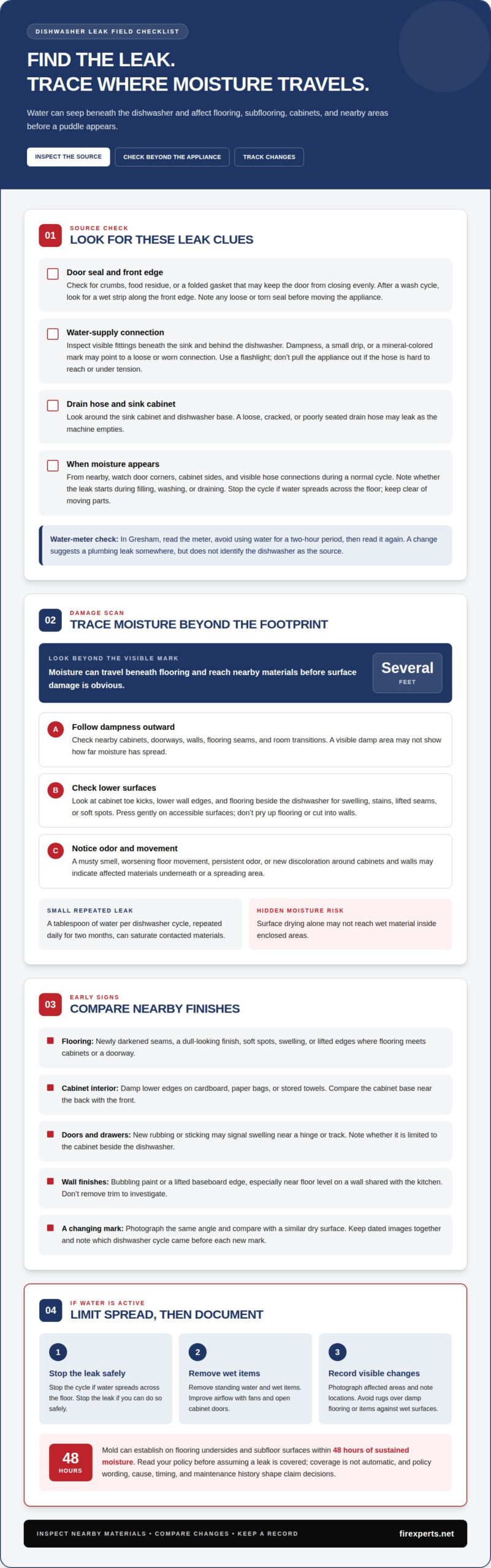
- Inspect the door seal and the floor directly below it. Crumbs, food residue, or a folded gasket can keep the door from closing evenly. After a wash cycle, look for a wet strip along the front edge. If the seal looks loose or torn, note its location before moving the appliance.
- Check the water-supply connection beneath the sink and behind the dishwasher. A damp fitting, small drip, or mineral-colored mark may point to a loose or worn connection. Use a flashlight to inspect the visible hose and shutoff valve. Don’t pull out the appliance if the connection is hard to reach or the hose is under tension.
- Look for drainage clues around the sink cabinet and dishwasher base. A loose, cracked, or poorly seated drain hose may leak as the machine empties. Note when moisture appears: water during draining suggests a different source than moisture that forms before the wash begins.
- Observe a normal cycle from nearby, keeping clear of moving parts. Watch the door corners, cabinet sides, and visible hose connections for fresh moisture. Stop the cycle if water spreads across the floor. Note whether the leak starts during filling, washing, or draining.
- A water-meter check can help distinguish a plumbing leak from other moisture. In Gresham, read the meter, avoid using water for a two-hour period, then read it again. A change suggests a leak somewhere in the plumbing, but doesn’t identify the dishwasher as the source. Compare the reading with your observations during the wash cycle.
Damage extent beyond the dishwasher
Trace moisture outward, check for signs in nearby materials, and dry wet areas promptly. Read your policy before assuming a leak is covered.
-
Trace water beyond the dishwasher
Follow dampness from the appliance toward nearby cabinets, doorways, and walls. Check flooring seams and room transitions because moisture can travel several feet beneath the surface. A tablespoon of water per dishwasher cycle, repeated daily for two months, can saturate contacted materials. Coverage isn’t automatic for every leak. Policy wording, cause, timing, and maintenance history shape claim decisions, so document what happened and what you find.
-
Check subflooring, cabinets, and walls
Check cabinet toe kicks, lower wall edges, and flooring beside the dishwasher for swelling, stains, lifted seams, or soft spots. Press gently on accessible surfaces, but don’t pry up flooring or cut into walls to look for hidden moisture. A musty odor or damage extending past the appliance may indicate wet materials underneath. Note the locations and photograph visible changes to track the affected area.
-
Dry affected areas and prevent mold
Stop the leak if you can do so safely, then remove standing water and wet items from the area. Improve airflow with fans and open cabinet doors; avoid covering damp flooring with rugs or storing items against wet surfaces. Mold can establish on flooring undersides and subfloor surfaces within 48 hours of sustained moisture. If water has reached enclosed materials, surface drying alone may not reach the wet area.
-
Assess untreated damage risks
Address damp materials rather than waiting for visible changes to disappear. Persistent moisture can support mold growth and raise indoor air-quality concerns, while wet wood-based flooring and subflooring can swell, soften, or weaken. Watch for worsening floor movement, persistent odor, or new discoloration around cabinets and walls. These signs can show whether the affected area is spreading and needs closer assessment.
Moisture from a dishwasher leak can weaken subflooring several feet beyond the appliance. The visible damp area may not show the full extent of the damage. Keep checking nearby flooring and room transitions, and note any soft spots, movement, or discoloration. These observations can help show whether moisture has reached underlying materials beyond the immediate area.
Early signs of water damage
Early signs of dishwasher leak water damage in Gresham may appear in small changes around kitchen finishes. For Oregon and Gresham, permit requirements depend on the repair work involved; don’t assume every water-damage job follows the same rules. Separate drying and cleanup from repairs that alter building materials, then consider the actual scope.
- Check the flooring edge where it meets cabinets or a doorway. A newly darkened seam or a dull-looking finish beside a brighter section is a change worth tracking. View it in daylight and photograph the same angle later to compare the floor without relying on memory.
- Open the cabinet beside the dishwasher and inspect its contents. A cardboard box, paper bag, or stored towel with a damp lower edge can reveal moisture inside. Move items aside and compare the cabinet base near the back with the front.
- Check cabinet doors and drawers for new changes in how they move. A door rubbing against its frame or a drawer that suddenly sticks may signal swelling near the hinge or track. Note which part changed and whether the issue is limited to the cabinet beside the dishwasher.
- Look for small changes to nearby wall finishes, such as bubbling paint or a lifted baseboard edge. Check the wall shared with the kitchen, especially near floor level. Don’t remove trim to investigate. Photograph the area and note whether the mark changes after the leak stops.
- Compare the affected area with a similar, dry surface elsewhere. With dishwasher leak water damage in Gresham, a photo of the same cabinet or floor from another angle can help show subtle differences. Keep dated images together and note which dishwasher cycle came before each new mark.
Permit requirements depend on the repair work involved. Distinguish drying and cleanup from repairs that alter building materials, then assess the actual scope. The applicable rules for mold remediation are not established here.
Water emergencies causing property damage
Take these steps in order: stop the water, protect people, and limit further damage. If a dishwasher leak is actively wetting floors or cabinets, treat it as water damage that needs prompt attention.
-
Shut off the dishwasher water supply
Turn off the dishwasher’s water-supply valve if you can reach it safely. It is often beneath the kitchen sink, where the dishwasher supply line connects. If it won’t turn or water keeps flowing, use the home’s main shutoff valve. Don’t pull out a leaking appliance or reach through standing water to access a valve.
-
Respond immediately to water damage
Stop the wash cycle and keep people away from wet areas near electrical outlets or appliances. If it’s safe, use towels to remove standing water and move dry belongings away from the wet floor. Don’t use electrical equipment in standing water. Quick action limits further contact, but wet flooring or cabinets may still need closer assessment.
- Once the immediate flow stops, record the damage. Photograph the dishwasher, visible water, and affected flooring or cabinets before moving items. Note when the leak began, which cycle was running, and whether water continued after shutdown. These details can help explain how the damage occurred and show how far moisture reached.
- For a Gresham water emergency causing property damage, call 503-618-2373 during business hours or 503-661-3906 outside business hours. Share whether the leak is stopped and which areas are wet. If water has spread beneath flooring, request water damage restoration help to assess the affected materials and next steps.
Identify where the water came from without delaying efforts to stop the leak or protect wet areas. Gresham property owners are responsible for water pipes from the meter to the house. If the source appears to be a pipe rather than the dishwasher, note its location and describe what you observed when seeking help. Clear observations can help distinguish an appliance leak from a water-pipe concern. The immediate priorities are stopping active water, limiting further damage, and keeping people away from electrical hazards.
Fire Industry Restoration Experts: Fire Restoration Services
Fire Industry Restoration Experts helps property owners address dishwasher leaks with Water Restoration Services and Water Remediation Services. Turn to the team when water has spread beyond the appliance, affected flooring or cabinets, or needs more than surface cleanup.
Restoration work can include damage assessment, removal of affected materials, and rebuilding. Fire Industry Restoration Experts also coordinates with insurance companies, helping organize damage details and restoration work. If you’re unsure what needs attention first, clear documentation and a careful assessment can bring the next steps into focus.
Contact Fire Industry Restoration Experts to discuss water damage in your home.
Take the Next Step Toward a Sound, Dry Home
Once the dishwasher leak is under control, record what changed and which areas still concern you. This gives you a practical starting point for deciding what needs attention next. If dishwasher leak water damage in Gresham has affected more than the area around the appliance, you don’t have to navigate restoration alone.
Fire Industry Restoration Experts offers Water Restoration Services, along with Fire Restoration Services and Smoke Restoration Services. The team can assess damage and guide restoration work, including rebuilding when needed. A straightforward conversation can help you explain what happened and identify a sensible path forward.
Contact Fire Industry Restoration Experts to discuss the damage and your next steps. With a clear plan, you can move ahead one decision at a time.
Frequently Asked Questions
How Does Water Under a Dishwasher Lead to Floor Damage?
Water can pass through floor joints and collect beneath the visible surface, reaching underlayment or subflooring. In Gresham, a dishwasher leak may affect materials beyond the spot where water first appears. For example, a damp seam near the appliance may connect to hidden moisture beneath an adjoining cabinet. The floor’s layers and the leak’s path shape the damage pattern.
What Early Signs of Dishwasher Leak Damage Do Homeowners Miss?
Look for small changes beyond the kitchen floor, such as cabinet doors that begin rubbing or stored items that feel damp underneath. A dishwasher leak can also leave water marks inside the adjacent sink cabinet, especially near shared plumbing. Compare both sides of the cabinet and note new differences. These subtle changes can reveal moisture before a clear floor defect appears.
Does homeowners insurance cover dishwasher leaks and resulting water damage in Oregon?
Coverage isn’t automatic. Policy wording, the leak’s cause and timing, and maintenance history shape claim decisions.