
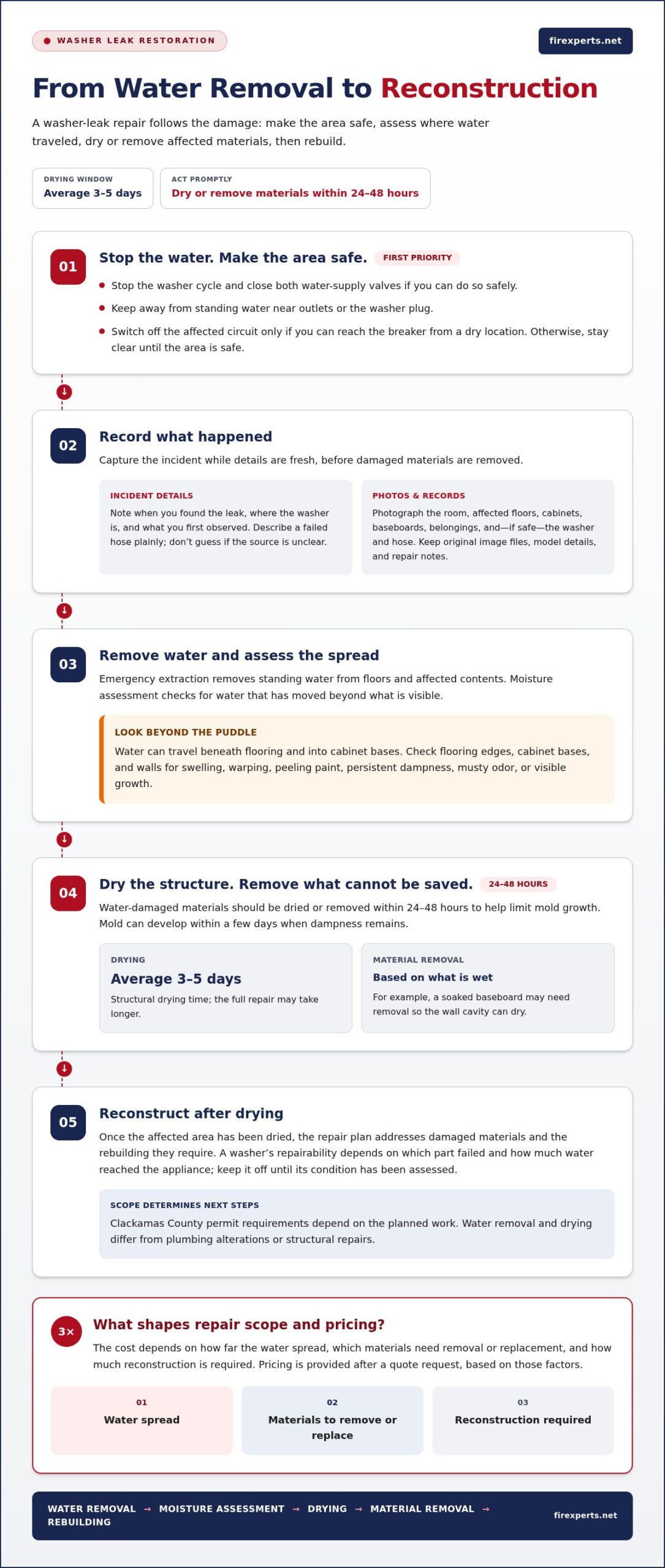
The cost of washing machine flood damage repair in Clackamas depends on how far the water spread, which materials need removal or replacement, and how much reconstruction the damage requires. Pricing is provided after a quote request, based on those factors. Structural drying takes an average of 3 to 5 days, but the full repair can extend beyond drying when floors, walls, or other parts of the home are damaged.
A washer leak can leave you with a wet room, damaged belongings, and questions about what comes next. It’s natural to wonder whether recovery ends once the water is gone or whether damaged areas can also be rebuilt. This guide explains washing machine flood damage repair in Clackamas, including how cleanup and reconstruction work, what can affect the scope of repairs, and how insurance documentation, sanitizing, and deodorizing fit into the process. You’ll also learn why prompt drying matters and how a clear restoration plan can turn a disruptive mess into manageable next steps.
Key Takeaways
- Learn what emergency water removal involves and why cleanup needs to address more than visible standing water.
- Understand how the extent of affected materials shapes the transition from cleanup to reconstruction.
- See which damage records and repair details can help organize an insurance claim.
- Find out how sanitizing and deodorizing fit into restoring a space after a washer leak.
Does insurance usually cover the cost of water damage restoration?
Often, yes. Many homeowners’ and commercial policies cover sudden, accidental water damage, such as a pipe failure or water heater leak. A washing machine hose that fails unexpectedly may meet that description, but coverage depends on the policy and the cause of the leak. Gradual leaks and damage that worsens while repairs are delayed may be treated differently, so record what happened and when.
Start with the water source. Stop the washer and close its supply valves if you can reach them safely. Then move dry belongings away from the wet area and take photographs before removing damaged materials. Emergency extraction removes standing water from floors and affected contents; drying addresses moisture that has soaked into surfaces. Cleanup should happen promptly, with water-damaged materials dried or removed within 24-48 hours to limit mold growth.
Emergency restoration may include water removal, inspection, drying, and decisions about materials that cannot be saved. Water on a hard floor, for example, may be removed directly, while soaked flooring or wall materials need closer assessment. Record the affected rooms, visible damage, and work completed to connect the emergency response with later repairs.
To find licensed water damage restoration companies near Clackamas, Oregon, search for local firms that publish their Oregon license details and describe water restoration work. Compare those details with the immediate need, such as extraction, drying, or rebuilding after a washer leak.
A labor warranty concerns workmanship, not whether an insurer covers water damage. Its written terms should explain which work is covered, any limits, and how workmanship concerns are handled. Keep the document with the restoration estimate, photographs, and receipts. A complete record makes it easier to distinguish a workmanship issue from new damage or moisture that remains.
Flood damage cleanup and reconstruction
After a washer leak, stop the cycle and close both water-supply valves. Keep away from standing water near outlets or the washer plug. If you can reach the breaker from a dry location, switch off the affected circuit. Otherwise, stay clear until the area is safe. For washing machine flood damage repair in Clackamas, stop further water flow first, without putting yourself at risk.
Prompt cleanup matters. Dry or remove water-damaged materials within 24-48 hours to help limit mold growth. Water can travel beneath flooring and into cabinet bases, so visible puddles don’t show the full extent. Mold can develop within a few days when dampness remains.
Professional restoration generally progresses from water removal to moisture assessment, drying, removal of unsalvageable materials, and reconstruction. A soaked baseboard, for example, may need to be removed so the wall cavity can dry. The repair plan depends on which materials are wet and how far the water has spread.
A washing machine may be repairable after a leak, depending on which part failed and how much water reached the appliance. A damaged supply hose is different from water exposure to electrical components. Keep the washer off until its condition has been assessed, then weigh repair against replacement.
Clackamas County permit requirements depend on the work, not simply on the fact that flooding occurred. Water removal and drying differ from plumbing alterations or structural repairs. The planned scope determines which local permit rules apply.
Check flooring edges, cabinet bases, and walls for swelling, warping, peeling paint, or persistent dampness. A musty odor or visible growth may also point to lingering moisture. After a burst pipe or plumbing leak, inspect beyond the original leak area. Flood or storm water may follow a different path through the home.
For washing machine flood damage repair in Clackamas, reconstruction should address affected materials after the area has been dried. If a washer leak has spread beyond the laundry space, a water damage restoration plan can help organize cleanup and rebuilding into clear steps.
Insurance documentation
Create a clear incident record while details are fresh. Note when you found the leak, where the washer is, and what you saw first. If a supply hose failed, describe that plainly; if the source is unclear, record what you observed without guessing. Keep the appliance’s model information and any repair notes with your claim records.
Photographs can help show how water moved through the home. Take wide views of the laundry area, then close-ups of affected flooring, cabinets, baseboards, and belongings. If it’s safe, photograph the washer and hose before moving or discarding damaged parts. Keep the original image files so their dates remain available.
For a useful claim file, collect:
- A room-by-room list of damaged materials and belongings, such as a swollen cabinet base or wet rug.
- Receipts, order records, or other proof of ownership for affected items.
- Restoration estimates that separate water removal, drying, material removal, and rebuilding.
- Invoices and receipts for work already completed or supplies purchased.
- Notes from calls with the insurer, including the date, representative’s name, and next step.
Ask for an itemized scope of work rather than one broad description. Separating damaged flooring from cabinet work, for example, makes proposed repairs easier to understand. Keep revised estimates with earlier versions and note why the scope changed, such as moisture discovered beneath flooring.
Submit the incident timeline, photographs, and repair documents through your insurer’s stated claim process. Keep copies of everything you send, along with submission dates and responses. If an adjuster inspects the laundry room, record the inspection date and any requested follow-up. Linking each repair record to a room and damaged item helps keep the claim organized from cleanup through reconstruction.
Sanitization and deodorizing
After a washer leak, cleaning and odor treatment should follow the water’s path, not just the visible puddle. Water can reach flooring seams, cabinet edges, and the space behind an appliance. First identify affected surfaces, then separate cleanable items from materials that remain wet, stained, or damaged.
Cleaning, sanitizing, and deodorizing address different concerns. Cleaning removes visible soil and residue; sanitizing treats suitable surfaces after cleaning. Deodorizing targets lingering smells, but fragrance alone does not remove their source. Masking a musty cabinet odor without cleaning and drying the affected area, for example, can leave the underlying problem untouched.
A practical sequence keeps the work organized:
- Remove loose belongings and debris from the affected laundry area.
- Clean washable hard surfaces, including the washer exterior, nearby floor, and cabinet fronts.
- Check flooring edges, baseboards, and cabinet interiors for remaining dampness or residue.
- Allow cleaned areas and salvageable belongings to dry before returning them to the room.
- Address persistent odors only after locating and treating the affected material.
Choose cleaning products that suit the surface. A product made for tile may damage wood finishes or fabric, so follow the label and test an inconspicuous spot. Never mix cleaning products. For a soaked rug or upholstered item, inspect the seams and backing as well as the visible surface; moisture can remain underneath after the top feels dry.
If an odor returns after cleaning, trace it to the affected material instead of adding more fragrance. A damp cabinet base, flooring underlayment, or washer drain area may need further inspection and drying. Note which surfaces you cleaned and where smells remain. This record helps show whether a surface odor has cleared or an area still needs attention.
If a washer leak has left stubborn residue or odors, get help planning water-damage cleanup and the next restoration steps.
Fire Industry Restoration Experts: Fire Restoration Services
F.I.R.E. Restoration helps property owners in Clackamas, Gresham, and Portland move from water damage assessment through cleanup and rebuilding. After a washing machine leak, the company’s Water Restoration and Water Remediation services address restoration needs, with construction expertise supporting repairs to damaged areas.
The team handles damage assessment, demolition, and rebuilding, and coordinates with insurance companies during the restoration process. That support can help when water has reached flooring, walls, or cabinets and the work extends beyond drying. Clear records of affected areas and completed repairs can also help keep the insurance process organized.
If a washer leak has left your home needing coordinated cleanup and repairs, contact F.I.R.E. Restoration to discuss the next step.
Take the Next Step Toward Restoring Your Home
Once the immediate disruption settles, use a clear record of the damage and the work your home needs to guide decisions. A written scope shows how cleanup connects to repairs, while organized claim documents keep details easy to follow. The plan should address all affected areas, not just what is visible at first glance.
For washing machine flood damage repair in Clackamas, Fire Industry Restoration Experts can help coordinate restoration and rebuilding. Its services include Fire Restoration Services, Smoke Restoration Services, and Water Restoration Services. If you’re ready to discuss the damage and practical next steps, contact Fire Industry Restoration Experts.
You don’t have to make every repair decision at once. Start with a conversation, then move through recovery one clear step at a time.
Frequently Asked Questions
Do you handle the rebuilding part, or just the drying?
Fire Industry Restoration Experts handles rebuilding as well as water damage restoration. The work can include assessing damage, removing affected materials, and rebuilding damaged parts of the structure. For example, if a washer leak damages flooring and nearby wall materials, restoration can address the affected structure after water mitigation. The team also coordinates with insurance companies during the restoration process.
How fast can a restoration crew reach my home in Clackamas?
A crew’s arrival depends on scheduling, current restoration work, travel conditions, and access to your Clackamas home. When arranging service, describe where the leak is, whether water is still spreading, and any access concerns. This helps clarify the immediate work needed. If water is near electrical equipment, stay clear and describe the hazard rather than entering the affected area.
How long will it take for my property in Clackamas to be completely dry?
Structural drying in a water-damaged property takes an average of 3 to 5 days. The actual drying plan depends on how deeply water reached building materials and which areas need drying. A wet floor surface may dry before moisture beneath it or inside a wall cavity. Completion means addressing affected materials, not simply waiting until the room feels dry.
Is it okay to just use house fans and a wet-vac for cleanup?
A household wet vacuum and fans can remove or move some surface water, but they may not prevent mold in water-damaged areas. Mold can develop within a few days when moisture remains. Water beneath flooring, behind cabinets, or inside walls may not be reached by surface cleanup. Check beyond the visible puddle, and don’t assume hidden materials are dry because the surface looks dry.
Does homeowners insurance cover washing machine water damage in Oregon?
Homeowners insurance often covers sudden, accidental water damage, which may include a washer hose that fails unexpectedly. Coverage depends on the policy wording and circumstances. A gradual leak or damage linked to delayed maintenance may be handled differently from a sudden failure. Describe the cause accurately, keep policy information with your claim records, and submit requested documents through your insurer’s process.
How do I document washing machine flood damage for an insurance claim?
Record when you discovered the water, what the washer was doing, and where you first saw damage. Photograph the appliance, affected rooms, and damaged belongings from several angles. Make a separate inventory of items such as clothing, rugs, or stored supplies, noting details that help identify each one. Keep estimates, invoices, and claim-related messages together for easy reference.