
Firefighting can leave another layer of damage behind: water soaked into floors, walls, and belongings. In Portland, water damage from firefighting efforts is addressed by removing standing water, drying affected areas, and assessing which materials need cleaning or repair. Stay out of standing water near outlets or electrical equipment, and stop a water source only if it’s safe to do so.
It’s understandable to feel overwhelmed when the fire is out but cleanup is only beginning. Damage may extend beyond what’s visible, especially when firefighters open walls to reach hidden fires or open roofs and windows to ventilate.
This article explains how water cleanup and drying work, what can affect the repair timeline, how restoration addresses moisture concerns, and what to expect when handling insurance and billing. You’ll also learn how fire, smoke, and water damage fit together in the restoration process, so you can take the next steps with a clearer sense of what comes first.
Key Takeaways
- Use the extent of fire, smoke, and water damage to understand why restoration may take a few days or stretch into several weeks or months.
- Learn what moisture conditions can allow mold to develop and how drying and repair help address affected areas.
- Contact your property insurer and agent promptly, then keep damage records to support conversations about coverage and billing.
- Stay clear of water near electrical equipment, and understand how drying, cleaning, and repairs can restore areas affected by firefighting.
Restoration timelines
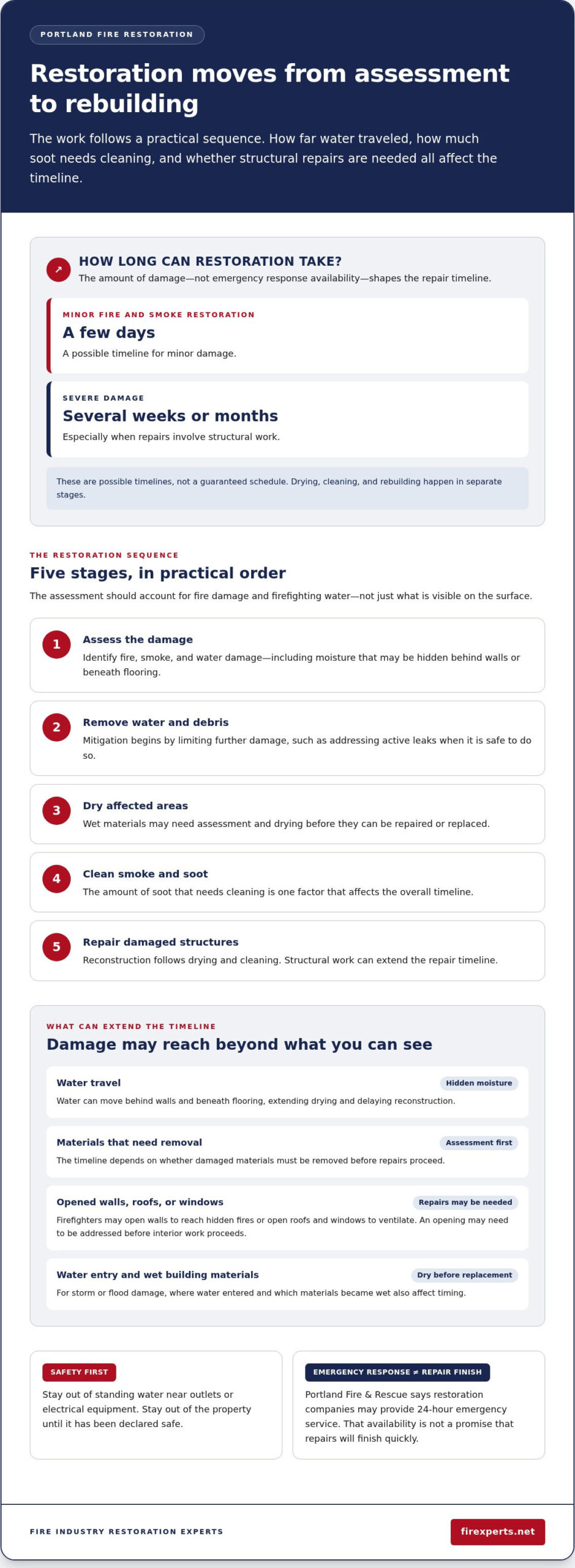
Minor fire and smoke restoration in Portland may take a few days. Severe damage may take several weeks or months, especially when repairs involve structural work. The timeline depends on how far water traveled, how much soot needs cleaning, and whether damaged materials must be removed. For example, a wet ceiling may need assessment and drying before it can be repaired or replaced. Stay out of the property until it has been declared safe.
Restoration follows a practical sequence: assess the damage, remove water and debris, dry affected areas, clean smoke and soot, then repair damaged structures. Mitigation starts by limiting further damage, such as addressing active leaks when it’s safe. Hidden moisture behind walls or beneath flooring can extend drying and delay reconstruction. The assessment needs to account for both fire damage and firefighting water, not just visible surface damage.
For storm and flood damage in Northwest Portland, restoration timing also depends on where water entered and which building materials became wet. A flooded lower level may need water removal and drying before damaged flooring can be replaced. If a storm has also damaged the roof, the opening may need to be addressed before interior work proceeds. This helps prevent unfinished repairs from being exposed to more water.
Portland Fire & Rescue says restoration companies may provide 24-hour emergency service. That availability refers to emergency response, not a promise that repairs will finish quickly; drying, cleaning, and rebuilding take separate steps. Portland homeowners shouldn’t assume firefighting automatically qualifies them for city-funded restoration. Portland Fire & Rescue advises property owners to contact their insurer and agent as soon as possible after a fire. The insurer can discuss policy coverage, while the damage assessment helps identify needed repairs. Restoration may include water mitigation, cleaning, and reconstruction, with the scope shaped by the damage found.
Mold remediation after water damage
Moisture left after firefighting can affect materials beyond the visible wet area. Inspection, controlled drying, and careful repairs help limit further damage and identify areas that may need attention for mold.
Moisture and Mold Concerns
Water can travel beneath flooring, behind baseboards, and into wall cavities, so a dry-looking surface doesn’t always tell the whole story. During inspection, note damp drywall, swollen trim, peeling paint, or musty odors, and identify where water collected. A ceiling stain, for example, may point to moisture above the finished surface. Record affected rooms and materials for your restoration documents.
Mold Risk Prevention
Start with the source: stop ongoing water only if it’s safe, then remove standing water and dry wet areas. Keep air moving through accessible rooms, and avoid covering damp materials with paint or new flooring. Check closets, corners, and areas near wet ceilings as drying progresses. These steps can help limit further damage, but hidden moisture still needs attention during inspection before repairs close the area.
Mold remediation addresses visible growth and affected materials; it is separate from basic water cleanup. The work may involve isolating the affected area, removing materials that can’t be cleaned, and cleaning salvageable surfaces. The right approach depends on the material and how far moisture or growth has spread. Don’t disturb suspected growth during cleanup, since that can spread debris into nearby rooms.
Keep dated photos, cleanup notes, and receipts with your insurance documents. If emergency services have declared the property safe to enter, document wet areas before repairs change them. For water-related damage, water restoration and drying can address the moisture that may contribute to mold concerns. Recheck repaired areas for lingering dampness before replacing finishes.
Insurance claims and billing
For Portland homeowners, homeowners insurance may cover fire-related water damage, depending on the policy. The documented condition and cause of the loss matter when discussing coverage.
Portland Fire & Rescue advises property owners to contact their insurer and agent as soon as possible after a fire. An early claim discussion can clarify what information the insurer needs before removal, drying, and repairs proceed.
Insurance Claims Assistance
A restoration company can document affected rooms and describe the work needed, helping organize information for an insurance claim. Compare the damage assessment with the proposed work, including water removal, drying, cleaning, and repairs. Keep communication with the insurer focused on the reported loss and the areas actually affected. Clear records can make a stressful process easier to follow.
Insurance Documentation
Keep dated photos of wet flooring, ceiling stains, damaged belongings, and visible smoke or fire effects. Save invoices, receipts, inspection notes, and written updates from the restoration company. These records show the condition of the property before repairs change it. A room-by-room record can also connect each proposed task, such as drying a wall cavity, to the damage observed there.
Payment for Firefighting Water Damage
Payment depends on the homeowner’s policy and how it treats the fire-related loss. Homeowners insurance may cover fire damage restoration, but coverage depends on the policy. Include water used to extinguish the fire in the claim discussion alongside direct fire and smoke damage. Ask the insurer how the policy applies to water removal, drying, and rebuilding.
Keep emergency mitigation records separate from later reconstruction invoices. For example, document water extraction and drying first, then keep repair estimates and receipts for replacement materials. This helps the insurer review each stage against the documented damage and policy terms. Don’t assume the fire department or city will pay restoration bills; start with the insurer and agent, as Portland Fire & Rescue advises.
Water damage from firefighting efforts
After firefighters leave, take immediate steps to protect people before addressing property damage. Call emergency services first if fire remains, you suspect a gas leak, see an electrical hazard, or the structure appears unstable. Keep everyone out of standing water near outlets or electrical equipment. Stop a water source only if it’s safe to do so.
Water damage from firefighting efforts in Portland can affect rooms firefighters needed to reach. Portland Fire & Rescue explains that firefighters may open walls to locate hidden fires and extinguish them completely. They may also open roofs or windows to ventilate and help reduce fire spread. These openings can expose a home or business to weather while interior materials remain wet.
Once the property is safe to enter, note affected rooms and take photos before cleanup changes the scene. Look beyond the floor: water may collect beneath flooring, soak baseboards, or reach a ceiling below an opened roof. Structural concerns, damaged finishes, and wet contents each need assessment. A focused inspection helps identify what needs water removal, drying, cleaning, or repair, rather than relying on surface appearance alone.
Restoration generally moves from water removal to drying, then cleaning and repair. Mitigation addresses active water and limits further damage, while reconstruction replaces materials that cannot be restored. The amount of water, its path through the building, and the materials affected shape the work. For a Portland property, documenting water damage from firefighting efforts in Portland helps connect each affected area with the restoration plan.
Don’t enter a flooded area to retrieve belongings if electrical equipment or unstable materials pose a hazard. After the property is safe, a water damage assessment can help define the next practical steps. Get help assessing firefighting water damage and planning cleanup for your property.
Fire Industry Restoration Experts: Fire Restoration Services
Fire Industry Restoration Experts can help when firefighting leaves your property with water, smoke, or structural damage. Fire Restoration Services address fire-related damage, while Smoke Restoration Services and Water Restoration Services focus on smoke and water impacts. Water Remediation Services can support the water cleanup process.
The work can include assessing damage, boarding up openings, removing damaged materials, and rebuilding affected areas. F.I.R.E. Restoration also coordinates with insurance companies, working with, not for, your insurer and helping connect the documented loss with restoration work. If water has reached walls, floors, or belongings, a clear assessment helps establish practical next steps.
For help with fire-related restoration, contact Fire Industry Restoration Experts or visit firexperts.net.
Take the Next Step Toward Recovery
The fire may be out, but deciding what to address first can still feel overwhelming. Treat recovery as a way to regain control of the property, one clear decision at a time. For water damage from firefighting efforts in Portland, a focused restoration plan connects the building’s condition with the work needed to move forward.
Fire Industry Restoration Experts provides Fire Restoration Services, Smoke Restoration Services, and Water Restoration Services for damage affecting different parts of a property. Bringing those needs into one restoration conversation helps you consider how fire, smoke, and water impacts interact. Share what you’ve observed and the steps already taken, then discuss a practical path for the property.
When you’re ready to talk through the damage and next steps, contact Fire Industry Restoration Experts. You can move forward with a clearer plan and steady support.
Frequently Asked Questions
How much water damage can firefighting efforts cause in a Portland home?
The affected area depends on the fire, the water used to extinguish it, and how water moves through the home. A fire in an upstairs room can leave wet flooring and affect rooms below; opened walls can reveal water in concealed spaces. Check adjacent rooms and lower floors during the damage assessment, not just the room where the fire started.
Does homeowners insurance cover water damage from firefighting in Oregon?
Homeowners insurance may cover fire damage restoration, but coverage depends on the policy. Describe firefighting water as part of the fire loss when speaking with your insurer, and ask how the policy treats cleanup and repairs. For example, note whether water reached another room or damaged belongings, so the claim record reflects more than the fire’s point of origin.
How do Portland fire departments handle water damage after extinguishing a fire?
Portland Fire & Rescue focuses on locating and extinguishing the fire; firefighters may open walls to find hidden fire and may open roofs or windows to ventilate. Those actions can leave areas exposed or reveal concealed damage. Once the scene is safe, property cleanup and restoration address remaining water and affected materials. Don’t assume the fire department handles building repairs.
How can homeowners document firefighting water damage for an insurance claim?
Make a room-by-room record from a safe location. Photograph water lines, damp belongings, and damage in connected rooms, then label each image with its location and date. Keep a simple log of what you observed and when, along with insurer communications and restoration paperwork. For example, distinguish a wet hallway from the room where firefighters accessed the fire.
What health risks can follow firefighting water damage, including mold and smoke contamination?
Smoke, soot, and chemical residues can cause respiratory issues, skin irritation, and other health problems. Moisture left in building materials can also create conditions for mold growth. Stay out until the property is declared safe, and avoid touching residue or disturbing suspected materials. If standing water is near electrical equipment, keep clear rather than entering to retrieve belongings.
How quickly should water extraction and drying begin after a Portland house fire?
Water extraction and drying should begin as soon as the property is declared safe to enter. Acting promptly helps limit how long moisture remains in flooring, drywall, and other materials. Don’t start cleanup while electrical hazards or structural concerns remain. If standing water is near outlets or equipment, stay away and make safety the first step before drying begins.