
A flooded home can take two to four weeks to dry completely before rebuilding, although professional drying often takes three to five days. Knowing what to do when your house floods starts with staying out until it’s safe to return, then documenting damage and removing water and wet materials carefully.
It’s understandable to want to get everything back to normal quickly. But rushing into a flooded home or starting cleanup before you know what’s safe can create more problems. A calm, step-by-step approach puts people first and helps the home dry thoroughly.
This guide explains how to return safely, manage standing water and damaged belongings, and understand what affects drying time. You’ll also learn when the water source or extent of damage makes professional restoration the safer next step.
Key Takeaways
- Wait for the all-clear before returning, and stay away from downed power lines and floodwater hazards.
- Photograph damage and keep cleanup receipts before removing damaged items; flood insurance policyholders must return the Proof of Loss within 60 days of the loss, according to the Federal Emergency Management Agency.
- Drying time depends on how much water entered and how deeply it reached building materials; complete drying before rebuilding can take two to four weeks.
- Use caution when removing wet belongings and materials, especially if floodwater may contain sewage or other contaminants.
- Learn which flood conditions call for professional restoration, including deep standing water and flooding from natural sources or sewer backups.
How Long Does It Take a House to Dry After Flooding?
Drying time varies depending on how far the water reached, which materials got wet, and how thoroughly moisture is removed. Drying depends on how far water reached, what materials got wet, and how thoroughly moisture is removed. For local recovery help in Portland, call 2-1-1 for connections to food, housing, medical care, and other resources. For a Red Cross shelter, call (800) 733-2767.
- Record damage before cleanup. Take clear photos of each affected room, wall, floor, appliance, and piece of furniture. Photograph the waterline and damaged belongings from several angles. Make a room-by-room inventory, noting the item, its condition, and where it was located. Save receipts for cleanup supplies and temporary expenses. Keep copies of photos and records in a place floodwater cannot reach.
- Notify the right people promptly. Homeowners should contact their insurance company, and renters should contact their landlord. Ask the insurer how to document the loss and begin an insurance claim before discarding damaged property. Keep a record of calls, including the date, the person spoken with, and any claim number. Flood insurance policyholders must return the Proof of Loss to their insurance company within 60 days of the loss, according to the Federal Emergency Management Agency.
- Review which policy may apply. Standard homeowners insurance typically doesn’t cover flood damage. Private flood insurance or a National Flood Insurance Program policy typically does. Review your policy for coverage details, limits, exclusions, and claim instructions. Save the policy and insurer’s written guidance with your damage photos. Don’t assume a burst pipe and outside floodwater are treated alike; describe the water source clearly when reporting damage.
- Keep damaged property records. List clothing, furniture, appliances, and other belongings separately from structural damage. Record brand or model details when visible, and photograph labels before items are removed. Don’t discard an item until you’ve documented it and followed the insurer’s instructions. Keep cleanup receipts together with the inventory so each expense has a clear record and purpose.
- Understand federal assistance limits. The Federal Emergency Management Agency states that no individual or household will receive more than $25,000 in assistance under this subpart for repairing or replacing a pre-disaster primary residence after a single major disaster or emergency. The U.S. Small Business Administration says renters and homeowners may borrow up to $100,000 to replace or repair personal property damaged or destroyed in a disaster. These programs differ from insurance claims.
- Choose repair help carefully. For repairs, hire licensed and insured contractors. Whether consulting local specialists or established renovation teams like HMJ Contracting, always ask for written estimates, a clear scope of work, and proof of insurance before work begins. Keep signed agreements, invoices, and receipts with your claim documents. Compare the written scope with your photos and damage inventory, so the repair record reflects affected rooms and materials.
- Use drying time to organize the claim. Professional drying typically takes three to five days, while complete drying before rebuilding can take two to four weeks. Solid wood two-by-fours may dry after a few days, but enclosed spaces and layered materials can hold moisture longer. Keep drying records and photos as the work progresses. Begin rebuilding only after wet materials have been assessed and the home has dried.
Safety when returning to a flooded home
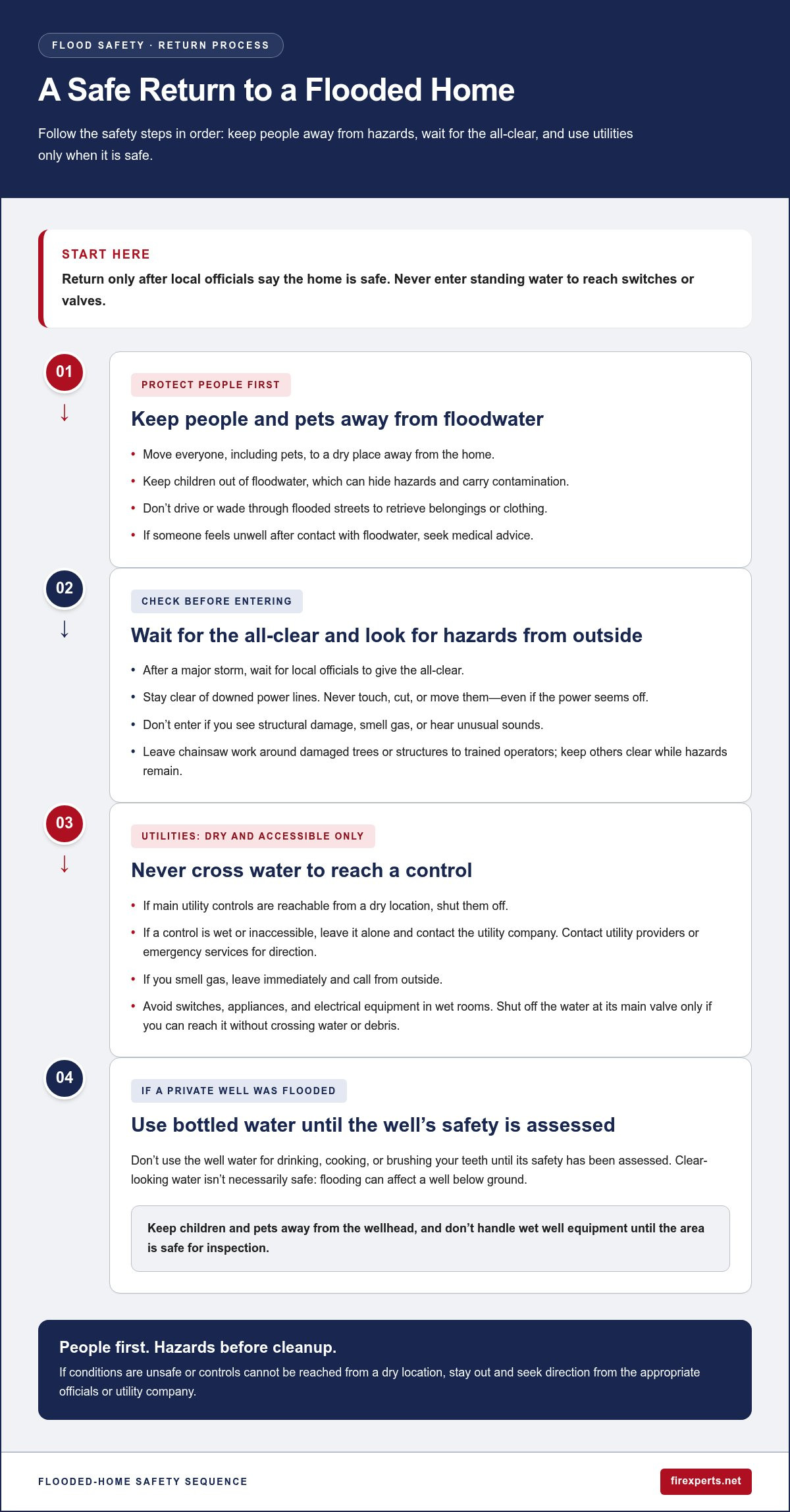
Return only after local officials say the home is safe. If you can reach the main utility controls from a dry location, shut them off. Never enter standing water to reach switches or valves. If controls are wet or inaccessible, leave them alone and contact the utility company.
-
Get people and pets to safety
Move everyone, including pets, to a dry place away from the home. Keep children out of floodwater, which can hide hazards and carry contamination. Don’t drive or wade through flooded streets to retrieve belongings or clothing. If someone feels unwell after contact with floodwater, seek medical advice. Once everyone is safe, tell your insurance company who was displaced and how to reach you.
-
Complete safety checks before returning
After a major storm, wait for local officials to give the all-clear, then look for hazards from outside. Stay clear of downed power lines. Never touch, cut, or move them, even if the power seems off. Don’t enter if you see structural damage, smell gas, or hear unusual sounds. Leave chainsaw work around damaged trees or structures to trained operators, and keep others clear while hazards remain.
-
Shut off utilities safely
Use only dry, accessible controls. If the electrical panel or gas shutoff is in a flooded area, don’t enter to reach it. Contact the utility company or emergency services for direction. If you smell gas, leave immediately and call from outside. Avoid switches, appliances, and electrical equipment in wet rooms. Shut off the water at its main valve only if you can reach it without crossing water or debris; if a broken pipe or faulty fixture triggered the flooding, bringing in a licensed contractor like Alberto Pro Plumbing ensures the issue is resolved before water is safely restored.
-
Check private well water safety
If a private well has been flooded, don’t use its water for drinking, cooking, or brushing your teeth until its safety has been assessed. Use bottled water for those needs in the meantime. Clear-looking water isn’t necessarily safe, because flooding can affect a well below ground. Keep children and pets away from the wellhead, and don’t handle wet well equipment until the area is safe for inspection.
Once hazards are controlled, flood restoration support can help address water damage that needs professional attention.
Removing standing water and drying the home
Remove water only when the area is safe to enter and electrical hazards are controlled. Then dry the structure and belongings promptly, tracking moisture in affected rooms.
-
Pump out standing water
Remove standing water only after confirming the space is safe and electrical hazards are controlled. If a basement is flooded, pump out about one-third of the water each day. Gradual removal helps reduce pressure on the foundation. Don’t empty a full basement in one pass: the water levels inside and outside the foundation affect pressure on its walls.
Use a suitable pump to remove water, then collect remaining puddles with a wet vacuum or absorbent materials. Keep appliances that contacted floodwater switched off. If you’re documenting damage, photograph water levels before removal. A record of affected rooms and waterlines can help show how far the flooding reached.
-
Dry and ventilate the home
Open windows and doors when conditions allow, then use fans, air conditioners, and dehumidifiers to move and remove moisture. Position fans to circulate air through affected rooms, not just toward one wet spot. Empty dehumidifier tanks as needed, and keep equipment away from standing water and wet electrical outlets.
Check enclosed areas, floors, and wall edges, where moisture can remain after visible water is gone. Mold can begin growing within 24 to 48 hours, so start drying promptly. A room that feels dry may still hold moisture behind drywall or beneath flooring. Keep drying equipment running and monitor affected areas as they change.
-
Dry and preserve salvageable items
Move salvageable belongings to a dry, ventilated area and separate them by material. Wipe water from hard surfaces, then let items dry fully before storing them. Space furniture apart so air can reach its surfaces. Open drawers and doors to release moisture, and place small items where they can dry without being stacked.
Prioritize items that can be dried within 48 hours, since they may be spared from mold. If flood-damaged items can’t be dried within two days, FEMA advises wrapping them in freezer paper and freezing them while seeking professional advice. Keep wet belongings away from dry property, and note which items need further attention.
-
Consider typical professional drying time
Use the timeline to plan the next steps, but distinguish surface drying from complete structural drying. A flooded house may take 24 to 72 hours to dry out, depending on its size, flood extent, and drying measures. Professional drying typically takes three to five days. These estimates describe different scopes and don’t mean rebuilding can begin once surfaces feel dry.
Drying a structure before rebuilding can take two to four weeks. Solid wood two-by-fours may dry after a few days, while enclosed areas and layered materials hold moisture longer. Track progress throughout affected rooms, not just at the floor. Rebuilding before the structure is fully dry can trap moisture behind new finishes, so allow drying to continue until affected materials are ready.
Removing water-damaged belongings and materials
After documenting the damage, sort affected belongings by material and condition. Work carefully: floodwater can affect a home’s structure, electrical system, appliances, furniture, clothing, and food.
- Protect yourself before handling debris. Wear long pants, sturdy shoes, goggles, gloves, and a mask while cleaning flood debris. Wash your hands with clean water and antibacterial soap after handling anything that may have contacted floodwater or sewage. Cover cuts and grazes with waterproof plasters. Keep children and pets away from the work area while wet debris and damaged materials are being moved.
- Separate items and record what you remove. Photograph damaged belongings and building materials before moving them, then make a simple room-by-room list. Note whether each item is furniture, clothing, an appliance, or part of the structure. This record can help explain what the flood affected and what cleanup involved. Keep receipts for cleanup supplies with the photos and inventory.
- Remove unsafe food and wet materials. Discard food touched by floodwater, including food in tins. Floodwater can carry contaminants onto packaging, so don’t keep items simply because they appear sealed. Remove water-damaged drywall about a foot above the waterline, where moisture may have spread beyond the visible mark. Homes built before 1978 may contain lead-based paint, and cleanup can stir up paint particles.
- Clean surfaces and dry salvageable belongings. Separate items that can be cleaned and dried from those that are soaked, contaminated, or falling apart. A solution of half a cup of bleach in 1 gallon of water can help kill mold and bacteria. Keep air moving through the area as items dry, and don’t stack damp belongings together. Mold can begin growing within 24 to 48 hours, so act promptly.
- Handle flood debris and vehicles with care. Place debris away from power lines, trees, poles, fire hydrants, meters, and buildings, without blocking the roadway. Keep an itemized record of discarded materials and damaged appliances. For a flooded car, photograph the damage before moving it, and contact your auto insurer. Comprehensive auto insurance most likely covers flood damage to a car.
- Know when cleanup needs trained help. Floodwater from natural flooding, sewer backups, and overflowing toilets may carry health hazards. Don’t treat contaminated water like a minor household spill. If the flooding has affected multiple rooms, building materials, or electrical components, leave unsafe cleanup to trained professionals. Careful removal and thorough drying help limit further water damage.
When to call professional restoration services
Mold can begin growing in a flooded home within 24 to 48 hours. Hire mold remediation professionals when you find mold growth; call restoration professionals sooner for deep water, contaminated flooding, or damage inside walls.
- Call when water is more than a couple of inches deep. Deep standing water can affect flooring, wall cavities, and building materials beyond what you can inspect from the surface. Don’t rely on open windows or household dehumidifiers to handle extensive flooding. A professional can assess affected areas and plan safe water removal and drying.
- Get help for sewage or natural floodwater. Water from overflowing toilets, sewer backups, and natural flooding may be greywater or blackwater. These sources can pose health hazards, unlike water from a burst pipe. Avoid direct contact, keep children and pets away, and call trained water-damage professionals to handle contaminated materials.
- Bring in help when moisture is hidden. Wet drywall, insulation, flooring, and enclosed spaces can hold water after visible puddles disappear. A musty smell or damp patch can point to moisture behind a wall or under a floor. Ask for an inspection when you can’t identify the full affected area, rather than sealing wet materials behind repairs.
- Don’t wait for visible mold to act. The 24-to-48-hour mold growth window makes prompt drying important after flooding. If you see mold, avoid disturbing it during cleanup. Mold can spread when contaminated materials are handled carelessly. Contact a mold remediation professional for mold work, and use water restoration professionals for floodwater removal and drying.
- Stop if cleanup puts you at risk. Avoid operating electrical equipment near standing water, and don’t enter areas with structural damage or unsafe utilities. If you can’t safely move wet contents or reach affected spaces, leave the work to trained professionals. Keep people away while the damaged area is inspected and made safe.
- Coordinate the response with your insurer. Contact your insurance company before major cleanup when possible, and keep photos, notes, and receipts. Explain the water source, how far it spread, and which rooms or materials were affected. Clear documentation helps connect the inspection, drying work, and repair plan to your claims.
- Choose a restoration plan that addresses the whole loss. Ask for an assessment of visible and hidden water damage, the drying work needed, and which materials require removal. Fire Industry Restoration Experts provides water restoration services for flood-related damage. Reach out when water removal, drying, or structural recovery exceeds safe household cleanup.
Fire Industry Restoration Experts: Fire Restoration Services
Fire Industry Restoration Experts can help when floodwater damages materials, rooms, or parts of your home that household cleanup can’t address safely. Its Water Restoration Services and Water Remediation Services support recovery, from assessing damage and removing affected materials to drying and rebuilding. The team also coordinates with your insurance company as restoration moves forward.
Fire Industry Restoration Experts also provides Fire Restoration Services and Smoke Restoration Services for fire or smoke damage. Each type of damage calls for a careful assessment and a clear plan, so you can understand the work needed before recovery continues.
Contact Fire Industry Restoration Experts to discuss restoration for your damaged home.
Take the Next Step Toward Recovery
Once the immediate danger has passed, the next step is turning a damaged home into a clear, manageable repair plan. If you’re deciding what to do when your house floods, focus on who can assess the damage, explain the work ahead, and help organize recovery. Fire Industry Restoration Experts handles damage assessment, boarding up, demolition, and rebuilding, while coordinating with insurance companies.
Its services include Water Restoration Services for flood-related damage, along with Fire Restoration Services and Smoke Restoration Services when those losses are part of the same event. Having one team manage restoration can help connect the assessment, cleanup, and rebuilding stages.
You don’t have to map out every repair alone. Contact Fire Industry Restoration Experts to discuss the damage and a practical next step. A steady plan can help you move forward, one repair at a time.
Frequently Asked Questions
What Does the Restoration Process Look Like?
Restoration generally moves from assessing damage to removing affected materials, drying, and repairing the home. The sequence can change if an inspection finds moisture behind walls, beneath flooring, or in building systems. Ask for a written scope that separates cleanup from repairs, and keep updates and decisions together. This makes it easier to understand which work addresses water damage and which restores the structure.
What should I do if I have flood insurance?
Contact your flood insurer and follow its claim instructions before discarding damaged belongings. Keep a dated record of calls, claim forms, photos, and cleanup receipts. Flood insurance policyholders must return the Proof of Loss to their insurance company within 60 days of the loss, according to the Federal Emergency Management Agency. If you can’t remember your flood insurance company, call the National Flood Insurance Program hotline at 800-427-4661.
What steps should I take after my home floods?
If you’re unsure what to do when your house floods, start by contacting your insurer and, if you rent, notifying your landlord. After officials say it’s safe, record affected rooms and separate structural damage from damaged belongings. Keep cleanup receipts and store copies of records away from the property. In the United States, call 2-1-1 for help finding local food, housing, or medical resources.
What should you do immediately when your house floods?
Move people and pets to a safe, dry place first, and don’t drive or wade through floodwater. If you’re deciding what to do when your house floods, prioritize safety over belongings. Shut off the water source only if you can reach it without entering a flooded area. Stay away from wet electrical equipment, and call emergency services if anyone is in immediate danger.
When is it safe to enter a flooded home, and what structural hazards should you check?
Enter only after local officials say it’s safe, especially after a major storm. From outside, look for shifted walls, sagging floors, damaged foundations, broken glass, and downed power lines. Don’t touch or move fallen lines, even if they appear inactive. If a door sticks or the structure looks unstable, stay out and report the concern to local officials or emergency services.
How can you protect yourself from contaminated floodwater, mold, and sewage?
Avoid direct contact with floodwater, sewage, and wet debris, which may carry contaminants. Wear gloves and sturdy shoes for necessary cleanup, cover cuts with waterproof plasters, and wash hands with clean water and antibacterial soap afterward. Mold can begin growing within 24 to 48 hours, so dry affected areas promptly. If sewage or natural floodwater entered the home, leave contaminated cleanup to trained professionals.
What steps should you take to document flood damage for an insurance claim?
Before moving belongings, photograph each room, visible waterlines, damaged materials, and individual items such as appliances or furniture. Add brief notes about each item’s location and condition, then save receipts for cleanup purchases. Keep original records and backup copies in a dry place. If an item must be removed for safety, photograph it first and note why it couldn’t remain.
Does homeowners insurance cover flooding, and how does the National Flood Insurance Program work?
Homeowners insurance typically doesn’t cover flood damage; private flood insurance or a National Flood Insurance Program policy typically does. Coverage depends on the policy and reported cause of damage, so describe where the water came from. The National Flood Insurance Program provides a separate route to flood coverage through participating insurers. Keep that policy’s claim instructions separate from your homeowners policy documents.