
A fire damage rebuild in Gresham often takes 1-8 weeks, depending on the structural repairs, cleaning, and air quality restoration involved. The work may move faster when damage is contained, or take longer when rebuilding requires more extensive repairs. A clear sequence of assessment, cleanup, and reconstruction helps make the process easier to follow.
It’s understandable to want a firm date for when you can return to normal. Fire damage can extend beyond what’s visible, and repairs may require careful documentation and coordination with an insurance adjuster. This guide explains what affects recovery timelines, what restoration and rebuilding involve, and how records and adjuster communication fit into the process. You’ll also learn what to expect as your property moves from damage assessment to repairs, so you can prepare for the next steps.
Key Takeaways
- Understand how Gresham’s runoff, low-lying areas, and freeze conditions can affect water damage alongside fire loss.
- Learn why soot removal and odor treatment require attention to both visible surfaces and affected materials.
- See how organized photos, damage notes, and repair records can support communication with an insurance adjuster.
- Follow the recovery sequence from assessment and cleanup through structural repairs and rebuilding.
- Use homeowner reviews to look for clear communication, careful documentation, and a methodical approach to restoration.
Gresham-area fire, water, and mold restoration services
Fire recovery in Gresham can involve heat, smoke, firefighting water, and structural repairs in the same property. A safe rebuilding sequence starts by distinguishing visible damage from hidden damage that could affect repairs.
Fire Cleanup and Reconstruction
Cleanup removes soot, debris, and damaged materials; reconstruction repairs or replaces building components affected by fire. A smoke-stained room may need surface cleaning, while burned framing can require demolition and structural rebuilding. Look for an assessment that clearly separates cleanup tasks from building repairs.
What permits are required to rebuild after a fire in Gresham? Requirements depend on the repair scope, especially if structural components or building systems are affected. Outline the planned work and ask the City of Gresham building department which review applies before rebuilding.
In-House Restoration Process
An integrated restoration process can move from securing damaged areas to assessment, cleanup, demolition, and rebuilding. Coordinating these steps helps preserve a clear record of what was found and what work followed. For example, crews can document damaged framing before removal and connect that record to the repair plan.
Firefighting water can also affect floors, walls, or insulation. Water Restoration and Water Remediation address this part of the damage, while moisture checks help identify areas that need attention before reconstruction closes them in.
Residential and Commercial Properties
In a home, restoration planning can focus on affected rooms, framing, and belongings. A commercial property may also need a work sequence that accounts for damaged work areas, equipment, and building access. In either setting, a room-by-room scope makes damage easier to track.
What financial assistance is available to fire-damaged homeowners in Multnomah County? Start with the homeowner’s insurance claim, keeping repair estimates, photographs, and receipts together. County or state assistance depends on active programs and eligibility rules, so review the criteria for any program you are considering.
Gresham’s Local Restoration Challenges
Gresham’s eastern edge location, where the valley rises toward the Cascade foothills and Mount Hood, brings several water concerns into fire recovery. Runoff collects in Johnson Creek and Fairview Creek, and low-lying properties can experience groundwater seepage into basements or crawl spaces. Johnson Creek drains nearly seven square miles of Gresham on its way to Portland.
Mid-century homes near downtown and Powell Valley may also face water risks from aging plumbing. After firefighting water or a damaged supply line, mold can begin growing within 24 to 48 hours. Prioritize water removal and moisture checks before finishing repairs, so trapped dampness does not go unnoticed.
How long does fire damage recovery take?
Most fire damage recovery projects take 1-8 weeks, depending on structural repairs, cleaning, and air quality restoration. Smoke and soot removal can take place alongside repairs, but each affected material needs the right treatment.
The schedule depends on what the fire affected and how far smoke traveled. A contained kitchen fire may call for focused cleaning, while damage to framing or several rooms adds demolition and rebuilding. Water from firefighting also needs attention before wet materials are covered or replaced.
After a house fire in Gresham, leave the property and wait until fire officials say it’s safe to return. Then document visible damage from a safe location, keep receipts for urgent needs, and avoid moving debris before it has been recorded.
Smoke, soot, and water can each create a separate cleanup problem. Soot may settle beyond the burned room, smoke can leave residue and odor on surfaces or belongings, and firefighting water can soak building materials. A ceiling may look intact while smoke residue remains on nearby walls.
A careful cleanup starts by identifying affected rooms and materials. Crews can separate salvageable contents from items that need removal, then clean suitable surfaces with methods matched to the residue. Dry sweeping or wiping soot without a plan can spread particles, so a documented assessment helps guide the work.
Odor removal takes more than covering a smoky smell with fragrance. Smoke residue can remain in porous materials, such as fabrics or unfinished wood, even after visible surfaces look clean. Restoration may involve cleaning, removing materials that cannot be restored, and deodorizing affected areas before repairs conceal them.
Water cleanup follows its own sequence. Remove standing water, identify damp materials, and dry affected areas before rebuilding. Water trapped inside a wall or beneath flooring can complicate the next repair, so document wet areas and include them in the cleanup scope.
Keep photos, room notes, and a record of removed materials together as cleanup progresses. If smoke residue or firefighting water affects several parts of the property, smoke and water restoration can help address those connected tasks within the recovery process.
Insurance documentation and adjuster coordination
A well-organized claim record connects the fire damage, proposed repairs, and supporting evidence. Start by documenting the damage before cleanup changes what is visible.
Insurance Documentation
Create one claim file for photographs, inventory notes, reports, estimates, and insurer correspondence. Photograph each affected room from the doorway, then take close views of damaged surfaces, belongings, and visible structural areas. Label files by room and date so the adjuster can connect each image to the repair scope.
Keep a running inventory of damaged belongings with descriptions and condition notes. Save receipts for emergency purchases and temporary measures, and record when each item was removed or moved. For example, note whether a cabinet was fire-damaged or removed because smoke residue could not be cleaned.
Ask for written copies of the adjuster’s scope and any revisions. Compare each listed room and repair task with your photographs and restoration estimate. If an item is missing, identify the specific room, photo, or assessment detail instead of sending a general disagreement.
Adjuster Coordination and Coverage
Homeowners insurance coverage for fire cleanup and rebuilding in Oregon depends on the policy’s terms, exclusions, limits, deductible, and the cause of the fire. Read the declarations and relevant coverage language, then request a written explanation of decisions about specific repairs or belongings.
Coordinate site visits with the property’s condition and planned work. When possible, share the damage assessment, photographs, and proposed scope before demolition. If crews uncover concealed damage, document it before removal and send the new evidence with a clear explanation of how it changes the repair plan.
Keep communication in one dated log. Record the adjuster’s name, contact date, requested documents, and next action. After a phone call, send a brief written recap so everyone has the same account of what was discussed.
- Before cleanup: Photograph each affected area and list visible damage by room.
- During removal: Record concealed damage with photos and notes before materials leave the property.
- As estimates change: Keep the original scope, revised scope, and written reasons together.
- For contents: Track damaged items, condition, and supporting receipts or photographs.
A clear record connects each repair to observed damage, rather than leaving the insurer to infer what happened. For example, a dated photo of smoke staining matched to the relevant room in the estimate makes the scope easier to review. Keep copies of submitted documents, including emergency invoices and contractor assessments, in the same claim file.
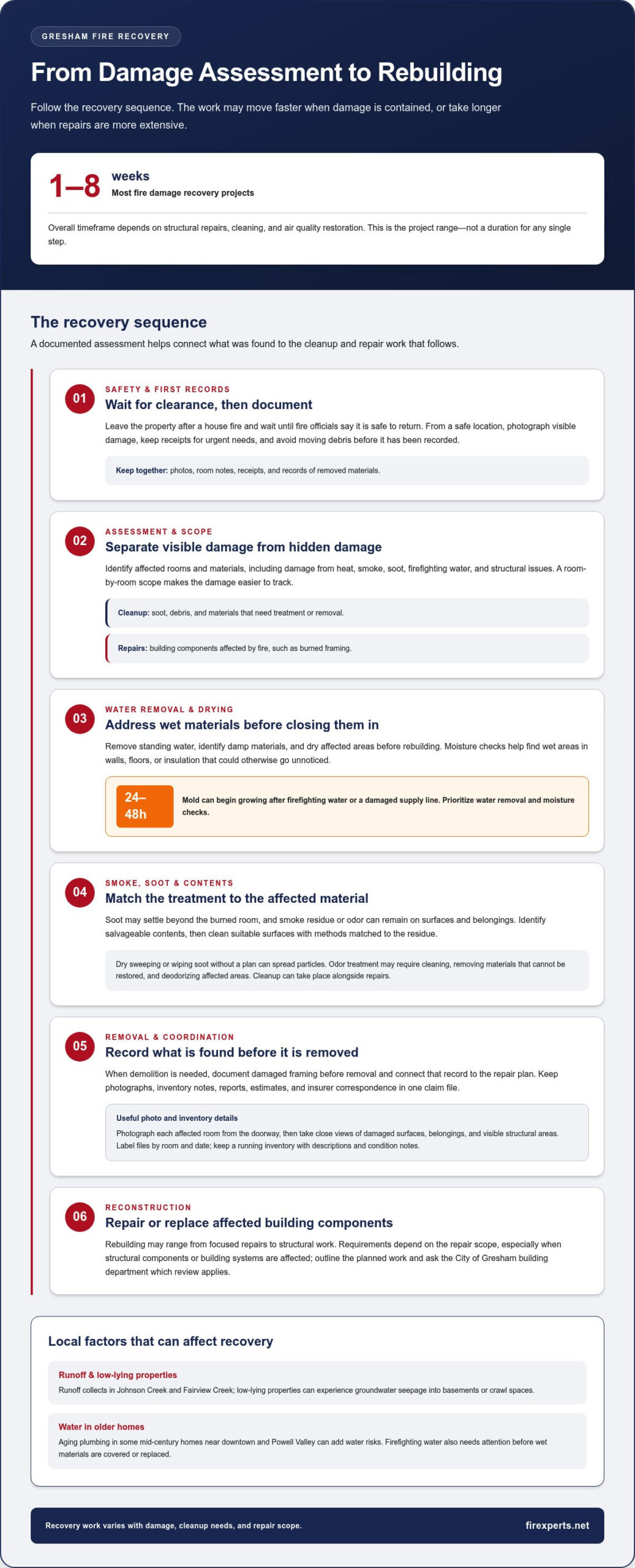
Fire damage recovery timelines
Most fire damage recovery projects take 1-8 weeks, depending on structural repairs, cleaning, and air quality restoration. The schedule follows the work required at the property, not simply the visible size of the fire.
Track the timeline through its main stages: assessment, cleanup, drying, repair planning, and rebuilding. Each stage prepares the property for the next, and findings along the way can change the work that follows.
What affects the schedule
Structural damage is a major timing factor. A room with smoke residue on sound surfaces needs different work from one where fire damaged framing or flooring. Crews must identify what can be cleaned and what needs removal before setting a practical repair sequence.
Cleaning and air quality restoration also shape the schedule. Smoke can spread beyond the room where the fire began, so affected surfaces and materials need assessment. Residue on walls, ceilings, and belongings may require separate cleaning steps before repairs can begin.
Firefighting water can add work. If it reaches flooring, wall cavities, or insulation, affected areas need attention before rebuilding covers them. The location and extent of wet materials influence the sequence, since repairs should follow cleanup and drying.
Track progress by completed steps
Rather than relying on a single return date, ask for a written work sequence with clear milestones. A useful update identifies the rooms assessed, cleanup completed, materials removed, and repairs ready to begin. This detail helps you understand what has changed since the last update.
- Assessment: Record which rooms and structural areas need work.
- Cleanup: Note completed soot removal and affected contents handling.
- Preparation: Track water cleanup, drying, and air quality work.
- Rebuilding: Confirm which repairs can proceed after earlier tasks are complete.
A living room, for example, may be ready for surface repairs while a smoke-affected hallway still needs cleaning. Tracking each area as a separate milestone gives a clearer picture than assuming every room follows the same schedule.
New findings can change the plan. If demolition exposes additional fire damage, the repair scope needs to account for it before rebuilding continues. Keep dated progress notes and match them to photographs so every change has a clear record.
Fire recovery brings real stress, especially when a household is waiting to use familiar rooms again. A written sequence turns an uncertain stretch into manageable tasks. Review progress at each milestone, note the next step, and tie questions to a specific room or repair.
Homeowner reviews and ratings
For a licensed fire restoration contractor in Gresham, assess licensing information, written scope, and experience with fire-related repairs. Reviews can add context, but specific examples matter more than a rating alone.
Read reviews for details about the work, not just praise or frustration. A useful review might explain how a contractor described the damage, kept the owner updated, or handled changes after demolition. Compare those details with the communication and documentation your property needs.
Look for recurring themes across reviews. One complaint may reflect an unusual situation, while repeated comments about missed updates or unclear estimates deserve closer attention. Specific accounts of organized cleanup and clear progress reports can also show how a contractor works.
- Communication: Notice whether reviewers describe timely updates and clear explanations.
- Work scope: Look for examples that distinguish cleanup from structural repairs.
- Documentation: See whether reviews mention photos, written estimates, or change explanations.
- Follow-through: Note how reviewers describe the response when plans changed.
Check the date and context of each review. Fire restoration differs from a small repair, so prioritize accounts involving smoke cleanup, structural work, or insurance coordination. A review from a Fairview-area homeowner, for example, may describe conditions that differ from a property farther up the valley.
Ratings can help reveal patterns, but they don’t explain the full project. Read reviews alongside the contractor’s written process. Look for a clear sequence from damage assessment through cleanup and rebuilding, including a way to document newly discovered damage.
Before choosing, compare the proposed scope with the problems described in reviews. If your home has smoke residue and damaged framing, look for relevant experience with both cleanup and structural repairs. A specific description of how work was organized is more useful than a broad claim of customer satisfaction.
Keep your selection notes together. Record the contractor’s license details, project scope, communication plan, and questions answered during the estimate process. Comparing these details side by side can help you see which approach fits your property and expectations.
If you’re weighing the next step after a fire, discuss fire restoration planning and the work your property needs.
Fire Industry Restoration Experts: Fire Restoration Services
Fire Industry Restoration Experts can help when fire damage calls for coordinated cleanup and rebuilding. The work includes damage assessment, boarding up, demolition, and reconstruction, with insurance coordination as the project moves forward.
Fire Restoration Services address fire-related damage, while Smoke Restoration Services focus on smoke impacts. If firefighting water has affected walls, flooring, or contents, Water Restoration Services and Water Remediation Services can address that part of the recovery. Bringing these needs into a clear work sequence helps connect cleanup findings with repair decisions.
Before work begins, gather your photographs, adjuster correspondence, and questions about affected rooms. This gives the restoration team a practical starting point for understanding the property and its recovery needs. For a conversation about your situation, contact Fire Industry Restoration Experts.
Take the next step toward a steady rebuild
The decisions made before repairs begin can shape how manageable the work feels. Start by gathering your property records, writing down unanswered questions, and identifying which areas need attention first. This gives you a clearer footing for discussing a fire damage rebuild in Gresham.
Fire Industry Restoration Experts can organize restoration work around the damage to your property. Fire & Smoke Restoration and Water Restoration address connected parts of fire recovery. A conversation can help you explain what happened and discuss the work ahead without sorting through every detail alone.
Contact Fire Industry Restoration Experts to talk through your restoration needs. You can take the next step at a pace that feels manageable, with a clearer plan to guide the way forward.
Frequently Asked Questions
What does fire damage reconstruction in Gresham typically include?
Fire reconstruction can include securing the property, assessing damage, removing damaged materials, and rebuilding affected areas. The scope depends on what the fire damaged and what cleanup reveals. A visual inspection may not show damage behind walls, under flooring, or within HVAC components. Ask for an assessment that identifies these areas and explains how the findings shape the repair plan.
How long does a fire-damaged home rebuild take in Gresham?
Most fire damage recovery projects take 1-8 weeks, with structural repairs, cleaning, and air quality restoration shaping the schedule. A rebuild involving damaged framing has different work stages from a property needing limited repairs. Ask for progress to be described by completed tasks, such as demolition finished or a room ready for reconstruction. That makes changes to the work sequence easier to understand.
Gresham building codes and inspections for fire-damaged homes
Before rebuilding, outline the planned work and ask the City of Gresham building department which review applies, especially if repairs affect structural components or building systems.