
Smoke odor can linger for months or even years without specialized cleaning. Smoke particles cling to hard surfaces and penetrate soft furnishings and porous materials, so removing smoke smell from a house after a fire in Gresham often takes more than opening windows or using an air freshener.
If the smell keeps returning, it’s understandable to wonder whether its source is still in the home. Odor absorbers and ventilation can help with some smoke smells, but they may not reach residue embedded in materials or inside the HVAC system. This guide explains why smoke odor is difficult to remove and how to decide whether careful DIY steps are enough or professional restoration is the better next move.
You’ll learn how to use ventilation and odor absorbers, when smoke-affected materials may need cleaning or removal, and what signs point to a deeper problem. The goal is to help you decide what to tackle safely and where to focus first.
Key Takeaways
- Use ventilation and odor absorbers as practical first steps, but recognize when the smoke source may remain in materials or hidden areas.
- Consider professional restoration when smoke affects several rooms, structural materials, or the HVAC system, or when odor persists after basic cleaning.
- Keep baking soda and activated charcoal in perspective: they can help absorb odors, but they don’t replace cleaning contaminated surfaces and belongings.
- Remove smoke-damaged porous materials only when they can’t be effectively cleaned or deodorized; some belongings may be restorable through specialized cleaning.
- Before tackling cleanup, follow fire-safety instructions and take care around older building materials that may require extra precautions.
1. What Makes Removing Smoke Smell From House So Difficult?
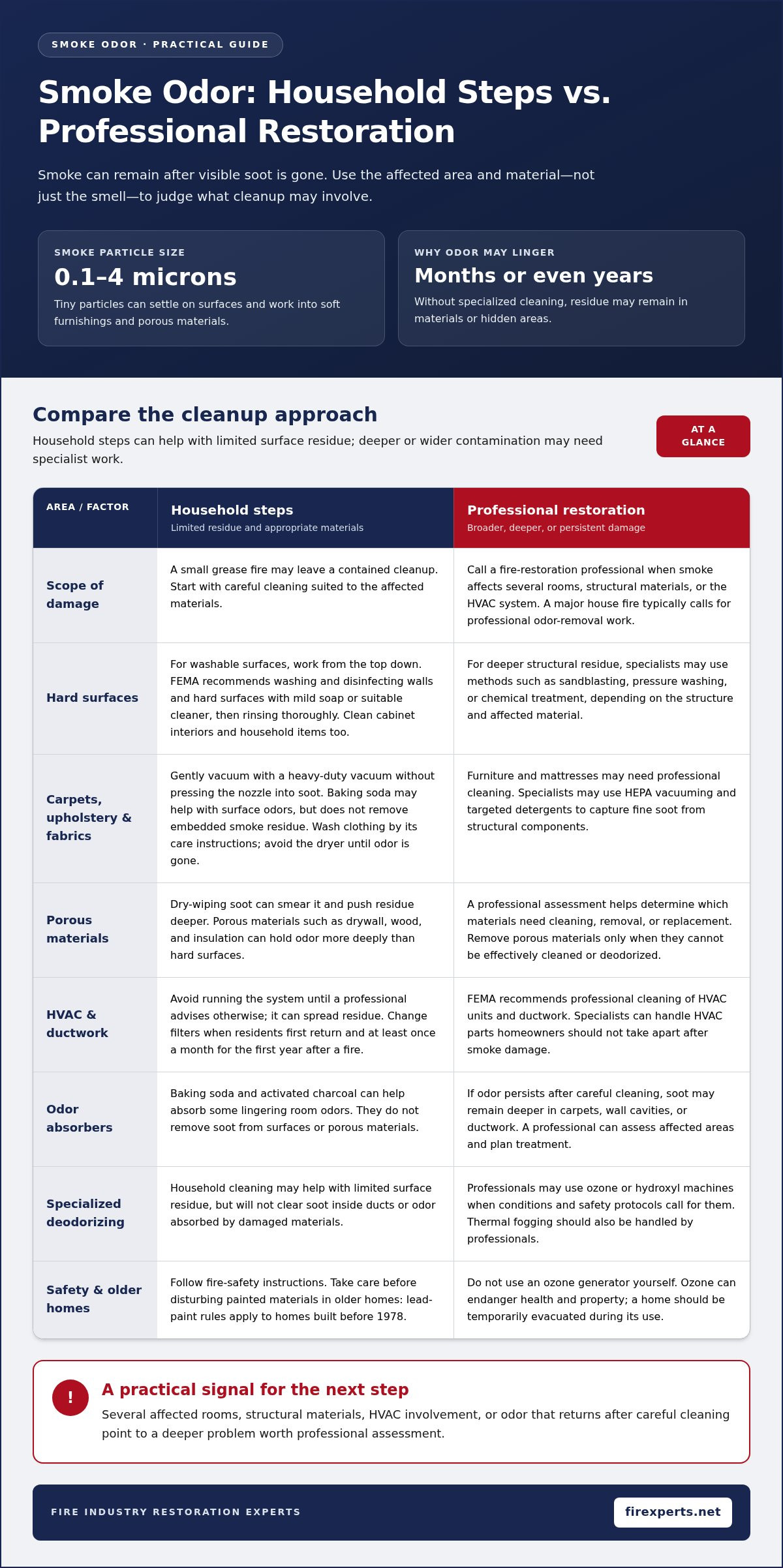
Smoke odor can remain after visible soot is gone because tiny particles settle across a home. Fire smoke particles can measure roughly 0.1 to 4 microns, and they stick to surfaces or work into soft furnishings and porous materials. Dry-wiping soot can smear it and push residue deeper, so begin with the right cleaning method for each material. Without specialized equipment, odor may linger for months or even years.
For washable hard surfaces, work from the top down so loosened residue doesn’t soil areas you’ve already cleaned. The Federal Emergency Management Agency recommends washing and disinfecting interior walls and hard surfaces with mild soap or suitable cleaning products, then rinsing thoroughly. Clean cabinets, shelves, and household items such as knick-knacks too. Empty cabinets first, clean their interiors and contents, and rinse surfaces if the cleaner requires it. Another listed approach for hard surfaces is a warm-water solution with a half cup of distilled white vinegar and a teaspoon of shampoo or dishwashing soap.
Soft goods need different care. Gently use a heavy-duty vacuum on carpets, upholstery, and fabrics, without pressing the nozzle into soot. Baking soda may help with surface odors on upholstery or carpet, but it won’t remove embedded smoke residue. Oklahoma State University Extension says furniture and mattresses may need professional cleaning. Wash smoky clothing according to its care instructions, and don’t put it in a dryer before the odor is gone, since heat can lock smells into fabric.
HVAC systems can spread residue if they run before inspection. Avoid using the system until a professional advises otherwise. The Federal Emergency Management Agency recommends professional cleaning of HVAC units and ductwork to remove soot, ash, and smoke residue. Oklahoma State University Extension advises changing filters when residents first return and at least once a month for the first year after a fire. Cleaning or replacing filters and grates helps reduce particle circulation.
Structural surfaces may need more than household cleaning. Smoke and soot can be removed from some structures through methods such as sandblasting, pressure washing, or chemical treatment. Porous materials, including drywall, wood, and insulation, can hold odor more deeply than hard surfaces. For older homes, take care before disturbing painted materials: lead-paint rules apply to homes built before 1978, according to the U.S. Environmental Protection Agency. The building’s age and the affected material help determine how cleanup should proceed.
2. When Should You Call a Professional to Effectively Neutralize Smoke Odor?
Call a fire-restoration professional when smoke affects several rooms, structural materials, or the HVAC system. Lingering odor after careful cleaning can mean soot remains deeper in carpets, wall cavities, or ductwork. A small grease fire may leave a contained cleanup, while a major house fire typically calls for professional odor-removal work. For homeowners removing smoke smell from a house after a fire in Gresham, the scope of affected materials is a practical guide to the next step.
Professional remediation begins with assessing affected areas and deciding which materials need cleaning, removal, or replacement. Specialists may use HEPA vacuuming and targeted detergents to capture fine soot from structural components. They can also handle HVAC parts that homeowners shouldn’t take apart after smoke damage. Ozone or hydroxyl machines may be used when site conditions and safety protocols call for them. Thermal fogging disperses a heated deodorizing solution into areas smoke may have reached, so professionals should handle that treatment.
Don’t use an ozone generator yourself. Oklahoma State University Extension warns that ozone can endanger health and property, and advises temporarily evacuating a home during its use. Professionals plan treatment around site conditions and safety protocols. Vinegar and household cleaning may help with limited surface residue, but won’t clear soot inside ducts or odor absorbed by damaged materials.
How long does professional smoke odor removal take? The timeline depends on affected rooms, materials, soot levels, and whether drying or structural work is needed. Cleaning, deodorizing, and checking for remaining odor are separate tasks. A contained area requires a different work plan from a fire affecting multiple rooms.
How can homeowners find licensed fire and smoke restoration companies in Gresham, Oregon? Look for restoration firms serving Gresham, request their Oregon contractor license number, and verify the business through the state’s contractor licensing records. Ask for a written assessment describing affected materials and planned work. This helps you compare proposed scopes, not just general service descriptions.
Does homeowners insurance cover smoke odor cleanup after a fire in Oregon? Coverage depends on the policy’s fire-damage terms, exclusions, and claim details. Photograph affected rooms and belongings, record items removed, and contact your insurer about the claim process before discarding property. A professional assessment can clarify what removing smoke smell from a house after a fire in Gresham will involve and help document the damage. For guidance on restoration steps, review smoke damage restoration guidance.
3. Baking soda and activated charcoal for odor absorption
Baking soda and activated charcoal can help absorb some lingering smoke odors in a room, but neither removes soot from surfaces or porous materials. Use them as supporting steps after cleaning, not as ways to eliminate the source. Set bowls of baking soda around affected rooms for several days. Place activated charcoal in breathable containers near odor sources, following the product’s directions. Keep both materials away from children and pets.
For upholstery, sprinkle baking soda over the fabric and leave it for several hours before vacuuming. On carpet, spread it evenly and leave it for around 24 hours, then vacuum thoroughly with a HEPA-filter vacuum. Test a small, hidden spot first if the fabric or carpet may be delicate. These steps can help with surface odor, but they won’t reach smoke residue inside carpet padding, cushions, or other deeply affected materials.
Some people use bowls of distilled vinegar as a household measure for smoke smells. For smoky clothing, Oklahoma State University Extension recommends adding 1 cup of vinegar to the wash cycle with regular detergent. If the clothes still smell after washing, rewash them immediately and repeat until the odor is gone. Keep washed fabric items outside the home until they no longer smell, so they don’t pick up smoke again. Don’t put smoky clothes in the dryer before the odor is gone; heat can lock it into the material.
Air fresheners and scented sprays work differently. They cover smoke odor with fragrance but don’t clean particles from furniture, carpet, walls, or fabrics. If the smell returns after the fragrance fades, check for recurring sources such as curtains, rugs, mattresses, closet contents, or residue on cabinet interiors. A smoky odor near a vent can also point to particles in filters, grates, or ductwork. An odor absorber won’t clean those areas.
Use a simple sequence: remove washable fabrics from the affected room, clean accessible surfaces, then use baking soda or charcoal to address remaining room odor. Notice where the smell is strongest, such as in one carpeted room or on a specific piece of furniture. If odor persists after cleaning and absorption, the source may be deeper in porous materials or building components. That calls for a more complete restoration approach, not more fragrance or bowls of baking soda.
4. Ventilation with open windows and doors
To remove smoke odor after a fire, first make sure firefighters have cleared the home for entry. Then open windows and doors when weather permits, and create a path for stale indoor air to leave. Oklahoma State University Extension recommends opening windows and doors for fresh air. Ventilation helps move airborne smoke particles outside, but it cannot clean residue already settled on surfaces or fabrics.
After smoke exposure, maintain maximum ventilation for 12 to 24 hours when conditions allow. Open windows on opposite sides of the home if available, so fresh air can move through rooms rather than circulate in one corner. Keep interior doors open along that airflow route. If outdoor air is smoky or weather makes open windows unsafe, pause this step and follow local safety guidance instead.
For positive-pressure ventilation, place a fan at the front door to push fresh air inward. Close all but one window or door to serve as an exhaust opening. Work room by room, directing airflow toward that outlet. This gives air a route through the home and out again. Keep the fan clear of soot-covered surfaces, and avoid aiming it directly at loose ash or debris.
Don’t switch on the HVAC system just to move air. Smoke and soot can travel through ductwork and spread into rooms that weren’t directly affected. Leave the system off until a professional advises otherwise. Opening windows does not replace cleaning filters, grates, or contaminated surfaces. If odor grows stronger near a vent, that location may help identify where residue remains.
Safe homeowner steps are straightforward: enter only after clearance, open windows and doors when weather permits, and ventilate the home without running the HVAC system. Keep foot traffic low in affected rooms so soot isn’t tracked across clean floors. After handling smoke-exposed fabrics safely, move them outside the home. This can help prevent lingering smoke odors from transferring to other belongings while you clean or launder the fabrics.
Ventilation is one part of odor removal, not a complete deodorizing treatment. Smoke particles can penetrate porous materials such as upholstery, carpet, and insulation, where open windows cannot reach them. If the smell remains after airflow and surface cleaning, note which rooms or belongings still carry the odor. Persistent odor across several rooms, or a strong smell returning after the windows close, points to residue that needs targeted cleaning.
Use ventilation as an early step, then reassess the home after the indoor air has circulated. Clean exposed surfaces and fabrics separately, and keep records of affected areas. This measured approach helps distinguish temporary airborne smoke from odor held deeper in materials.
5. Removing porous, smoke-contaminated materials
Hard surfaces can often be cleaned, but porous materials hold smoke residue inside their fibers and layers. Drywall, wood, insulation, carpet padding, wallpaper, mattresses, and upholstered furniture can retain odor after surface cleaning. The deeper smoke damage reaches, the harder it is to deodorize an item in place. Restoration work therefore starts by identifying which materials can be cleaned thoroughly and which still smell after treatment.
Wet materials need attention as well as smoky ones. Fire suppression can leave carpet, drywall, insulation, and wood damp, and wet materials should be dried within 24 to 48 hours to help prevent mold. Separate wet belongings from dry items, and document affected rooms and property before removal. If water has reached carpet padding or a wall cavity, drying the visible surface alone won’t address moisture trapped inside.
When should smoke-damaged belongings be discarded or professionally cleaned? Keep items that can be cleaned thoroughly, and arrange specialized cleaning for restorable furniture, clothing, and linens. Remove or replace porous materials such as carpeting, wallpaper, or insulation when the smoke damage can’t be repaired or odor remains after cleaning.
Some soft goods and non-porous items can be restored through specialized off-site processes. A restoration professional can assess each item’s material, condition, and smoke exposure, then determine whether it needs cleaning or replacement. For example, washable linen may be handled differently from a smoke-saturated mattress or carpet pad. Sorting belongings by material and recording what leaves the home helps keep cleanup organized.
Structural removal calls for care. Smoke-contaminated drywall or insulation may need to be removed when deodorizing cannot reach residue inside. Don’t tear out materials simply because they smell smoky. Identify the affected area and assess whether cleaning can restore it first. Controlled removal can help limit the spread of soot, while properly drying exposed framing prepares the area for further restoration work.
For materials that remain damp after firefighting, prioritize drying and keep a record of the affected locations and items. Fire Industry Restoration Experts’ smoke restoration services can help assess smoke-affected materials and guide cleaning, removal, or replacement decisions.
Fire Industry Restoration Experts: Fire Restoration Services
Fire Industry Restoration Experts helps homeowners address fire and smoke damage when odor persists, several rooms are affected, or cleanup reaches structural materials. Its Fire Restoration Services and Smoke Restoration Services cover work such as damage assessment, demolition, and rebuilding. If firefighting left water damage, Water Restoration Services and Water Remediation Services can address that part of the recovery too.
The team also coordinates with insurance companies during restoration, helping organize the work and claim process. A clear assessment can identify which materials need cleaning, removal, or repair, helping homeowners make practical decisions about next steps.
For help with fire or smoke damage in your home, contact Fire Industry Restoration Experts or visit firexperts.net.
Take the Next Step Toward a Fresh Start
Once cleanup begins, keep a simple record of what still smells smoky and where the odor is strongest. Room-by-room notes can help focus the next inspection and clarify decisions about belongings and repairs. For homeowners considering removing smoke smell from a house after a fire in Gresham, the next step is matching the remaining damage to the right level of restoration.
Fire Industry Restoration Experts provides Fire Restoration Services, Smoke Restoration Services, and Water Restoration Services for homes affected by fire and suppression water. Talk with the team about what you’ve observed and consider a practical path forward without sorting through every decision alone.
Contact Fire Industry Restoration Experts to discuss the damage and your next steps. You can move forward one clear decision at a time.
Frequently Asked Questions
What Makes Removing Smoke Smell From House So Difficult?
Smoke odor is difficult to remove because particles can settle in places that aren’t obvious during a quick cleanup. A room may look clean while residue remains on the back of a cabinet, inside a closet, or beneath upholstered cushions. Smoke can also cling to several materials at once, so treating only the floor or walls may leave a source behind. Check concealed and rarely moved items as well as open surfaces.
Before You Clean: Is It Safe to Go Back Inside?
Don’t re-enter a fire-affected home until firefighters have instructed you that it’s safe. After clearance, limit trips inside and avoid disturbing soot or debris as you gather essentials. Take photos of damaged rooms and belongings before moving or removing items. If a room has unstable, burned, or heavily contaminated materials, don’t handle them as part of ordinary household cleaning. Document the area and leave it undisturbed.
Deep Cleaning: Does Baking Soda or Vinegar Neutralize Smoke Odor?
Baking soda and vinegar can help with limited odors, but they don’t replace removing smoke residue. Oklahoma State University Extension recommends placing bowls of baking soda around the home for several days. For smoky clothes, it recommends adding 1 cup of vinegar to the wash with regular detergent. Keep fabrics out of the home until the odor is gone, and rewash clothing that still smells after its first wash.
How Long Does Ventilation Take to Clear Smoke After a Fire?
After smoke exposure, allow maximum ventilation for 12 to 24 hours when weather permits. Oklahoma State University Extension recommends opening windows and doors to bring in fresh air. That period helps replace smoky indoor air, but it doesn’t remove odor held in carpet, furniture, or other materials. If outdoor air is smoky or conditions make open windows unsafe, don’t rely on ventilation alone to address the remaining odor.
When Should You Call a Professional to Effectively Neutralize Smoke Odor?
Call a restoration professional if odor remains after careful cleaning, several rooms are affected, or smoke reached structural materials or the HVAC system. A small, contained cooking fire may leave a simpler cleanup than a major house fire. In Portland, Gresham, or Clackamas, note the affected rooms and materials, along with any odor near vents, before arranging an assessment. This information helps pinpoint the remaining source and the work needed.
Why Does the Smoke Smell Keep Coming Back?
Smoke odor can return when residue remains on or inside an item that wasn’t cleaned. A washed room may still smell if a smoky coat stays in a closet, a rug retains odor, or residue remains around a vent. Changes in airflow can also make an overlooked source more noticeable. Compare rooms and belongings to find where the smell is strongest, then focus on that area rather than masking the odor.
How do fire restoration professionals deodorize a smoke-damaged home?
Professionals assess affected materials, then match cleaning and deodorizing methods to the location and type of residue. They may use HEPA vacuuming and targeted detergents on structural components, and can address contaminated HVAC parts. Depending on the site plan, odor treatment may include ozone or hydroxyl equipment, or thermal fogging. Furniture and other restorable belongings may be handled separately so cleaning can reach areas that remain inaccessible inside the home.
Are ozone generators safe for removing smoke odor in homes?
Ozone generators aren’t a safe do-it-yourself choice for smoke odor removal. Oklahoma State University Extension warns that ozone can pose health and property dangers and advises temporarily evacuating the home during use. Don’t operate a generator in an occupied house or treat it like an ordinary air freshener. Professional use depends on site conditions and safety protocols, including keeping people out of the treated area as directed.