
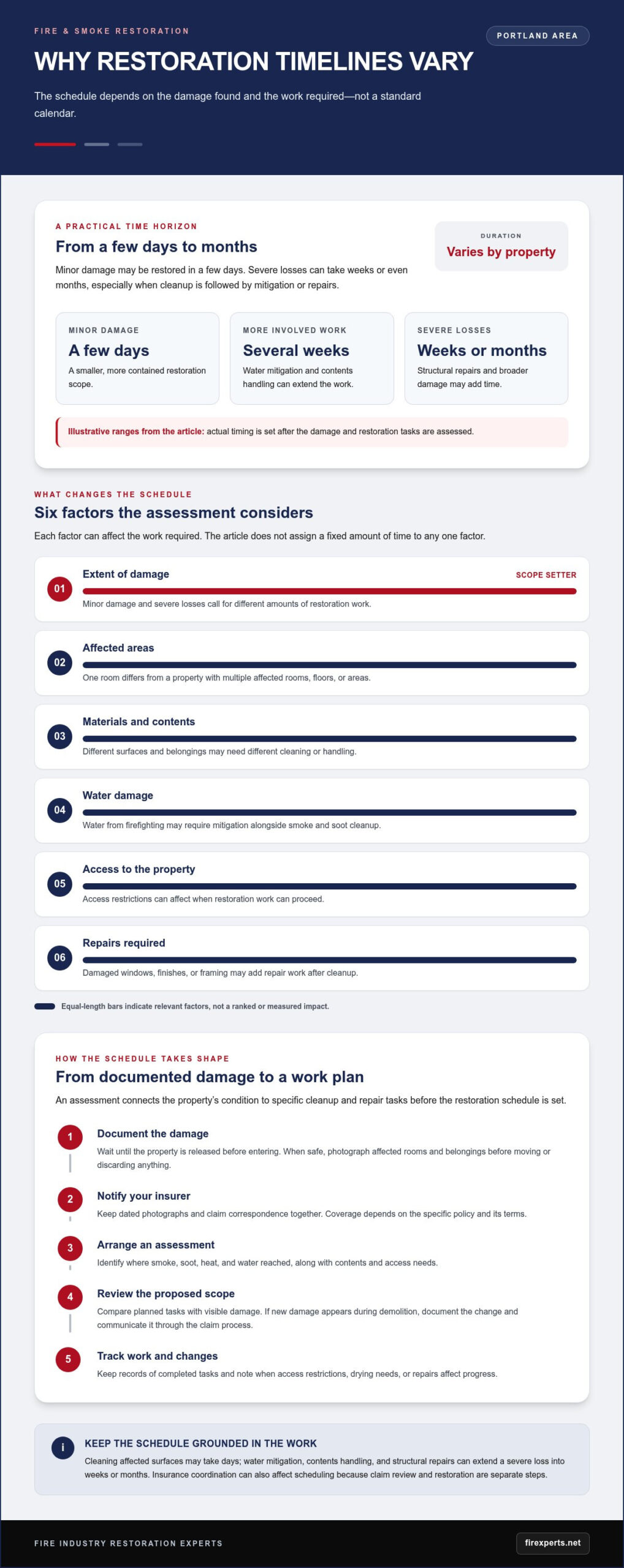
Fire restoration can take a few days, several weeks, or even months, depending on the extent of the damage. Minor damage may be restored in a few days, while severe losses can take much longer. The timeline for smoke and soot cleaning services in Portland also depends on the affected areas, materials and contents, water damage, access, and whether repairs are needed.
After a fire, it’s understandable to want a clear timeline and cost so you can plan what comes next. Cleanup can feel like another uncertainty, but the work follows practical steps: assess the damage, select cleaning methods for the affected surfaces and materials, and determine whether repairs are part of the restoration.
This article explains how professional soot cleaning works, what shapes a property-specific cleanup estimate, and how crews address smoke odors and residue. You’ll also learn why timelines vary and what to expect during assessment and cleanup in the Portland area.
Key Takeaways
- Wait until the fire department or responsible authority releases the property before entering, and photograph damage when it’s safe to do so.
- Turn off potentially contaminated heating and cooling equipment, and avoid wiping or scrubbing soot with household cleaners.
- Insurance coverage depends on your policy, including its limits, deductible, exclusions, and claim requirements.
- Smoke odor treatment may involve methods such as HEPA air filtration, thermal fogging, or ozone treatment, depending on the affected materials and areas.
- A property-specific assessment helps identify the cleanup and repair work needed to build a realistic restoration plan.
How long does fire damage restoration take?
Minor fire damage restoration may take a few days; severe cases can take weeks or months. Smoke and soot cleanup timing depends on the affected areas, materials and contents, access, water damage, and required repairs. Cleaning soot in one room, for example, differs from restoring a fire-damaged property with affected windows, finishes, and framing. An assessment identifies the work before the restoration schedule is set.
Insurance coordination starts with documenting the loss and notifying your insurer. Wait until the fire department or responsible authority releases the property before entering. When it’s safe, photograph each affected room and belongings before moving or discarding anything. Record visible damage to finishes, windows, and contents, and keep the images with your claim correspondence. Your insurer determines coverage based on the policy, cause of loss, limits, deductible, exclusions, and policyholder responsibilities.
For a commercial property, organize records by room or work area. Useful documentation includes dated photographs, an inventory of damaged contents, the assessment, a written scope of work, and records of completed restoration tasks. Preserve relevant invoices and communications about access or operations. Share claim documents with your insurer and keep copies together. This gives the insurer a clear record to review as restoration proceeds.
Keep the restoration scope and any written workmanship warranty with your insurance file. They serve different purposes: the scope records planned work, while warranty terms describe the workmanship coverage offered. Neither document changes your policy’s limits, deductible, or exclusions. Before work begins, compare the listed tasks with visible damage, such as soot on walls or water-damaged flooring. If demolition reveals new damage, document it and communicate the change through the claim process.
Insurance coordination can affect scheduling because restoration and claim review are separate steps. A clear sequence helps: document the damage, notify your insurer, arrange an assessment, review the proposed scope, and track completed work. Keep dated notes when access restrictions, drying needs, or repairs affect progress. Many homeowners policies cover fire damage restoration, but coverage depends on the specific policy. Commercial policies also require review of their terms and submitted records.
The timeline depends on the work, not a standard calendar. Cleaning affected surfaces may take days, while water mitigation, contents handling, and structural repairs can extend a severe loss into weeks or months. An assessment links the damage to specific tasks and helps explain the schedule. Keep insurance records current as work changes, so the claim file reflects the property’s condition and restoration progress.
Fire restoration service areas around Portland
Fire damage restoration in Portland may involve one room, several floors, or separate areas of a home or business. Smoke and soot can travel beyond the room where the fire began, while firefighting water may affect nearby floors and contents. A restoration assessment identifies where residue, heat, and water reached, then separates immediate cleanup from repairs. Regional wildfire smoke can also drift into the Portland metro during summer and early fall, affecting properties without a structure fire.
During the visit, the team reviews affected rooms and identifies surfaces and belongings that need attention. Leave soot-covered areas undisturbed: brushing or wiping can spread particles into finishes and irritate skin or airways. A controlled work area can help limit residue movement while crews handle debris and clean surfaces. The assessment also considers access, contents, and whether damaged windows or building materials need repair.
Contents work starts with an inventory. Record each affected item by room, note visible damage, and photograph it before moving it. Items that need treatment can be separated from debris and organized for pack-out, cleaning, or return. A soot-marked chair and smoke-affected clothing, for example, need different handling from a damaged wall finish. A clear inventory supports orderly restoration and keeps belongings connected to their original rooms.
DIY cleanup can make soot damage harder to correct. Soot can etch paint, plastics, and metals, while scrubbing may smear it or drive particles deeper into materials. If fire damage extends beyond one small, isolated item, leave affected surfaces alone and arrange a professional assessment. Household cleaners may react poorly with residue, and unsuitable tools can spread contamination into adjoining rooms.
When comparing smoke and soot cleaning companies in Portland, review customer feedback for clear communication, careful documentation, and follow-through on cleanup. Compare the services described with your needs, such as contents handling, odor treatment, and repairs, rather than relying on broad claims. For credentials, look for relevant restoration training, including IICRC certification, and consider how licensing relates to any repair work. Certification and licensing are separate checks.
During containment, crews can isolate affected work areas and organize the order of cleaning to limit cross-contamination. The plan should identify which rooms are included, how contents will be handled, and what work follows cleaning. If you need a structured assessment of fire or smoke damage in Portland, fire and smoke restoration support can be a practical next step.
How much does smoke & soot cleanup cost?
There’s no single cleanup scope for every Portland property. A property-specific assessment identifies affected rooms, materials and contents, odors, water damage, and needed repairs before costs can be outlined.
Smoke Odor Removal
Smoke odor removal addresses residue and odor that may remain after visible soot is cleaned. Smoke odor can penetrate drywall and insulation within hours, so technicians assess more than the surface of a wall. They consider affected materials, rooms, contents, and how far smoke traveled. The removal plan may include cleaning contents and surfaces, treating odor, or repairing materials that retain smoke.
Equipment and treatment choices depend on the affected area and materials. Restoration experts may use HEPA air filtration, thermal fogging, or ozone treatment to address smoke odors. For safety, people should temporarily leave areas receiving ozone treatment. Ask for a scope that identifies affected rooms, proposed odor removal steps, contents work, and any repairs. This detail clarifies what the estimate covers.
The scope may include several connected tasks: board-up, debris removal, soot and smoke cleaning, odor removal, water damage mitigation, structural repairs, and contents cleaning or replacement. A fire in one room may also leave firefighting water in nearby areas. For example, an estimate may need to cover both smoke residue on a ceiling and water-damaged flooring below it. Costs depend on the case, and the assessment considers affected areas, materials and contents, access, water, odor treatment, and repairs.
Soot staining can remain after loose residue is removed, especially when particles bond with paint or other finishes. Odors may also return if smoke-affected drywall, insulation, or contents remain untreated. A thorough assessment traces each visible stain or lingering odor to its source, then identifies cleaning or repair steps. Make sure the scope states which surfaces and belongings will be treated.
Wildfire Smoke and Odor Removal
Regional wildfire smoke can drift into the Portland metro during summer and early fall. Unlike a structure fire, wildfire smoke may enter through openings and affect rooms without visible fire damage. An assessment should identify smoke-affected surfaces, furnishings, and ventilation areas, rather than treating odor alone. HEPA air filtration can address airborne particles, while cleaning and other odor treatments address affected materials.
For a property-specific estimate, document affected rooms and contents, then note any water damage or needed repairs. Compare proposed tasks with observed conditions, distinguishing smoke residue, odor treatment, contents cleaning, and structural work. This makes the cleanup scope easier to understand and connects the work to the property’s actual damage.
Professional soot-cleaning methods
Professional soot cleaning starts with assessing the residue and the material beneath it. Soot can damage surfaces, so the condition of each surface matters. Technicians identify affected finishes, contents, and structural materials before choosing a method. A painted wall, metal fixture, and fabric chair need different handling. The goal is to remove residue without grinding it into the surface or spreading it elsewhere.
Choosing smoke and soot cleaning services in Portland means looking for a method suited to the specific surfaces, not a one-size-fits-all approach. Soot particles can spread through a property within hours, and smoke odor can penetrate drywall and insulation within hours. Within days, residue on walls and HVAC components becomes harder to clean. Firefighting water can add secondary damage, so an assessment maps areas needing cleaning, drying, odor treatment, or repair.
Don’t scrub dry soot with water or household cleaners. These can smear residue and drive particles deeper into materials. Trained technicians match specialized tools and methods to the surface and soot condition. They clean affected areas carefully and check the results before moving to adjoining finishes. A soot-marked painted wall, for example, needs different handling from residue on a metal fitting or porous insulation.
- Assess: Identify affected rooms, materials, visible residue, and water damage.
- Select: Match the method to the surface, residue, and material condition.
- Clean: Remove soot without scrubbing it deeper into finishes.
- Recheck: Review cleaned areas and identify remaining odor or repair needs.
Air and odor treatment can complement surface cleaning. Restoration experts may use HEPA air filtration, thermal fogging, or ozone treatment to address smoke odors. For safety, people should temporarily leave areas receiving ozone treatment. The plan should identify which rooms receive treatment and why. For smoke and soot cleaning services in Portland, ask how the approach addresses both visible residue and smoke that may have entered drywall or insulation.
After an electrical fire in an older Portland home, restoration crews should coordinate with electricians before work begins. Cleaning and structural work must reflect the property’s condition, not just its appearance. Leave soot undisturbed, document damage when safe, and have affected surfaces assessed before attempting cleanup. Because a method suited to one finish may harm another, careful assessment guides the work from the start.
What smoke and soot cleaning services are available in Portland homes and businesses?
Smoke and soot restoration can include cleaning, odor treatment, contents work, water mitigation, and repairs. The right scope depends on what the fire affected, from surfaces in one room to multiple rooms and belongings. A residential kitchen fire and smoke damage in a commercial office, for example, may require different cleaning sequences. An assessment connects each task to the affected materials and areas.
Surface cleaning targets soot on walls, ceilings, fixtures, and other affected finishes. Technicians choose methods based on the material and residue rather than using one approach throughout the building. Soot on a painted wall may need different treatment from residue on a metal fixture. Cleaning must also account for soot that traveled beyond the fire’s starting point, including into adjoining rooms.
Odor treatment can address smoke that lingers after visible residue is removed. Restoration experts may use HEPA air filtration, thermal fogging, and ozone treatment to address smoke odors. The chosen method depends on the affected spaces, materials, and odor conditions. A clear work plan identifies which areas receive treatment and how contents and surfaces fit into the process.
- Cleaning: Remove soot from affected surfaces using methods suited to their materials.
- Odor treatment: Apply appropriate equipment and methods to address smoke odors.
- Contents work: Clean or replace affected belongings, based on their condition.
- Water mitigation: Address water left by firefighting alongside fire damage.
- Repairs: Restore damaged structural materials and finishes where needed.
Contents services can include documenting belongings, separating damaged items, and cleaning or replacing affected contents. A smoke-affected chair, for example, may need different treatment from a soot-marked wall. Organizing items by room helps connect the inventory to the areas being cleaned and gives owners a practical record of which belongings need attention during restoration.
Fire restoration may also include board-up and debris removal when damage leaves openings or unsafe materials. Water mitigation may be needed if firefighting water reaches floors, walls, or contents. Structural repairs address building materials that cleaning alone cannot restore. These tasks can overlap, so sequencing matters: crews need to address the property’s condition before finishing surfaces or returning cleaned contents.
For a home or business with fire-related residue, odor, or water damage, a property assessment can define the work areas and restoration steps. Request fire and smoke restoration support to discuss the damage and the next steps.
Fire Industry Restoration Experts: Fire Restoration Services
Fire Industry Restoration Experts helps organize restoration after fire, smoke, or related water damage. The team assesses damage, boards up openings, handles demolition, and rebuilds, coordinating with insurance companies throughout the restoration process.
Turn to the team when soot and smoke affect rooms, firefighting water reaches the structure, or cleanup needs to connect with repairs. Fire Restoration Services and Smoke Restoration Services address fire-related damage, while Water Restoration Services and Water Remediation Services address water impacts. Work begins with an assessment of the property and the tasks needed to move from cleanup toward restoration.
Describe what happened and which areas or belongings were affected. Contact Fire Industry Restoration Experts to discuss the damage and next steps.
Take the Next Step Toward a Usable Property
After a fire, the next decision is how to move from damage control toward safely using your home or workplace again. Set a clear priority for the property, such as protecting rooms from further damage or planning which areas need restoration first. That gives the assessment a practical focus and helps keep decisions centered on what matters to you.
For smoke and soot cleaning services in Portland, Fire Industry Restoration Experts can guide the restoration work. The company provides Fire Restoration Services, Smoke Restoration Services, and Water Restoration Services, bringing cleanup and related damage into one coordinated process. The team also coordinates with insurance companies as restoration needs are assessed.
You don’t have to sort through every step alone. Contact Fire Industry Restoration Experts to discuss the damage and a practical path forward. A steady plan can help make the next decisions feel more manageable.
Frequently Asked Questions
Can soot damage be cleaned without professional help?
Small, washable belongings may be cleaned at home if they have no heavy residue and their care instructions allow it. Building surfaces are different: soot can smear, spread, or damage finishes when handled incorrectly. Avoid dry sweeping, household cleaners, and ordinary fans around contaminated areas. If residue covers walls, ceilings, furnishings, or several rooms, leave the area undisturbed and arrange an assessment before attempting cleanup.
Does soot damage affect indoor air quality?
Yes. Soot and other fire residues can irritate airways and skin, and particles may travel beyond the room where the fire started. Avoid running heating or cooling equipment if soot may have entered its intake or ducts. Keep people away from visibly contaminated spaces, especially while debris is disturbed. The condition of the HVAC system and the extent of residue help determine which areas need attention.
How do professionals remove the smell of smoke?
Technicians identify where odors remain and address the residue or material holding them, rather than masking the smell. Smoke odor on a hard surface calls for different treatment from odor embedded in upholstery or building materials. Crews may combine cleaning with air filtration or odor treatment, then reassess affected areas. If the odor returns, untreated contents or materials may be the source, rather than the room’s air alone.
How is soot different from regular smoke residue?
Soot is the visible particulate deposit left on surfaces after combustion. Smoke residue is a broader term for contamination from smoke, including fine deposits and odors that may not be visible. A room can smell smoky even when surfaces look clean. This distinction matters because wiping away a visible mark may not address odor or residue on nearby belongings, inside furnishings, or in building materials.
How quickly should soot be cleaned after a fire?
Arrange an assessment as soon as the property is released for entry and conditions are safe. Soot can etch some finishes, and delays can make residue harder to remove. Don’t rush into cleaning: rubbing a surface may spread soot or drive it deeper. First keep people away from the affected area, then document visible damage and plan cleanup based on the materials involved.
What should I do immediately after a fire?
First, make sure everyone is safe and contact emergency services if the fire is active or anyone needs urgent help. Don’t enter until the fire department or responsible authority releases the property. Once it’s safe, photograph rooms and belongings before moving them, notify your insurer, and keep receipts and claim communications together. Leave soot-covered surfaces alone so you don’t spread residue while documenting damage.
Will soot odors go away on their own?
Not necessarily. Smoke odor can settle into porous materials such as drywall, insulation, fabrics, and furnishings, where opening windows may not remove its source. If the odor persists after visible residue is gone, look beyond room surfaces: affected contents or building materials may still need treatment. Avoid using fragrance products to cover the smell, since they don’t remove the smoke residue causing it.
Which smoke and soot cleaning companies serve Portland, Oregon?
Fire Industry Restoration Experts provides Fire Restoration Services and Smoke Restoration Services for property damage in Portland, Gresham, and Clackamas. The company serves homeowners and property managers, and can also address related water damage through Water Restoration Services. If fire residue has affected your home or business, contact the team to discuss the property and the restoration work needed.