
What if the visibly burned part of your kitchen is only one piece of the damage? Smoke and soot can travel beyond the room, and firefighting water may affect floors, cabinets, walls, and other materials. After a fire, it’s understandable to wonder what can be cleaned, what needs removal, and how to keep restoration and an insurance claim organized. Kitchen fire cleanup Portland homeowners can rely on is a coordinated recovery process, not simply a surface-cleaning job.
This guide explains what to expect from the first damage assessment through cleanup, demolition when needed, structural restoration, and rebuilding. You’ll learn what information and photos to document for your insurer, and how restoration work can be coordinated with the claim process without promising a particular coverage decision. Fire Industry Restoration Experts serves Portland and nearby communities, bringing fire-response experience and construction knowledge to the work. Founded by volunteer firefighter and contractor Greg Philo, the team guides property owners through each stage so the next steps feel clearer and more manageable.
Key Takeaways
- Kitchen fire cleanup Portland can involve smoke, soot, and firefighting water damage beyond the visibly burned area.
- Understand the usual path from assessment and mitigation to cleaning, removal, and repairs, with the scope guided by site conditions.
- A kitchen fire doesn’t automatically require a full rebuild; the right approach depends on the damage found during assessment.
- Prepare incident details, available photos, affected areas, and insurer contact information to help keep the claim process organized.
- Learn how Fire Industry Restoration Experts combines fire, smoke, and water restoration with practical project guidance and insurance coordination.
Kitchen Fire Cleanup in Portland: What Damage Can Remain After the Flames?
The flames may be out, but the kitchen can still hold damage that isn’t obvious at first glance. Smoke and soot can move through open doorways or ventilation, settling on surfaces and belongings beyond the cooking area. Water from suppression can also affect flooring, cabinets, or rooms below. That doesn’t mean every affected item or room needs removal. It means the full picture should be established before cleanup and repair begin.
Kitchen fire cleanup is the assessment and restoration of fire, smoke, soot, and related water damage, including effects that may extend beyond the burned cooking area. For kitchen fire cleanup Portland homeowners need a scope based on what inspection finds, not just the darkest burn mark. Immediate safety actions and restoration are separate: follow directions from fire officials and don’t enter areas that remain unsafe. Restoration work can begin once access is safe and the damage can be evaluated.
How smoke, soot, and firefighting water affect a kitchen
Smoke may travel into an adjoining dining area or hallway, while soot can settle on walls, counters, cabinet faces, and contents. Some materials may be cleanable; others may need closer evaluation or removal. The hood and exhaust path also deserve attention. Kitchen exhaust cleaning is recognized as part of fire prevention, and after a fire those components may warrant assessment as part of the cleanup.
Suppression water creates a separate concern. It can spread beyond the area where flames burned and affect building materials or belongings. The actual pattern depends on where the fire started, what materials burned, how the space is ventilated, and how the fire was suppressed. A small visible burn area doesn’t necessarily show the full reach of smoke or water.
What a kitchen fire damage assessment establishes
An assessment records visible damage and identifies areas that need closer evaluation before work proceeds. That may include the kitchen, nearby rooms, affected building materials, and contents. For example, a clean-looking surface near the fire may sit beside a soot-marked cabinet or a floor affected by water. The inspection helps distinguish what’s apparent from what needs further attention.
Documenting those findings creates a practical basis for planning cleanup, removal, and repairs. A restoration team can record affected rooms, materials, and contents, then use that information to shape the work around the conditions at the property. The resulting scope isn’t assumed in advance: it follows the evidence gathered during assessment and may change if closer inspection reveals additional damage.
This careful start helps bring order to a difficult situation. Instead of treating the kitchen as one damaged surface, the assessment considers how fire, smoke, soot, and water may have affected different parts of the home, then sets out the work those findings support.
How Kitchen Fire Cleanup Works: From Portland Damage Assessment to Restoration
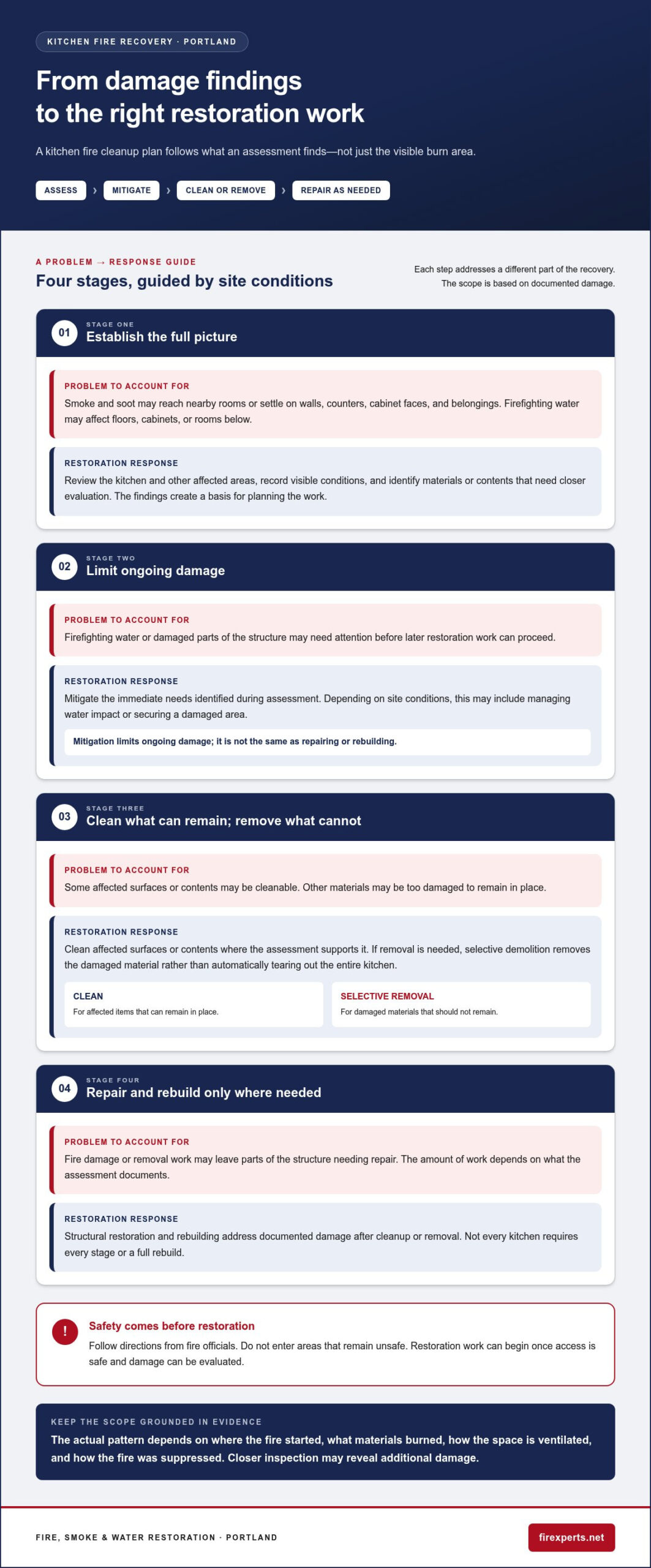
Once the property is safe to enter, restoration moves from understanding the damage to addressing it in a deliberate order. A kitchen fire may call for soot cleaning, water mitigation, removal of damaged materials, repairs, or only some of these steps. The findings on site guide the plan. Kitchen fire cleanup moves from assessment and mitigation to cleaning or selective removal, then to repairs and rebuilding only where the documented damage calls for them.
Assessment and mitigation before kitchen repairs
The team first reviews affected areas and identifies immediate priorities, such as addressing water impact or stabilizing damaged parts of the structure when needed. Mitigation means limiting ongoing damage and preparing the property for the next work. It isn’t the same as repairing or rebuilding the kitchen. If you need guidance on what to do before restoration begins, follow a dedicated first-steps guide and avoid disturbing areas that may be unsafe.
- Assess the damage. Review the kitchen and other affected areas, document conditions, and identify materials or contents that need closer evaluation. These findings form the basis for deciding what work is appropriate.
- Mitigate ongoing damage. Address immediate restoration needs identified during assessment. Depending on the conditions, this may include managing the effects of firefighting water or securing a damaged area before other work can proceed.
- Clean or remove affected materials. Cleaning is used where the assessment supports it. If a material is too damaged to remain in place, selective demolition removes that material rather than treating the entire kitchen as an automatic tear-out.
- Repair and rebuild as needed. Once cleanup or removal is complete, structural restoration and rebuilding can address the documented damage. The work follows the site conditions and scope, not a fixed sequence that every kitchen must receive.
Cleaning, selective demolition, and rebuilding
These stages solve different problems. Cleaning addresses affected surfaces or contents that can remain in place. Demolition removes damaged materials that shouldn’t remain. Repair and rebuilding restore the parts of the structure affected by the fire or removal work. Keeping those distinctions clear helps property owners understand why a proposed task is included and what it prepares for next.
Some projects may move from assessment to cleaning with limited repairs. Others need removal before rebuilding can begin. The sequence can also shift if inspection reveals additional damage, so the documented scope should remain the guide as work progresses. The Portland fire damage restoration guide offers a broader look at how fire restoration is planned. The IICRC standards for fire restoration provide a professional reference point for fire and smoke restoration practices.
For kitchen fire cleanup Portland property owners, Fire Industry Restoration Experts coordinates assessment, mitigation, demolition, and rebuilding around the conditions found at the property. If you’re sorting through the next stage, talk with the restoration team about how the work can be organized around the documented damage.
Can a Portland Kitchen Be Cleaned Without Rebuilding? How Restoration Decisions Are Made
A kitchen fire doesn’t automatically mean every cabinet, surface, or wall must come out. Some damage may be addressed through cleaning and targeted repairs; more extensive damage can call for selective demolition or rebuilding. The right scope depends on the condition of the affected materials, how far fire, smoke, soot, or water reached, and what the assessment finds. Appearance alone doesn’t settle the question.
For kitchen fire cleanup Portland property owners can expect the restoration team to explain the proposed work and why it fits the documented conditions. Each loss is different, so a plan should reflect the actual damage rather than assume every kitchen needs the same treatment.
| When it may fit | What the work focuses on | |
|---|---|---|
| Assess and clean | Inspection indicates affected areas or contents may be cleaned and can remain in place. | Cleaning identified surfaces and contents, including areas affected by smoke or soot beyond the cooking area. |
| Remove and repair | Some materials are too damaged to remain, while other parts of the kitchen may be retained. | Selectively removing affected materials, then repairing the parts identified in the scope. |
| Rebuild | Assessment finds damage that requires broader removal or structural restoration. | Addressing documented structural damage and rebuilding affected portions as needed. |
When cleaning may be part of the restoration scope
Cleaning may be appropriate when inspection supports leaving affected surfaces or contents in place. The team considers the type and extent of damage rather than assuming an item can be restored based on appearance alone. Smoke and soot can also affect nearby rooms, so the work may extend beyond the kitchen if assessment finds related damage there.
That distinction matters: a clean-looking surface isn’t proof that no further evaluation is needed, and visible residue doesn’t by itself establish that a material must be removed. Findings guide the decision.
When demolition or structural repairs may be needed
If inspection finds material damage that can’t remain in place, selective demolition may be needed before repairs proceed. That means removing affected portions identified in the scope, not automatically tearing out the entire kitchen. Structural repair also follows inspection findings; a dramatic-looking surface doesn’t by itself prove that the structure is damaged, and hidden damage shouldn’t be ruled out from appearance alone.
The team can explain what the assessment supports, what work is proposed, and how removal connects to repair or rebuilding. For more detail about the rebuilding side of a fire loss, see structural fire damage repair details. That separate topic can help clarify how structural restoration differs from cleaning and selective removal.
What Portland Property Owners Can Prepare for Kitchen Fire Cleanup
After a kitchen fire, keeping a few basic records together can make conversations about the damage and restoration easier to manage. You don’t need to solve the claim or decide what should be repaired before an assessment. Focus on collecting information you already have, and leave damaged areas alone if it isn’t safe to approach them.
Documenting kitchen and contents damage
If the property is safe to access, record what you can see without disturbing damaged materials or belongings. Photos can help capture the kitchen and nearby affected areas as they appeared after the incident. Keep the notes factual. Documentation supports discussions about the loss, but it doesn’t determine what an insurance policy covers.
- Incident details: Note when the fire occurred, where it began if known, and any details provided by fire officials.
- Available photos: Gather existing images and take new ones only if it’s safe to do so.
- Affected areas and contents: List visible impact in the kitchen and other rooms, along with contents that appear affected.
- Insurance information: Keep your insurer’s contact information and claim reference, if one has been provided, in one place.
- Related records: Save incident-related messages and any available ownership or purchase records for affected contents.
Don’t enter an area that remains unsafe, and don’t try to clean or move damaged items just to improve a photo. If you’re unsure whether an area is safe to access, wait for appropriate direction.
Coordinating the restoration scope with insurance
Clear communication helps keep the project understandable. Fire Industry Restoration Experts coordinates restoration work with insurance companies, while the assessment and documented scope help explain what work is being considered. Coverage decisions remain with the insurer and depend on the policy and claim. Keep notes on conversations and save relevant messages so details don’t get scattered across calls, texts, and paperwork.
As the work is discussed, useful questions include: What areas are included in the proposed scope? Which tasks come first, and what work depends on the findings? How will changes or newly identified damage be documented? Who should receive project updates? Having these questions in one place can make it easier to follow the plan and share consistent information with your insurer.
Smoke effects may extend beyond the kitchen, so note nearby rooms and contents that appear affected rather than assuming the loss stops at the doorway. For more detail on smoke-specific considerations, Portland smoke damage cleanup guidance can help you understand why those areas may be part of the discussion.
For kitchen fire cleanup Portland homeowners can approach with more clarity, keep your records together and share what you know without guessing about damage or coverage. Discuss your restoration documentation and project questions with Fire Industry Restoration Experts.
Kitchen Fire Cleanup in Portland: How Fire Industry Restoration Experts Guides the Work
A kitchen fire can leave you facing a damaged room, questions about what can stay, and uncertainty about how cleanup connects to repairs. Fire Industry Restoration Experts serves Portland and nearby communities with fire, smoke, and water restoration. The team helps organize the work around the damage found at the property, so you can understand what comes next without assuming every project needs the same treatment.
One restoration team for assessment through rebuilding
Founded in 2013 by volunteer firefighter and contractor Greg Philo, the company brings fire-response experience and construction knowledge to restoration projects. That combination supports practical guidance: assess the affected areas, identify mitigation needs, and set out a scope based on site conditions. The team handles damage assessment and mitigation, then carries out cleaning, demolition, structural restoration, or rebuilding where the documented work calls for it.
These stages have different purposes. Mitigation addresses immediate restoration priorities. Demolition removes damaged materials that shouldn’t remain. Structural restoration and rebuilding address repairs identified in the scope. A kitchen may need some of these stages, not necessarily all of them. The assessment helps determine where work should begin and how one task connects to the next.
As the project moves forward, the team can explain the work being considered and how findings inform the plan. If inspection identifies damage beyond what was first visible, the scope can reflect those conditions. If the assessment supports a more limited approach, the work can be planned around that too. The goal is a clear path based on the property, not a blanket assumption about what a fire loss requires.
Local project support for Portland-area properties
Fire Industry Restoration Experts works with property owners in Portland and nearby communities. Local support means the restoration conversation stays focused on the specific home, the damage documented there, and the practical steps needed to move the project ahead. Whether the affected property is in Portland or a nearby community such as Gresham or Clackamas, the scope should be tied to what the assessment shows.
Insurance questions can add another layer of uncertainty. The company coordinates restoration work with insurance companies, helping keep project information connected to the work being planned. That coordination doesn’t determine coverage or guarantee a claim outcome. Your insurer makes coverage decisions under the terms of your policy, while the restoration team focuses on assessing and completing the property work in scope.
With kitchen fire cleanup Portland homeowners can take one step at a time: understand the findings, review the proposed work, and keep communication organized as the project progresses. You don’t have to map every stage on your own. Talk with Fire Industry Restoration Experts about the kitchen fire restoration process and the next practical steps for your property.
Take the Next Step Toward a Clear Recovery Plan
After a kitchen fire, you don’t need to have every repair decision figured out before moving forward. A useful next step is to get a clear understanding of what the property needs and which decisions can wait until the damage has been assessed. That helps keep the process grounded in the condition of your home, rather than guesses made in a stressful moment.
Kitchen fire cleanup Portland homeowners can approach with confidence starts with a conversation about the property and the questions still weighing on you. You can discuss what you’ve noticed, what information may help, and how restoration planning can proceed. From there, the work can be considered one stage at a time, with the scope shaped by the findings and your project’s needs.
Start a conversation about your kitchen fire recovery plan. You deserve clear guidance and a steady path forward, and the next step can begin with simply talking through what happened.
Frequently Asked Questions
Is it safe to use my kitchen after a small fire?
Not necessarily. A small fire can still leave unsafe conditions or damage that isn’t obvious, including affected surfaces, smoke residue, or problems with kitchen fixtures. Follow instructions from fire officials and avoid using the kitchen until it’s considered safe to enter and use. If you notice lingering smoke, unusual damage, or affected utilities, keep out of the area and have the conditions assessed before resuming normal use.
Can smoke from a kitchen fire affect rooms beyond the kitchen?
Yes. Smoke can move through doorways and ventilation, leaving residue or odor in nearby rooms and on belongings. For example, a hallway or dining area may be affected even if flames never reached it. The extent depends on the fire and how smoke moved through the home. During kitchen fire cleanup Portland restoration professionals can assess adjoining areas so the work reflects the conditions throughout the property, not just the kitchen.
How long does kitchen fire cleanup take in Portland?
There isn’t one reliable timeline for every kitchen fire. The duration depends on the damage found, whether affected materials need removal, whether water mitigation is needed, and whether repairs or rebuilding are part of the scope. A project limited to cleaning has different work than one involving structural repairs. An assessment helps establish the likely sequence, and the schedule may need to adjust if additional damage is discovered as work proceeds.
Does homeowners insurance cover kitchen fire cleanup?
Coverage depends on the terms of your policy and the facts of the loss, so no general answer can guarantee payment. Contact your insurer promptly to report the fire and ask what documentation they need. Keep claim communications, photos, and records together. Fire Industry Restoration Experts coordinates restoration work with insurance companies, but the insurer determines coverage and claim decisions under your policy.
What happens if firefighters used water to put out a kitchen fire?
Firefighting water may leave moisture in flooring, cabinets, walls, or other materials, including areas away from the flames. A restoration assessment can identify where water reached and whether mitigation or drying should be included before repairs. Don’t assume a surface is dry because it looks dry. Share what you know about where water collected or flowed so the team can consider it in the property review.
Should I clean soot from my kitchen cabinets before the restoration assessment?
No, avoid wiping or scrubbing soot before the assessment, especially if the area is unsafe to enter. Cleaning attempts can spread residue or change the condition of the surface, making it harder to understand what was affected. Leave the cabinets as they are and note which areas appear marked. If you can safely take photos from outside the affected area, keep them with your incident records.
Can kitchen contents be restored after a fire?
Some contents may be cleanable, while others may be too affected by heat, smoke, soot, or water to keep. The decision depends on each item’s condition and the restoration assessment, so don’t assume all belongings are either salvageable or lost. If it’s safe, make a simple inventory and photograph visible damage. Keep records of affected items and discuss them with your restoration team and insurer before making disposal decisions.