
What if the fire is out, but the damage is only beginning to show? Smoke and soot can reach beyond the burned area, while firefighting water may affect floors, walls, and hidden spaces. House fire cleanup Clackamas homeowners face is easier to manage when the next steps are clear and handled in order.
It’s understandable to worry about what can be saved, how long repairs might take, and whether cleanup will connect smoothly to rebuilding. A professional team can assess visible and hidden damage, document the work, and guide mitigation, restoration, and reconstruction. Insurance coordination can also help keep information organized, though coverage decisions remain with your insurer.
This guide explains how recovery moves from the first damage assessment through smoke, soot, and water cleanup, structural repairs, and rebuilding. You’ll see how each stage connects, what to expect as the property is made safe and restored, and how one local team can help bring order to a difficult process.
Key Takeaways
- House fire cleanup Clackamas recovery follows a clear sequence, from assessing damage and stabilizing the property to cleaning and restoration.
- A written scope helps connect observed damage with the work needed, while organized fire-related records can support insurance coordination.
- Mitigation, selective demolition, and rebuilding serve different purposes; the right next step depends on the property’s condition, not just visible damage.
- Knowing what to share at the start, including the location and known damage, helps set a practical plan for assessment and next steps.
- One team can guide the property through assessment, mitigation, demolition, and rebuilding, helping keep recovery stages connected.
What House Fire Cleanup in Clackamas Actually Covers
Fire damage disrupts more than the room where flames were visible. Smoke can travel through the property, soot can settle on surfaces, and water from firefighting can affect floors, walls, and other materials. Recovery becomes easier to understand when it’s organized one stage at a time.
Professional house fire cleanup Clackamas work begins with assessing the damage across the property. The team identifies affected areas, removes materials that can’t be restored, and takes steps to limit further loss. Cleaning addresses smoke residue and soot, while water-related work responds to moisture left by firefighting. The right scope depends on what the fire affected, not only what can be seen at first glance.
Fire cleanup addresses fire-related damage and affected materials; complete restoration carries the property through mitigation, repairs, and rebuilding so it can return to usable condition. That distinction matters because cleaning alone may not resolve structural damage. Demolition or other mitigation work can be needed before repairs begin.
How cleanup differs from complete fire damage restoration
Cleanup focuses on the immediate effects of the fire, including residue, damaged contents or building materials, and water impacts. Restoration extends beyond that work. It can include repairing or rebuilding affected parts of the structure. If damaged materials need to be removed, that demolition creates a sound starting point for reconstruction rather than leaving repairs to begin around unresolved damage.
The work scope follows the fire’s effects throughout the property. A contained fire may leave most rooms untouched, while smoke movement or firefighting water can extend the affected area. Assessment helps establish what needs cleaning, what needs removal, and what can remain part of the structure.
Why Clackamas properties need a property-specific scope
No two fire losses follow the same path through a home or managed property. The fire’s location and intensity, the rooms it reached, how smoke moved, and where firefighting water traveled all shape the work plan. For example, a fire in one room may leave soot or odor concerns beyond that room, while water may affect materials below or beside the fire area. These conditions call for an assessment of the whole affected space, not an assumption based on the most visible damage.
A clear scope connects those observations to practical work stages. It helps show which materials need removal, where mitigation is needed, and what restoration may involve. This property-by-property approach helps keep cleanup connected to the repairs that follow. For a wider view of how the process applies across the region, see the Portland fire damage restoration property guide.
Understanding the difference between cleanup and restoration gives owners a firmer footing as decisions unfold. The assessment sets the direction, and the work can then proceed from affected materials and mitigation toward structural repairs and rebuilding.
How Professional House Fire Cleanup Moves Forward in Clackamas
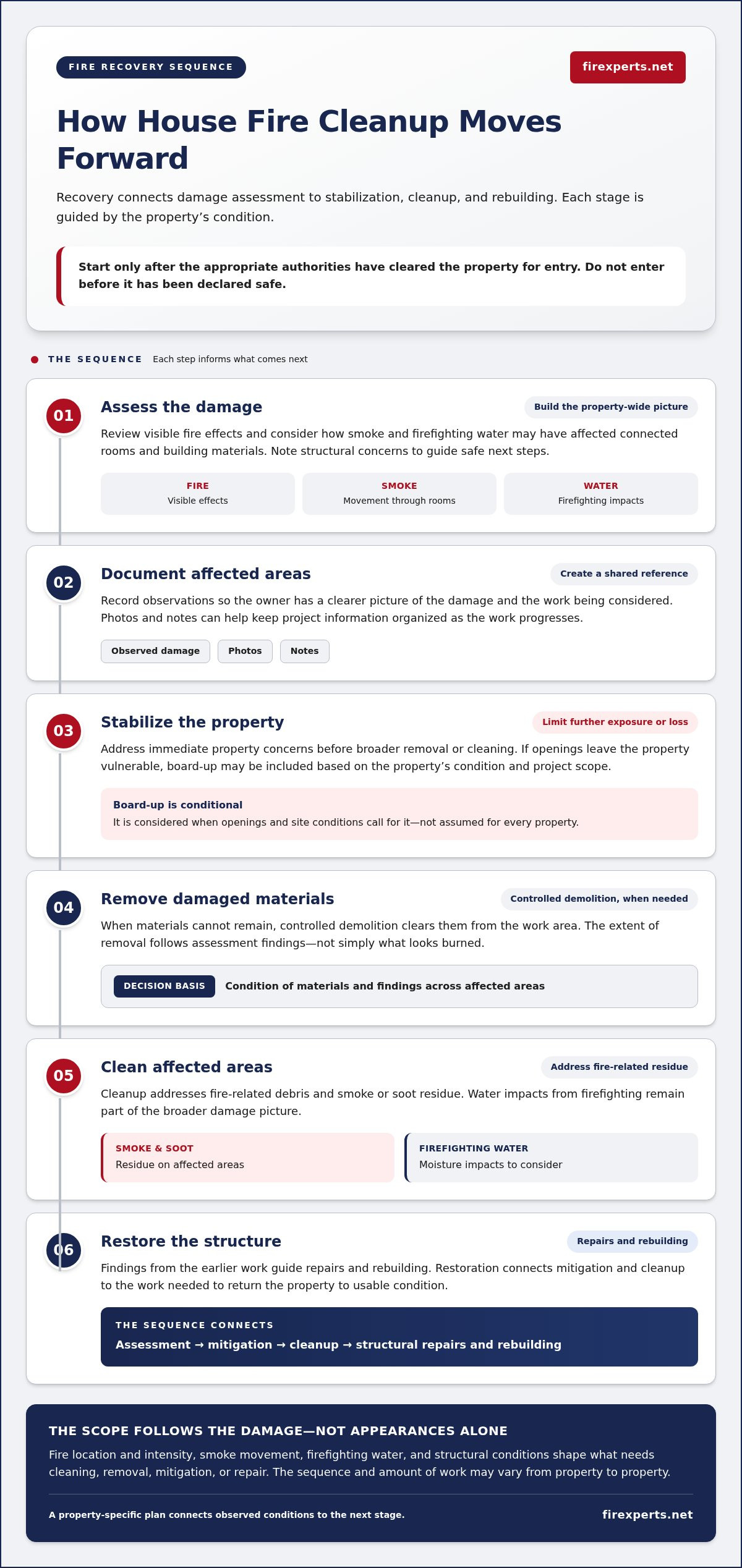
Once the property has been cleared for entry by the appropriate authorities, recovery can move through a practical sequence. Each step informs the next, but the order and amount of work may change to fit the fire, smoke, water, and structural conditions at a particular Clackamas property.
A clear fire cleanup sequence moves from assessment and documentation to stabilization, removal, cleaning, and restoration, with each stage guided by the property’s condition.
- Assess the damage. The team reviews visible fire effects and looks at how smoke and firefighting water may have affected connected rooms and building materials. Structural concerns are noted to help guide safe next steps.
- Document affected areas. Observations are recorded so the property owner has a clearer picture of the damage and the work being considered. Photos and notes can also help keep project information organized.
- Stabilize the property. The immediate focus is limiting further exposure or loss. If openings leave the property vulnerable, board-up may be included based on its condition and the project scope.
- Remove damaged materials. When materials cannot remain, controlled demolition clears them from the work area. The extent of removal depends on assessment findings, not simply on what looks burned.
- Clean affected areas. Cleanup addresses fire-related debris and smoke or soot residue. Water impacts from firefighting are considered as part of the broader damage picture.
- Restore the structure. Findings from the earlier work guide repairs and rebuilding, connecting mitigation and cleanup to the steps needed to return the property to usable condition.
Assessment and stabilization before cleanup work
Assessment brings the different kinds of damage into one picture: fire effects, smoke movement, water exposure, and visible structural changes. Stabilization comes before broader removal or cleaning because it addresses immediate property concerns first. Board-up can secure openings when the condition calls for it. Owners should not enter until authorities have said it is safe to do so.
Good documentation helps keep decisions grounded in what was observed. It also gives the owner and restoration team a shared reference as work progresses. The Institute of Inspection, Cleaning and Restoration Certification (IICRC) is a resource for information about professional cleaning and restoration practices; a reference to industry standards does not replace an assessment of the individual property.
Removing damage and preparing the property for restoration
Demolition is selective when the project scope calls for it. The team removes affected materials identified for removal, then addresses debris and smoke or soot residue in the impacted areas. This work can reveal additional conditions that weren’t clear during the first assessment. Those findings help shape the next repair or rebuilding steps, keeping the recovery plan tied to the actual condition of the structure.
Fire Industry Restoration Experts serves Clackamas with assessment, mitigation, demolition, and rebuilding, helping connect these stages under one recovery plan. For a clearer picture of how Clackamas fire restoration work can move from initial findings toward structural repairs, the team can help you review the next steps.
How Clackamas Homeowners Can Navigate Scope and Insurance Coordination
After a fire, it can be hard to keep project details and claim paperwork straight. A written restoration scope provides a practical reference: it records observed damage and describes the work identified for recovery. It helps connect the property’s condition to cleanup, mitigation, and any structural repairs, so conversations with the restoration team and insurer have clear details to refer to.
What documentation helps keep the recovery organized
Gather what’s already available and keep it in one place. You don’t need a perfect file before discussing the project. Existing photos, insurer correspondence, and restoration documents can help you and the team review what’s known and identify what information may still be useful.
- Keep claim emails, letters, and notes from conversations together.
- Save existing photos or videos that show the property and affected areas.
- Retain copies of the assessment, scope, and project documents as they’re shared.
- Note questions or new observations so they can be discussed with the restoration team.
These records can make it easier to compare the observed damage with the work being discussed. For example, if the assessment identifies smoke effects outside the room where the fire began, the scope can show how those affected areas fit into the recovery plan. Clear documentation supports informed conversations, but it doesn’t determine what an insurer will cover.
How restoration coordination supports the property owner
Insurance coordination can help keep restoration information organized as the work moves forward. The restoration team can communicate relevant project details with the insurer and help the owner understand how the documented damage connects to proposed cleanup or repairs. This practical exchange supports clarity, especially if mitigation and structural work involve different stages.
The restoration scope describes the property conditions and the work identified for recovery. It isn’t a coverage decision. Policy terms, claim approval, and payment decisions belong to the insurer and depend on the individual policy and claim. Keeping those roles clear helps set realistic expectations while the property owner, restoration team, and insurer work through their respective parts of the process.
For house fire cleanup Clackamas projects where damage reaches framing or other structural components, the scope may extend beyond surface cleanup. Understanding Oregon structural damage repair after fire can help clarify how documented findings may lead into structural repairs and rebuilding.
Keep the file simple, current, and easy to share. When new findings change the planned work, updated project information gives everyone a clearer basis for discussing what comes next, while leaving coverage decisions with the insurer.
How to Decide When Clackamas Fire Cleanup Should Move Into Rebuilding
Cleanup and rebuilding aren’t separate problems. They’re connected stages, and the handoff depends on what the assessment and mitigation work reveal. A room may look heavily damaged while nearby materials need a closer evaluation, or a less visibly affected area may have smoke or water impacts that change the plan. Appearance alone can’t tell you what should stay.
The restoration scope helps show which stage fits the property’s condition. This simple comparison can help you follow how the work moves forward:
| Stage | Purpose | Typical next step |
|---|---|---|
| Mitigation | Address immediate conditions and limit further property damage. | Assess what remains affected and whether material removal is needed. |
| Selective demolition | Remove specific damaged materials identified in the project scope. | Review exposed areas and prepare the property for repair. |
| Rebuilding | Repair or reconstruct parts of the structure after necessary cleanup and removal. | Complete the planned structural and interior work so the property can return to use. |
When damaged materials may need removal
Fire, smoke, and firefighting water affect materials in different ways. Assessment findings guide whether a material can remain, needs cleaning, or should be removed. For example, visible charring may indicate damage, but a clean-looking surface doesn’t by itself establish that the material beneath it is unaffected. Demolition should follow documented conditions and the restoration plan, not a universal rule to remove or retain a particular material.
That distinction is especially useful when the scope includes interior finishes or framing. As affected materials are addressed, the team can evaluate what the work reveals and use those findings to clarify the next steps. For related detail on smoke and residue, the smoke damage cleanup guide for Portland explains why smoke impacts can be part of the broader recovery picture.
How structural repairs connect to the rebuild
Rebuilding follows the assessment, mitigation, and any required demolition. If the scope identifies damaged framing, those findings help define the structural work needed before affected interior areas can be finished. This connection matters: cleanup prepares the work area, demolition clears material identified for removal, and rebuilding addresses the structure and surfaces that need repair.
A team with experience in both restoration and construction can carry project knowledge across those stages, reducing the chance that cleanup decisions and repair planning become disconnected. Fire Industry Restoration Experts handles assessment, mitigation, demolition, structural restoration, and rebuilding for Clackamas properties. The sequence and timing depend on the documented scope and conditions at the property, so a fixed calendar isn’t a reliable measure of when rebuilding should begin.
If you’re weighing the next step for house fire cleanup Clackamas, talk with Fire Industry Restoration Experts about your restoration and rebuilding plan.
Start House Fire Cleanup in Clackamas With a Clear Recovery Plan
After a fire, you don’t need to have every detail figured out before starting a restoration conversation. A few basic facts can help the team understand the property and discuss a sensible path forward. The first steps are straightforward: share where the damage occurred, describe what you know, arrange an assessment, and review the next actions together.
- Share the property location. Provide the address and identify whether it’s a home or a managed property.
- Describe the known damage. Note where the fire started, which areas appear affected, and whether you know of smoke or firefighting water impacts.
- Discuss an assessment. A property review helps clarify observed damage and the work that may be needed.
- Review next steps. Talk through how assessment, mitigation, demolition, and rebuilding may fit the property’s recovery plan.
What to have ready for an initial restoration conversation
If available, gather the property address, a brief description of the fire, and any known access or safety information. Share insurer and claim details if you already have them, along with existing photos or correspondence that may help explain the situation. You don’t need to know the full extent of the damage before speaking with the team. Uncertainty is understandable, and the process can be discussed in plain language.
It can also help to note immediate questions, such as which areas need assessment or how cleanup may connect to structural repairs. That gives the conversation a practical starting point without requiring you to make decisions before the property has been reviewed.
How Fire Industry Restoration Experts supports Clackamas recovery
Fire Industry Restoration Experts serves Clackamas property owners with damage assessment, board-up, mitigation, demolition, structural restoration, and rebuilding. The team can help carry the work from initial findings through cleanup and construction, keeping the relationship between each stage in view. This hands-on approach is grounded in both emergency-response and building experience: company founder Greg Philo is a volunteer firefighter and contractor.
Insurance coordination is part of practical project support. The team can share relevant restoration information and help keep project details organized, while coverage, approval, and payment decisions remain with the insurer under the individual policy. Clear communication helps everyone understand the documented scope without promising a claim outcome.
Starting house fire cleanup Clackamas recovery can feel like a lot to take on. You can begin with the information you have and work through the remaining questions one step at a time. Talk with Fire Industry Restoration Experts about your Clackamas property and discuss its recovery needs.
Take the Next Step Toward a Steadier Recovery
After a fire, it’s easy to feel pressure to solve every problem at once. You don’t have to. Start with the next clear decision: share what you know, ask what needs attention first, and keep the recovery plan focused on the property’s actual condition. A grounded conversation can turn uncertainty into manageable steps.
For house fire cleanup Clackamas support, bring your questions even if you’re still sorting through the damage or claim details. The right starting point is simply an honest discussion about what happened and what the property may need. From there, you can consider the path ahead with a clearer understanding of the work involved.
Talk with Fire Industry Restoration Experts about your Clackamas property and take the next step at a pace that feels manageable. Recovery begins one decision at a time, and you don’t have to work through the plan alone.
Frequently Asked Questions
Can I clean soot from my Clackamas home myself after a fire?
It’s safer to avoid disturbing soot until the affected areas have been assessed. Dry wiping or sweeping can spread residue to nearby surfaces, and ash or debris may contain hazardous substances. If authorities have cleared the property for entry, take photos from a safe location and keep people away from visibly damaged areas. A professional assessment can help determine which surfaces need specialized cleaning and which materials may require removal.
Is it safe to stay in a house after a small fire?
Not necessarily. A fire that appears limited can still leave smoke residue, firefighting water, or damage that isn’t obvious from the doorway. Don’t re-enter or stay in the property until the fire department has said it’s safe. After clearance, an assessment can help identify concerns such as affected rooms or damaged building materials. The size of the visible burn area alone can’t establish that the home is safe to occupy.
Does homeowners insurance cover house fire cleanup in Clackamas?
Homeowners insurance often includes fire-related cleanup and repairs, but the policy and claim determine what applies to your property. Contact your insurer to start the claim and keep copies of correspondence, photos, and restoration documents. The restoration team can share project information and coordinate with the insurer, but it can’t decide coverage or promise approval. For house fire cleanup Clackamas homeowners should review their policy and claim details directly with their insurer.
How long does house fire cleanup take?
There isn’t one set duration for every fire cleanup. A contained fire with limited damage may involve fewer work stages than a loss affecting several rooms, structural materials, or areas reached by firefighting water. Assessment findings, the amount of material requiring removal, and the repairs needed all shape the sequence. Ask for updates as the scope develops, especially if new conditions appear after damaged materials are removed.
What happens if the fire was limited to one room?
A one-room fire may still affect nearby areas through smoke, soot, or water from firefighting. For example, residue can settle outside the room where flames burned, while water may reach flooring or spaces below. The assessment helps establish how far the effects extend and whether adjacent surfaces need attention. A limited fire may mean a narrower scope, but the boundary should be based on observed conditions rather than the room where the fire started.
Can firefighting water cause damage after a house fire?
Yes. Water used to extinguish a fire can soak flooring, wall materials, insulation, or ceilings below the affected area. Some moisture may be hidden behind finishes, so a surface that looks dry doesn’t always show the full extent of exposure. An assessment can identify where water reached and whether affected materials need mitigation, removal, or repair. Include water impacts in the damage discussion, even if flames never reached those parts of the property.