
What if the damage you can see is only part of the problem? After a storm, roof or wall damage can conceal issues that aren’t obvious at first. Storm damage structural repair Oregon property owners may need starts with a careful assessment, not guesswork. The findings guide the next steps, from protecting exposed areas to planning permanent repairs.
It’s understandable to feel unsettled when a home or building seems unsafe, or when you’re unsure what to do about repairs and insurance. The process is easier to follow when each step has a clear purpose: stabilize the property, assess and document the damage, then plan the repair or rebuild. Temporary measures such as board-up help protect a damaged structure, but they aren’t a substitute for permanent repairs.
This guide explains signs that warrant professional assessment, what to expect during an evaluation, and how repair records can support coordination with your insurer. You’ll also see how stabilization connects to demolition and rebuilding. Fire Industry Restoration Experts brings these stages together for Oregon property owners and managers, including those in Portland, Gresham, and Clackamas.
Key Takeaways
- Structural storm damage affects parts that support or protect a building. Surface damage alone doesn’t reveal the full condition.
- For storm damage structural repair Oregon properties may need, the right scope depends on assessment findings, material condition, and how much of the structure is affected.
- Temporary stabilization, localized repairs, and reconstruction serve different purposes. Knowing the difference helps you understand the proposed work.
- Keep dated photos, written observations, insurer communications, and claim records together. Don’t enter areas that may be unsafe.
- Assessment, protective work, possible demolition, and rebuilding can connect as part of a coordinated restoration process.
What Counts as Storm Damage Structural Repair in Oregon?
Storm damage structural repair restores building parts damaged by a storm when those parts support the structure or protect it from the elements. Work may involve roof framing, exterior walls, foundations, or connections between building components. Cosmetic work, such as repainting a scuffed surface, changes appearance. Structural repair addresses damage that may affect stability, strength, or weather protection. An on-site assessment determines what a specific property needs.
Storm conditions vary across Oregon and from one event to another. Wind-driven rain can enter through damaged roofing or siding. Fallen branches can strike roofs and walls, while saturated ground may affect areas around a foundation. These are possible pathways to damage, not proof of structural failure. A building’s age, construction, exposure, and the storm itself all influence what an assessment may find.
The broad idea of Disaster restoration is to return damaged buildings to a safe, usable condition, not simply improve their appearance. That distinction helps explain why storm damage structural repair Oregon properties may need can involve opening or removing finishes to inspect what lies beneath.
Which storm-damaged building components may need repair?
Damage may involve roof framing, such as rafters or trusses, or the connections that hold framing together. Exterior walls and load-bearing framing may also be affected. Depending on the event, an assessment may include foundations, porches, garages, or other attached structures. Cracking, shifting, sagging, or separation between connected parts can warrant a closer look, particularly when these signs appear after a storm or seem to be changing.
When does visible storm damage suggest a deeper problem?
A torn shingle, dented gutter, or scraped siding may be limited to the surface. An uneven roofline, a shifted wall, or new cracks near openings may indicate movement or compromised support. These signs aren’t a diagnosis. They are reasons to avoid assumptions and arrange an assessment.
Damage can also be concealed behind drywall, roof coverings, insulation, or other finishes. Water may travel from the point where it entered, and an impact can affect framing beyond the visible mark. What you can see from the ground may not show the full extent of the damage, and conditions may differ across the building.
Put safety first. Don’t enter a visibly unstable area or climb onto a storm-damaged roof to investigate. Keep others away from areas with sagging ceilings, shifting walls, or signs of separation. From a safe location, note what you can observe and when you noticed it. Relying on structural evaluators and certified roofers for a thorough assessment can determine which components need attention and help establish an appropriate repair scope.
How Oregon Contractors Assess and Stabilize Storm-Damaged Structures
After a storm, it can be hard to know what needs attention first. A steady process turns uncertainty into practical next steps: make the affected area safer, document visible conditions, assess the damage, and plan the repair scope. This sequence guides storm damage structural repair Oregon projects, though timing and outcomes depend on the building, the storm, and which areas can be accessed safely.
What happens during an initial structural damage assessment?
The initial review focuses on observable conditions and apparent concerns, such as damaged framing, shifting components, or openings that leave the building exposed. The restoration team records photographs and observations, then uses the documented damage to guide repair planning. A visual review has limits. Finishes, insulation, and debris can conceal affected materials until they are appropriately removed or opened for inspection.
Clear records help property owners, restoration professionals, and insurers stay aligned about what was observed and what work is being considered. If storm-related flooding is part of the loss, FEMA’s Substantial Damage Quick Guide explains a separate determination that may be relevant to repair decisions in floodplain settings. Whether it applies depends on the property and circumstances.
How does temporary stabilization differ from permanent repair?
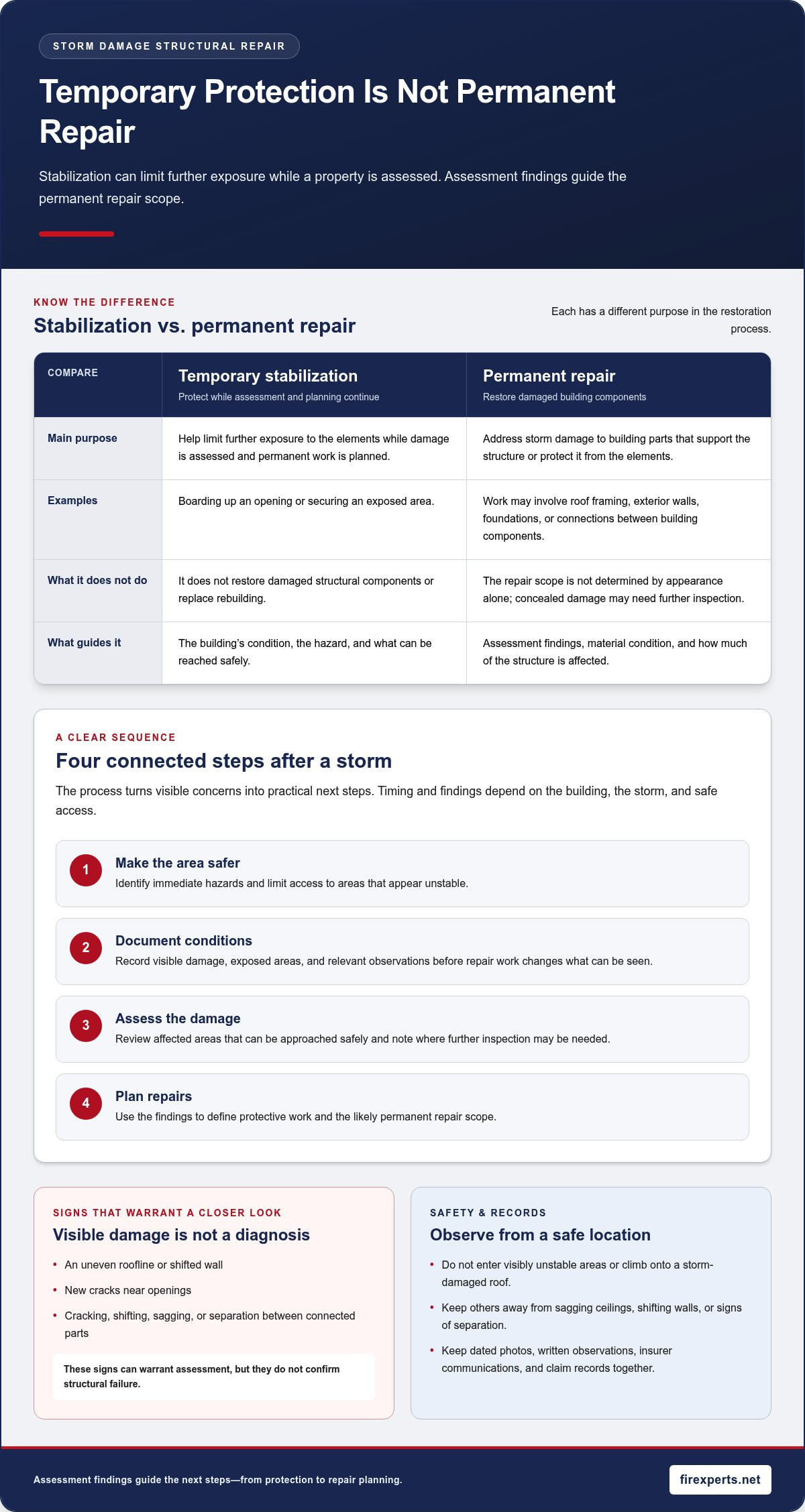
Stabilization is temporary protective work, such as boarding up an opening or securing an exposed area. It can help limit further exposure while the damage is assessed and permanent work is planned. It doesn’t restore damaged structural components or replace rebuilding. The right protective steps depend on the building’s condition, the hazard, and what can be reached safely.
In practice, the work follows four connected steps:
- Make the area safer. Identify immediate hazards and limit access to areas that appear unstable.
- Document conditions. Record visible damage, exposed areas, and relevant observations before repair work changes what can be seen.
- Assess the damage. Review accessible affected areas and note where further inspection may be needed.
- Plan repairs. Use the findings to define protective work and the likely permanent repair scope.
Access matters. An assessment may cover exterior and interior areas that can be approached safely, but it may not reveal concealed damage right away. For example, a roof opening may expose visible framing while damage behind nearby finishes remains unknown until those materials are carefully opened as part of the work. As new conditions come to light, the documented scope may need to be updated.
Fire Industry Restoration Experts connects assessment and protective work with demolition when needed and structural rebuilding. The team also coordinates restoration documentation with property owners and insurers. If storm damage has left your building exposed or difficult to assess, Oregon storm restoration support can help you understand the next steps.
Structural Repair Options After Storm Damage: Stabilize, Repair, or Rebuild?
Storm damage doesn’t point to one automatic fix. A shifted roof component may need a different response from a section of framing that has lost strength. Temporary protection also serves a different purpose from permanent work. For storm damage structural repair Oregon properties need, the plan should reflect assessment findings, not just how dramatic the damage looks from outside.
The repair approach depends on assessed conditions, including the extent of damage, the condition of affected materials, safe access, and what becomes visible during inspection or removal. A component that appears damaged doesn’t always need full replacement. The decision depends on whether it can be appropriately repaired and how surrounding parts are affected.
These options serve different needs:
- Temporary stabilization protects or secures an affected area while permanent work is planned. It isn’t a finished structural repair.
- Localized structural repair addresses a limited area, such as affected framing or a connection, when assessment supports that scope.
- Partial or full reconstruction removes and rebuilds affected structural elements when damage is extensive, materials are compromised, or the necessary work can’t be completed through a narrower repair.
These paths can connect. Temporary protection may come first, followed by removal of damaged materials, a closer review, and a decision about repair or rebuilding. The appropriate scope can change if concealed conditions are uncovered. That doesn’t mean the initial assessment was careless. It reflects the fact that the full condition may only become clear as work progresses.
When may targeted structural repair be appropriate?
Targeted repair may suit a limited area if the assessment shows that affected framing or a connection can be addressed without rebuilding a larger section. Work may include removing damaged material, making the structural repair, and restoring nearby areas disturbed in the process. Whether a particular rafter, wall, or connection can be repaired depends on its condition and how it relates to surrounding components.
When might partial rebuilding be part of the repair plan?
Partial rebuilding may be considered when damage extends beyond a small, accessible area, materials are too compromised to remain, or concealed conditions require broader repairs. The work focuses on restoring affected structural elements, not adding unrelated upgrades or changing the property for appearance alone. The scope remains tied to site findings and any applicable project requirements.
For an owner, the most useful questions are what findings support the proposed work, which areas it covers, and how the repair connects to the surrounding structure. Clear documentation helps everyone understand why targeted repair, broader reconstruction, or temporary stabilization is being considered. A sound plan is based on the building’s actual condition, not assumptions made from a quick look.
What Oregon Property Owners Can Do During Structural Storm Repairs
Storm repairs can bring a steady stream of questions, but you don’t need to enter a damaged area or inspect the structure yourself to stay involved. From a safe location, keep useful records, share observations, and organize communications. These steps create a clear account of what happened and how the repair plan develops.
For storm damage structural repair Oregon properties may need, keep one folder, digital or paper, for documents connected to the loss. Add dated photos taken from safe areas, notes about what you observed and when, and copies of relevant claim communications. Don’t climb onto a roof or move debris to get a better image. If water entered the building, the Oregon water remediation contractor guide offers related guidance for properties with storm-related water intrusion.
How can owners document damage and coordinate with insurance?
When it’s safe, photograph visible conditions from a safe distance before restoration work begins. Keep later photos dated as work progresses. Note where damage appears, when you noticed it, and any changes you observe without entering restricted or unstable areas. A written repair scope and assessment notes can make discussions with the insurer more specific. The insurer determines coverage, and thorough documentation doesn’t guarantee payment.
- Keep photos and notes together, with dates and brief descriptions.
- Save claim numbers, insurer correspondence, submitted documents, and records of conversations.
- Keep updated repair scopes and related restoration records alongside the claim file.
What should owners know about Oregon permits and repair records?
Structural work may involve local permit requirements, and rules can vary by jurisdiction and project. Verify requirements for the property’s location with the Oregon Building Codes Division or the relevant local building department. Don’t assume requirements in Portland apply in Gresham, Clackamas, or elsewhere in Oregon.
Keep copies of assessment notes, the repair scope, permits when applicable, and records showing completed work. These documents provide a useful history of what was identified and addressed. They can also help keep conversations with restoration professionals and insurers grounded in the same information.
Fire Industry Restoration Experts coordinates restoration work and documentation with property owners and insurers as repairs move forward. Discuss your storm restoration needs and get a clearer view of the path from assessment to repair.
How Storm Damage Structural Repair Moves from Assessment to Rebuilding
Damage to a building can leave owners juggling safety concerns, repair decisions, and insurance questions at once. A connected restoration process brings those pieces into clearer order. Fire Industry Restoration Experts moves from assessing damage to protective work, demolition when needed, and structural rebuilding. The scope is shaped by the property’s condition and the assessment findings.
For storm damage structural repair Oregon property owners can expect each phase to inform the next. Protective work addresses exposure, while assessment findings help guide what materials may need removal and what structural work follows. As conditions become clearer, the repair scope and supporting documentation can be coordinated with the property owner and insurer. Coverage and claim decisions remain with the insurer.
What does a full-process restoration team handle?
The work can include damage assessment, board-up, demolition, and rebuilding. Keeping these phases connected can reduce the number of handoffs an owner must manage while the property is disrupted. It also carries observations from the initial assessment into repair planning and construction. The exact plan depends on the assessed damage and the project’s needs.
- Assessment: Review visible conditions and establish what damage is apparent.
- Protective work: Board up or protect exposed areas as needed.
- Demolition: Remove damaged materials when necessary to proceed with restoration.
- Structural rebuilding: Restore affected building components according to the repair scope.
Not every project follows the same pattern. Some damage may call for a narrower repair, while other findings may require removal and rebuilding. Clear communication helps owners understand what the work addresses and how new information may affect the documented scope. The team coordinates restoration documentation with property owners and insurers, without promising a particular coverage decision or result.
How does the company bring field experience to Oregon storm repairs?
Fire Industry Restoration Experts was founded in 2013 by Greg Philo, a volunteer firefighter and contractor. The company serves Oregon property owners and managers, bringing construction and emergency response experience to storm and structural restoration. The approach is practical: take the damage seriously, explain the work plainly, and carry the repair forward with care.
Storm damage can make a property feel uncertain, but you don’t have to sort through every repair question alone. A conversation about the building, the damage you’ve observed, and the records you have can help clarify next steps. Talk with Fire Industry Restoration Experts about your damaged property and the restoration process.
Take the Next Step Toward a Safer Property
After storm damage, uncertainty can make every decision feel heavier. You don’t need to settle the full repair scope on your own before starting a conversation. Share what you’ve observed from a safe location, note immediate concerns, and gather the records you already have. That gives the restoration discussion a practical place to begin.
With storm damage structural repair Oregon, the right path starts with understanding the property’s condition and identifying what needs attention. Clear communication can help move you from concern toward a workable plan, while coverage decisions remain with your insurer.
If your building has been damaged, talk with Fire Industry Restoration Experts about your storm damage. The team can help connect assessment, protective work, and rebuilding as you decide what comes next.
Frequently Asked Questions
How do I know if storm damage has affected my home’s structure?
Changes such as a newly uneven roofline, doors that suddenly stick, or cracks that appear after a storm are reasons to arrange a professional assessment. They don’t prove structural damage on their own, and a lack of obvious signs doesn’t rule out concealed problems. For storm damage structural repair Oregon homeowners may need, avoid testing damaged areas yourself. Note what changed and where, then share those observations with the restoration team.
Can storm-damaged framing be repaired, or does it need to be replaced?
Storm-damaged framing may be repairable or may need replacement, depending on its condition and how the surrounding structure is affected. A localized issue may allow a limited repair, while damage extending into connected framing could call for more extensive work. Appearance alone can’t settle the question. Assessment findings and conditions revealed during appropriate removal help establish a sound scope.
What happens during a storm damage structural assessment?
A structural assessment reviews the reported damage and accessible areas, records visible conditions, and identifies concerns that may need further examination. The restoration team can use photos, observations, and a written scope to explain what appears affected and what remains uncertain. If finishes or insulation conceal an area, its condition may not be clear until work exposes it. Share the storm date and any changes you noticed afterward.
Does storm damage structural repair require a permit in Oregon?
Some structural repairs may require permits, but the answer depends on the work and the property’s jurisdiction. Portland, Gresham, and Clackamas may have different local processes. Confirm current requirements with the relevant local building department or Oregon Building Codes Division before work proceeds. Don’t assume a rule for one city applies elsewhere. Keep copies of permit documents when they apply to your project.
Will homeowners insurance cover structural repairs after storm damage?
Coverage depends on the policy, the cause of damage, and the insurer’s claim decision. A restoration team can document observed damage and coordinate the repair scope with the property owner and insurer, but can’t guarantee coverage or payment. Report the loss to your insurer and keep copies of claim instructions and correspondence. If the insurer requests more information, organized assessment notes and dated records can help you respond clearly.
Can a restoration contractor handle both temporary stabilization and rebuilding?
Yes. A restoration team can connect protective work with later demolition and structural rebuilding, depending on the property’s assessed needs. Fire Industry Restoration Experts handles damage assessment, board-up, demolition, and rebuilding, and coordinates restoration work with insurers. Keeping those phases connected gives owners a clearer point of coordination as the scope develops. Stabilization is temporary protection, not a substitute for the permanent repair plan.
What should I document before storm damage repairs begin?
From a safe location, record the date and time, photograph visible damage from several angles, and note which rooms or exterior areas appear affected. Save insurer messages, claim details, assessment notes, repair scopes, and any permit records that apply. Don’t move debris or enter an unsafe area to get better evidence. If new conditions are found during work, keep the updated scope and supporting records with your project file.