
Could your home have wind damage even if nothing looks wrong from the sidewalk? In Portland, lifted roofing, loose siding, and water stains can be hard to spot without getting too close. Wind damage repair Portland OR starts with safe observation and documentation, not climbing onto a roof or disturbing unstable materials.
Rain may enter through a small opening before you notice a problem indoors. Start by looking for visible changes from a safe location, recording what you see, and limiting further exposure only if it’s safe to do so.
This guide covers common signs of wind damage, what to photograph, and when to leave inspection or temporary protection to trained professionals. You’ll also learn how assessment and stabilization lead into mitigation, structural repairs, and rebuilding. Fire Industry Restoration Experts brings construction and emergency response experience to the restoration process for property owners in Portland, Gresham, and Clackamas.
Key Takeaways
- Look for lifted shingles, missing roofing material, bent flashing, and loose siding, but don’t climb or approach unstable areas to inspect them.
- Wind can shift or damage exterior materials, creating openings where rain may reach the structure.
- The scope of wind damage repair Portland OR depends on the assessment, including what is visible and what may be affected beneath the surface.
- Protect people first, report hazards, photograph damage from safe ground-level positions, and arrange an assessment before cleanup changes the scene.
- Restoration can move from assessment and stabilization to needed demolition and rebuilding, guided by construction and emergency response experience.
Wind Damage Repair in Portland, OR: First Signs to Look For
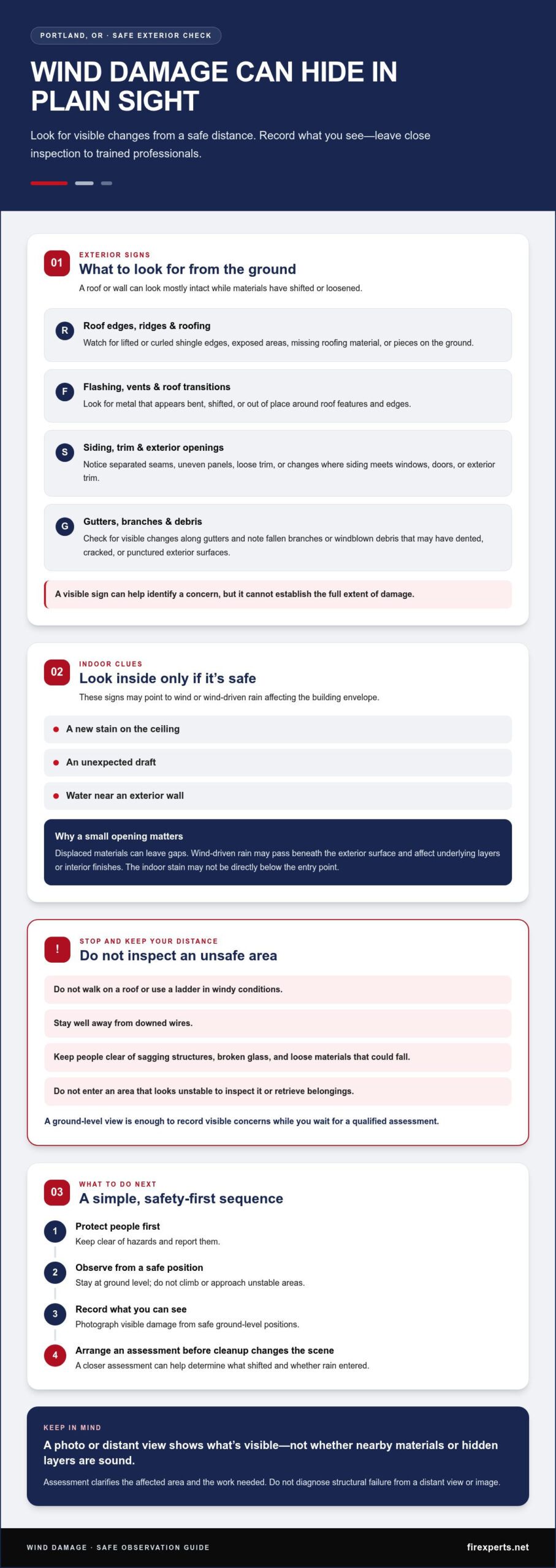
Wind damage isn’t always obvious from the ground. A roof can look mostly intact while a shingle edge has lifted, flashing has shifted, or siding has pulled loose at a seam. You don’t need to diagnose the damage yourself. A careful look from a safe distance can help you identify warning signs and share useful details during an assessment.
From the ground, look for changes such as:
- Lifted or curled shingles: Uneven edges or exposed areas may indicate that roofing has shifted.
- Missing roofing material: Shingles or other pieces on the ground can point to damage above, even if you can’t see the affected spot.
- Bent flashing: Metal around roof features or edges may appear out of place or damaged.
- Loose siding or trim: Separated seams, uneven panels, or trim hanging away from the wall may leave openings.
Check indoors, too, but don’t enter an area that may be unsafe. A new ceiling stain, an unexpected draft, or water near an exterior wall can be a clue that wind or wind-driven rain has affected the building envelope. These signs don’t confirm the cause, but they’re worth documenting and sharing during an assessment.
Where wind damage may appear on Portland-area homes
From a safe position, look for changes along roof edges and ridges, around vents and flashing, at gutters, and where siding meets exterior trim. Wind can lift or displace materials, leaving gaps that let rain reach underlying layers or interior spaces. Fallen branches and windblown debris can also dent, crack, or puncture exterior surfaces. Wind engineering principles help explain how airflow and pressure affect structures, but a visible sign alone can’t show the full extent of damage.
When an exterior inspection is unsafe
Don’t walk on a roof or use a ladder in windy conditions. Stay well away from downed wires, and keep people clear of sagging structures, broken glass, and loose materials that could fall. If an area looks unstable, don’t enter it to inspect or retrieve belongings. A ground-level view is enough to record visible concerns while you wait for a qualified assessment.
Safety first: Keep your distance from hazards, and don’t climb or enter an unstable area to check for damage.
For wind damage repair Portland OR property owners need, start by recording what you can safely observe and leave close inspection to trained professionals. Wind can affect connected parts of a roof or wall, so damage that appears limited at the surface may need a closer assessment to determine what shifted and whether rain has entered.
How Wind Damages Roofs and Siding in Portland
Wind damage occurs when pressure or impact weakens, shifts, or opens part of a building’s exterior. Wind can push or pull on roof and wall materials, while a branch or airborne debris can strike the structure directly. The result may be obvious, such as a missing shingle, or subtle, like a loosened connection that leaves a narrow gap.
That gap matters because wind-driven rain can travel beneath displaced materials and reach layers meant to stay protected. Once water gets past the exterior surface, it may affect sheathing, insulation, or interior finishes. The path isn’t always directly below the visible damage, so an indoor stain doesn’t necessarily show where water entered.
How roof materials and connections can be affected
Wind can lift shingle edges, tear away roofing material, loosen flashing, or damage roof edges. Flashing covers joints and transitions, so if it bends or shifts, water may find a route around those seams. A branch can also strike the roof and crack or puncture materials. These are different causes, but either can leave the roof less able to keep weather out.
What you can see from the ground is only the surface. A photograph may show a missing shingle or bent metal, but it can’t establish whether nearby materials or the layers beneath them are sound. Avoid drawing conclusions about structural failure from an image or distant view. An assessment can trace the affected area and clarify what needs attention. For general industry resources on restoration work, the Restoration Industry Association (RIA) provides a useful point of reference.
How siding and openings can let weather inside
On walls, wind pressure or impact can loosen, crack, or displace siding and exterior trim. The same force may affect areas around windows and doors, where several materials meet. A small separation at a seam or opening can expose the sheathing behind the siding. Rain can then reach that layer or wet interior finishes, even if the damage looks limited from outside.
An opening in the exterior can become a path for water.
The important question isn’t only what moved, but whether that movement exposed a vulnerable joint or surface. Wind damage repair Portland OR starts with understanding this cause and effect: identify the affected exterior components, assess the extent of the opening or impact, and plan the appropriate restoration. Fire Industry Restoration Experts handles storm and structural restoration, including assessment and rebuilding when needed. If wind has opened part of your property’s exterior, storm damage restoration can guide the work from assessment toward repair.
Wind Damage Repair or Replacement? How Assessment Clarifies the Work
A lifted shingle or loose siding panel doesn’t automatically mean an entire roof or wall needs replacement. The right scope depends on what’s damaged, which materials are affected, and what’s happening beneath the visible surface. An assessment helps distinguish damage that can be addressed in a limited area from damage that calls for broader removal and rebuilding. It also gives the repair plan a clear starting point instead of relying on assumptions from a ground-level view.
What a wind damage assessment may examine
An assessment may look at roof coverings, edges, flashing, siding, and openings around windows or doors, along with accessible interior signs such as water staining. Photos and written observations can record visible conditions and keep damage details organized. The inspection depends on the property and what can be accessed safely. Opening building materials is not necessary in every assessment, and reports can differ based on the work involved.
Assessment comes before repair planning because visible damage may not show the full area or materials affected.
How findings shape a repair scope
If the damage is limited to a small, identifiable area and the surrounding materials are sound, the plan may focus on those affected components. Broader removal and rebuilding may be appropriate when findings show more extensive damage or impacts to connected parts of the structure. These are possibilities, not conclusions that can be drawn from a single photo. The scope follows the evidence gathered during assessment.
Some conditions become clear only after damaged materials are opened during the work. An exterior covering, for example, may conceal wet or damaged material beneath it. If that happens, the repair scope may need to change to address what is found and restore the affected area. Clear communication about new findings helps property owners understand why the work may shift as the project progresses.
For wind damage repair Portland OR property owners should distinguish visible damage from confirmed scope. A photograph can document a missing section or shifted component, but it can’t show the condition of concealed materials. A careful assessment connects observable evidence with the repair decisions that follow.
Insurance coverage and repair decisions are separate questions. Coverage depends on the terms of the property owner’s policy, the evidence of damage, and the insurer’s claim review. Documentation can help explain what was observed, and restoration professionals can coordinate with insurance companies as part of the process. That coordination supports clear communication, but it doesn’t guarantee coverage or a particular claim outcome.
Once the findings and scope are understood, the next phase can be planned in order: stabilize exposed areas where needed, address affected materials, and complete structural repairs or rebuilding when the assessment calls for them. This approach ties the work to the property’s condition rather than assuming every wind event requires the same fix.
What to Do After Wind Damage: Steps for Portland Owners
After a wind event, it can be hard to know what deserves attention first. Keep the response simple and put safety ahead of cleanup. Don’t climb onto the roof, use a ladder to reach loose materials, or remove debris from an unstable area. A few careful steps can preserve useful information and help limit further exposure without adding risk.
- Protect people. Keep household members and visitors away from damaged roof sections, loose siding, broken glass, hanging materials, and fallen branches that may shift. If a structure appears unstable, leave the area rather than entering to inspect it.
- Report hazards. Stay well clear of downed wires and other immediate dangers. Report them to the appropriate utility or emergency authority, and don’t attempt to move or investigate them.
- Document what you can see. Before cleanup changes the scene, take photos from safe ground-level positions. Capture the overall area and closer views only when you can do so without approaching debris or unstable parts of the property.
- Arrange an assessment. Share your observations and images so the damage can be evaluated. If the property is insured, notify your insurer and keep a record of claim-related communications. Policy terms and claim decisions vary.
Document damage without increasing risk
Take wide photographs to show where damage is located, then closer images from a safe spot to capture visible details. Note when you first noticed the damage and which rooms or exterior areas appear affected. Keep receipts for reasonable temporary protection and save related messages, emails, and call notes. Don’t delay safety steps just to get a picture.
Limit further exposure while waiting for assessment
Keep people clear of loose siding, damaged roof sections, and unstable debris. If water is dripping indoors, place a container beneath it only if you can reach the spot safely. Move belongings away from active leaks when access is clear, but don’t enter a sagging or otherwise unsafe area. Avoid DIY roof tarping, ladder work, and debris removal from unstable locations.
If wind damage has allowed water inside, the work may need to address both the opening and affected interior materials. The guide Water Remediation in Oregon: How to Choose a Contractor explains considerations for water-related damage. Focus on safe documentation and preventing additional exposure while the property is assessed.
For wind damage repair Portland OR property owners can share their observations with a restoration team. Fire Industry Restoration Experts handles storm damage assessment and restoration, with work that can include stabilization, mitigation, and rebuilding. Arrange a storm damage assessment to clarify what needs attention.
How Wind Damage Repair Works with Fire Industry Restoration Experts
Wind damage can leave a property exposed, but the work doesn’t have to feel like a jumble of urgent decisions. Fire Industry Restoration Experts manages restoration from assessment and stabilization through any needed demolition and rebuilding. Each step is guided by the property’s condition, so the work can address immediate exposure and affected structures without assuming every project needs the same repairs.
The process generally moves through these stages:
- Assess the damage. The team reviews affected areas and visible conditions to understand what needs attention and what should happen next.
- Stabilize where needed. Depending on the findings, temporary protection or board-up can help secure an exposed area while the longer repair plan is prepared.
- Address damaged materials. Demolition may be needed if affected materials must be removed to reach or repair damaged areas. The scope follows the property’s condition.
- Repair and rebuild. Once the work area is ready, structural restoration and rebuilding address the damage identified during assessment.
From stabilization to structural restoration
Assessment findings guide the transition from protecting the property to planning lasting repairs. Temporary protection is used when it fits the documented damage and helps limit exposure; it isn’t a substitute for restoring affected materials. If demolition is needed, it creates access to damaged areas so repairs can proceed. Rebuilding follows the findings and agreed scope.
This sequence keeps decisions connected. For example, a newly exposed area may need temporary protection before the team moves into demolition or structural repair. As work proceeds, newly visible conditions may inform the next steps. Construction experience helps the team understand how building components fit together, while emergency response experience supports practical coordination when the property has been disrupted.
Local help and the next conversation
Fire Industry Restoration Experts serves property owners in Portland, Gresham, and Clackamas. The company was founded in 2013 by volunteer firefighter and contractor Greg Philo. That combination of construction and emergency response experience shapes a steady approach: assess the damage, explain the work ahead, and coordinate the move from stabilization toward rebuilding.
Insurance can add questions to an already difficult situation. The team can support communication with insurance companies by documenting restoration work and coordinating project information. Coverage and claim decisions remain subject to the policy, the evidence, and the insurer’s review. Clear records and communication can help keep the process organized, but no restoration team can promise a particular coverage decision.
If you’re considering wind damage repair Portland OR, a conversation can help you explain what happened and understand the restoration steps that may apply to your property. Fire Industry Restoration Experts handles assessment, stabilization, and structural restoration for wind-related damage. Talk with Fire Industry Restoration Experts.
Take the Next Step Toward a Safer, Sounder Property
After wind damage, it’s natural to want every answer at once. You don’t have to map out the full repair on your own. A clear conversation can turn uncertainty into a practical next step, whether you’re still assessing what you noticed or ready to discuss the work ahead. The goal of wind damage repair Portland OR property owners can feel confident about is a plan grounded in the property’s actual condition, with decisions explained as the work moves forward.
Bring your questions, observations, and concerns about access or ongoing exposure. You can discuss what matters most and what you need clarified before moving ahead. Fire Industry Restoration Experts approaches restoration with steady coordination and care for the people living through the disruption.
Talk with Fire Industry Restoration Experts about the next step for your property in Portland, Gresham, or Clackamas. Discuss the damage and restoration process with the team.
Frequently Asked Questions
Can wind damage to a roof be hidden from the ground?
Yes. A roof can have loosened or displaced materials that aren’t visible from street level, especially around edges, ridges, or roof features. You might first notice a clue indoors, such as a new stain after rain, rather than see a clear exterior opening. Don’t climb to verify what’s happening. A professional assessment can examine areas that aren’t safely visible from the ground.
Is it safe to put a tarp on a wind-damaged roof myself?
No. Climbing onto a roof after a storm can expose you to slick surfaces, loose materials, and unstable areas, and wind can make a ladder or tarp difficult to control. Don’t attempt roof tarping yourself. Keep people away from the affected area and arrange professional assessment and temporary protection as appropriate. If water is entering, move belongings only if you can do so without entering an unsafe space.
How can I document wind damage for a homeowners insurance claim?
Take clear photos or videos of visible damage and the surrounding area before cleanup or temporary repairs change the scene, as long as you can do so safely. Keep the original files, note when you noticed the damage, and record changes such as a leak appearing after rain. Save receipts for reasonable temporary protection and keep copies of messages and claim-related conversations in one place.
Does homeowners insurance cover wind damage in Oregon?
Coverage depends on the terms of your specific policy, the circumstances of the loss, and the insurer’s claim review. Read your policy’s declarations and relevant coverage language, including any deductible or exclusions, and report damage according to the policy’s instructions. Photos and dated notes can help document what you observed. A restoration team can coordinate documentation with the insurer, but can’t promise coverage or a claim decision.
What happens if rain enters through a wind-damaged roof?
Rain entering through a roof opening can wet materials below the roof covering and reach ceilings, walls, or belongings. If it’s safe, move items away from the water and place a container under an indoor drip. Avoid entering areas with sagging ceilings or other signs of instability. Document the affected rooms and arrange an assessment so the opening and resulting water damage can be considered together.
How soon should wind damage to siding or roofing be assessed?
Arrange an assessment as soon as it’s safe to do so, particularly if you see an opening, active leak, or loose material that could shift. Prompt attention can clarify what needs protection and whether rain is reaching interior materials. There isn’t one timeline that fits every policy or property, so follow your insurer’s notice instructions as well as practical safety needs. Don’t enter a dangerous area just because you want to inspect it sooner.
Can a fallen tree cause structural damage even when the roof looks intact?
Yes. A tree or large branch can strike a wall, eave, or another part of the building without leaving an obvious hole in the roof. Impact may affect connected materials or the structure beneath the surface. Don’t climb onto debris or enter an area that looks unstable to check. Keep a safe distance, record visible changes from outside, and arrange an assessment if the impact was significant or new interior changes appear.