
What should happen first when fire, water, flooding, or a storm disrupts your property? A dependable disaster recovery contractor Oregon property owners can count on helps turn a confusing situation into a clear sequence of decisions. Mitigation, demolition, rebuilding, and insurance discussions can feel like too much to manage at once. Start by understanding the damage and organizing the work, rather than trying to solve everything in a day.
This Oregon-focused checklist explains what to expect from the initial assessment through repairs, what information to gather, and how to keep contractor and insurance conversations organized. It also explains how one restoration partner can coordinate damage assessment, mitigation, demolition, and structural rebuilding as the property moves toward safe use again.
Fire Industry Restoration Experts brings restoration and construction experience to properties in Portland, Gresham, and Clackamas. Founded in 2013 by volunteer firefighter and contractor Greg Philo, the company works with property owners and managers through disruptive losses. Use this checklist to prepare for the next decision and keep recovery focused on the property’s needs.
Key Takeaways
- Put safety first, follow emergency instructions, and photograph visible damage only when it’s safe.
- Organize recovery in stages: assessment and stabilization, scope planning, authorized work, and rebuilding.
- When evaluating a disaster recovery contractor Oregon property owners can rely on, look for clear coordination across assessment, mitigation, demolition, rebuilding, and insurance discussions.
- Save photos, notes, estimates, receipts, and project updates together. Record decisions and changes as they happen.
- Fire Industry Restoration Experts provides fire, smoke, water, flood, and storm restoration, including structural restoration and rebuilding.
After Property Damage in Oregon: What Belongs on Your First Recovery Checklist?
After property damage, you don’t have to settle every repair question at once. Start with safety, then organize the next decision when you have enough information. Damage can disrupt normal use of a home or business, but a short first checklist helps distinguish immediate needs from work that can be planned later.
Start with these steps:
- Follow emergency personnel’s instructions and stay out of areas considered unsafe.
- When it’s safe, photograph visible damage and note the affected rooms or parts of the property.
- Record the date and known cause of the damage, if known.
- Save receipts and relevant messages, but don’t delay necessary safety measures to collect paperwork.
Disaster recovery moves from assessing damage and stabilizing the property to planning and completing repairs. The sequence depends on what happened and the building’s condition. Fire, water, flooding, and storm damage can require different mitigation and repair work, so don’t assume the steps for one property will fit another.
What should an Oregon property owner do before recovery work begins?
Once you’re clear of immediate danger, create a dated record. Note the event date, known cause, affected rooms, and damage you can see without entering an unsafe area. When it’s safe, photograph the same areas from several angles and keep the original images if possible. These details give you a record to refer to as the project develops.
Keep photos with related receipts, messages, estimates, and conversation notes. After an important discussion, add the date, who you spoke with, what was decided, and any next steps. When working with a disaster recovery contractor, keeping questions and answers in one place makes it easier to track decisions across calls, emails, and paperwork.
Which early recovery decisions can wait?
Separate urgent protection needs from choices about finishes or nonessential repairs. Securing an exposed area or addressing damage that could worsen may come before selecting paint, flooring, or replacement details. Those later decisions are easier once affected areas have been assessed and the work scope is clearer.
When it’s practical and safe, document damaged materials before they’re discarded. Don’t enter an unsafe area or delay necessary protection to take photographs or preserve debris. The right sequence depends on the damage, the building’s condition, and the safety assessment. Assessment, stabilization, demolition, restoration, and rebuilding are separate stages, and not every loss requires work at every stage. Address what protects people and property first, then make other choices with a clearer understanding of the damage.
How Oregon Disaster Recovery Moves from Assessment to Rebuilding
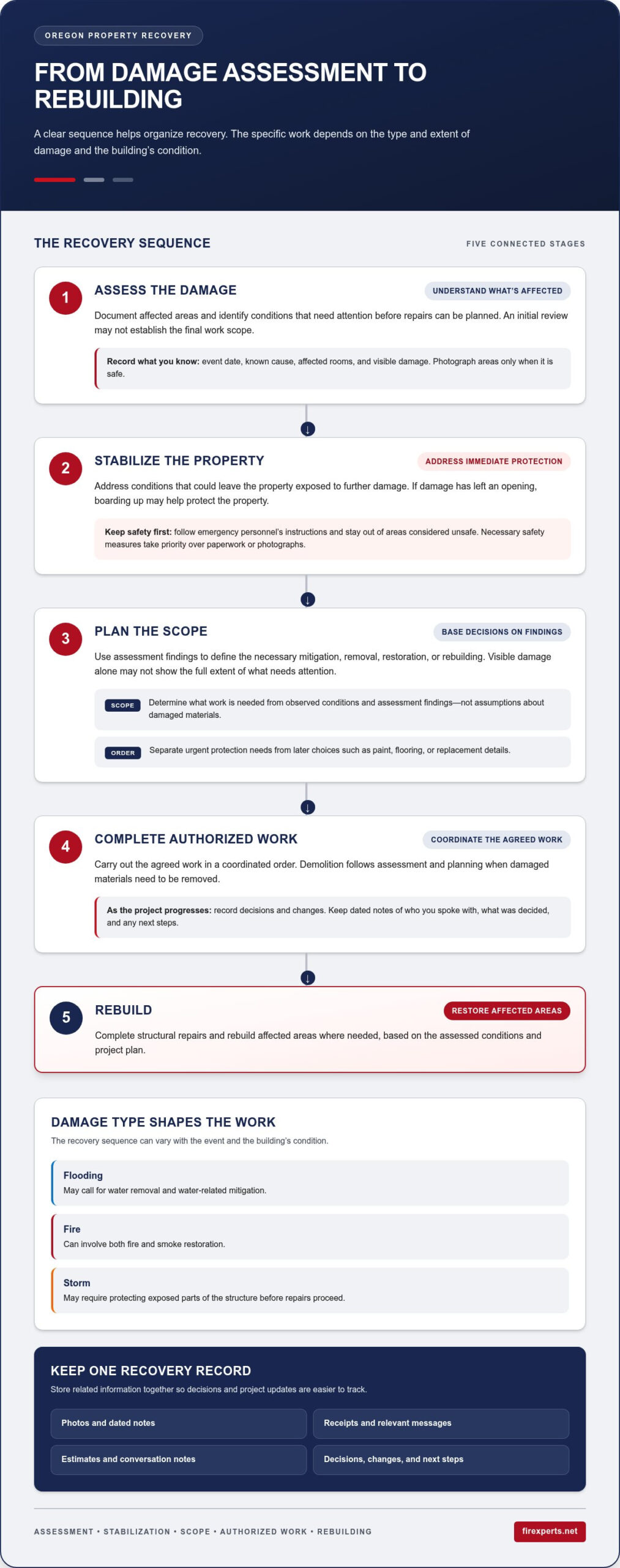
Recovery is easier to follow when each phase has a clear purpose. Assessment documents what’s affected. Stabilization addresses immediate conditions that could leave the property exposed to further damage. Planning defines the work before demolition or rebuilding begins. Steps may overlap, but decisions should be based on observed conditions and assessment findings, not assumptions about what damaged materials look like from the surface.
The work sequence depends on the type and extent of property damage. Flooding may call for water removal and water-related mitigation. Fire damage can involve both fire and smoke restoration. Storm damage may require protecting exposed parts of the structure before repairs proceed. The property’s conditions determine the specific work.
- Assess the damage. Document affected areas and identify conditions that need attention before repairs can be planned.
- Stabilize the property. Address immediate protection needs. Boarding up may help protect a property when damage has left it exposed.
- Plan the scope. Use assessment findings to define the necessary mitigation, removal, restoration, or rebuilding.
- Complete authorized work. Carry out the agreed work in a coordinated order, recording decisions and changes as the project progresses.
- Rebuild. Complete structural repairs and restore affected areas based on the assessed conditions and project plan.
What happens during assessment and stabilization?
Assessment documents visible damage and considers affected areas together. An initial review helps identify conditions that need attention, but it may not establish the final work scope. As more information becomes available, the plan may need to account for damage that wasn’t clear at the outset.
Stabilization protects the property before longer repair work begins. If damage leaves an opening, boarding up may be an appropriate protective measure. The goal is to address immediate exposure and create a safer starting point for planning, not to rush into demolition.
When do demolition and structural repairs fit?
Demolition follows assessment and planning when damaged materials need to be removed. Visible damage alone may not show the full extent of what should be taken out, so removal decisions should follow the findings and defined scope. Once affected materials are addressed, restoration can move to structural repairs and rebuilding where needed.
Timelines and work order vary with the damage and project conditions. A privately managed property recovery also differs from a specific funded program. Programs such as Oregon’s HARP have their own eligibility and process requirements; they aren’t a universal sequence for every loss. For broader state disaster resources, consult the Oregon Department of Emergency Management.
A disaster recovery contractor can coordinate assessment, mitigation, demolition, and rebuilding into a practical plan. For a property affected by flooding, flood restoration work can be part of that recovery path.
How to Evaluate a Disaster Recovery Contractor in Oregon
After damage, the work may stretch from the first assessment to structural repairs. To evaluate a disaster recovery contractor, look at how each phase connects. Clear coordination can reduce handoffs between mitigation, demolition, and rebuilding while helping you understand what’s happening and what comes next.
Use this comparison to focus on practical project needs:
| Project area | What clear coordination looks like |
|---|---|
| Damage assessment | A documented view of affected areas and conditions that inform the next steps. |
| Mitigation | Actions to address immediate damage or exposure are explained separately from later repairs. |
| Demolition | Removal is tied to assessed damage and a defined scope, not assumptions based only on visible conditions. |
| Rebuilding | Structural restoration follows the assessment and removal work, with responsibilities and decisions recorded. |
| Insurance coordination | Restoration information and project updates can be shared with insurance representatives, without promising a coverage decision. |
What capabilities matter across the full recovery project?
Look for a connected plan, not just a list of tasks. Assessment, stabilization, demolition, and rebuilding affect one another, so it should be clear what comes next and who will communicate it. Experience across restoration and construction helps connect damage mitigation with the structural work that may follow.
The work also depends on the event. Fire and smoke can call for different restoration steps than water or storm damage. Fire Industry Restoration Experts handles fire, smoke, water, flood, and storm restoration, along with mitigation, demolition, structural restoration, and rebuilding. A defined scope should explain which work applies to your property and how decisions will be documented as the project moves forward.
How should insurance coordination fit into contractor communication?
Insurance conversations are easier to organize when project information is clear and shared consistently. Fire Industry Restoration Experts coordinates restoration work with insurance companies. Keep your own record of estimates, messages, decisions, and questions alongside project updates so you can refer to the same details during discussions.
Coordination is not a coverage decision. The insurer determines coverage and claim decisions under the terms of the policy, and restoration work does not guarantee approval or payment. Keep the work scope, changes, and communications documented. That gives you an organized basis for discussing the project with your insurance representative as recovery progresses.
In practical terms, clear communication means knowing what work is planned, what has changed, and who will explain the next step. It makes a complicated loss easier to follow, one documented decision at a time.
Oregon Property Recovery Checklist for Documents, Decisions, and Updates
A simple record system makes property recovery easier to follow. Keep project information in one folder, digital, paper, or both. Add dates and short descriptions so you can find the right photo, estimate, or decision without sorting through scattered messages. These records support clear conversations with your restoration team and insurance representative, but they don’t determine what an insurer will cover.
Which project records help keep recovery organized?
Gather key records in one accessible place. Label photos with the date and room or area shown. Keep estimates and written work scopes together so you can compare the proposed work with later updates. Note who discussed each decision and when a follow-up is expected. A brief entry is useful if it captures the essential details.
- Damage record: Dated photographs and notes describing affected rooms and visible conditions.
- Project paperwork: Estimates, work scopes, receipts, and written decisions.
- Communications: Messages with the contractor and insurer, including dates, names, and agreed next steps.
- Open items: Questions awaiting answers, decisions you need to make, and expected follow-up.
Keep water-related records with the relevant assessment and scope details. For a fire loss, separate fire and smoke-related notes where that makes the work easier to track. Clear records help avoid confusion about which work or discussion a document refers to.
How can owners follow progress without adding confusion?
Use one current list for open questions, decisions, and completed work. After a project conversation, record what was decided, who will take the next step, and when you expect an update. If the scope changes, keep the revised description and written decision with the earlier version instead of replacing it. That preserves a useful record of how the plan developed.
Review progress against the current scope. If completed work appears inconsistent with what you understood, raise the difference promptly and ask for the next step to be recorded clearly. Identify the area, describe what you see, and note when you shared the concern. Documentation helps organize discussions, but it can’t guarantee a particular insurance outcome.
Oregon weather can matter if damage leaves part of a property exposed to rain. Keep protection decisions focused on the immediate condition and safety, and record what was done and when. Don’t put yourself at risk to inspect or document an exposed area.
For flood-related questions, keep water remediation notes with the scope and project updates. Fire and smoke losses need their own restoration records. A disaster recovery contractor should keep project communication tied to documented decisions. If your property needs coordinated restoration, discuss your property’s recovery needs with Fire Industry Restoration Experts.
How Fire Industry Restoration Experts Supports Oregon Disaster Recovery
After a damaging event, property owners need more than a list of repairs. They need a clear path from understanding the damage to restoring the structure. Fire Industry Restoration Experts was founded in 2013 by Greg Philo, a volunteer firefighter and contractor. The company combines emergency-response and construction experience to address immediate property needs and the building work that may follow.
The company supports property owners and managers in Portland, Gresham, and Clackamas with fire, smoke, water, flood, and storm restoration, as well as structural restoration and rebuilding. Work can include damage assessment, boarding up, mitigation, demolition, and repairs. Coordinating these phases helps property owners understand how the project moves forward and where decisions fit.
What does coordinated restoration and rebuilding look like?
Each phase should connect to the assessment findings. The team documents affected areas, then uses those findings to guide stabilization and mitigation. If damage leaves the property exposed, boarding up may help protect it. Demolition follows the project plan when damaged materials need removal. Structural repairs and rebuilding address the conditions identified during assessment and the work completed before reconstruction begins.
This order helps keep separate tasks from becoming a confusing pile of activity. Owners can follow what has been assessed, what work is underway, and what comes next. Fire, smoke, water, flood, and storm events can each require different restoration work, so the plan should reflect the damage at the specific property rather than assume every loss follows the same path.
Fire Industry Restoration Experts also coordinates restoration work with insurance companies. This keeps project information connected as work progresses, while the owner stays informed about scope and decisions. Insurance coverage and claim outcomes depend on the policy and insurer, so coordination is not a promise of approval or payment. Clear updates and documented decisions remain important as project conditions change.
What is a practical next step for an Oregon property owner?
You don’t need every detail settled before starting a conversation. Share what happened, the property’s location, which areas appear affected, and any immediate concerns about access or exposure. Photos and notes can help explain what you’re seeing, but don’t enter an area that may be unsafe to document it. From there, discuss the recovery process one decision at a time.
Fire Industry Restoration Experts serves property owners and managers in Portland, Gresham, and Clackamas. If your property has been damaged by flooding or another disruptive event, talk with Fire Industry Restoration Experts about your property and the restoration steps ahead.
Take the Next Step Toward Recovery
Recovery doesn’t have to be mapped out all at once. Start with a clear conversation about what you know, what remains uncertain, and what needs attention first. Then work through decisions in a practical order, guided by the property’s actual needs.
A disaster recovery contractor Oregon property owners can work with should make the path ahead easier to understand. Share the damage you’ve noticed and the questions you have. You don’t need every answer before discussing what comes next.
Talk with Fire Industry Restoration Experts about your property to discuss the damage and the restoration steps ahead.
Frequently Asked Questions
Is a disaster recovery contractor the same as a restoration contractor?
Not always. A disaster recovery contractor may coordinate several stages, while a restoration contractor may handle a narrower or broader set of tasks. The labels alone don’t tell you who is responsible for each part of the work. If you’re looking for a disaster recovery contractor in Oregon, compare written scopes. For example, does the plan cover only water-related work, or does it also address demolition and structural repairs?
Can a disaster recovery contractor work with my insurance company?
Yes. A restoration contractor can share project information and discuss the work scope with insurance representatives. An insurer may request an estimate or details about a particular repair, and the contractor can provide restoration-related information. The insurer makes coverage and claim decisions based on the policy. Keep copies of messages and documents, and note any questions that still need an answer.
What should I document after property damage in Oregon?
Record what happened and what you can safely observe. Along with dated photos and notes, identify the room or area shown in each image, such as “Gresham, kitchen, north wall,” so its location is clear later. Save receipts, estimates, and related messages in the same project folder. Keep original photos and documents where possible, and don’t put yourself in danger or delay necessary protection to collect them.
How long does disaster recovery take for an Oregon property?
There’s no single recovery timeline for every property. A small affected area and a building needing structural repairs involve different work. Rather than rely on a fixed completion date, ask about the current project phase, the next planned step, and what could change the schedule. For a property in Portland, Gresham, or Clackamas, keep notes on updates so you can track changes against the current plan.
What happens if damage is found after restoration work begins?
Tell the restoration team about the newly discovered condition and identify where it appeared. Damage uncovered during removal, for example, may differ from what was visible beforehand. Record when you noticed it and keep the related communication with the project file. The work scope may need review before additional work is planned. If insurance is involved, don’t assume the new condition is covered; the insurer makes that decision under the policy.
Should I enter my property after a fire, flood, or storm?
Don’t enter if authorities have restricted access or the building may be unsafe. Follow emergency personnel’s instructions, even if you can see belongings or damage from outside. Some building conditions aren’t obvious from the doorway, so wait until access is considered safe before going in to document damage or retrieve items. Once entry is allowed, take photos from safe areas and leave assessment of damaged building materials to restoration professionals.
Does Oregon’s ReOregon HARP guidance apply to every disaster recovery project?
No. Oregon Housing and Community Services guidance describes the Homeowner Assistance and Reconstruction Program, including processes that apply to that program. It isn’t a universal checklist for every privately managed repair or restoration project. If you’re dealing with a private property loss, keep program-specific instructions separate from your project records, and use your property’s scope and decisions to track its recovery.