
What if a puddle on the floor is only a small sign of what’s happening beneath it? After a leak or flood, water can reach subfloors, wall cavities, and framing before the full damage is visible. It’s understandable to wonder whether extraction is enough. For water damage repair Oregon property owners need more than visible water removed: hidden moisture must also be assessed and addressed.
Water extraction is an important first step, but it can’t protect a structure on its own. Removal, moisture assessment, drying, and appropriate repairs work together. Understanding what each step does can help you see what needs attention and why.
The process may move from mitigation to selective demolition and rebuilding, if needed. Knowing what to ask a restoration contractor about the damage, proposed work, and documentation can help you make informed decisions and keep your insurer informed. A coordinated process makes it easier to follow each step.
Key Takeaways
- Water damage repair Oregon can involve assessment, mitigation, drying, selective demolition, and rebuilding, depending on what the inspection finds.
- Water may travel beyond visible pooling through openings and contact with building materials, so surface appearance alone may not show the full extent.
- Extraction removes standing water, drying addresses retained moisture, and demolition removes selected materials. Each step serves a different purpose.
- Protect yourself first, document visible damage, report the loss, and arrange a professional assessment. Avoid electrical hazards and unsafe or potentially contaminated water.
- Demolition findings can help guide repair plans, but not every water-damaged property needs structural replacement.
What Water Damage Repair in Oregon Involves, and Why Extraction Matters
A plumbing failure, appliance leak, roof leak, or storm water intrusion can affect places you can’t see. Water damage repair Oregon property owners may need is a process, not just a cleanup. It can include assessment, mitigation, drying, selective demolition, and necessary rebuilding. The right steps depend on where the water traveled and which materials it reached. The Water damage overview provides background on common causes and effects, but an inspection is needed to understand what happened in a particular building.
Extraction is an important early step because it removes accessible standing water before it continues affecting nearby materials. But a cleared floor doesn’t show whether moisture remains in a wall, beneath a finished floor, or inside framing. That distinction matters when planning repairs and deciding what needs further attention.
What water extraction removes, and what it cannot confirm
Pumps and other extraction equipment remove accessible standing water from floors and other reachable areas. They can’t, by themselves, confirm whether wall cavities, insulation, framing, or subfloors have retained moisture. Water may seep through gaps, travel under flooring, or reach materials behind baseboards and wall finishes.
Water extraction removes accessible standing water; structural drying addresses moisture that may remain in building materials. After extraction, an inspection and appropriate moisture checks help determine the next steps. Ask the restoration contractor which areas were assessed, what the findings showed, and how those findings affect the drying or repair plan.
How water can affect framing, walls, and subfloors
Moisture can move from its source into nearby materials through openings and direct contact. For example, a leaking appliance may wet the floor and reach the subfloor below. Water from a roof leak may run along framing or collect inside a wall. If materials stay wet, they may weaken, swell, separate, or deteriorate. The extent depends on the materials and conditions, so visible water alone can’t establish how far the damage goes.
A stain is a reason to investigate, not proof that a structural component must be replaced. A contractor should assess the affected area and explain whether drying, selective removal, or repair is appropriate. Avoid opening walls or disturbing materials yourself, especially if water may have reached electrical components or the source or condition of the water is uncertain. A careful assessment helps distinguish visible marks from damage that calls for structural work, without assuming every affected surface needs to be removed.
How Water Damage Moves from Initial Leak to Hidden Structural Moisture
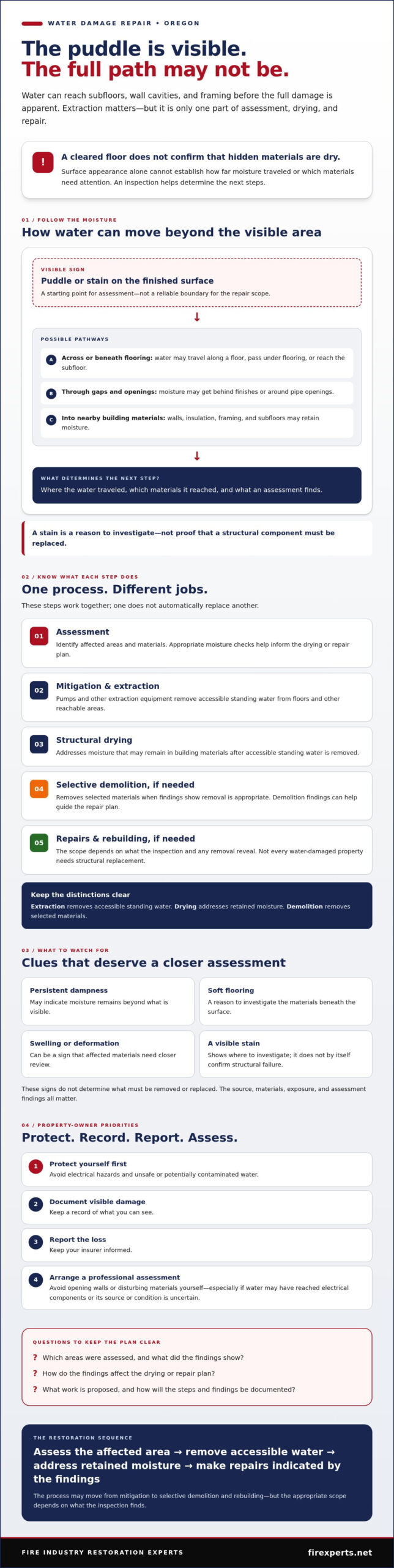
Water rarely stays within the outline of a puddle. It can move across a floor, slip beneath flooring, and reach a wall where finishes meet the subfloor. A small stain may mark the first visible point of contact, not the full path moisture took. That’s why water damage repair Oregon property owners arrange should be based on assessment findings, not appearance alone.
Why water can spread beyond the visible stain
Imagine a supply line leaking beside a kitchen cabinet. Water may run along the floor, pass under the cabinet toe kick, and soak the subfloor. If it reaches a gap around a pipe or the edge of a wall, it may affect materials behind the finished surface. Gravity can pull water downward, while openings and contact between materials can carry it sideways or into concealed spaces.
How far moisture travels depends on the source, the building materials, and how long they were exposed. Porous materials may absorb water, while seams and gaps can let it pass behind otherwise intact finishes. The U.S. Environmental Protection Agency explains that moisture control is the key to mold control. This is one reason to identify and address damp areas rather than judge the damage by visible pooling alone.
The visible wet area is a starting point for assessment, not a reliable boundary for the repair scope.
When framing or subfloor concerns need closer assessment
Persistent dampness, flooring that feels soft underfoot, or visible swelling and deformation are reasons to seek a closer assessment. These signs don’t prove that framing or a subfloor has failed, and they don’t determine what must be removed. They do indicate there may be more to investigate than the surface suggests.
The water source matters, too. A plumbing leak may involve water from a sanitary supply line, while sewage or floodwater may carry contaminants. Don’t assume water is safe to touch based on its appearance. Avoid contact with potentially contaminated water and keep clear of electrical hazards. Ask qualified professionals to assess the conditions and advise on safe next steps.
A restoration professional can examine affected materials and use appropriate checks to help determine whether drying, selective demolition, or repair is warranted. Before work begins, ask which areas are included in the assessment and what evidence supports the proposed scope. For questions about water restoration services, a qualified restoration team can discuss the conditions and findings with you.
Water Extraction, Drying, and Demolition: How to Understand the Differences
These stages address different problems, so one doesn’t automatically make the others unnecessary. For water damage repair Oregon property owners may need, the appropriate scope depends on the affected materials, the water source, and the conditions found at the property.
| Stage | Purpose | What it doesn’t accomplish alone |
|---|---|---|
| Extraction | Removes accessible standing water from affected areas. | Doesn’t confirm that moisture has left concealed materials or that drying is complete. |
| Drying and dehumidification | Use appropriate equipment and conditions to address moisture remaining in materials and the surrounding space. | Don’t restore materials that are damaged or unsuitable to keep. |
| Selective demolition | Removes specific affected materials when assessment indicates they can’t reasonably be dried or repaired. | Doesn’t, by itself, complete drying or rebuild the removed area. |
What extraction, drying, and dehumidification each do
Extraction clears water that can be reached and removed. Drying and dehumidification address what remains: moisture held in building materials or in the air. A restoration professional assesses the conditions and determines what equipment is appropriate. The equipment needed and how long it runs vary by property, affected materials, and verified conditions. Ask how progress will be assessed and what findings will guide the next step.
Think of extraction as removing the water you can see and reach, not as a final check of every floor, wall, or framing member. Drying is a separate part of the process, and completion should be based on assessment rather than assumption.
When selective demolition or structural repair may be considered
Some materials may not be practical to dry or repair in place. If assessment supports removal, selective demolition can expose affected areas and help clarify what repairs are needed. Structural repair may be considered if an inspection finds damage to framing or other building components. That doesn’t mean every loss requires replacement.
Damage-related removal is different from optional renovation. Ask the contractor to explain which materials they propose to remove, what evidence supports that decision, and what repair would follow. Clear notes and photos can also help you discuss the proposed scope with your insurer. Coverage and claim decisions depend on your individual policy and insurer, so don’t assume a proposed restoration step is automatically covered.
What Oregon Property Owners Can Do During Water Damage Repair
Water damage can leave you juggling safety concerns, repair decisions, and insurer communications at once. Following a simple order of steps can make the situation easier to manage. This checklist can help Oregon property owners keep important details organized while qualified professionals assess the property.
- Address immediate safety. Keep people and pets away from unsafe standing water, electrical hazards, and water that may be contaminated. Don’t enter a hazardous area or try to handle an uncertain source yourself. Follow guidance from qualified professionals.
- Document what you can safely see. Take dated photos or video of affected rooms and visible damage before cleanup changes the scene, if it’s safe to do so. Note when you noticed the problem and any steps already taken.
- Report the loss to your insurer. Contact your insurance company promptly and follow its instructions for reporting, documentation, and claim submission. Save messages, claim details, and copies of estimates and work records.
- Arrange an assessment. Ask a restoration contractor to explain what was inspected, what the findings show, and what work may be needed. Keep a copy of the proposed scope and any updates.
Questions to ask during the water damage assessment
Clear questions can help you understand the plan before work moves ahead. Ask which rooms and materials were inspected, how the affected area was determined, and whether any spaces still need assessment. Find out which proposed tasks are mitigation, which involve demolition, and which are reconstruction. Request that findings, progress, and changes to the scope be documented and shared with you.
For a broader look at the stages involved, see this guide to the water damage restoration process in Portland.
How to coordinate restoration work and an insurance claim
Your insurer makes coverage and claim decisions under your individual policy. A restoration contractor can explain observed damage and provide estimates or scope information, but can’t determine whether the insurer will approve coverage or payment. Ask how the contractor coordinates documentation with your insurer, what information they’ll provide, and what you should submit yourself. Keep your own dated record of conversations, estimates, photos, and work completed.
These steps won’t remove every uncertainty, but they give you a clearer record and a practical way to follow the work. Fire Industry Restoration Experts can discuss assessment and restoration next steps.
From Water Removal to Structural Repair: Planning the Restoration Next Steps
Once water is removed, the next decisions should follow the assessment findings. The process moves from mitigation toward repairs when conditions and the documented scope support that transition. Some materials may be suitable for drying and repair. Others may need to be removed or replaced. The goal is to match the work to the damage, not assume every wet area needs structural replacement.
How mitigation findings guide repair and rebuilding
Assessment findings help determine which materials can be dried, cleaned, or repaired and which may need replacement. If selective demolition reveals additional affected areas, the contractor can document the conditions and explain whether the repair scope should change. This information guides the move from moisture-related work to structural restoration: address the affected materials first, then repair or rebuild areas that the findings show need it.
Ask for clear records of the conditions found, work completed, and any changes to the proposed scope. Don’t assume a fixed completion date before the property has been assessed and the necessary work is understood. Timing depends on the damage, materials, and repair plan.
Choosing restoration support in Portland, Gresham, and Clackamas
As you consider water damage repair Oregon options, confirm whether a contractor serves your location and ask how findings and work will be documented. Check that the proposed scope clearly separates mitigation, demolition, and rebuilding. Also ask who will explain any changes as the project progresses.
Fire Industry Restoration Experts provides water restoration, mitigation, demolition, structural restoration, and rebuilding, and coordinates with property owners and insurance companies. Founded by Greg Philo, a contractor and volunteer firefighter, the company brings construction expertise together with emergency response experience. Property owners in Portland, Gresham, and Clackamas can confirm current service availability and discuss what work fits their property.
A restoration project is easier to follow when each step connects to documented findings and a clear repair plan. Talk with Fire Industry Restoration Experts about the damage, your location, and possible next steps.
Take the Next Step Toward a Sound Repair Plan
Removing standing water is a start, not proof that framing, walls, or subfloors are dry. A careful assessment helps show where moisture traveled and whether materials can be dried and repaired or need selective removal. Those findings guide the next steps, from mitigation through any necessary structural work.
For water damage repair Oregon property owners can approach the process more confidently by keeping photos, estimates, and work records together, asking what supports the proposed scope, and staying in touch with their insurer. Each property is different, so repair recommendations and timing should follow the conditions found on site.
Fire Industry Restoration Experts handles water mitigation, demolition, structural restoration, and rebuilding, helping property owners move from damage assessment toward repair with a clearer plan. To discuss what happened at your property and ask about next steps, contact Fire Industry Restoration Experts about your water damage.
You don’t have to sort through every decision at once. A grounded assessment can help you move forward one step at a time.
Frequently Asked Questions
How does water extraction help prevent structural damage?
Water extraction removes accessible standing water, which can limit how long nearby materials remain exposed. It doesn’t confirm that framing, subfloors, or wall cavities are dry, and it can’t guarantee that structural damage has been prevented. After extraction, a professional assessment can identify areas that may hold moisture. Appropriate drying and follow-up checks help determine whether materials need further attention or repair.
Can water damage framing even if the wall looks dry?
Yes. A dry-looking wall surface can’t confirm conditions inside the wall or floor assembly. Depending on the water source, its route, and how long materials were exposed, moisture may reach framing, insulation, or subfloors without leaving an obvious mark. If you notice persistent dampness, soft flooring, or visible changes, arrange a professional assessment. Appearance alone can’t determine whether framing has failed or needs replacement.
How long does water damage repair take in Oregon?
There’s no single timeline for water damage repair Oregon property owners can rely on, because each loss is different. Duration depends on the water source, affected materials, property size, drying conditions, and repair scope. Initial water removal is distinct from drying and rebuilding, and each step may take a different amount of time. Ask your restoration contractor for project-specific updates as assessment findings clarify the work ahead.
What happens if water is left in a subfloor or wall cavity?
Retained moisture can continue affecting building materials and may contribute to further deterioration if it isn’t addressed. The outcome depends on the material, the length and extent of exposure, and conditions in the affected space. A damp subfloor or wall cavity needs assessment, not guesswork. A restoration professional can check the affected area and recommend appropriate moisture management without assuming a fixed damage timeline or a specific repair outcome.
Does homeowners insurance cover water damage repair in Oregon?
Coverage depends on your specific policy, the cause of the damage, applicable exclusions, and the circumstances of the claim. Contact your insurer to report the loss and follow its instructions for documentation and claim submission. A restoration contractor may provide estimates or scope information and coordinate with the insurer, but can’t promise coverage, claim approval, or payment. Keep copies of photos, communications, estimates, and work records for your files.
Should damaged framing always be removed after water damage?
No. Framing doesn’t automatically need to be removed after water damage. A qualified assessment considers the affected material, its condition, and whether it can be appropriately dried or repaired. Visible staining alone doesn’t establish that a structural component has failed. Before approving demolition or repairs, ask what inspection findings support the recommendation, which areas are affected, and how the proposed work relates to the documented damage.
What should I do first after finding water damage at home?
Put personal safety first. Stay clear of electrical hazards, unsafe standing water, and water that may be contaminated. If it’s safe, stop the water source, then photograph visible damage and contact the appropriate plumber, insurer, or restoration professional. Avoid disturbing materials that may be unsafe. Visible marks may not show the full affected area, so don’t assume the damage ends where the stain or pooling stops.