
What should you do when rain is still coming through your roof and water is spreading inside? A growing ceiling stain can be unsettling, especially when you don’t know what may be wet behind the wall. Roof leak water damage restoration Portland property owners can rely on starts with safety and limiting further damage, not rushing into repairs.
Take the leak seriously. Even after visible dripping stops, moisture may remain in ceilings, walls, or other building materials. A steady, practical response can help protect people and belongings while creating a clearer record of what happened for your insurance claim.
This guide covers what to do first, how to document the damage, and what to expect as a restoration contractor assesses affected materials, removes damaged sections if needed, and dries the property before rebuilding. It also explains how water restoration differs from repairing the roof covering, so you can decide which professionals to contact and how their work fits together.
Key Takeaways
- Prioritize personal safety, then limit water entry and protect belongings without entering hazardous areas.
- Water can travel from the roof before appearing indoors. Record visible signs and avoid removing materials to search for hidden damage.
- Roof leak water damage restoration Portland involves separate steps: a qualified roofer addresses the roof source, while a restoration team assesses and addresses interior damage.
- Keep a clear record of dates, photos, affected rooms, changes, receipts, and communications to support conversations with your insurer.
- Expect restoration to move through assessment, mitigation, drying, scope decisions, and repairs. Demolition should follow documented damage and professional assessment.
Portland Roof Leak Water Damage: Initial Steps
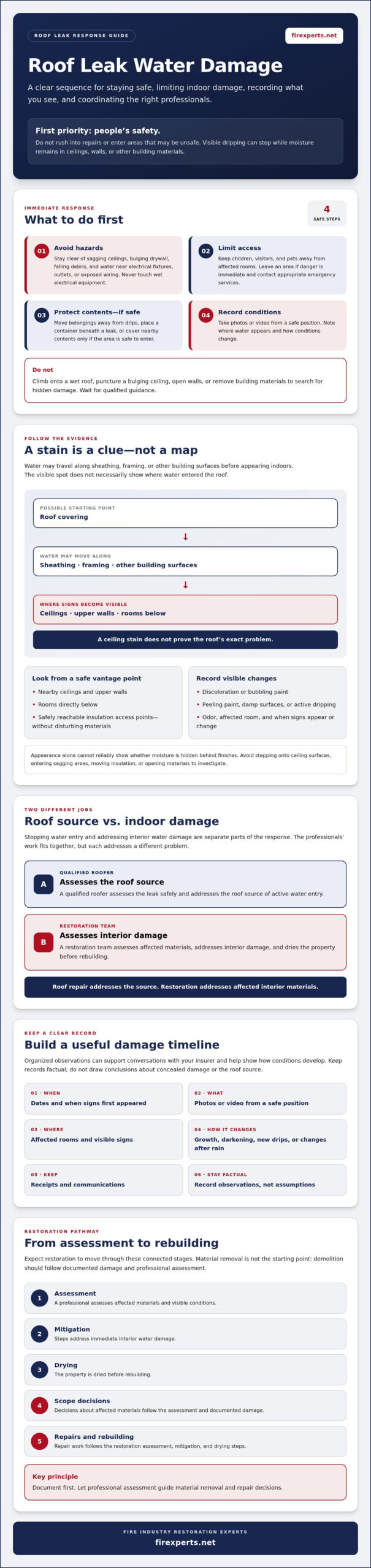
A roof leak can turn a quiet room into a stressful scene, especially while rain continues. Put people’s safety ahead of belongings or cleanup. First, keep others away from affected areas, protect what you safely can, and record what you see. These steps can help limit immediate risks while a qualified roofer assesses the source of active water entry. They are also a useful start to roof leak water damage restoration Portland property owners may need.
Which roof leak hazards need immediate attention?
Stay out of rooms with sagging ceilings, bulging drywall, falling debris, or other unstable materials. Water adds weight, and a damaged ceiling may worsen without warning. Keep clear of water near electrical fixtures, outlets, or exposed wiring. Never touch wet electrical equipment or enter standing water where wiring may be present. If danger is immediate, leave the area and contact appropriate emergency services. Don’t climb onto a wet roof. Contact a qualified roofer to assess the leak safely.
How can you limit additional water damage indoors?
Only act if the area is safe to enter. Move belongings away from drips, place a container beneath a leak, or cover nearby contents if you can do so safely. Keep people out of rooms where the ceiling or floor appears unstable. Don’t puncture a bulging ceiling or open walls and other building materials. Doing so could release trapped water or expose hidden hazards, so wait for qualified guidance.
- Avoid hazards. Watch for electrical risks, sagging surfaces, and falling debris. Leave unsafe areas.
- Limit access. Keep children, visitors, and pets away from affected rooms.
- Protect contents. Move items only if you can do so without entering an unsafe area.
- Record conditions. Take photos or video from a safe position, and note where water is appearing.
These indoor steps can reduce immediate exposure, but they won’t stop water entering through the roof. During Portland rain, a leak may continue or its visible signs may change as water travels through the structure. Record changes without disturbing materials. For a general overview of what is water damage, see how moisture can affect areas beyond the first visible spot. Once the area is safe, the next steps are to assess the interior damage and coordinate the right professionals.
How to trace roof leak water damage through a Portland property
A ceiling stain shows where water became visible, not necessarily where it entered. After passing the roof covering, moisture can follow sheathing, framing, or other building surfaces before appearing indoors. In Portland, continued rain can change what you see and where it appears. Treat each stain as a clue, not proof of the roof’s exact problem.
Why the ceiling stain may not show where water entered
Water can travel along a sloped surface or beam and emerge some distance from the roof opening. A stain beneath a roof valley, for example, doesn’t establish that the valley is the source. Don’t climb into an attic or open a ceiling to trace the path, especially if access may be unsafe. Note where the mark is and when it first appeared or changed.
From a safe vantage point, look for related signs around the affected area:
- Nearby ceilings and upper walls, including corners and the edges of the stain
- Rooms directly below, where water may have continued downward
- Insulation access points, viewed only if they’re safely reachable without disturbing materials
Don’t step onto ceiling surfaces, enter areas with sagging materials, or move insulation to search for moisture. A qualified assessment can check building materials more thoroughly than a visual inspection alone.
What visible signs should property owners record?
Note discoloration, bubbling or peeling paint, damp surfaces, active dripping, and any change in odor. Take dated photos from a safe position. Write down which room is affected and whether the mark grows, darkens, or appears after rain. Appearance alone can’t reliably show whether moisture is hidden behind finishes, so appropriate assessment may be needed. The EPA’s guide to mold and moisture also explains why addressing damp conditions matters.
Keep your observations factual. Marking a stain’s edge on a photo or noting when a drip starts can help show how conditions develop, but avoid conclusions about concealed damage or the roof source. Don’t remove drywall, insulation, or trim to investigate. That can disturb materials and complicate a professional assessment.
If signs appear in several rooms or keep changing, a water restoration professional can assess affected building materials and help determine what needs attention. Learn more about water restoration support as you plan next steps. A restoration assessment addresses interior water damage; a qualified roofer should inspect and repair the roof itself.
Roof repair, water mitigation, and restoration: what each step addresses
Stopping the leak and repairing the damage inside are related, but they are different jobs. A qualified roofer addresses the exterior source, such as damaged roof covering or flashing. A restoration team assesses and addresses the resulting interior water damage. You may need both trades. Controlling the roof entry point helps prevent ongoing water from affecting interior restoration work.
| Step | What it addresses | Who typically handles it |
|---|---|---|
| Stop water entry | Roof covering, flashing, or another exterior source of the leak | Qualified roofer |
| Mitigate water | Assessment and steps to address water affecting interior materials | Water restoration team |
| Restore damaged materials | Decisions about removal, repairs, and rebuilding after assessment and drying | Restoration team, with other trades as needed |
When should you call a roofer versus a restoration contractor?
Contact a qualified roofer to inspect and repair the roof source. A restoration contractor focuses on resulting interior damage, including assessment, mitigation, necessary demolition, and rebuilding. If water has affected ceilings, walls, or floors, you may need both. Tell each professional whether the leak has been stopped and which areas still need attention so they can coordinate their work. For property owners dealing with severe winter weather where heavy snow accumulation creates additional exterior risks, you can find out more about professional snow management services.
Why visible cleanup may not be the whole restoration
Wiping up a puddle or drying a visible surface doesn’t confirm that drywall, insulation, framing, or flooring beneath it is dry. A restoration team assesses affected materials, then uses appropriate drying and monitoring to inform next decisions. The IICRC S500 standard offers a reference for professional water restoration practices. Drying needs depend on the materials and extent of moisture, so don’t rely on a fixed timeline or surface appearance alone.
Assessment should guide decisions about removal. Some materials may be dried and retained; others may need removal and repair, depending on their condition and the professional findings. If you’re concerned about mold, ask a qualified provider what assessment or services are appropriate. Mold remediation is separate from water restoration, so confirm that any provider you consider offers the specific service you need.
For roof leak water damage restoration Portland property owners should expect distinct steps: address the roof source, assess and mitigate interior water, dry affected areas, then determine the repair scope. Keeping those roles clear helps you understand who is responsible for each part of the recovery.
How to document roof leak damage and coordinate next steps in Oregon
A clear record makes it easier to explain what happened and keep conversations with your insurer and restoration professionals organized. Start with what you know, avoid guessing about the cause or hidden damage, and follow your insurer’s instructions for notice and documentation. Coverage depends on the policy and the facts of the loss, so only your insurer can assess your specific claim.
What information helps explain the damage clearly?
Build a simple timeline and keep related records together. Photograph visible damage before moving items when it’s safe and practical. Don’t put yourself at risk or delay reasonable steps to protect the property just to get a picture.
- Record the dates. Note when you discovered the leak and when you contacted your insurer, roofer, or restoration contractor.
- Describe conditions. List affected rooms, visible damage, active dripping, and changes you observe over time.
- Log actions taken. Note reasonable temporary protective measures, such as moving belongings or catching drips, and keep related receipts.
- Save communications and documents. Keep messages, contractor assessments, estimates, invoices, and insurer instructions in one folder.
Use straightforward descriptions instead of conclusions. For example, write “brown stain appeared on the bedroom ceiling” rather than stating that a particular roof component failed. This keeps your record factual while the source and full extent of damage are assessed.
How can a restoration contractor support the process?
A restoration contractor can assess affected building materials, document observed conditions and the proposed scope, and carry out appropriate mitigation and restoration work. Ask what the assessment shows, what work is proposed, and which details remain uncertain or may need further inspection. A contractor may also coordinate with your insurer, but that support doesn’t determine coverage or guarantee a claim outcome.
Contact your insurer promptly and follow the notice, inspection, and recordkeeping instructions in your policy. Share dated photos and notes, and ask how the insurer wants estimates and other documents submitted. Keep copies of everything you provide. For roof leak water damage restoration Portland property owners may need, an organized record helps keep discussions grounded in documented conditions rather than assumptions.
If you’re in the Portland area and want to discuss assessment, mitigation, or restoration for water-damaged materials, talk with the restoration team about your situation. Have a qualified roofer assess and repair the roof covering itself.
Water Mitigation to Rebuilding: A Path to Recovery
Once the roof leak is addressed, interior recovery can move forward in an orderly way. Work generally progresses from assessment to mitigation, drying, decisions about affected materials, and repairs. Each step informs the next. For roof leak water damage restoration Portland property owners should expect a plan based on conditions found at the property, not assumptions based only on visible damage.
What happens after the source of water is addressed?
A restoration team assesses which materials have been affected and determines appropriate mitigation steps. The findings guide drying and decisions about whether materials can remain or need removal. Demolition should be based on documented damage and professional assessment, not started simply because a surface looks stained. Once affected areas are stabilized and the repair scope is clear, rebuilding can begin when the site is ready.
- Assessment: Identify and document affected materials and areas.
- Mitigation and drying: Address water damage and monitor conditions as appropriate for the materials.
- Scope decisions: Determine what can be retained, what needs removal, and what repairs are required.
- Repairs and rebuilding: Restore affected areas according to the established scope and site conditions.
Dry-looking paint or flooring doesn’t necessarily show what’s happening behind or beneath it. A careful assessment can help avoid unnecessary removal as well as repairs that overlook affected materials. If conditions change during the work, ask how the new findings affect the documented scope before moving to the next phase. For broader interior or exterior reconstruction following water damage, partnering with an experienced renovation team like Remod Group can help return the property to top condition.
How to choose a restoration partner for roof leak damage
Ask how the provider assesses water-affected materials, documents proposed work, communicates new findings, and coordinates with your insurer. Confirm what the restoration team will handle and what requires a qualified roofer. A restoration contractor may support insurance communication, but coverage and claim decisions remain with the insurer.
Fire Industry Restoration Experts provides water restoration, assessment, mitigation, demolition, and rebuilding. Before work begins, ask for a clear explanation of what’s included and what remains uncertain. Property owners in Portland, Gresham, or Clackamas can ask whether service is currently available for their specific location.
For a roof leak, restoration and roof repair are separate parts of recovery. The roofer addresses the roof source; the restoration team addresses resulting damage inside. To discuss water restoration for your property, contact Fire Industry Restoration Experts to talk through the situation and possible next steps.
Take the Next Step Toward a Dry, Stable Property
A roof leak recovery plan starts with safety, clear records, and an understanding of what each professional handles. A qualified roofer addresses the roof source, while a restoration team assesses and addresses resulting damage. Drying and repair decisions should follow the conditions found at the property, not guesswork or surface appearance alone.
For roof leak water damage restoration Portland property owners can rely on, Fire Industry Restoration Experts can help assess water damage, mitigate affected areas, and carry out demolition and rebuilding when the documented scope calls for it. Founded by volunteer firefighter and contractor Greg Philo, the company also coordinates with insurance companies as part of the process. That support doesn’t guarantee coverage or a claim outcome, which depends on your policy and the facts of the loss.
If you’re ready to discuss the damage and possible next steps, contact Fire Industry Restoration Experts about water damage restoration. Contact the team to talk through your situation and the restoration work that may be appropriate.
Frequently Asked Questions
What should I do first when my roof leaks during a Portland rainstorm?
Move people away from hazards before trying to protect belongings. Stay clear of sagging ceilings, falling debris, exposed wiring, and water near electrical fixtures. If the area is safe, move items, catch drips, and take photos from a safe spot. Don’t climb onto a wet roof or puncture a ceiling. Contact a qualified roofer about active water entry, and notify your insurer according to your policy.
Can a roof leak cause water damage even if the ceiling stain is small?
Yes. A small stain doesn’t show how far water may have traveled or whether moisture has reached concealed materials. Water can follow framing or other building surfaces before appearing indoors, potentially affecting insulation, walls, or flooring. Photograph the stain and note whether it changes, but don’t remove finishes to investigate. A restoration professional can assess affected materials and help determine whether further drying or repairs are needed.
How do you dry water damage from a roof leak?
Roof leak water damage restoration in Portland typically starts with assessing which materials are wet and how far moisture has spread. A restoration team selects mitigation and drying steps based on the conditions found, then monitors affected areas as appropriate. Surface dryness alone doesn’t confirm that materials behind or beneath it are dry. After assessment and drying, the team can help determine whether materials can remain or need removal and repair.
Should I call a roofer or a water damage restoration company first?
For active water entry, contact a qualified roofer to assess and repair the roof source, but don’t climb onto the roof yourself. A water restoration company addresses the resulting interior damage by assessing affected materials, mitigating water, and planning drying and repairs. You may need both trades. If ceilings are sagging or there’s an immediate electrical or structural danger, leave the area and contact appropriate emergency services.
Will homeowners insurance cover roof leak water damage in Oregon?
Coverage depends on your policy and the specific facts of the loss, so only your insurer can assess your claim. Contact the insurer promptly and follow its instructions for notice, inspection, and documentation. Keep dated photos, notes, receipts for reasonable temporary protective measures, and copies of contractor assessments and communications. A restoration contractor may coordinate with insurance companies, but can’t promise coverage or a particular claim outcome.