
The damage behind an ice dam can matter more than the ice itself. Homeowners insurance may cover resulting water damage, but coverage depends on the policy and circumstances of the loss. If you need ice dam water damage repair in Gresham, documenting the damage and understanding your policy are important first steps.
It’s understandable to worry about what the insurer will pay and how much repair work your home may need. The cost depends on the damage and is provided after a quote request; the scope can be shaped by harm to the roof, gutters, downspouts, and interior areas affected by water.
This article explains how ice dams lead to leaks, what can influence insurance coverage, and what to consider before permanent repairs begin. You’ll also learn how professional removal and restoration can address visible damage and moisture in areas that may be harder to see, so you can make informed decisions about the next steps.
Key Takeaways
- Insurance coverage depends on your policy. Photograph the damage and contact your insurer before cleanup or permanent repairs.
- Professional removal and restoration can address water intrusion, dry affected areas, and repair damage to the home.
- Ice and snow can strain roofs and damage shingles, gutters, and downspouts, so assess these areas as well as indoor damage.
- Water can reach insulation and wall cavities, making hidden moisture worth considering even when the visible damage seems limited.
Does Insurance Cover Damage from Ice Dams?
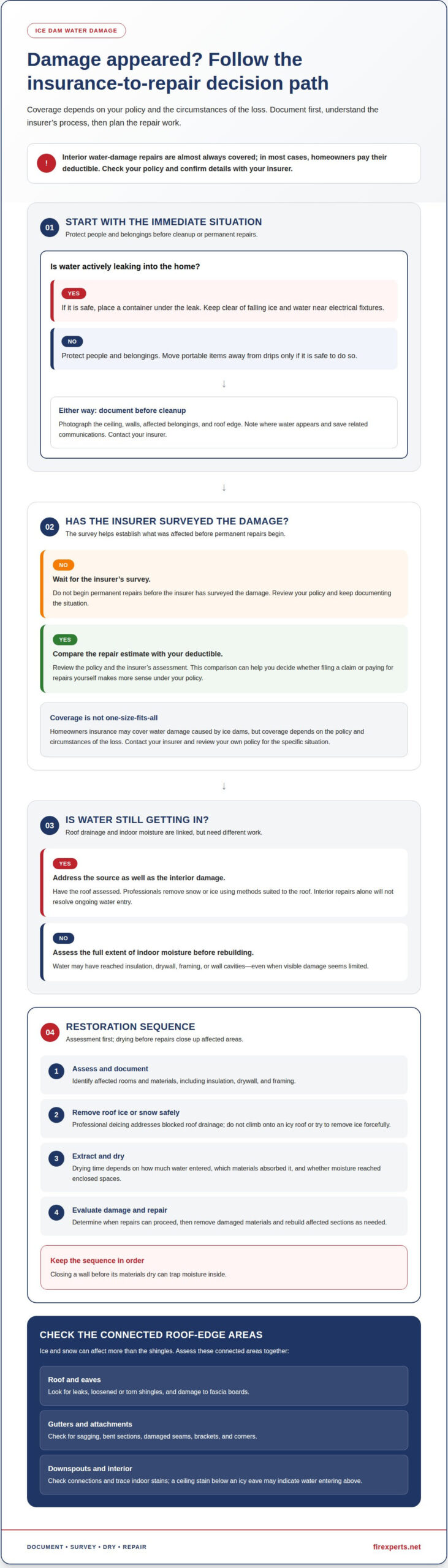
Homeowners insurance may cover water damage caused by ice dams, but coverage depends on your policy and the circumstances. Interior water-damage repairs are almost always covered, and in most cases homeowners pay their deductible. Contact your insurer after damage appears, photograph affected areas before cleanup, and review your policy. Wait for the insurer to survey the damage before starting permanent repairs.
Ice dams form when snow melts on a roof, runs toward colder eaves, then refreezes. The resulting ridge blocks runoff, allowing water to pool and work beneath shingles. Changing winter temperatures can drive this cycle; early-winter conditions with lower snowfall and temperatures fluctuating between 20 and 30 degrees are less likely to produce ice dams. Still, an ice dam can develop within 24 hours, so visible ice along the roof edge deserves attention.
Once water gets beneath shingles, it can damage roofing materials and spread into ceilings, drywall, insulation, wiring, paint, and framing. Trapped moisture may reach wall cavities, while snow and ice can strain the roof. Ice can also pull at gutters and downspouts or damage fascia boards. A ceiling stain below an icy eave, for example, may indicate water entering above, even if the roof leak isn’t obvious.
In Gresham, attic insulation, ventilation, and roof maintenance can help limit the conditions that lead to ice dams. Adequate insulation and ventilation reduce heat escaping into the attic and help prevent uneven roof temperatures. Maintenance can address roof air leaks, cracks, or damaged shingles that let water enter.
Keep a record as the situation unfolds: photograph the roof edge and interior damage, note where water appears, and save related communications. After the insurer’s survey, compare the repair estimate with your deductible. This can help you decide whether filing a claim or paying for repairs yourself makes more sense under your policy.
Professional ice dam removal and water damage restoration
Professional restoration addresses two linked problems: ice blocking roof drainage and moisture inside the home. The work typically progresses from assessment and safe removal to drying, damage evaluation, and repairs.
Choosing a Restoration Company
A restoration company assesses water intrusion, documents affected areas, and explains the work needed. For a Gresham property, consider whether the company is licensed, bonded, and insured contractors, and ask how it approaches drying, repairs, and coordination with your insurer. Clear communication matters because a visible ceiling stain may not show how far moisture has spread. A thorough assessment identifies affected rooms and materials, including insulation, drywall, and framing.
Immediate Damage-Limiting Steps
First protect people and belongings, then document the damage before cleanup. Keep clear of falling ice and water near electrical fixtures; move portable items away from drips if it’s safe. Put a container under an active leak and photograph the ceiling, walls, and affected belongings. Contact your insurer, and avoid permanent repairs until its survey. Don’t climb onto an icy roof or try to remove ice forcefully.
Repair and Drying Timeline
Drying and repair time depends on how much water entered, which materials absorbed it, and whether moisture reached enclosed spaces. A small, accessible leak differs from water-soaked insulation or damp framing behind a wall. Restoration professionals assess these conditions, dry affected areas, and determine when repairs can proceed. The sequence matters: closing a wall before its materials dry can trap moisture inside.
Roof deicing and indoor restoration address different parts of the damage. Professionals remove snow or ice using methods suited to the roof, while restoration focuses on water extraction, drying, and damaged building materials. If water continues to enter, interior repairs alone won’t resolve the source.
Once the roof is assessed, a restoration team can map water-damaged areas, including concealed insulation and wall cavities. That assessment helps shape a practical repair plan, from drying and removing damaged materials to rebuilding affected sections. For help with water intrusion and interior recovery, explore water damage restoration.
Damage to roofs, gutters, and downspouts
Ice and snow can damage several connected parts of a roof edge. Assess shingles, fascia, gutters, and downspouts together, since damage in one area can affect drainage elsewhere.
Roof Damage from Ice Dams
An ice dam can hold melting water against the roof, allowing it to seep beneath shingles. The backed-up water may cause leaks, loosen or tear shingles, and damage fascia boards along the eaves. Ice and snow also add weight and strain to the roof. Missing or lifted shingles near an icy roof edge, for example, can create a path for water intrusion.
Damage may extend beyond the visible roof surface. Water entering beneath shingles can reach roof framing and interior materials, and a leak may appear some distance from where it entered. A roof assessment should trace the affected area from the eaves toward the interior stain, rather than treating one damaged shingle as the whole problem. This helps distinguish surface repairs from work that also needs to address water intrusion.
Gutter and Downspout Damage
Ice and snow can weigh down gutters and downspouts, bending them or pulling them away from the roofline. A gutter shifted at its attachment points may no longer carry meltwater as intended, and ice can break sections loose. A sagging gutter below a roof edge, for instance, may indicate strain even when the downspout still appears connected.
During an assessment, check the full drainage path: gutter seams, brackets, corners, and the downspout connection. A crushed or detached downspout can leave runoff beside the building instead of directing it away. This is separate from a roof leak, so repairs may need to address both damaged drainage components and water already inside. Assess the roof edge and connected drainage as one system, not as isolated pieces.
How can homeowners identify ice dam leaks and hidden water damage?
Look for changes inside the home after snow or ice builds up at a roof edge. A ceiling stain, peeling paint, or damp drywall beneath the eaves can indicate water entering above. The leak may appear away from where it entered, so note which rooms and surfaces show changes.
Inspect accessible areas without climbing onto the roof or disturbing wet materials. In an attic, look for damp insulation, water marks on framing, or wet roof sheathing. In living spaces, check ceilings and upper walls near exterior edges, then look in nearby rooms for related signs. A small stain may sit below a larger area of trapped moisture.
Keep a simple record to help show where the damage is spreading:
- Photograph each stain, damp surface, or patch of peeling paint.
- Note the room and the surface where you found it.
- Record whether the area feels damp or changes after new melting or refreezing.
- Include visible roof-edge, gutter, or downspout damage in the same record.
Water can soak insulation in attics and wall cavities without making every affected surface visibly wet. A professional assessment can trace water’s path from the roof toward interior materials and identify areas that need drying. A ceiling mark alone doesn’t show whether framing, wiring, or insulation has also been affected.
Keep people away from sagging, water-heavy ceiling areas and don’t touch wet electrical fixtures. Photograph visible damage before cleanup, and contact your insurer to discuss the loss. If a stain grows or a new damp area appears, add it to your record rather than assuming it shares the same entry point. Separate water paths may need separate assessment.
For help assessing and addressing water intrusion, request water damage restoration. A careful assessment can connect visible signs with moisture hidden behind drywall or above ceilings, helping determine the affected areas and the work needed to dry and repair them.
Fire Industry Restoration Experts
Fire Industry Restoration Experts helps homeowners move from documenting ice dam damage to planning restoration. When water affects ceilings, insulation, walls, or framing, the company’s Water Restoration Services and Water Remediation Services address the damage and the work needed to restore affected areas.
The process can include damage assessment, removal of damaged materials, and rebuilding. The team also coordinates with insurance companies, helping connect the repair scope to the damage identified in your home. This support is useful when a roof leak leaves visible stains but moisture may also have reached concealed materials.
If ice dam water damage has affected your home, contact Fire Industry Restoration Experts to discuss restoration.
Move Forward With a Clear Repair Plan
Once the immediate damage has been assessed, turn that assessment into a workable repair plan. Keep the insurer’s questions, proposed work, and your priorities together so decisions reflect your home’s condition. Coverage depends on your policy and the circumstances of the damage, so allow time for the insurer’s review before settling on permanent repairs.
For ice dam water damage repair in Gresham, Fire Industry Restoration Experts can help homeowners with Water Restoration Services, as well as Fire & Smoke Restoration and Smoke Restoration Services. The right work depends on the property’s needs, from addressing water-damaged areas to restoring affected parts of the structure.
When you’re ready to discuss the damage and possible next steps, contact Fire Industry Restoration Experts. A steady plan can make the path forward feel more manageable, one repair decision at a time.
Frequently Asked Questions
How Do Ice Dams Affect Your Home or Business?
Ice dams can cause interior leaks and damage roofing, ceilings, walls, insulation, wiring, and framing. In a business, wet rooms or damaged finishes can also disrupt normal use of the affected space. A leak above a storage area, for example, can affect building materials and stored belongings. The damage depends on where water travels and which materials it reaches.
What Causes Ice Dams?
Ice dams develop when snow melts on a warmer part of the roof, then refreezes near colder eaves. Heat escaping into an attic can contribute to uneven roof temperatures, while changing winter conditions can lead to repeated melting and refreezing. Roof insulation, ventilation, and maintenance all affect these conditions. A roof’s shape and how it holds snow can also influence where ice builds up.
What Is an Ice Dam?
An ice dam is a ridge of ice along a roof edge that blocks melting snow from draining away. As water collects behind the ridge, it can work beneath roof shingles and enter the building. Icicles may form along the same edge, but they don’t reveal how much water is trapped behind the ice. The resulting leak may appear indoors away from where it entered the roof.
Why Call a Professional Restoration Company?
A restoration professional can assess damage beyond what’s visible on a ceiling or wall. A small stain, for example, may sit below wet insulation or framing, and drying only the surface won’t address moisture in those materials. Professionals can assess affected areas, plan drying, and identify the repairs needed to restore the building. They can also document conditions, helping homeowners explain the damage during an insurance discussion.
What causes ice dams and water damage in Gresham, Oregon?
In Gresham, ice dams can form when snow on a roof melts and then refreezes at colder eaves. Winter temperature changes and heat escaping into the attic can contribute to this cycle. Blocked runoff may back up beneath shingles, while ice and snow strain roof edges and drainage components. A resulting leak can wet interior finishes or hidden building materials.
What does professional ice dam water damage restoration include?
For ice dam water damage repair in Gresham, restoration generally begins by assessing where water entered and which parts of the building were affected. The work may include water removal, drying impacted areas, documenting damage, and repairing affected materials. For example, a ceiling leak may require checking the space above before repairs begin. The actual scope depends on the damage found throughout the property.