
A fallen tree can damage more than a roof or fence; it can leave unstable debris and expose the property to further harm. Fallen tree damage repair in Clackamas starts with keeping clear of hazards, then arranging safe removal and cleanup before assessing the damage that needs restoration. If a tree is on or leaning against a power line, don’t approach or touch it.
It’s unsettling to find your property damaged by a storm, and it can be hard to know what to do first. This guide explains how fallen tree damage repair in Clackamas works, what to consider when reviewing restoration experience, licensing, and insurance, and how to document damage for your home insurance once it’s safe. You’ll also learn how storm restoration can help return affected parts of your property to usable condition.
Key Takeaways
- Keep clear of fallen trees that touch power lines, and remember that a tree can shift or roll even after it appears settled.
- Learn how the tree’s condition and the damage around it shape removal and debris cleanup decisions.
- Understand how experience, licensing, insurance, and clear damage documentation can help you make informed choices after a storm.
- See how restoration support can address damage to the structure and help move the property toward recovery.
Fallen-tree removal and debris handling
Start by identifying immediate hazards, then keep people away from unstable limbs and damaged structures. In Clackamas, safe removal depends on the tree’s position and condition, as well as nearby utilities.
Fallen Tree Removal
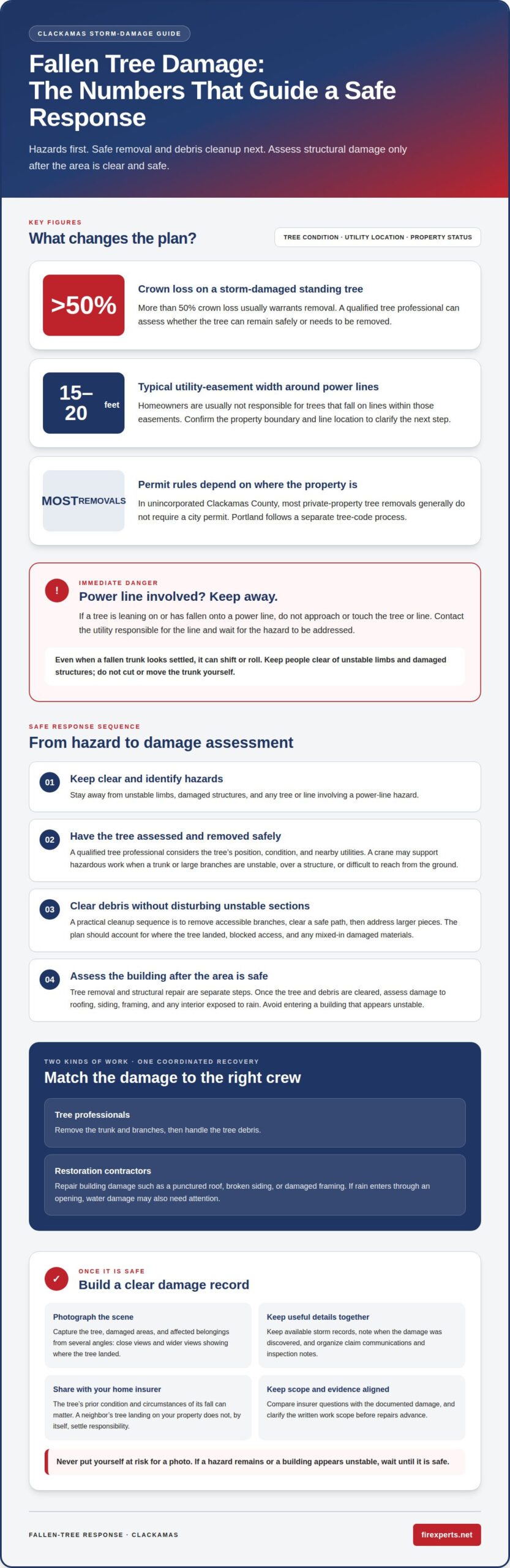
A fallen trunk can shift or roll, creating injury risks or causing more property damage. Keep clear rather than cutting or moving it yourself. If the tree is leaning on or has fallen onto a power line, don’t approach or touch the line or tree. Contact the utility responsible for the line and wait for the hazard to be addressed.
For storm-damaged trees still standing, crown loss helps guide removal decisions. More than 50% crown loss usually warrants removal. A qualified tree professional can assess whether the damaged tree can remain safely or needs removal. A crane may support hazardous tree work when a trunk or large branches are unstable, over a structure, or difficult to reach from the ground. The equipment and removal sequence depend on the site.
Tree rules also depend on property location. Clackamas County rules apply to unincorporated properties, where most private-property tree removals generally don’t require a city permit. Utility easements are typically about 15 to 20 feet around power lines; homeowners are usually not responsible for trees that fall on lines within those easements. Confirming the property boundary and line location helps clarify who handles the next step.
Storm Debris Handling
After removal, debris handling means sorting and clearing the trunk, branches, and smaller material from the affected area. The cleanup plan should account for where the tree landed, whether debris blocks access, and whether damaged fencing or other materials are mixed in. Branches across a driveway, for example, need different handling from a trunk resting on a roof.
Separate tree debris from building damage before cleanup advances. A practical sequence is to remove accessible branches, clear a safe path, then address larger pieces without disturbing unstable sections. Pruning may reduce hazards from a damaged tree, but it isn’t a substitute for removal when the tree presents a serious risk. A sound tree work plan accounts for both removal and the debris left behind.
Storm cleanup and structural repair are related, but they’re different steps. Once the tree and debris are cleared, the damaged roof, siding, or framing can be assessed. In Clackamas, documenting visible damage after the area is safe helps organize removal and repair. Avoid entering a building if fallen limbs have made its structure appear unstable.
Licensing, insurance, and company experience
For Clackamas County properties, county rules apply in unincorporated areas. Most private-property tree removals there generally don’t require a city permit, but location and property status matter. Portland follows a separate tree-code process, so don’t assume Portland rules apply in Clackamas.
A neighbor’s tree landing on your property doesn’t, by itself, settle who is responsible for the damage. The tree’s condition before the storm and the circumstances of its fall can matter. Photograph the damage when it’s safe, then share the details with your home insurer for review.
Licensing and insurance deserve attention because tree removal and structural repairs involve different work. Before work begins, understand which company handles each part, what the written scope includes, and how the work relates to damaged roofing, siding, or framing. A clear explanation makes it easier to understand what the professional service includes and what falls outside its scope.
Experience matters in a specific way: a crew that understands storm damage can recognize how a fallen tree affects the structure, not just the visible break. A roof puncture, for example, can expose the interior to rain, while a cracked wall may need assessment before cleanup proceeds. A careful assessment connects the damage, work sequence, and documentation.
Documenting damage for insurance
Once the site is safe, photograph the tree, damaged areas, and affected belongings before cleanup changes the scene. Take clear images from several angles, including close views of broken materials and wider views showing where the tree landed. Keep any available records of the storm and note when you discovered the damage. These details give your insurer a clearer account of the situation.
Don’t put yourself at risk to take a picture. If a building appears unstable or a hazard remains, wait until it’s safe to document the area. Photos should support your claim, not create another problem.
Working with insurance companies
Insurance coordination works best when the damage assessment, photographs, and work scope tell the same story. A restoration team can document affected areas and coordinate with insurance companies during restoration. This can help move decisions forward while keeping the record tied to observed damage.
Keep communications and claim documents together, including notes about inspection findings and cleanup. Compare the insurer’s questions with the documented damage, then address any unclear scope before repairs advance. Clear records help everyone follow the situation from initial damage through restoration.
Who repairs damage caused by a fallen tree in Clackamas, Oregon?
Different crews handle different parts of a fallen-tree incident. Tree professionals remove the trunk and branches, while restoration contractors repair damage to the home, such as a punctured roof, broken siding, or damaged framing. If rain enters through an opening, water damage may also need attention. For fallen tree damage repair in Clackamas, match each part of the damage to the work it requires.
The repair process begins with assessing the structure. A restoration professional examines visible damage and identifies areas that need closer inspection. A branch can break shingles and roof decking, for example, while a heavy impact can crack a wall or affect framing. The repair scope should distinguish immediate protection from permanent repairs and make the work sequence clear.
Tree removal and building repair are related, but they are separate tasks. A tree crew clears the tree, while a restoration team evaluates the roof, exterior, and interior affected by the impact. Depending on the damage, repairs may involve boarding an opening, removing damaged materials, assessing the structure, and rebuilding affected areas. This assessment helps establish what needs repair once the site is accessible.
Experience matters when a team can explain its assessment in plain language. A written scope can identify inspected areas, observed damage, and proposed repairs. If the roof is open, for instance, the scope should address damaged roof materials and interior areas exposed to weather. Clear documentation connects the repair plan with your claim records.
Licensing and insurance matter because tree removal and structural repairs involve distinct work. The written plan should clarify who handles each task and where one crew’s work ends. That division helps prevent gaps between clearing debris and repairing the building. For fallen tree damage repair in Clackamas, an understandable scope gives you a practical way to follow the work from assessment through rebuilding.
After hazards are addressed, keep photographs, inspection notes, and the proposed repair scope together. Share those records with your home insurer and save copies of updates. If questions arise about a damaged roof or room, the assessment and images can help identify affected areas without relying on memory alone.
For structural damage after a tree impact, discuss the restoration work needed and how the repair process can address affected parts of your property.
Fire Industry Restoration Experts
Fire Industry Restoration Experts helps property owners address building damage after a fallen tree has been removed. When impact damages a roof, siding, or framing, the team can assess affected areas, board up openings, remove damaged materials, and coordinate rebuilding. If rain has entered through a damaged roof, Water Restoration Services can address the resulting water damage.
The restoration process also includes documenting damage and coordinating with insurance companies, helping keep the assessment and repair work organized. This support is useful when the tree is gone but the home still needs structural repairs or interior restoration. The next step is to discuss the damage to your property and the work involved. Contact Fire Industry Restoration Experts to talk through your situation.
Take the Next Step Toward Recovery
After a tree has been removed, deciding what comes next can feel like another heavy task. A clear repair plan can help you move from disruption toward restoring the parts of your home that matter most. For fallen tree damage repair in Clackamas, focus on having the damaged structure assessed and understanding how the proposed work addresses it.
Fire Industry Restoration Experts helps with property restoration needs, including Fire Restoration Services, Smoke Restoration Services, and Water Restoration Services. The right support depends on what the incident affected, whether that’s the structure, interior materials, or areas exposed to water.
You don’t have to sort through the next steps alone. Contact Fire Industry Restoration Experts to talk about the damage and the restoration work your property needs. One practical conversation can help you move forward with greater clarity and confidence.
Frequently Asked Questions
Can You Help With Storm Damage?
Yes. Fire Industry Restoration Experts provides Storm Restoration Services for property damage after a storm. Restoration can include securing an opening, assessing damage, removing damaged materials, and planning repairs. If a fallen limb has damaged a roof and rain has affected rooms below, for example, the team can evaluate structural and water damage and coordinate with your insurance company during restoration.
What Happens to the Tree After the Hazard Is Removed?
After the immediate hazard is controlled, the remaining trunk, branches, and debris are handled as part of the cleanup plan. The approach depends on where the material lies and whether it’s mixed with damaged building materials. Before cleanup begins, clarify which tree material will be removed and which property materials need separate assessment, so debris handling doesn’t obscure damage that still needs repair.
What should I do immediately after a tree falls on my home or property?
Move people and pets away from the impact area, and don’t enter rooms beneath a damaged roof or ceiling. If the tree has affected a power line, stay clear and don’t touch the line or tree. Once the site is safe, contact your insurer and arrange an assessment. Note which rooms or outbuildings are affected so they can be included in the damage review.
Does homeowners insurance cover fallen tree removal and damage repair in Oregon?
Homeowners insurance may cover removal or repairs, but coverage depends on the policy terms, the cause of the fall, and the damage involved. A tree that damages a home may be treated differently from one that falls without damaging a covered structure. Review your policy and report the loss to your insurer; the adjuster can explain how your coverage applies to the claim.
How do I document fallen tree damage for an insurance claim?
Once it’s safe, capture wide views and close-up photos, including the point of impact, each affected room, and visible damage to roofs, walls, or belongings. Keep the original images together and note when and where you took them. If damage appears in more than one area, document each location separately to make it easier to connect the pictures with the insurer’s inspection notes.
What are the risks of removing a tree that has fallen on a house or power lines?
A tree can shift or roll during removal, causing injury or worsening damage to the house. A tree touching or resting on a power line also creates a serious electrical hazard. Don’t cut, pull, or climb on it. Keep clear and let the utility address the line hazard before removal work proceeds nearby.