
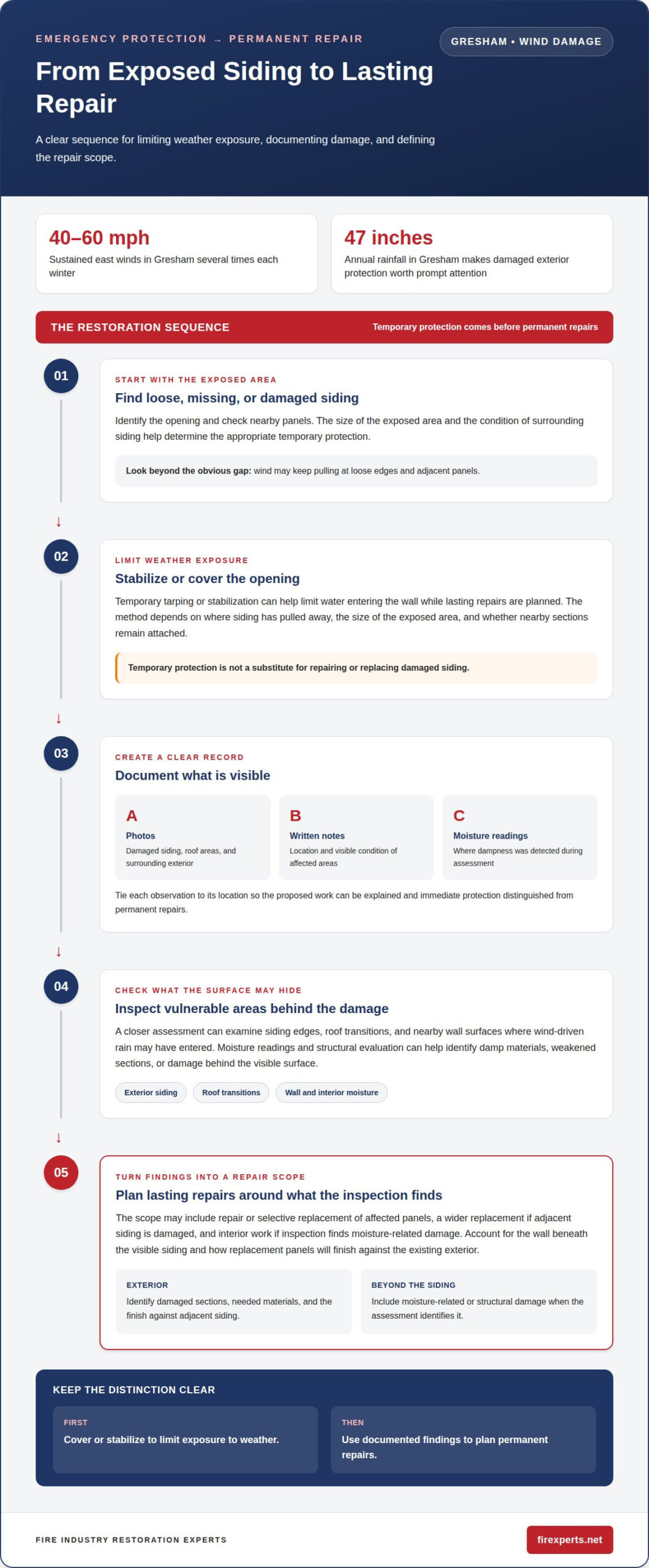
Wind-torn siding needs a weather barrier before permanent repairs begin. Yes, emergency tarping and temporary stabilization can cover exposed areas and help limit water entering the wall. For wind damage siding repair in Gresham, these are protective first steps, not the finished repair. Columbia Gorge east-wind events bring sustained winds of 40 to 60 mph in Gresham several times each winter, making loose or missing panels more than a cosmetic concern.
It’s unsettling to see siding pulled away, especially when you don’t know whether rain has reached the framing or interior. A careful assessment clarifies what is damaged and what should happen next. This article explains how temporary protection can limit exposure, how storm damage is assessed and documented, and when restoration may include both exterior siding and interior damage. You’ll also learn how the process moves from stabilizing an opening to planning lasting repairs.
Key Takeaways
- Temporary protection can cover exposed siding while the damage is assessed and lasting repairs are planned.
- Storm damage may reach beyond the siding, so an assessment can help identify moisture or damage inside the wall and home.
- Photos, written notes, and moisture readings can help document the damage and clarify the scope of restoration.
- Learn how local wind exposure and the condition of the siding shape repair decisions and the next steps.
Can both exterior and interior storm damage be repaired?
Yes. Storm restoration can address damaged siding outside and moisture-related damage inside. The right scope depends on what an inspection finds behind the affected panels.
Storm-Resistant Siding Repairs and Replacements
Wind can blow off siding, crack panels, or warp sections, leaving the wall vulnerable to rain. Gresham receives 47 inches of rain annually, so damaged exterior protection deserves prompt attention. Repairs and replacements can use durable, weather-resistant materials. The estimate should identify the damaged areas, the work needed, and how the new siding will finish against the existing exterior.
Siding Repair and Partial Replacement
When damage is limited, an assessment can establish whether affected panels can be repaired or selectively replaced. Removing damaged siding may reveal problems behind it: a Gresham-area project uncovered framing damage after siding removal. That’s why the repair scope should account for the wall beneath the visible damage, not just the panel. Matching replacement siding to the surrounding panels also helps create a consistent finish.
Vinyl Siding Damage and Replacement
Vinyl siding can crack, loosen, or pull away during a storm. The condition of adjacent panels helps determine whether the repair can stay local or needs a wider replacement. Vinyl siding installed in the 1980s has been in service for over 40 years, so age and wear may affect how well older panels match new ones. Include those differences when reviewing the estimate and planned finish.
Roof damage can also accompany siding loss. Most residential roof replacements in Gresham take 1-3 days, while storm damage repair timing depends on the affected materials and work scope. A roof inspection can identify issues that aren’t visible from the ground.
Commercial roof repair or replacement needs a scope suited to the building and the damaged areas. An assessment should document the affected sections and determine whether repair or replacement addresses the damage.
Compare contractors by reviewing written warranty terms, documentation of licensing, and reviews that describe storm repairs and completed work. Specific examples of communication and workmanship give homeowners more useful context than general praise.
Gresham permit requirements depend on the siding project’s scope. Before work begins, compare the planned repair or replacement with the City of Gresham’s applicable permit requirements.
Damage assessment and documentation
Wind can loosen siding without creating an obvious opening, and a roof can appear intact while concealing damage. An inspection examines visible storm damage and vulnerable areas around the exterior. In Gresham, this can include siding edges, roof transitions, and nearby wall surfaces where wind-driven rain may have entered.
Moisture readings and structural evaluation can help identify conditions a surface-only review could miss. An inspector can look for damp materials, weakened sections, and signs that water has traveled behind siding or roofing. A careful assessment ties each observation to its location, distinguishing damaged materials from unaffected areas. That helps homeowners understand what needs attention before repairs or rebuilding begin.
Documentation should provide a clear record of observed conditions. It can include:
- Photos showing damaged siding, roof areas, and the surrounding exterior.
- Notes describing the location and visible condition of each affected area.
- Moisture readings that record where dampness was detected during the assessment.
These records help explain why repairs include specific materials or locations. For example, photographs of a lifted siding edge can show where the inspection focused, while notes and readings can record findings behind the visible surface. Clear documentation also makes it easier to discuss the proposed scope and distinguish immediate protective work from permanent repairs.
Keep the assessment tied to the property and the storm event. A Gresham home near a Portland-area roofing project may have different exposure and damage patterns, so the report should identify the inspected building and affected elevations. When the work involves siding installation, documentation can also clarify which sections need replacement and how the repair relates to adjacent surfaces. A storm damage assessment can bring exterior observations and interior moisture findings into one documented scope.
Emergency siding services
Loose or missing siding should be addressed promptly, before rain reaches the wall assembly. Strong windstorms can tear panels away, exposing the structure to water intrusion and long-term deterioration. In Oregon weather, emergency work focuses first on limiting exposure, then on understanding the damage and planning permanent repairs.
Temporary tarping or stabilization can cover an opening while permanent siding repairs are planned. The appropriate method depends on where the siding has pulled away, the size of the exposed area, and whether nearby sections remain attached. A missing panel on one wall, for example, may call for a different temporary covering approach than several loosened panels across an exterior wall. This protection is temporary, not a substitute for repairing or replacing damaged siding.
A practical emergency sequence keeps the work focused:
- Assess the exposed area and identify loose or missing siding.
- Stabilize or cover the opening to reduce exposure to weather.
- Document visible damage and plan the next repair steps.
Loose edges matter, too. Wind can keep pulling at adjacent panels, so stabilization should account for the surrounding siding, not just the most obvious gap. Once the immediate opening is protected, a closer assessment can determine whether damage extends behind the exterior or reaches other building materials. That distinction helps shape the permanent repair scope.
How quickly should loose or missing siding be repaired to prevent water damage? Arrange emergency protection promptly, especially if the wall is exposed and rain is expected. Tarping or stabilization limits immediate exposure; permanent repairs follow after the affected siding and underlying areas have been assessed.
Clear information helps homeowners make informed decisions during a stressful event. A record of the affected wall, missing panels, and temporary protection gives the repair plan a concrete starting point. For wind damage siding repair in Gresham, separating temporary protection from permanent work also clarifies what each stage addresses.
Gresham east-wind siding damage
Gresham’s east winds can put unusual strain on an exterior, especially in exposed areas. Columbia Gorge east-wind events bring sustained winds of 40 to 60 mph in Gresham several times each winter. Gusts can exceed 70 mph in exposed areas. In Pleasant Valley and Powell Valley, east-wind events can reach 60 mph or more. These conditions can loosen siding, crack panels, or pull sections away from the wall.
Wind direction matters because it affects which exterior walls receive the strongest pressure. A siding inspection should note the affected wall, loose edges, missing panels, and nearby corners. For example, if east-facing siding has pulled away, the inspection should also assess adjacent sections for shifting or cracking. This helps distinguish damage to one panel from a wider area that needs repair.
After an east-wind event, connect visible exterior damage with possible water entry. Missing or split siding can expose parts of the wall to rain. An inspection should document openings and look for signs of moisture inside or behind affected areas. Prioritize temporary protection where the wall is exposed, then use the findings to plan permanent repairs. This sequence separates the immediate risk of water damage from the full repair scope.
For a Gresham property, a focused inspection can follow these steps:
- Record which exterior elevations show loose, cracked, or missing siding.
- Check surrounding panels and corners for related movement or breaks.
- Identify openings where rain could reach the wall assembly.
- Document observed damage before planning the lasting repair.
These steps make the east-wind pattern part of the repair record, rather than treating every damaged wall alike. If wind has also allowed water inside, ask about water restoration to address the resulting interior damage.
Fire Industry Restoration Experts
Fire Industry Restoration Experts helps turn storm damage findings into a clear restoration plan, from assessment and documentation through repairs and rebuilding. When wind-damaged siding has allowed rain inside, the team can address related interior damage through Water Restoration Services and Water Remediation Services. It also coordinates with insurance companies, helping keep the damage record and restoration work organized.
Turn to the team when you need help understanding damage beyond exposed siding, including moisture inside the property or damage to building materials. Next steps can be based on the home’s condition and the documented scope, with attention to both immediate protection and lasting repairs.
Contact Fire Industry Restoration Experts to discuss the storm damage and determine what your property needs next.
Take the Next Step Toward a Safer Home
After a storm, it can be hard to know which decision deserves attention first. Start by separating immediate protection from the longer repair plan, then make sure any interior effects are included in the assessment. That gives you a clearer starting point for discussing wind damage siding repair in Gresham and deciding how to move forward.
Fire Industry Restoration Experts provides Fire & Smoke Restoration, Water Restoration, and Storm Restoration. These services address restoration needs that can arise alongside storm damage, including water impacts inside the property. The team can also coordinate with insurance companies as the restoration process moves ahead.
You don’t have to sort through the next steps alone. Contact Fire Industry Restoration Experts to talk through the damage and the work your property needs. A calm, informed conversation can help make the path forward feel more manageable.
Frequently Asked Questions
Are emergency tarping and temporary repairs available?
Yes. Temporary tarping or board-up can cover exposed areas while permanent siding repairs are planned. For example, a tarp can shield an opening where wind removed a panel, limiting direct exposure to rain. These measures protect the property temporarily; they don’t replace repairing the siding or addressing damage behind it. The appropriate protection depends on the opening’s location and condition.
How is hidden storm damage identified?
A hands-on inspection, moisture readings, and structural evaluation can help identify hidden damage. An inspector may examine a wall near a missing panel or check interior surfaces below a damaged roof edge. Damp materials, weakened framing, or moisture behind a finish can indicate damage beyond what’s visible outside. Findings should connect each observed condition to its location in the home.
How quickly can restoration teams respond after a storm?
Response timing depends on storm conditions, location, and the amount of damage requiring attention. An exposed opening that lets rain reach the wall needs prompt protective action, while less exposed damage can be assessed and planned as conditions allow. When several areas are affected, crews must consider safe access and the scope of stabilization before setting the restoration sequence.
Is storm damage covered by insurance in Oregon?
Coverage depends on the policy, the cause of damage, and the terms that apply to the property. A wind-damaged siding claim may be treated differently from damage linked to another cause or an excluded condition. Review the policy language and document storm-related damage clearly. Fire Industry Restoration Experts coordinates with insurance companies during restoration, helping keep the damage scope organized.
Need a pro for your siding service project in Gresham, OR?
Fire Industry Restoration Experts can help when a siding project follows storm damage and needs a broader restoration plan. The team assesses property damage, documents the scope, and handles restoration and rebuilding work. This can be useful when visible siding damage may involve other building materials or interior areas. The assessment helps clarify which parts of the property need restoration.
Which siding contractors repair wind damage in Gresham, Oregon?
For wind-related property damage in Gresham, Fire Industry Restoration Experts provides Storm Restoration and manages restoration work related to the damage. This includes assessing affected areas and coordinating the broader repair process when the storm has affected more than the siding. If panels are missing or loose, describe their location and any indoor effects so the damage can be considered as a whole.