
A damp crawlspace can affect the air inside your home, especially when moisture lingers and creates conditions for mold and musty odors. The U.S. Environmental Protection Agency says indoor air can be two to five times more polluted than outdoor air, so wet crawlspace cleanup in Clackamas is about more than removing standing water. It starts with finding where the moisture is coming from and assessing what it has affected.
It’s understandable to worry when you notice damp smells, puddles, or damage beneath your home. This guide to wet crawlspace cleanup in Clackamas explains common causes of moisture, its possible effects on indoor air, and what to expect during inspection, cleanup, and restoration. You’ll also learn how crews assess affected materials and why addressing the water source matters for lasting repairs.
Key Takeaways
- Learn how rain, saturated soil, and drainage around a home can contribute to crawlspace moisture in Clackamas.
- See why debris and contaminated materials need careful handling, and what safer cleanup involves.
- Follow the restoration sequence from moisture inspection through cleanup, treatment, and repairs.
- Understand what signs can indicate that insulation, vapor barriers, or damaged materials need replacement.
What Causes a Wet Crawl Space in Clackamas, Oregon?
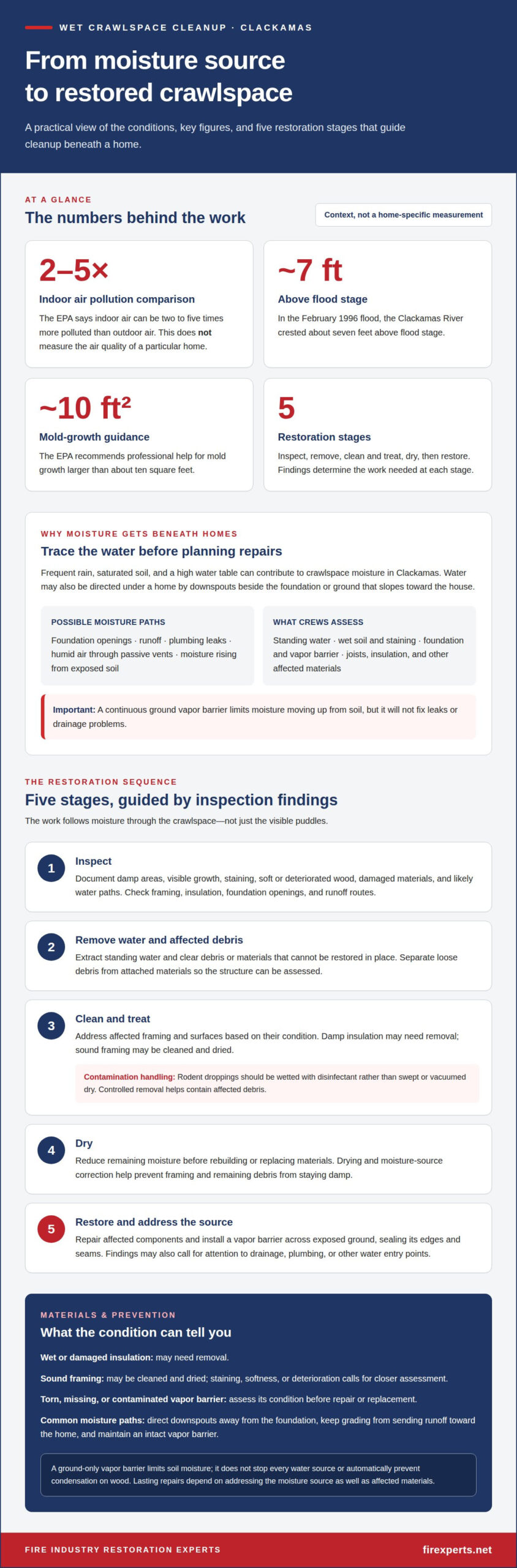
In Clackamas, frequent rainfall, a high water table, and saturated soil can push moisture toward crawlspaces. During the rainy season, soil around Oregon City homes may stay wet for months. The February 1996 flood shows how high water can affect the area: the Clackamas River crested about seven feet above flood stage. Seasonal ground moisture can seep through foundation openings or collect beneath a home.
Rain isn’t the only source of crawlspace moisture. Downspouts that release water beside the foundation and ground that slopes toward the house can direct runoff underneath. In wet Pacific Northwest winters, humid air entering passive vents can add moisture. A torn or missing vapor barrier leaves exposed soil free to release moisture upward. Covering the ground with a continuous barrier limits that movement, but won’t fix leaks or drainage problems.
Moisture trapped beneath a home can affect foundation materials, joists, and other framing. Damp wood and debris can support foundation-level mold growth, while musty smells may reach indoor rooms. The U.S. Environmental Protection Agency says indoor air can be two to five times more polluted than outdoor air. That figure doesn’t measure a particular home’s air quality, but it helps explain why locating moisture matters.
Inspection follows the water. Crews locate standing water, check wet soil and staining, inspect the barrier and foundation, then trace runoff toward downspouts and sloped ground. Cleanup removes affected debris, treatment addresses impacted surfaces, and barrier installation covers exposed soil. The moisture source also needs attention to help prevent recurring problems.
Permit and local-rule requirements for crawlspace drainage or repairs depend on the work’s scope and location. The specific drainage change or repair determines which Clackamas County or city requirements apply.
Homeowners insurance coverage for wet crawlspace cleanup in Oregon depends on the policy and the cause of the water. The policy’s coverage terms and exclusions determine whether a particular loss is covered.
To reduce future flooding risk, direct downspouts away from the foundation, keep ground grading from sending runoff toward the home, and maintain an intact vapor barrier. These steps address common moisture paths around Clackamas homes.
Debris and contaminated material cleanup
Wet insulation, fallen soil, packaging, and damaged stored items can hold moisture beneath a home. During cleanup, crews separate loose debris from materials attached to the structure. That distinction matters: damp insulation may need removal, while sound framing may be cleaned and dried. Clearing debris also exposes floor joists, plumbing, and the vapor barrier for closer assessment.
Contamination calls for careful handling, not a quick sweep. Rodent droppings should be wetted with disinfectant rather than swept or vacuumed dry. Dry sweeping can send particles into the air, so crews use controlled removal and contain affected debris. In a Portland-area crawlspace, this approach helps keep dirty material from spreading toward the access opening or floors above.
After debris is removed, crews check for residue and damp surfaces that can keep humidity elevated. Cleaning visible contamination alone won’t address moisture trapped in porous material or framing joints. The assessment looks for staining, soft or deteriorated wood, and wet insulation. Findings guide what can be cleaned, what needs drying, and what must be removed before restoration.
Material removal should preserve access for the next stage of work. Crews clear the ground without damaging plumbing or unnecessarily tearing a usable vapor barrier. If the barrier is contaminated or torn, they assess its condition before planning repairs or replacement. A clear work area makes it easier to inspect the underside of floors and trace moisture damage along joists.
Once cleanup is complete, drying and moisture-source correction help prevent remaining debris or framing from staying damp. The work may include water restoration when a leak or flooding has affected the crawlspace. For help understanding the cleanup and drying process, explore crawlspace water damage restoration.
Inspection, cleanup, treatment, and restoration steps
A thorough inspection follows moisture through the crawlspace, not just visible puddles. Crews map wet areas, check floor framing and insulation, and look for staining, soft wood, or damaged materials. They also trace possible entry points, including foundation openings, plumbing leaks, and runoff paths. For wet crawlspace cleanup in Clackamas, these findings guide the work and help identify repairs that address the cause.
Next, crews remove standing water and debris, then assess affected surfaces. Damp insulation may need removal, while framing can require direct cleaning and treatment. The U.S. Environmental Protection Agency recommends professional help for mold growth larger than about ten square feet. Visible growth is one sign, but moisture trapped behind materials can also require careful assessment.
- Inspect: Document damp areas, visible growth, damaged materials, and likely moisture paths.
- Remove: Extract water and clear debris or materials that cannot be restored in place.
- Clean and treat: Address affected framing and surfaces based on their condition.
- Dry: Reduce remaining moisture before rebuilding or replacing materials.
- Restore: Repair affected components and install a vapor barrier across the ground, sealing its edges and seams.
Drying and correcting the source matter as much as surface cleanup. If water keeps entering, damp framing can remain vulnerable even after visible growth is treated. A ground-only vapor barrier limits soil moisture, but doesn’t stop every water source or automatically prevent condensation on wood. Inspection findings determine whether drainage, plumbing, or damaged materials also need attention.
Indoor air quality concerns deserve a measured response. A musty smell can signal lingering dampness, but smell alone doesn’t identify the source or prove the extent of damage. Crews connect observations inside the living space with conditions below it, then recommend work based on visible evidence and moisture patterns. During wet crawlspace cleanup in Clackamas, the goal is to leave the space clean, dry, and ready for sound restoration.
When should crawlspace insulation, vapor barriers, or damaged materials be replaced?
Replacement depends on what water has done to each material, not simply how long it has been installed. After a leak or flood, inspection should identify wet insulation, torn barriers, and weakened framing. For example, insulation that is compressed, dirty, or still damp after drying may no longer perform as intended. Sound materials can often remain if they’re clean and dry.
Crawlspace insulation needs closer attention when it has absorbed dirty water, pulled away from its supports, or stayed damp. Wet, sagging insulation can hold moisture against floor framing. Crews assess its condition alongside the joists and nearby surfaces, then remove damaged sections before repairs. Replacing only affected areas can preserve usable material elsewhere.
A vapor barrier with tears, gaps, or missing sections can leave soil exposed. Replacement is appropriate when damage prevents it from covering the ground continuously. Installation should cover the crawlspace floor, with edges and seams sealed. Even an intact barrier may not prevent condensation on wood framing, so inspection also considers airflow and moisture conditions.
Wood and other structural materials need replacement when inspection finds deterioration that cleaning and drying can’t correct. Soft or crumbling framing, persistent wetness, and damage around fasteners warrant careful assessment. A surface stain alone doesn’t establish that lumber must be removed. The material’s condition and the extent of water exposure guide the decision.
Timing matters in Clackamas. Late fall and winter can make moisture issues easier to spot, and periodic inspections after a very wet winter can reveal new damage. Crews should assess insulation, barriers, and framing together, rather than treating one visible problem in isolation. That approach helps target replacement and avoid leaving hidden damp materials behind.
If water has damaged crawlspace materials, request help with water restoration and the affected structure.
Fire Industry Restoration Experts
Fire Industry Restoration Experts helps with crawlspace water damage that calls for cleanup and repair. Its Water Restoration Services and Water Remediation Services address water-related damage, with work that can include damage assessment, demolition of affected materials, and rebuilding. This is a practical next step when standing water or damp materials have affected the structure and the water source needs attention.
For larger losses, the team can coordinate with insurance companies during the restoration process. The goal is to make the work and next steps clear while the affected parts of your home are addressed. If water damage extends beyond the crawlspace, restoration can also account for affected areas of the structure.
Contact Fire Industry Restoration Experts to discuss the water damage in your home and the restoration work it may need.
Take the Next Step Toward a Dry, Sound Home
For wet crawlspace cleanup in Clackamas, discuss what you’re seeing and how water may have affected your home. Details such as recurring dampness, a recent leak, or visible damage help frame the restoration conversation. You don’t need to have every answer before asking for help.
Fire Industry Restoration Experts offers Water Restoration Services, Fire & Smoke Restoration, and Smoke Restoration Services. When water has reached the crawlspace or affected other parts of the structure, the team can assess the damage and explain the restoration work involved. The focus is on addressing affected areas and helping you understand the path forward.
Taking action can feel like one more burden when your home is already disrupted. A direct conversation can help make the next steps clearer. Contact Fire Industry Restoration Experts today to discuss the water damage and restoration needs in your home. You can move forward one practical step at a time.
Frequently Asked Questions
Can a damp crawlspace affect my home’s air?
Yes, moisture beneath your home can contribute to musty odors and affect indoor comfort. Air can move between a crawlspace and rooms above through gaps around plumbing, wiring, and floor openings. A persistent smell near floor registers or a damp odor after rain can help locate the concern. Odor alone, however, doesn’t show how much damage is present.
Do you fix the moisture source, not just the symptoms?
Restoration starts by assessing water damage and identifying where moisture may be entering. For example, staining beneath a plumbing line points to a different source than wet soil beside a foundation wall. Finding the difference helps shape the repair plan. Fire Industry Restoration Experts handles damage assessment and restoration, so the work can address affected materials rather than simply conceal visible signs.
How Long Does It Take, and What Warranty Should You Expect?
Time depends on the affected area, materials, drying needs, and repair scope. Crawlspace waterproofing jobs commonly take one to three days, depending on space size and work scope, but that timeframe doesn’t describe every cleanup or restoration project. Warranty terms also depend on the work and materials involved. Review written warranty documents for coverage, exclusions, and duration instead of assuming one standard applies.
How do I know if I have a crawlspace issue?
Clues can appear inside before you see water below: a musty odor after rain, dampness along lower walls, or floors that feel unusually cool. Outside, water pooling near the foundation after a storm can point to drainage concerns. These signs help direct an inspection, but don’t identify the cause by themselves. A crawlspace assessment can connect indoor symptoms with conditions underneath.
Why are crawlspace problems so common in Portland?
Portland’s wet-season conditions can keep surrounding soil saturated for months, allowing moisture to persist around foundations. Humid winter air entering through passive crawlspace vents can add to damp conditions. Older homes and sites with poor drainage may face different combinations of these pressures. Downspout placement, ground slope, and ventilation all affect how water and humid air reach a crawlspace.
What causes a wet crawlspace in Clackamas, Oregon?
Rainfall, a high water table, and saturated ground can contribute to wet crawlspaces around Clackamas. Downspouts that discharge close to the house or ground sloping toward the foundation can carry runoff underneath. A damaged vapor barrier may also leave soil moisture exposed. Wet crawlspace cleanup in Clackamas should account for the water’s entry path, because removing water alone won’t stop repeated moisture intrusion.