
An appliance leak is water damage, even when the spill looks small. For appliance leak cleanup in Portland, OR, drying typically takes 3-5 days, while many cases take 3-7 days from start to finish. Floors and cabinets can sometimes dry without demolition when moisture is found early and affected materials remain salvageable.
It’s understandable to worry about what’s hidden under an appliance, whether cabinets or flooring will need to come out, and how long the disruption will last. The price depends on the case and is provided after a quote request; the affected area, flooring type, cabinet condition, access, and drying needs all shape the work. This guide explains how to recognize appliance leak cleanup needs in Portland, OR, what influences the work, and when drying in place may be possible. You’ll also learn what to do first and how a careful moisture assessment helps determine the next steps.
Key Takeaways
- Stop the water source if you can do so safely, and stay out of standing water where electrical or contamination hazards may be present.
- Moisture checks and controlled drying help show whether floors and cabinets can stay in place or need to be opened.
- Drying commonly takes several days; the affected area, materials, access, and hidden moisture influence the timeline.
- Cleanup cost depends on the water released, damage extent, flooring and cabinet condition, and drying needs.
Can floors and cabinets under an appliance be dried without demolition?
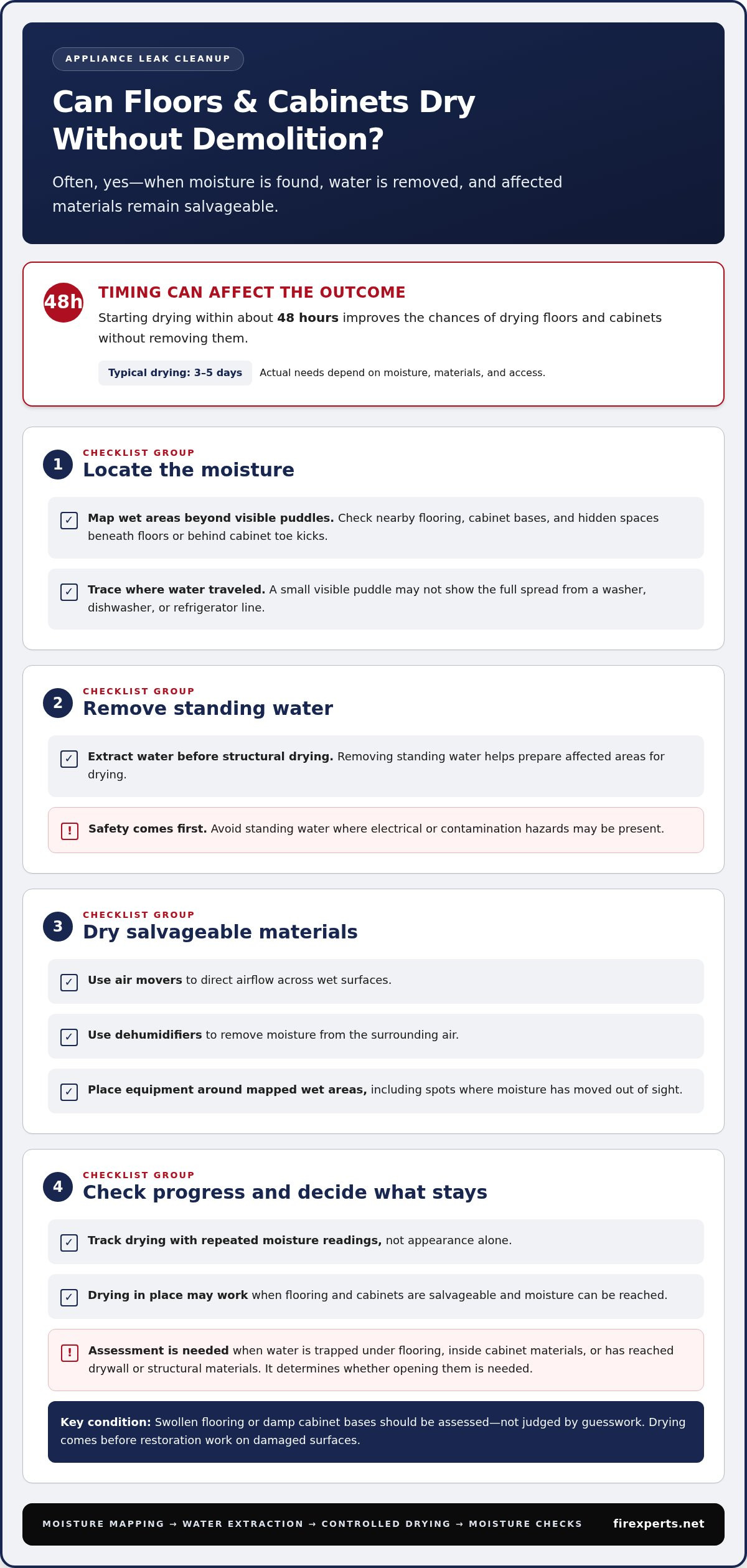
Often, yes. Floors and cabinets can dry without demolition when moisture mapping locates wet areas, extraction removes standing water, and materials remain salvageable. For washing machine, dishwasher, or refrigerator leaks, restoration professionals trace moisture, extract water, then use air movers and dehumidifiers.
Moisture Mapping and Water Extraction
Moisture mapping identifies wet areas beyond visible puddles. After a washing machine leak, checks can cover nearby flooring and cabinet bases. Extraction removes standing water before structural drying begins. A thorough assessment tracks hidden moisture beneath flooring and behind cabinet toe kicks, helping show which materials may dry in place and where water remains.
Drying Floors and Cabinets
Drying in place may work when flooring and cabinets are salvageable and moisture can be reached. Water trapped under a floor or inside cabinet materials can increase the work required. Starting drying within about 48 hours improves the chances of drying floors and cabinets without removal. Swollen flooring or damp cabinet bases need assessment, not guesswork.
Air Movers and Dehumidifiers
Air movers direct airflow across wet surfaces, while dehumidifiers remove moisture from the surrounding air. Together, this equipment supports structural drying of affected flooring, cabinet bases, and nearby materials. Its placement should address mapped wet areas, including spaces where moisture has moved out of sight. Drying progress is checked through repeated moisture readings, not appearance alone.
Restoring Appliance Leak Damage
A dishwasher leak may wet flooring under the unit and the cabinet beside it. A refrigerator ice maker line can leave hidden moisture near the appliance connection. In either case, the process is to locate affected materials, extract water, and dry salvageable areas. If moisture has reached drywall or structural materials, the assessment helps determine whether opening them is needed. Drying comes before restoration work on damaged surfaces.
How fast can you get appliance leak cleanup help in Portland?
Start by controlling the water source, then arrange an inspection as soon as possible. Water can move beyond the appliance, so a prompt assessment helps identify affected materials before damage spreads.
Inspection and Damage Assessment
An inspection traces water from its source through nearby flooring, cabinets, and walls. For example, a refrigerator line can leak behind the unit while leaving only a small puddle in view. A damage assessment should identify wet materials, hidden spread, and needed drying steps. To compare Portland cleanup companies, look for specific inspection details, clear documentation, named certifications, and reviews describing similar water damage work.
Washer Hose Burst Damage
A burst washing machine hose can release around 500 gallons in an hour if nobody is home. That water can cross a laundry room and reach adjoining floors, cabinets, or walls. Once the hose is shut off, remove standing water where it’s safe and note which areas got wet. The extent of spread, not just the visible puddle, shapes the repair work.
Act promptly to limit secondary damage. The U.S. Environmental Protection Agency says mold begins within 24-48 hours on wet material. Drying affected areas and removing trapped moisture can help prevent further problems. An inspection should include flooring edges, cabinet bases, and wall surfaces, especially where water passed beneath or behind an appliance. A water heater leak also needs its source addressed before cleanup can proceed.
Reviews are more useful when they describe concrete steps, such as inspection, water removal, and drying, rather than broad praise alone. Compare those details with the proposed work and any named certifications; look for clear explanations of what gets inspected and how damage is assessed. In an emergency, immediate water shutoff and a focused inspection help establish what needs attention first.
If water has reached building materials, water damage restoration support can help address assessment, cleanup, and drying needs.
Is an appliance leak considered water damage?
A plumber repairs the failed hose, valve, or appliance connection. Restoration addresses water already inside building materials. In Oregon, standard homeowners policies cover sudden water damage, while excluding slow seepage and landslide.
Emergency Shutoff and Electrical Safety
Turn off the appliance’s water supply if you can reach it safely. Avoid standing water because it may be electrically charged or contaminated. Don’t step into a flooded laundry area to reach a plug or appliance. Once the source is controlled, record affected rooms and materials. These steps help separate the plumbing repair from the water damage cleanup.
Signs of Appliance-Related Water Damage
Look for water around a dishwasher, swollen flooring, damp cabinets, wall stains, or a musty odor. A leak may stay hidden behind an appliance, then appear along a baseboard or cabinet edge. Portland’s wet season includes 150-plus consecutive days of measurable rainfall, so indoor moisture can be harder to spot. Standing water or new stains after appliance use deserve prompt attention.
Water Heater Leaks and Bursts
A ruptured water heater tank can release 50 gallons unless its inlet is closed. If the inlet is safely accessible, shut it off and keep clear of standing water. A leaking tank can affect nearby flooring, walls, or stored belongings, so inspect beyond the tank’s footprint. Replacing water heaters near the 10-year mark, before failure, can help avoid a sudden leak.
After an appliance leak, stop the source if possible and avoid wet areas with electrical hazards. Note visible damage, including damp drywall or warped flooring, and arrange plumbing repair for the failed component. Water restoration is appropriate when water has spread into floors, cabinets, walls, or other structural materials. The plumber addresses the cause; restoration addresses the resulting damage and drying.
Appliance leak cleanup costs and duration
Cleanup time and cost depend on how far water traveled, which materials got wet, and what drying requires. A washing machine hose leak contained to washable flooring differs from water that reaches kitchen cabinets or structural materials. The visible puddle is only one part of the assessment. Hidden moisture, flooring type, cabinet condition, access, and the affected area all shape the work.
For most appliance leak water damage cases, the drying phase typically takes 3-5 days. Many cases take 3-7 days from start to finish, assuming no mold development. The range reflects different damage conditions, not a fixed schedule for every home. A leak caught early may involve fewer affected materials; a failure that spreads beneath flooring can require more assessment and drying.
Restoration timing also depends on what happens after drying. If materials can be salvaged, work can focus on drying and restoring affected areas. If flooring or cabinets need removal, repairs add steps beyond the drying phase. A thorough assessment connects the water source, affected materials, and drying needs, giving homeowners a clearer picture of the scope before repair work proceeds.
The price depends on the case and is provided after a quote request. The amount of water released, affected area, flooring type, cabinet condition, accessibility, and drying requirements all influence the estimate. For example, a kitchen leak that reaches under cabinets may require different work from a contained appliance spill. Reviewing the documented scope and steps helps you understand what the estimate covers, without treating a broad range as a promise for your home.
If appliance failures have left water in building materials, request water damage restoration support to discuss the assessment and restoration steps for your property.
Fire Industry Restoration Experts: Fire Restoration Services
Fire Industry Restoration Experts can help when an appliance leak has spread beyond a simple plumbing repair. Its Water Restoration Services and Water Remediation Services address water damage, from assessment and cleanup through drying and restoration work. Contact the team when moisture has reached flooring, cabinets, walls, or other structural materials, or when the repair scope extends beyond the failed appliance connection.
The team can assess affected areas, remove damaged materials when needed, and coordinate restoration work, including rebuilding. This helps put cleanup and the work that follows into a clearer sequence, with attention to the damage found in your home. For appliance leak damage in Portland, contact Fire Industry Restoration Experts to discuss your situation or visit firexperts.net.
Take the Next Step Toward a Sound Repair Plan
Once the leak is controlled, a clear record of what happened can help keep the next decisions organized. Note where water appeared, which rooms or belongings were affected, and what steps have already been taken. Photos of visible damage and a simple timeline can help you explain the situation and keep repair conversations focused.
For appliance leak cleanup in Portland, OR, the next step is to connect the damage assessment with a practical restoration plan. Fire Industry Restoration Experts offers Fire Restoration Services, Smoke Restoration Services, and Water Restoration Services. The team can help address water damage and guide the restoration work that follows, while keeping the focus on the affected property.
If you’re ready to discuss what happened and the work your home may need, contact Fire Industry Restoration Experts. A steady next step can make a difficult repair feel more manageable.
Frequently Asked Questions
Does a water heater burst always require major repairs?
No. The repair scope depends on how far water traveled and which materials it affected. A leak contained near the tank may leave nearby surfaces intact, while water reaching finished flooring, drywall, or framing can require more work. Once the inlet is safely shut off, note wet areas and visible changes. An assessment can distinguish appliance replacement from repairs to the surrounding home.
How do I know if my refrigerator ice maker leak caused hidden damage?
Look beyond the visible drip. Check the floor seams, baseboard, and cabinet edges beside and behind the refrigerator for discoloration, swelling, or a musty smell. A small leak can leave signs away from the ice maker connection. Keep a record of when you noticed the leak and photograph visible changes. A moisture assessment can help identify damp areas that a surface check may miss.
How do I prevent appliance leaks from happening again?
Inspect appliance hoses and water connections for looseness, cracking, or wear, especially after moving a washer or refrigerator. Replace rubber washing machine hoses every 5 years. Keep appliance drain areas clear, and pay attention to new drips after running a cycle. If a connection starts leaking, shut off its water supply when safe and arrange repair rather than continuing to use the appliance.
How much damage can a washing machine hose cause?
A burst washing machine supply hose can release 6-10 gallons of water per minute. Water may spread from the laundry area into nearby rooms, beneath flooring, or into cabinet bases before the leak is noticed. The eventual damage depends on how long water flows and which materials it reaches. Shut off the supply if safe, then note the areas water touched.
Which Portland, OR companies offer appliance leak cleanup and emergency water removal?
Fire Industry Restoration Experts provides Water Restoration Services and Water Remediation Services for property damage in Portland, Gresham, and Clackamas. If an appliance leak has affected building materials, restoration can address the resulting water damage. First stop the leak if it’s safe and keep clear of electrical hazards. Then contact the company to discuss the affected property and restoration needs.
What is the typical cost of appliance leak cleanup in Portland, OR?
There isn’t one flat cost for every appliance leak. The price depends on the case and is provided after a quote request. The work scope can change with the affected rooms, materials, access, water extraction needs, and whether flooring or cabinets need removal. A written assessment of the damage and planned work helps clarify what the estimate covers before restoration proceeds.