
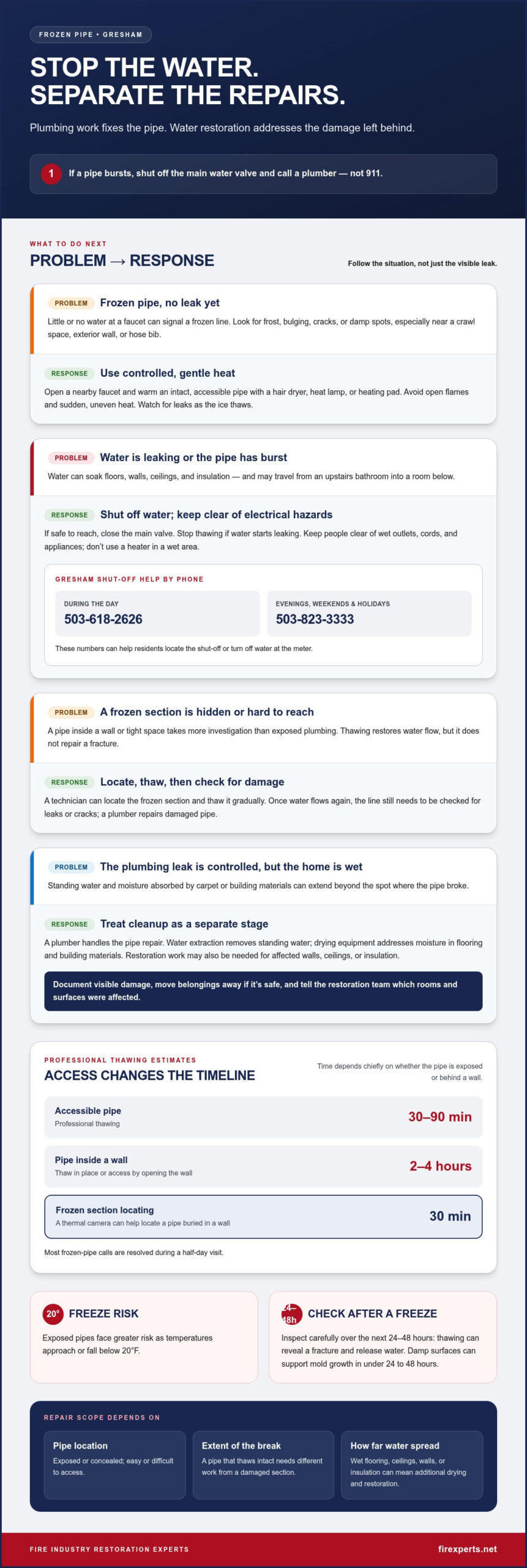
A burst frozen pipe calls for a plumber, not 911; shut off your home’s main water valve first. For frozen pipe flood repair in Gresham, the plumbing fix and the water damage cleanup are separate parts of getting your home back in order. If a pipe is frozen but hasn’t burst, use gentle heat such as a hair dryer, and avoid open flames.
Finding water where it shouldn’t be is unsettling, especially when you don’t know how far it has spread or what repairs may involve. A clear sequence of steps can help protect your home and identify what needs attention first.
This guide explains what to do about a frozen or burst pipe, how thawing and pipe repairs differ from water restoration, and what can affect the repair scope. You’ll also learn when plumbing work is only the first step and water damage inside the home needs attention.
Key Takeaways
- If a pipe bursts, shut off your home’s main water valve and call a plumber; don’t call 911 for a burst pipe.
- For a frozen pipe that hasn’t burst, use gentle heat such as a hair dryer and avoid open flames.
- Professional thawing may take 30-90 minutes for an accessible pipe, while a pipe inside a wall can take 2-4 hours to thaw in place or access.
- Repair costs depend on factors such as the pipe’s location, the damage, and the work needed to dry and restore affected areas.
Who do I call for a frozen pipe in Gresham?
For a burst pipe, shut off the main water valve and call a plumber. If the frozen pipe is intact, apply gentle heat and watch for leaks as the ice thaws.
Recognizing Frozen or Burst Pipes
A faucet that produces little or no water can signal a frozen line, especially near a crawl space, exterior wall, or hose bib. Exposed pipes face greater risk as temperatures approach or fall below 20 degrees Fahrenheit. Check visible plumbing for frost, bulging, cracks, or damp spots. After a freeze, inspect carefully over the next 24-48 hours because thawing can reveal a fracture and release water.
Frozen and Burst Pipe Repairs
For an intact frozen pipe, open a nearby faucet and apply controlled warmth with a hair dryer, heat lamp, or heating pad. Don’t use an open flame or sudden, uneven heat, which can damage the pipe. If water starts leaking, stop thawing and shut off the main valve. A plumber can repair the damaged section; the repair depends on the pipe’s condition and location.
A burst pipe can soak flooring, walls, ceilings, and insulation. Water may run from an upstairs bathroom into a kitchen ceiling or basement, so check below and around the leak, not just beside the pipe. Photograph visible damage and move belongings away from wet areas if it’s safe. Once the plumbing leak is controlled, drying and restoration address the resulting water damage.
Permit and building-code requirements depend on the repair’s scope. Ask the plumber handling the pipe repair to explain which requirements apply to that work. Damp surfaces can support mold growth in under 24 to 48 hours. Keep people clear of wet outlets, cords, and appliances, and have electrical concerns assessed before entering affected areas.
Emergency plumbing response
If you suspect a leak, limit further water flow and organize the response. Gresham residents can get help locating the shut-off valve or turning off water at the meter by phone.
Water Shutoff During a Pipe Emergency
If you can reach the main valve safely, close it to stop water feeding the leak. If you can’t locate it, call 503-618-2626 during the day, or 503-823-3333 during evenings, weekends, and holidays. These numbers can help Gresham residents locate the shut-off or turn off water at the meter. Keep clear of standing water near electrical equipment, and don’t use a heater in a wet area.
Damage Containment and Repair Approval
Once the water is off, move dry belongings away from the affected bathroom, kitchen, or basement. Place a container under an active drip only if the area is safe to enter, and photograph wet surfaces and damaged items. A plumber handles the pipe; you can document the damage and review the proposed work before repairs begin. Keep receipts and notes together for insurance discussions.
Emergency Water Extraction
Water left on floors or absorbed by carpet can spread beyond the visible leak. Extraction removes standing water, while drying equipment helps address moisture in flooring and building materials. Tell the restoration team which rooms were affected and whether water reached a wall, ceiling, or basement. A leak from a second-story bathroom, for example, may also affect the room below.
Once plumbing work has stopped the leak, consider water-damage restoration for cleanup and drying of affected areas. Keeping the plumbing repair and water cleanup steps organized helps you track what was damaged, what was removed, and what still needs attention.
How long does professional pipe thawing take in Gresham?
In Gresham, thawing time depends chiefly on whether the frozen pipe is exposed or buried behind a wall. An accessible pipe typically takes 30-90 minutes to thaw professionally. A pipe inside a wall can take 2-4 hours to thaw in place or access by opening the wall. Most frozen-pipe calls are resolved during a half-day visit.
The first step is to locate the frozen section and understand how easily a technician can reach it. Exposed plumbing offers a direct path for controlled thawing. A pipe concealed in an exterior wall, crawl space, or other tight area takes more investigation. A thermal camera can help locate a wall-buried frozen pipe; that locating step is estimated at 30 minutes.
Once the frozen section is located, controlled thawing warms it gradually to avoid sudden, uneven heat that could stress the pipe. After water starts flowing again, check the line carefully for leaks or cracks. Thawing restores water flow, but it does not repair a fracture or address water damage.
If the frozen line is leaking, keep the main water shut off and don’t apply heat near standing water or electrical equipment. If the pipe is intact and accessible, gentle household heat may help. Concealed pipes need professional assessment. The pipe’s location and accessibility affect whether thawing is straightforward or requires more extensive work.
After the freeze, insulate exposed pipes in unheated areas to reduce their exposure to cold. During freezing weather, Gresham residents can also open sink cabinets to let warmer indoor air reach the plumbing. These steps can help prevent problems, but they don’t replace an inspection if a pipe has leaked or lost pressure.
Frozen pipe repair costs
The repair scope depends on what the freeze damaged, how easily the pipe can be accessed, and whether water escaped. A line that thaws without cracking needs different work from a burst pipe that soaked a kitchen floor. For frozen pipe flood repair in Gresham, distinguish plumbing repairs from water cleanup and building repairs when reviewing the scope.
A repair estimate reflects the work required, not just the visible leak. A plumber may need to locate a concealed section, access it through a wall, replace damaged pipe, and test the line. If water reached flooring, ceilings, or insulation, drying and restoration involve additional work. For frozen pipe flood repair in Gresham, clarify what each stage addresses.
The main factors are the pipe’s location, the extent of the break, and how far the water spread. An exposed pipe may be easier to access than one inside an exterior wall. A small leak contained near a sink differs from water that traveled from an upstairs bathroom into a ceiling. Document each affected room before cleanup changes what you can see.
- Access: Exposed plumbing is more direct to reach than pipe concealed behind a wall.
- Pipe damage: A crack may require replacement of the damaged section, not thawing alone.
- Water spread: Wet flooring, drywall, or insulation can require drying and repair.
- Scope: Plumbing, extraction, drying, and rebuilding are distinct parts of recovery.
The price depends on the case and is given after a quote request. Share when the freezing occurred, where water appeared, and which rooms were affected. Photos of the leak, damaged pipe, and visible water damage can help explain the scope. Keep repair notes and receipts together for your records and any insurance discussions.
Before approving work, compare the described tasks with the damage you’ve documented. Review the next steps for water damage as you plan repairs and restoration.
Fire Industry Restoration Experts: Fire Restoration Services
After a frozen pipe leak has been stopped, Fire Industry Restoration Experts can help address water damage to the home. Its Water Restoration Services and Water Remediation Services cover the restoration work, while a plumber handles pipe repairs.
When water reaches flooring, walls, or ceilings, next steps may include assessing the damage, removing affected materials, and rebuilding damaged areas. Fire Industry Restoration Experts handles restoration work and coordinates with insurance companies, helping organize the damage assessment and recovery process.
If a burst pipe has caused damage beyond the plumbing repair, contact Fire Industry Restoration Experts to discuss restoration, or visit firexperts.net.
Move from damage control to a clear recovery plan
Once the immediate plumbing emergency is under control, determine what your home needs to function safely again. Look beyond the visible leak to consider affected rooms, materials, and belongings. Separating pipe repairs from property restoration helps you plan the work in order and focus on making the home usable and sound.
For frozen pipe flood repair in Gresham, Fire Industry Restoration Experts can address property damage through Water Restoration Services. The company also offers Fire Restoration Services and Smoke Restoration Services. Restoration work can include damage assessment, demolition, and rebuilding, with coordination with insurance companies.
When you’re ready to discuss the water damage and the next steps, contact Fire Industry Restoration Experts. A steady plan can help you move forward one repair at a time.
Frequently Asked Questions
Active damage in Gresham: how is it contained, assessed, and restored?
Separate the plumbing repair from the work needed inside the home to keep the response organized. A room-by-room assessment can record affected materials, visible damage, and belongings that need attention. Keep photos and a simple inventory together, then use them to compare the initial condition with the restoration plan. This helps distinguish pipe repairs from property repairs and organize the next steps.
Can water damage spread even if it looks minor?
Yes. A small wet patch can hide water that has traveled behind a baseboard, beneath flooring, or into a wall cavity. Check adjoining rooms and materials rather than judging the damage by the visible puddle alone. For example, a damp kitchen threshold may indicate moisture beneath nearby flooring. Hidden wet areas can remain after the surface looks dry, so assess surrounding materials too.
How do I prevent frozen pipes in Gresham?
During freezing weather, keep your home’s interior above 55°F and leave a steady stream running from faucets farthest from the street. Before freezing temperatures, drain outside pipes and faucets, cover exterior faucets and vents, seal drafts, and winterize irrigation systems and backflow devices. These steps target exposed plumbing and cold air entry points, which can leave pipes vulnerable during winter conditions.
How do you ensure everything is fully dry?
Drying should include checking affected materials and nearby areas, not just looking at the floor. Restoration workers can compare moisture in wet materials with readings from unaffected areas and inspect places water may have reached, such as beneath flooring or inside wall cavities. These findings help show where drying should continue and which materials need further repair.
How many days does it take to fix a burst pipe?
The schedule depends on the pipe’s accessibility, the extent of the break, and whether water damaged building materials. Repairing an exposed pipe involves different work from accessing a concealed break through a wall, followed by drying and rebuilding. Ask for the work sequence to distinguish plumbing, drying, and reconstruction, since each stage depends on the damage found in the home.
What are common causes of water damage in the Gresham area?
Gresham homes face water-damage risks from heavy East County rainfall, rapid snowmelt from nearby foothills, and winter frozen-pipe bursts. Localized flooding can also affect areas near Johnson Creek or Fairview Creek. These risks can come from different directions: a pipe failure begins inside the property, while rainfall, snowmelt, or creek flooding can bring water from outside. The source shapes the damage assessment.