
A burst pipe can damage plumbing and the rooms around it. Most homeowners insurance policies cover sudden, accidental water damage caused by a pipe failure, while coverage for repairing the failed pipe depends on the policy. For burst pipe water damage cleanup in Clackamas, shut off the water if it’s safe and stay clear of electrical hazards.
It’s natural to worry about insurance while water is spreading through your home. Acting promptly can help limit further damage, but hidden moisture may remain even after a leak slows or appears to stop. This guide explains how coverage for burst-pipe damage generally works, what to do first, and how cleanup and structural drying help protect your home.
You’ll also learn what documentation can support an insurance claim and how residential water restoration moves from damage assessment to drying and repairs. With the steps laid out clearly, you can focus on safety and take the next part of recovery one step at a time.
Key Takeaways
- Homeowners insurance often covers sudden, accidental water damage from a burst pipe, but coverage for the pipe repair itself depends on your policy.
- Wet building materials can grow mold within 24 to 48 hours, according to the U.S. Environmental Protection Agency, so thorough structural drying matters.
- Photographs, damage records, and restoration documentation can help organize your insurance claim.
- Cleanup addresses more than visible water: the right approach accounts for affected materials, hidden moisture, and any contamination.
Does homeowners insurance cover burst pipe repair?
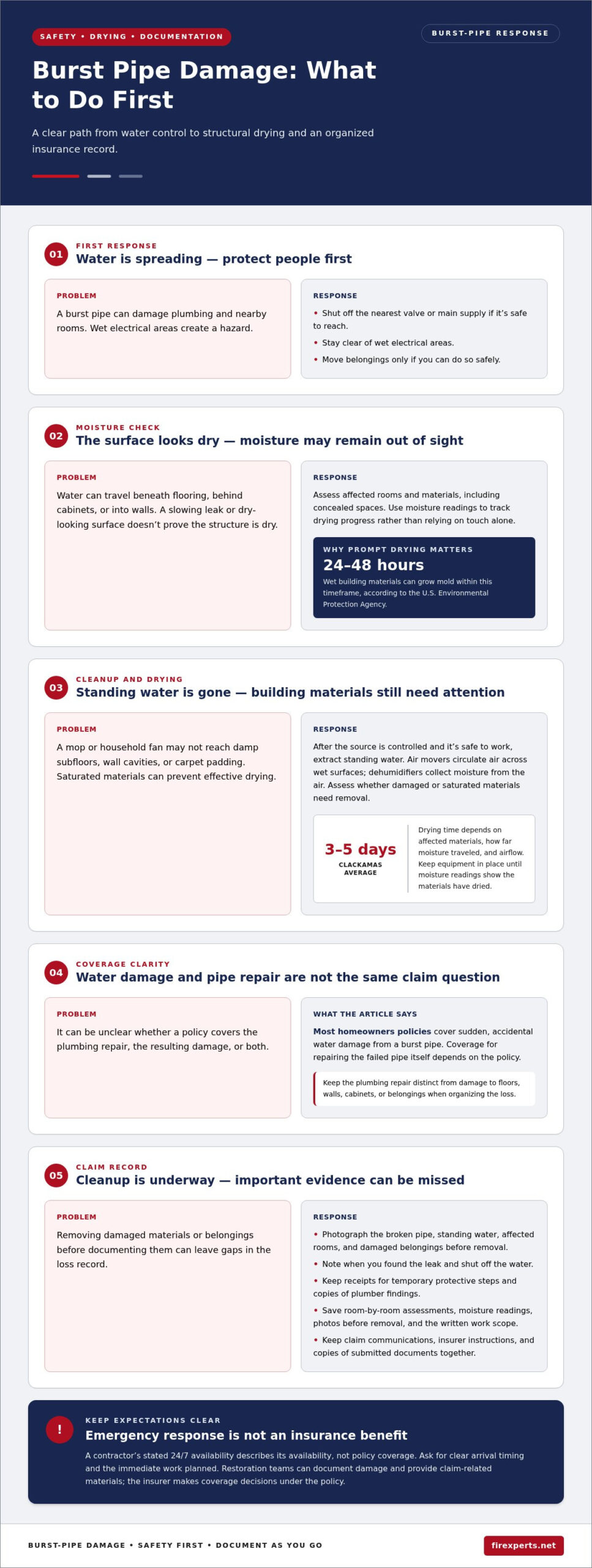
Most homeowners policies cover sudden, accidental water damage from a burst pipe. Coverage for repairing the failed pipe depends on the policy, so distinguish the plumbing repair from damage to floors, walls, or belongings. Keep your policy details handy and record what happened for the claim.
Start with safety and water control. Shut off the nearest valve or main supply if it’s safe to reach. Keep away from wet electrical areas, and move belongings out of the water only if you can do so safely. Even a leak that slows or seems to stop can leave moisture behind cabinets, below flooring, or inside walls.
During a response, a restoration team assesses affected rooms, identifies visible water, and checks where moisture may have traveled. Extraction equipment removes standing water, while air movers and dehumidifiers support drying. The equipment and repair steps depend on the water source, affected materials, and access to concealed spaces.
A 24/7 emergency response describes a contractor’s stated availability, not an insurance benefit. Ask for a clear account of arrival timing and the immediate work planned, such as stopping active water intrusion, extracting standing water, and documenting damage. These early actions help separate emergency mitigation from later repair and restoration.
Choose licensed, bonded, and insured contractors who explain the work scope and document conditions before cleanup. Look for clear communication about emergency mitigation, structural drying, and damage restoration, not promises about insurance claim outcomes.
Permit needs depend on the planned work: water extraction and drying differ from plumbing replacement or structural rebuilding. For a specific repair, confirm applicable requirements with the local building department before rebuilding begins.
Structural drying and dehumidification
Once the water source is controlled and it’s safe to work, extract standing water and begin drying promptly. This limits how long moisture reaches flooring, drywall, and nearby materials.
Structural Drying and Air Movement
Structural drying addresses moisture beyond the reach of a mop or household fan. Technicians assess affected rooms, then position air movers to circulate air across wet surfaces and dehumidifiers to collect moisture from the air. Household fans may not reach damp subfloors or wall cavities, so a dry-looking surface doesn’t prove the structure is dry.
For example, water on a hallway floor may seep beneath flooring or into a nearby wall. Drying equipment should suit the affected materials and areas. Moisture readings help track progress more reliably than touch alone.
Drying Wet Materials and Mold Risk
Wet building materials can grow mold within 24 to 48 hours, according to the U.S. Environmental Protection Agency. That makes prompt extraction and drying an important part of the water-damage response, especially where water has reached drywall, carpet, insulation, or wood.
After removing standing water, assess concealed spaces and damp materials. A wet carpet may hide moisture in its padding, while water near a baseboard can enter a wall cavity. Drying equipment helps manage moisture, but saturated or damaged materials may need removal before the structure can dry effectively.
In Clackamas, structural drying takes an average of 3 to 5 days. The timeline depends on affected materials, how far moisture traveled, and airflow through the space. Track progress with moisture checks, and keep equipment positioned until readings show the materials have dried. Learn more about the water-damage recovery process.
Insurance claim assistance
Most homeowners insurance policies cover sudden, accidental water damage from burst pipes. Coverage for the failed pipe itself depends on the policy. A pipe failure can damage floors, walls, cabinets, and belongings, so separate plumbing repair from water damage restoration when reviewing the loss. This distinction helps organize the claim and clarify which work repairs the pipe and which addresses resulting damage.
Build a clear record as soon as it’s safe. Photograph the broken pipe, standing water, affected rooms, and damaged belongings before removing or discarding items. Note when you found the leak and shut off the water. Keep receipts for temporary protective steps and copies of any plumber’s findings. These details give the insurer a useful timeline and record what changed during cleanup.
Restoration records can support the claim while extraction and drying proceed. A thorough file may include a room-by-room damage assessment, photos of materials before removal, moisture readings, and a written work scope. For example, a photo of a wet baseboard paired with an assessment of moisture behind it can show why surface cleanup alone may not address the damage.
Keep claim communications organized. Record the claim number, the insurer’s instructions, and the name of each person you speak with. Send requested documents through the insurer’s stated process and keep copies together. If water affected several rooms, label images by room and date so the records are easy to follow.
Insurance coordination can connect restoration records with the claim review. A restoration team can document burst-pipe damage and provide claim-related materials, while the insurer makes coverage decisions under the policy. Keep copies of assessments and work records. Before damaged materials are removed, document their condition, then retain relevant invoices and updates as restoration moves toward repairs.
Residential water damage cleanup
A burst pipe can leave water across floors, inside cabinets, and beneath finishes. For burst pipe water damage cleanup in Clackamas, address the source, visible water, and every material the water reached. A dry-looking room may still hold moisture behind drywall or below flooring.
Once the plumbing leak is stopped and the area is safe to enter, break cleanup into clear steps. Extract standing water, then sort affected belongings and building materials. Photograph damaged items before moving or discarding them. Keep wet materials apart from dry contents, and note where water traveled, such as from a kitchen supply line into an adjoining hallway.
Next, assess the structure rather than judging by surface appearance. Water can spread beneath flooring, into baseboards, and through drywall. A soft or swollen area may signal damage beyond the visible stain. Document affected rooms and materials, then determine which items can be cleaned and dried and which need removal. Careful removal exposes hidden wet areas and makes restoration work easier to track.
The type of water changes the cleanup plan. A clean supply-line leak differs from sewage or heavily contaminated water. Contaminated water requires careful removal, sanitation, and moisture control after unsafe material is handled. Keep people away from the affected area until unsafe material has been addressed, and avoid spreading contamination into nearby rooms on shoes or tools.
Before repairs finish, make sure the work accounts for damaged materials and remaining moisture. Replacing stained drywall without addressing damp framing can leave the underlying problem in place. Keep cleanup records, photographs, and repair notes together for insurance documentation. For homeowners seeking burst pipe water damage cleanup in Clackamas, request water restoration support.
Fire Industry Restoration Experts: Fire Restoration Services
Fire Industry Restoration Experts can help when a burst pipe leaves standing water, damaged materials, or repairs that need coordination. Its Water Restoration Services and Water Remediation Services address water damage through assessment, cleanup, and restoration. The team can document affected areas and coordinate with insurance companies to help keep recovery steps organized.
After extraction and drying, damaged building materials may need removal before rebuilding begins. Fire Industry Restoration Experts handles restoration work that can include boarding up, demolition, damage assessment, and rebuilding. This support is useful when water has spread beyond one room or managing repairs alongside an insurance claim feels difficult.
For help with water damage restoration, contact Fire Industry Restoration Experts.
Take the Next Step Toward a Restored Home
After a pipe failure, the next step is turning a disrupted home into a clear recovery plan. Keep claim records, repair notes, and questions together so conversations about the work stay focused. If you need burst pipe water damage cleanup in Clackamas, choose support that can address the damage and the restoration work ahead.
Fire Industry Restoration Experts provides Water Restoration Services, along with Fire & Smoke Restoration and Smoke Restoration Services. Its team can assess damage, handle restoration work, and coordinate with insurance companies. Practical support can help you move from uncertainty toward a workable plan for your home.
Contact Fire Industry Restoration Experts to discuss your water damage restoration needs. You don’t have to sort through every next step at once. Start with a conversation and take recovery forward one decision at a time.
Frequently Asked Questions
How fast can you get to my house for a burst pipe?
Arrival timing depends on the response schedule and travel conditions, so don’t assume a specific arrival time. If water is still flowing, shut off the nearest valve or main supply when safe, then move people away from wet electrical areas. Contact Fire Industry Restoration Experts to discuss your situation and response timing while you take those first safety steps.
How long will it take for my property in Clackamas to be completely dry?
Structural drying in Clackamas averages 3 to 5 days, though the conditions in your home affect the timeline. Water trapped beneath flooring or inside a wall can take longer to dry than exposed surfaces. For example, a damp carpet pad may remain wet after the carpet feels dry. Moisture checks help show whether affected materials are ready for the next repair stage.
Can a burst pipe cause mold?
Yes. Wet building materials can grow mold within 24 to 48 hours, according to the U.S. Environmental Protection Agency. Water may soak into drywall, carpet padding, or wood framing, even when the surface looks dry. Remove standing water and begin drying promptly. If you see visible mold, avoid disturbing the affected material and arrange appropriate assessment before repairs continue.
Can a leaking pipe be repaired without replacing it?
A limited leak may be repairable when the surrounding pipe is in good condition. Corrosion, several weak points, or difficult access can make replacement more suitable. For example, a small leak in one sound section differs from a corroded line with damage at multiple points. A plumber can assess the pipe’s condition and location to determine the repair approach.
Do you handle the rebuilding part, or just the drying?
Fire Industry Restoration Experts handles restoration beyond drying, including demolition, damage assessment, and rebuilding. For example, if water damages drywall and flooring, the process can address affected materials and move into reconstruction. The team also coordinates with insurance companies during restoration. Its work focuses on returning damaged property to functional condition, not discretionary remodeling or new home construction.
Does insurance usually cover the cost of water damage restoration?
Homeowners insurance often covers sudden, accidental water damage from a burst pipe, but the failed pipe’s repair may be treated differently under your policy. Coverage depends on the policy terms and circumstances of the leak. Keep photographs, repair records, and restoration documents together. These records can help explain the damage and support the insurer’s claim review.