
The flames may be out, but electrical fire damage can extend beyond the room where the fire began. Smoke can travel through hallways and ventilation systems, leaving residue and odors on nearby surfaces and belongings. The Electrical Safety Foundation International estimates that electrical fires cause an average of 51,000 home fires in the United States every year.
It’s understandable to feel unsettled when visible damage seems limited, but smoke, ash, and firefighting water may have affected more of your home. Electrical fire damage repair in Gresham starts with assessing the full extent of the damage, including hazards that aren’t immediately visible.
This article explains what electrical fire damage involves, how restoration assessments and safety checks work, and what cleanup and rebuilding may entail. You’ll also learn how damage records and restoration work can be coordinated with an insurance claim, helping you approach recovery with a clearer plan.
Key Takeaways
- Electrical fire damage can affect surfaces and belongings beyond the burned area, so an assessment should consider smoke, soot, ash, and firefighting water.
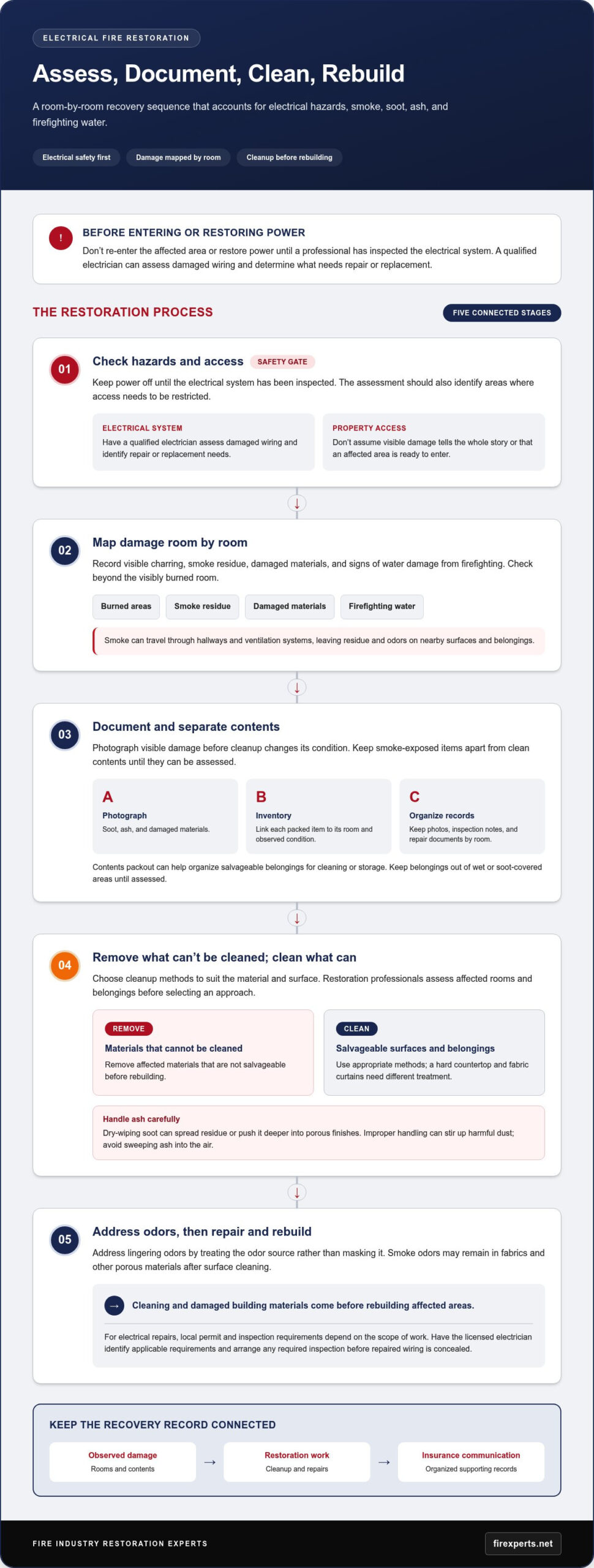
- Don’t re-enter the affected area or restore power until a professional has inspected the electrical system.
- Learn how careful soot and smoke cleanup helps address residue, odors, and the risk of harmful dust from improper ash cleanup.
- Organized photos, damage records, and restoration details can help support communication with your insurance company.
- See how fire debris removal, restoration work, and rebuilding fit into a step-by-step recovery plan.
What is electrical fire damage?
Electrical fire damage includes more than charred wiring or a scorched outlet. Heat can damage nearby framing, wall coverings, and household items. Soot can settle well beyond the ignition point, while acidic ash can cause corrosion over time. A malfunctioning appliance or faulty wiring may start the fire, but the resulting damage can affect multiple parts of a home.
Cleanup methods should suit the material and surface, not just the visible discoloration. Dry-wiping soot can spread residue or push it deeper into porous finishes. Improper handling of smoke and ash can also stir up harmful dust. Restoration professionals assess affected rooms and belongings, then choose appropriate cleaning methods. A hard countertop and fabric curtains, for example, need different treatment.
Residential fire and smoke cleanup typically follows a deliberate sequence: document affected areas, remove materials that cannot be cleaned, clean salvageable surfaces, and address lingering odors. Handle ash carefully rather than sweeping it into the air. Smoke residue can stain belongings, and odors may remain in fabrics and other porous materials after surface cleaning.
For fire-damaged wiring in Gresham, use a licensed electrician experienced in fire-related electrical assessments. Check the electrician’s current credential through Oregon’s official license lookup, and share what you know about the affected outlet, circuit, or appliance.
Restoration professionals in Gresham can assess smoke damage beyond the visibly burned room, including residue on household contents and interior surfaces. Smoke cleanup and odor removal may involve cleaning affected areas and treating the odor source rather than masking it. The work depends on where smoke traveled, which materials absorbed it, and whether firefighting water also affected the home.
- Separate affected belongings: Keep smoke-exposed items apart from clean contents until they can be assessed.
- Record visible damage: Photograph soot, ash, and damaged materials before cleanup changes their condition.
- Plan the repair sequence: Address cleaning and damaged building materials before rebuilding affected areas.
Start by identifying the restoration work your Gresham home needs. Request a clear assessment of affected rooms, contents, and cleanup steps, including how damage will be documented and coordinated with an electrician. This helps distinguish surfaces that can be cleaned from materials that need removal, creating a practical path from cleanup to rebuilding.
Electrical fire restoration assessment and hazard checks
A restoration assessment maps damage room by room. The team records visible charring, smoke residue, damaged materials, and signs of water damage from firefighting, as well as areas where access should be restricted. This record helps organize cleanup, repair priorities, and claim documentation. A scorched kitchen outlet, for example, calls for a different response from smoke residue in an adjoining hallway.
Electrical hazards come first. After an electrical fire, don’t re-enter the affected area or restore power until a professional has inspected the electrical system. A qualified electrician can assess damaged wiring and determine what needs repair or replacement. Restoration professionals can then document affected walls, ceilings, and contents without assuming visible damage tells the whole story.
Permit and inspection requirements for electrical repairs after a fire in Gresham depend on the scope of work. Have the licensed electrician identify applicable local requirements and arrange any required inspection before repaired wiring is concealed. This matters especially when work involves wiring inside a wall rather than replacing a visibly damaged fixture.
Firefighting can leave standing water, wet insulation, and damaged flooring alongside fire and smoke damage. Record these conditions, since water restoration may require separate drying and removal steps. Keep belongings out of wet or soot-covered areas until they’re assessed. A smoke-damaged chair and a water-soaked rug, for example, may need different handling.
Contents packout can help organize salvageable belongings during restoration. Items are documented, separated by condition, and prepared for cleaning or storage as appropriate. A clear inventory links each item to its room and observed damage. In a commercial space, the record can also distinguish equipment, stock, and furnishings affected by smoke or water.
Residential and commercial restoration both require hazard checks, but each assessment reflects how the property is used. In a home, the team may map bedrooms, shared spaces, and personal belongings. In a shop, office, or workshop, it may also document affected work areas and business equipment. Fire and water restoration addresses each type of damage in a planned sequence, with safety and access considered before cleanup begins.
- Record affected rooms, contents, and visible water damage.
- Keep power off until the electrical system has been inspected.
- Track packed belongings by room and condition for restoration records.
A written assessment can help keep repairs, cleanup, and claims records aligned. For coordinated fire and water restoration support, use the documented damage to guide the next steps.
Insurance claim documentation and coordination
A clear claim record connects observed damage, restoration work, and insurance communications. Keep photos, inspection notes, and repair documents organized by room.
Insurance Coverage for Fire Damage
Standard homeowners insurance policies typically cover sudden and accidental fire damage, including structural damage, belongings, and loss-of-use expenses. Review your policy’s coverage, limits, deductibles, and exclusions to understand how they apply. For example, record a damaged wall and smoke-affected furniture separately, while temporary living expenses relate to loss of use.
You aren’t legally required to use the insurance company’s preferred restoration vendor. You can choose a restoration professional and coordinate the assessment with your insurer. Keep communications factual: describe the fire, affected areas, and immediate safety needs, then save claim numbers and written messages with your policy documents.
Damage Documentation for Claims
If it’s safe, document each affected room before cleanup changes what you can see. Take wide photographs of each room, then close-ups of soot, charred materials, damaged belongings, and firefighting water. Label images by room and date. An itemized contents list can record each damaged item’s location, condition, and ownership.
Keep inspection notes with photographs, receipts, and restoration records. Include damage that isn’t immediately obvious, such as smoke residue in a hallway or water beneath flooring. Don’t enter unsafe areas to collect evidence. A restoration assessment can identify visible and hidden damage and provide a written scope for claim discussions.
Insurance Estimates and Claims
An insurer’s estimate and a restoration estimate serve different purposes. The restoration estimate describes observed damage and proposed work; the insurer’s estimate reflects its claim review. Compare them by room, material, and task. If one lists wall cleaning while the other also documents damaged insulation, share the supporting inspection notes and photographs.
Ask for explanations of unclear line items, omitted rooms, or differences in repair scope. Keep revised estimates and written responses together to track what changed and why. Fire restoration professionals can coordinate damage documentation with homeowners and insurance companies as work progresses from assessment to cleanup and rebuilding.
For an organized claim file, group records by stage: initial photographs, inspection findings, contents inventory, estimates, and repair updates. Record the date and sender of each insurer communication. If water extraction or restoration is part of the work, keep those findings with the fire-related records while distinguishing water damage from smoke and heat damage.
Consistent records help homeowners explain how each repair relates to the fire. Before approving completed work, compare the final documentation with the rooms and items recorded earlier. Keep invoices, receipts, and completion notes with the claim file. This organized record gives you a clear reference for insurance discussions and restoration coordination.
What services do local fire restoration companies offer?
After an electrical fire, restoration may involve debris removal, smoke cleanup, and water damage work. The right sequence depends on what the fire and firefighting affected.
Fire Debris Removal
Fire debris removal clears burned materials that can’t be restored, such as damaged drywall, insulation, or an appliance casing. A restoration team separates debris from belongings that may be cleaned and kept. Document affected areas before removal to preserve a clear record of the damage and work. Clearing debris also makes room for cleaning and repairs.
Soot and Charred-Material Removal
Soot cleanup addresses residue on walls, ceilings, fixtures, and contents. Charred materials may need removal if burning has damaged their surface or structure. The material matters: painted drywall, metal fixtures, and fabric furnishings need different handling. Cleaning should limit the spread of residue, while removal should avoid disturbing areas that still need assessment.
Do Gresham electrical fire damage contractors offer 24/7 emergency response? Some restoration companies advertise 24/7 response, but availability varies by company. This is separate from the cleanup and repair services included in a restoration project.
Firefighting water can pool on floors or soak carpets, wall materials, and belongings. Water removal and drying address this damage alongside smoke cleanup. A restoration team identifies wet areas and affected materials, then removes water and dries spaces before repairs proceed. A soaked section of flooring, for example, needs different attention from a damp countertop.
Odor removal and air purification address smoke that remains after visible soot is cleaned. Smoke can travel into nearby rooms and ventilation pathways, so cleanup may need to extend beyond the burned area. A team assesses affected surfaces and belongings, cleans residue, and treats odor sources rather than relying on fragrance. The rooms involved and materials exposed shape the work.
Fire and smoke restoration can also include cleaning salvageable belongings and preparing damaged areas for rebuilding. A household might need soot removed from a living room, water extracted near the kitchen, and a burned appliance disposed of. In a commercial space, debris removal may affect work areas and stored items. Separating these tasks clarifies what cleanup addresses and what repair work follows.
- Identify debris that needs removal separately from salvageable contents.
- Include standing water and damp materials in the damage assessment.
- Track soot cleanup and odor work across affected rooms.
A clear, organized scope makes the work easier to follow during a stressful response. It can connect debris removal, drying, cleaning, and repairs to the affected areas. It also helps you track progress as the property moves from immediate cleanup toward restoration.
Electrical fire damage assessment
A useful assessment maps how an electrical fire affected the whole property, not just its point of origin. It connects visible burning, smoke residue, firefighting water, and structural conditions in one repair plan. In a Gresham home, that might mean documenting a damaged outlet, smoke-marked nearby rooms, and water on the floor below.
Begin with a room-by-room inspection once access is safe. The assessment records affected materials, visible residue, and areas needing further review. An electrician evaluates damaged wiring and the electrical system; restoration professionals document building surfaces and contents. Keeping these observations distinct helps clarify which work involves electrical repairs and which involves cleanup or rebuilding.
Structural assessment looks beyond dark marks. Heat may affect wall and ceiling materials near the fire, while firefighting water can reach flooring or areas below. A useful record identifies each location and material, such as scorched drywall, wet flooring, or smoke residue on a doorway. Those details help define removal, cleaning, and structural restoration needs.
Smoke and ash can travel beyond the room where the fire started. The assessment should trace affected pathways, including hallways and connected rooms, and note residue on surfaces and belongings. A closed bedroom, for example, may still need inspection if smoke entered through a shared hallway or ventilation system. Recording these findings keeps the repair plan from focusing only on the burned area.
Assess firefighting water separately. Record visible water, damp materials, and areas where moisture may have spread beneath a surface. Water remediation addresses this damage apart from soot cleanup. The location and type of affected material help determine whether it can be dried or cleaned, or needs removal before rebuilding.
Good documentation links each finding to a room, material, and proposed next step. Use photographs and written notes to record damage before removal or remediation changes the scene. A clear assessment helps you compare observed conditions with planned work, track changes as concealed materials are exposed, and keep records aligned throughout restoration.
- Map each affected room and the damage observed.
- Separate electrical-system findings from structural and contents findings.
- Record firefighting water alongside fire and smoke effects.
- Connect each documented condition to a cleanup or repair step.
For damage involving wet materials or affected building components, ask for water remediation and structure restoration support guided by the documented assessment.
Fire Industry Restoration Experts: Fire Restoration Services
Fire Industry Restoration Experts helps organize restoration after an electrical fire, from damage assessment and boarding up through demolition and rebuilding. Its Fire Restoration Services address fire-related property damage, while Smoke Restoration Services focus on smoke impacts. When firefighting leaves water damage, Water Restoration Services and Water Remediation Services address that part of the recovery.
The team coordinates restoration documentation with insurance companies, connecting observed damage with repair work. This support is useful when soot, structural damage, and firefighting water affect different parts of a property. Electrical system inspection and repair remain a separate safety step for a qualified electrician.
For a calm conversation about restoration needs, contact Fire Industry Restoration Experts or visit firexperts.net.
Take the Next Step Toward Recovery
After a fire, deciding what to handle first can feel difficult. Start by bringing your records together, identifying decisions that need attention, and making space for the work to proceed in an orderly way. You don’t have to resolve every part of recovery at once.
If you need electrical fire damage repair in Gresham, Fire Industry Restoration Experts can help restore the property after fire damage. Its Fire Restoration Services, Smoke Restoration Services, and Water Restoration Services address different parts of a fire’s impact. Start with a conversation about what happened and what your property needs next.
Reach out when you’re ready to discuss the situation and the path forward. Contact Fire Industry Restoration Experts to begin a practical conversation about restoration. One clear next step can make the rest feel more manageable.
Frequently Asked Questions
Can smoke and soot spread to other areas of the property?
Yes. Smoke can move through hallways and ventilation systems, leaving residue beyond the room where the fire began. It can stain belongings, and odors may settle into fabrics or other porous items. Avoid carrying exposed belongings through clean rooms, as this can spread soot. Make a simple list of affected items and where you found them for the restoration assessment.
Is it safe to stay in a home after a fire?
Don’t enter the affected area or restore power until a professional has inspected the electrical system. Wiring can be damaged even when surfaces look intact. Keep household members away from affected rooms, and don’t use switches, outlets, or appliances there before inspection. If you need medication or essential items, wait until the area has been declared safe.
When should I call a professional restoration company?
Once everyone is safe and the fire department has extinguished the fire, contact a restoration company promptly. Describe which rooms were affected, whether firefighting water entered the property, and whether smoke reached other areas. If you’re displaced, keep receipts for temporary living expenses and save insurer correspondence. These details help organize restoration planning and an insurance claim.
Which companies repair electrical fire damage in Gresham, Oregon?
Fire Industry Restoration Experts provides fire, smoke, and water damage restoration for property owners in Gresham, Portland, and Clackamas. Its work includes damage assessment, demolition, and rebuilding, with coordination with insurance companies. Restoration addresses property damage; a qualified electrician must inspect and repair damaged wiring. Keeping those roles clear helps you arrange building recovery and electrical work as separate scopes.
What steps are involved in electrical fire damage cleanup and restoration?
The process generally moves from safety assessment to damage documentation, removal of unsalvageable materials, cleaning, and repairs or rebuilding. Wait to restore power until a professional has inspected the electrical system. If firefighting water affected the property, drying and water restoration may also be needed. Assess furniture, electronics, and other belongings separately, since material and condition determine whether cleaning is practical.
How much does electrical fire damage repair cost in Gresham?
The cost depends on the damage and the proposed restoration scope. Key factors include how far fire, smoke, and firefighting water spread; which materials can be cleaned; and whether structural demolition or rebuilding is needed. The condition of belongings and scope of electrical repairs also affect the overall work. A written assessment shows how each task contributes to the proposed restoration.
Does homeowners insurance cover electrical fire damage and smoke cleanup in Oregon?
Standard homeowners insurance policies typically cover sudden and accidental fire damage, including structural damage, belongings, and loss-of-use expenses. Your policy terms determine how coverage applies to your home and loss. Review the relevant coverage sections and deductible, then notify your insurer and keep receipts for expenses. Photographs and an itemized contents list can help link damaged property to your claim.
How soon should smoke and soot damage be cleaned after an electrical fire?
Fire damage restoration should ideally start within 24 to 48 hours. Once the property is safe to enter, prompt assessment can identify residue on surfaces and belongings before cleanup proceeds. Don’t dry-sweep ash or wipe soot across materials, because improper cleanup can create harmful dust or spread residue. Keep affected contents separate until they can be assessed and cleaned appropriately.