
What if the damage you can see is only part of the problem? After a fire, leak, flood, or storm, smoke residue, affected materials, and structural concerns may extend beyond the obvious damage. Property damage restoration Oregon is a staged recovery process, not a single cleanup task. Knowing what happens at each stage can make the next decisions easier to manage.
It’s understandable to wonder which repairs are needed, whether building materials are affected, and what information your insurer will need. A careful assessment helps identify visible damage and develop a work scope. Dated photos, notes, and damage-related records can support conversations about the claim and repairs, though coverage depends on your policy and insurer.
This guide explains the broad stages of restoration, from assessment and mitigation through demolition and rebuilding. You’ll also learn how fire, water, flood, and storm damage can call for different work, and what to expect as recovery moves forward. Use the process to organize your questions and keep track of what has been assessed, what work is proposed, and what remains to be done.
Key Takeaways
- Property damage restoration Oregon follows a staged process, from assessing and stabilizing damage to completing repairs and rebuilding.
- Fire, water, flood, and storm damage can affect different parts of a property, so restoration work depends on the source and extent of the damage.
- An assessment helps clarify affected areas and potential work scope; keep dated photos, relevant messages, and damage-related records organized.
- Insurance coordination can help keep documentation and repair discussions organized, but coverage and claim decisions depend on the insurer and policy.
- F.I.R.E. Restoration brings assessment, mitigation, demolition, and rebuilding together, guided by founder Greg Philo’s firefighting and contracting experience.
What Property Damage Restoration in Oregon Covers, and Where Recovery Begins
After a fire, flood, or severe storm, it can be hard to tell whether a property needs a limited repair or a broader recovery effort. Property damage restoration Oregon refers to coordinated work that assesses damage, stabilizes affected areas, and repairs or rebuilds parts of a building after a damaging event. In short, restoration addresses the effects of damage, while routine maintenance helps prevent ordinary wear from becoming a larger problem.
The word “restoration” has different meanings in different fields; the broad Restoration (disambiguation) overview reflects that range. In property recovery, the work responds to a specific event and its effects on the building. It is more than repainting a room or choosing new finishes. Cosmetic updates may be part of a repair, but they do not address underlying damage on their own.
Which kinds of property damage call for restoration?
Different events leave different problems behind. Fire can damage building materials directly, while smoke may affect rooms beyond the area where flames were visible. Water from a leak or flood can affect finishes and other materials, sometimes far from where water first appeared. Floodwater may also leave silt or debris that needs to be assessed before repairs proceed.
Storm damage can involve wind-driven rain, damaged exterior areas, or other structural concerns. The visible opening may be just one part of the problem. Surrounding materials and interior spaces may also need attention. Restoration work depends on what happened and what the assessment finds, rather than on a one-size-fits-all checklist.
Why Oregon conditions matter to property recovery
Oregon’s rainy seasons make water intrusion and storm-related damage relevant concerns for property owners. Rain entering through a damaged roof or opening can affect interior finishes and materials, so the water’s source and path help shape the repair scope. The same applies after a flood: debris, sediment, and staining can indicate areas that need closer assessment, but appearance alone may not reveal the full extent.
Local conditions and the property itself shape recovery needs. F.I.R.E. Restoration serves property owners and managers in Portland, Gresham, and Clackamas. An assessment helps identify affected areas and the work needed, giving owners a clearer starting point than treating every damaged surface as a simple patch-and-paint job.
Depending on the findings, restoration can include assessment, mitigation, demolition of damaged materials, and rebuilding. Connecting these tasks helps move recovery from initial protection toward repairs. The next step is understanding how the work is organized, since stabilization and rebuilding do not always happen at the same time or in the same order.
How Oregon Property Restoration Moves from Stabilization to Rebuilding
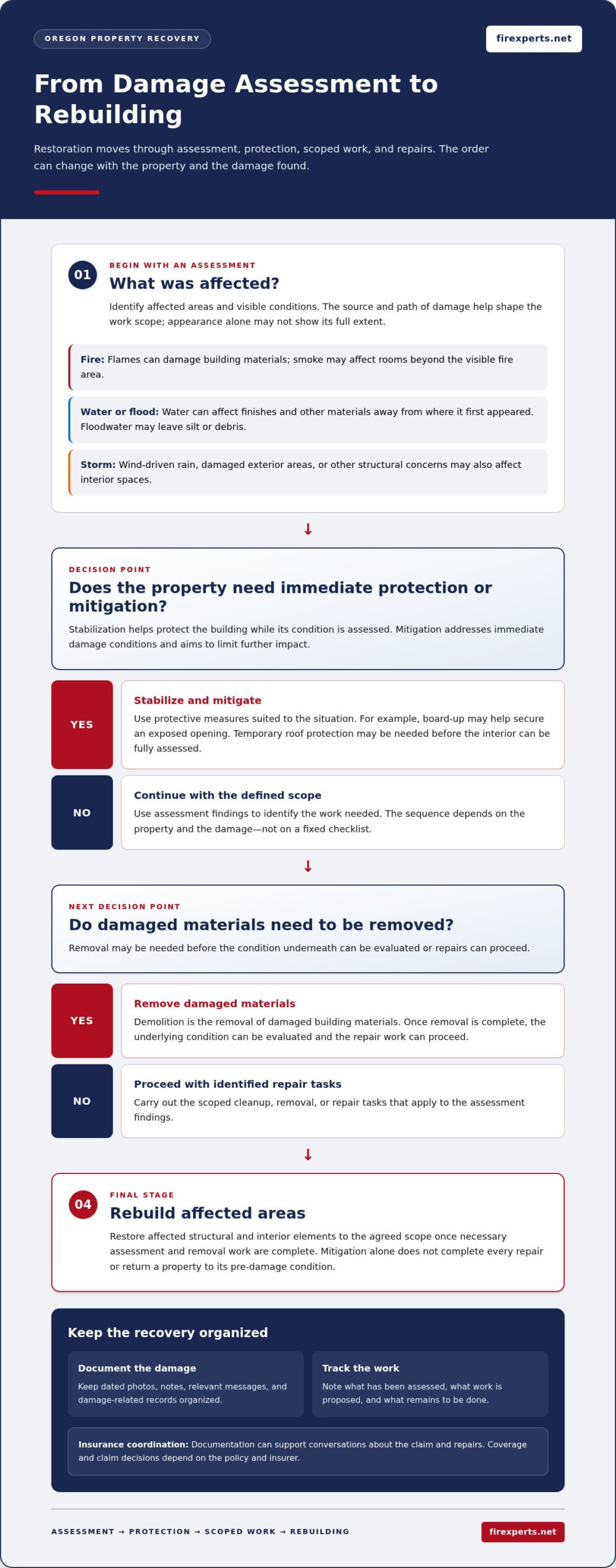
Once damage has been assessed, the practical questions are what happens first and what needs to wait. In property damage restoration Oregon, work generally moves from understanding the damage to protecting the building, completing the defined restoration work, and rebuilding affected areas. The sequence can change with conditions. For example, a storm-damaged roof may need temporary protection before the interior can be fully assessed.
The stages are assessment, stabilization, scoped restoration work, and rebuilding, in an order shaped by the property and the damage. Separating the stages helps distinguish immediate actions from repairs that depend on a clearer picture of the building.
- Assess the damage: Identify affected areas and visible conditions. The findings help define the work needed and what belongs in the repair scope.
- Stabilize and mitigate: Limit further damage where possible. Depending on the situation, this may include board-up or other protective measures and work to address immediate damage conditions.
- Complete scoped work: Carry out the agreed cleanup, removal, or repair tasks. Mitigation is not the same as completing every repair or rebuilding the property.
- Rebuild: Restore affected structural and interior elements to the agreed scope once necessary assessment and removal work are complete.
Restoration industry resources, including the Restoration Industry Association (RIA), offer broader context on the field and its practices. For a property owner, the key is to connect each task to the damage found instead of treating a standard sequence as a fixed template.
What stabilization and mitigation are meant to do
Stabilization helps protect the property while its condition is being assessed. If an opening leaves a building exposed, board-up may help secure that area. Other situations call for different protective work. Mitigation addresses immediate damage conditions and aims to limit further impact. It does not complete the repair scope or return the property to its pre-damage condition by itself.
When cleanup gives way to structural repair and rebuilding
Damaged materials may need to be removed before the condition underneath can be evaluated or repairs can proceed. Demolition means removing damaged building materials; structural repair addresses affected building elements. Reconstruction restores damaged structural and interior parts within the agreed scope. The assessment, damage source, and property condition determine how these tasks fit together.
That distinction helps make work-scope discussions clearer. Ask which tasks protect the building, which materials need removal, and what repairs or rebuilding are included. F.I.R.E. Restoration coordinates assessment, mitigation, demolition, and rebuilding, connecting early protection to construction. Its property restoration services are shaped around the damage and the property rather than a universal schedule.
Fire, Water, Flood, or Storm Damage: How Restoration Needs Differ
The cause of damage helps shape the recovery plan, but it does not determine the full scope on its own. A scorched room, a wet floor, and a storm-damaged roof raise different questions about affected materials and repairs. In property damage restoration Oregon, assessment connects visible conditions with the work the property may need. The table below is a starting point, not a repair checklist.
| Damage source | Typical affected areas | Restoration focus |
|---|---|---|
| Fire and smoke | Areas touched by flames, plus surfaces and rooms affected by smoke or soot | Assess direct damage and smoke impact, then determine cleanup and repair needs |
| Water intrusion | Interior finishes and building materials near the source or water’s path | Establish the source and extent of exposure to guide restoration work |
| Flooding | Lower levels, floors, walls, and areas where water or debris reached | Assess affected materials and debris before defining the cleanup and repair scope |
| Storm damage | Roofing, exterior openings, and interior areas exposed to wind or rain | Consider exterior damage, water entry, and potential structural concerns |
A stain, cracked surface, or damaged opening can show where a problem became visible without revealing how far it extends. Conditions behind or beyond the damaged area may affect which repairs are appropriate. The Oregon Administrative Rule 150-308-0510 uses “destroyed or damaged” in a tax-proration context. It is not a repair guide, but it illustrates that damage can have different meanings depending on the question being addressed.
How fire and smoke losses shape the restoration scope
Fire can damage materials where flames reached, while smoke and soot may affect other parts of the building. Assessment helps distinguish these conditions and identify where cleanup or structural repair may be needed. The scope depends on the findings, not just the most visibly burned area. For a closer look at the property-owner process, see the Fire Damage Restoration Portland OR property owner guide.
How water, flooding, and storms change the work
The source and path of water matter. A limited interior leak differs from flooding that brings water and debris into a building. Storm damage may begin outside, with wind affecting an exterior area and rain entering through it; flooding can affect interior spaces directly. Assessment helps define which materials and building areas need attention. For water-specific context, see Water Remediation in Oregon.
These categories can overlap. A storm, for example, may cause both exterior damage and interior water exposure. No single pathway fits every loss, so the property’s condition and assessment determine the repair scope.
What Oregon Property Owners Can Expect from Assessment and Insurance Coordination
After damage, two concerns often arise together: What work does the property need, and how should the loss be explained to the insurer? A documented assessment helps answer those questions. It records affected areas and visible conditions, then helps establish a potential work scope. This gives property owners a clearer basis for discussing repairs, although it does not determine what an insurance policy covers.
What a restoration assessment helps clarify
An assessment connects observed damage to possible restoration work. It may note which rooms or building components appear affected, what conditions are visible, and which tasks may be needed. If the loss involves fire, the Oregon fire damage assessment guide explains what inspectors may check in that situation.
An assessment is a working picture, not always a final one. Removing damaged materials or starting repairs can reveal additional conditions, which may mean the scope needs review. Clear notes about what was observed and what changed help the property owner and insurer follow those updates.
Keep records together and add dates where possible:
- Photos or videos showing affected areas and visible damage.
- Communications with the insurer and restoration team, including messages about next steps.
- Damage-related records, such as relevant receipts or documents connected to the property.
- Updated notes when the observed condition or proposed work changes.
These records help organize the account of the damage and the work being discussed. Keep original files when possible, and sort copies by date or property area so details are easier to find.
How restoration work and insurance communication fit together
Restoration documentation supports conversations about observed damage and proposed work. It helps distinguish what has been seen from the work being considered, and gives the owner information to share or discuss with the insurer. In property damage restoration Oregon, this distinction matters: a restoration contractor can document conditions and coordinate about the work, but the policy terms and insurer determine coverage and claim decisions.
Review your policy and direct coverage questions to your insurer. If a decision or scope item is unclear, ask for an explanation and keep notes on the response. The restoration team can explain its assessment and work scope, but it cannot guarantee approval, payment, or a particular insurance outcome. F.I.R.E. Restoration coordinates with insurance companies during recovery and keeps the property owner informed about the work being considered.
If you’re sorting through an assessment or discussing a repair scope, talk with F.I.R.E. Restoration about your property damage assessment and the restoration work under consideration.
A Steady Path to Property Damage Restoration with F.I.R.E. Restoration
Damage to a home or commercial property can leave owners juggling immediate concerns, repair questions, and insurance conversations. Fire Industry Restoration Experts brings those parts of recovery into a coordinated process. Founded in 2013 by Greg Philo, a volunteer firefighter and contractor, the Oregon restoration company draws on firefighting and construction experience to assess affected buildings and plan work around their needs.
For property owners seeking property damage restoration Oregon, continuity can matter. Fire Industry Restoration Experts handles the process from assessment and mitigation through demolition and rebuilding. Early findings can inform later work, so owners do not have to restart the conversation at every stage. The work still depends on the specific loss and the scope developed for the property.
How one coordinated restoration process reduces handoffs
Each part of the recovery plan serves a different purpose. Assessment documents observed conditions and helps define the work. Board-up or other protective work can secure affected areas where needed. Mitigation addresses immediate damage conditions, while demolition removes materials that must come out before repairs proceed. Rebuilding restores affected structural and interior elements to the agreed scope.
These tasks connect, but they are not interchangeable or automatic. A flood-damaged property may need a different sequence from one affected by fire or a storm. As work progresses, updated findings can clarify what comes next. Fire Industry Restoration Experts coordinates the stages, with the project scope shaped by the property’s damage and needs.
Local restoration support across the Portland area
Fire Industry Restoration Experts serves property owners and managers in Portland, Gresham, and Clackamas. For homeowners, a clear picture of the assessment, proposed work, and repair progress can make decisions easier to manage. Property managers may also need organized communication to track affected spaces and coordinate the property’s recovery.
The company coordinates with insurance companies to support communication about observed damage and the work being considered. That coordination does not determine coverage or guarantee a claim outcome. Policy terms and insurer decisions govern those questions, while the restoration team can explain its assessment and scope.
Recovery can feel like a long list of unfamiliar tasks. A coordinated approach makes the work easier to follow, from the first assessment through rebuilding. If your property has been damaged, talk with Fire Industry Restoration Experts about the restoration work your property may need.
Take the Next Step Toward a Clear Recovery Plan
After property damage, you do not need to solve every repair question at once. Start by gathering what you’ve observed, any photos or records you’ve kept, and the questions you still have. That gives the conversation a practical starting point and helps turn uncertainty into a clearer plan.
Every property has its own needs. With property damage restoration Oregon, understanding your building’s condition and the work being considered can help you make informed decisions as recovery moves forward. Ask for clear explanations of the assessment, proposed scope, and next steps.
Talk with F.I.R.E. Restoration about your property’s next steps. A conversation can help you identify what to address first and move toward recovery one step at a time.
Frequently Asked Questions
Does homeowners insurance cover property damage restoration in Oregon?
It depends on your policy, the cause of damage, and your insurer’s review. A policy may treat sudden water damage differently from flooding or gradual wear, so do not assume every repair is covered. For property damage restoration Oregon homeowners may need, keep claim details and policy documents handy. Ask your insurer to explain any coverage decision, deductible, or exclusion that affects the proposed work.
How long does property damage restoration usually take?
There is no single schedule for every property. Duration depends on the type and extent of damage, which materials need removal, and the repairs required. A contained area with limited damage may involve fewer work stages than a loss affecting several rooms or structural elements. Ask for updates as the scope develops, especially if newly visible conditions change the planned repairs.
Can restoration work begin before an insurance claim is approved?
Work to protect a property or limit ongoing damage may need to be considered before a claim decision, but the right next step depends on the conditions and your insurer’s instructions. If it is safe, document the damage and notify your insurer. Keep records of any work authorized or completed. Before committing to repairs, understand who is responsible for payment if coverage is limited or denied.
What is the difference between damage mitigation and property restoration?
Mitigation addresses immediate conditions that could lead to further damage, while restoration covers the broader work needed to repair affected parts of the property. For example, protecting an opening after storm damage may help limit exposure, but it does not repair the damaged building elements. The work that follows depends on assessment findings. Ask which tasks are protective measures and which are permanent repairs.
Is property damage restoration only for homes?
No. Restoration can apply to commercial buildings as well as homes. A damaged office, rental property, or other managed building may need assessment and repairs, though the affected spaces and project needs will differ. Owners and property managers can record which areas are affected, note access concerns, and identify who should receive updates to keep decisions and repair planning organized.
Can Oregon rain cause damage that needs professional restoration?
Yes. Rain can lead to restoration needs if it enters through a damaged roof, exterior opening, or another vulnerable area and affects interior materials. A damp patch may be a clue, but it does not always show how far water traveled. In Portland, Gresham, and Clackamas, note where water appeared and when, then arrange an assessment if damage is visible or continues.
What should I document after property damage?
Record when you noticed the damage and describe what happened, if known. Photograph affected areas from several angles, including close views and wider shots that show where the damage is located. Make a simple inventory of damaged belongings, and save related receipts, insurer messages, and repair documents. Keep copies together and note when conditions change. Do not enter unsafe areas just to collect evidence; personal safety comes first.