
What if removing the visible floodwater is only the first part of getting your property back? In Oregon, flood extraction and rebuild work needs to follow a connected sequence: remove standing water, assess affected materials, dry the structure, then repair damaged components. A room can look dry while moisture remains behind walls, beneath flooring, or in framing, so rushing into reconstruction can leave damage hidden inside the building.
It’s understandable to feel unsure about what comes next, especially when cleanup, repairs, and insurance documentation all demand attention at once. This guide explains how flood extraction and rebuild Oregon recovery typically progresses, from initial safety steps to structural drying and reconstruction. It also covers what to document, how moisture checks help guide repair decisions, and how restoration work and insurance communication fit together.
Each stage builds on the one before it. Knowing what information to gather and what decisions depend on assessment findings can help you understand the work ahead, whether your property is in Portland, Gresham, or Clackamas.
Key Takeaways
- Before cleanup begins, keep clear of unsafe standing water and wet electrical equipment, then record visible damage from a safe location.
- Moisture monitoring helps identify which building materials can stay and which may need removal or repair.
- Photos, assessment findings, and a defined repair scope help organize insurance discussions.
- Flood extraction and rebuild Oregon projects move from water removal and drying review into repairs based on documented damage.
- Fire Industry Restoration Experts connects damage assessment, demolition, structural restoration, and rebuilding through coordinated project communication.
Oregon Flood Extraction and Rebuild: What the Recovery Process Involves
Flood extraction removes standing water from a property, while rebuilding repairs or replaces building components damaged by water. Between those phases, recovery may include damage assessment, structural drying, and selective demolition. The order matters: removing visible water is an important start, but it doesn’t show what happened behind a wall or beneath a floor.
Flood damage can differ from a small, contained household leak. A leaking supply line may affect a limited area, while flooding can spread across several rooms or into a basement, depending on how water entered and moved through the building. The source, duration, and affected materials all help shape the next steps in flood extraction and rebuild Oregon recovery. A consistent process works from what the property shows rather than assuming every water loss has the same scope.
What flood extraction addresses inside an Oregon property
Extraction focuses first on visible water across floors, in basements, and in other affected areas. Removing standing water clears the way for a closer assessment. Water may also reach concealed materials, such as flooring layers, wall cavities, or structural components. In Portland, Gresham, and Clackamas, property layouts and building materials vary, so an inspection helps establish where water traveled instead of relying on appearances alone.
A recovery plan may move through these stages:
- Assessment: Identify visible damage and areas that need closer review.
- Removal: Extract standing water and clear affected spaces.
- Drying review: Monitor affected materials to understand their condition.
- Demolition, if needed: Remove damaged components that cannot remain.
- Reconstruction: Repair or replace building components according to the documented scope.
The findings at each stage guide what comes next. Not every flood requires the same amount of demolition or rebuilding. For example, water confined to an accessible floor can present different repair needs from water that reaches wall cavities, flooring layers, or framing.
Why rebuilding is a separate phase from water removal
Extraction doesn’t determine whether flooring, drywall, insulation, or framing can remain. That decision depends on assessment and drying findings. Documenting affected areas and material conditions gives property owners a clearer basis for repair planning and insurance discussions. It also keeps reconstruction tied to observed damage rather than guesswork.
Extraction removes water; rebuilding restores the building components that assessment shows need repair or replacement. Keeping those phases distinct helps avoid treating a cleared floor as proof that the whole structure is ready for repairs. A clear handoff from water removal and drying review to reconstruction helps property owners understand why each part of the work is needed.
How Flood Extraction Works: Safe, Ordered Steps for Oregon Property Owners
After flooding, it can be tempting to start moving items or pumping water. Pause first. Water can hide electrical hazards, unstable surfaces, or contaminated debris. If there’s an immediate danger, leave the affected area and contact emergency services or the appropriate utility provider. Don’t enter unsafe standing water or operate electrical equipment in wet conditions.
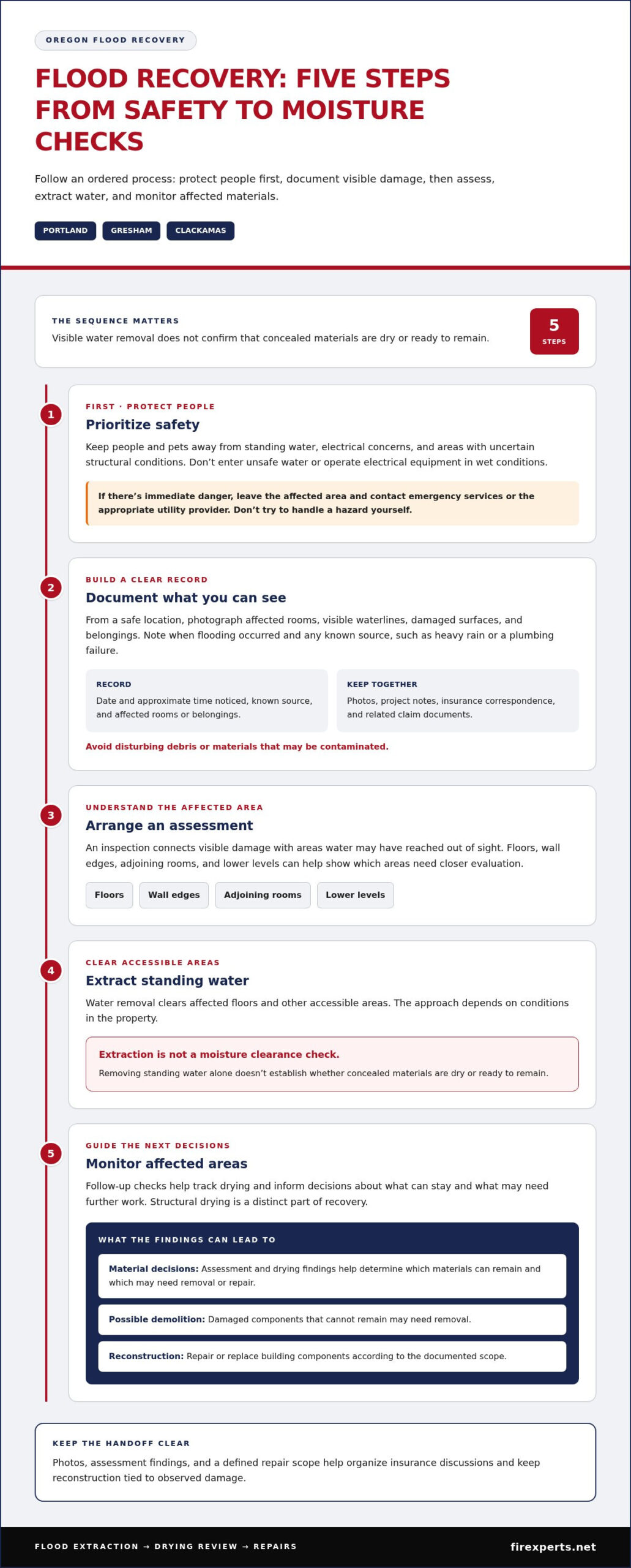
Once it’s safe to proceed, this sequence helps protect people and create a clear record of the damage:
- Prioritize safety. Keep people and pets out of areas with standing water, electrical concerns, or uncertain structural conditions. Don’t try to handle a hazard yourself.
- Document what you can see. From a safe location, photograph affected rooms, visible waterlines, damaged surfaces, and belongings. Note when flooding occurred and any known source, such as heavy rain or a plumbing failure. Avoid disturbing debris or materials that may be contaminated.
- Arrange an assessment. A restoration team inspects visible damage and considers where water may have traveled out of sight. Floors, wall edges, adjoining rooms, and lower levels can help show which areas need closer evaluation.
- Extract standing water. Water removal clears affected floors and other accessible areas. The approach depends on the conditions in the property. Extraction alone doesn’t establish whether concealed materials are dry or ready to remain.
- Monitor affected areas. Follow-up checks help track drying and inform decisions about what can stay and what may need further work. Structural drying is a distinct part of recovery, as explained in Structural Drying After Storm Events.
What to do before extraction begins
Keep your project notes simple and factual. Record the date and approximate time you noticed the flooding, what you know about its source, and which rooms or belongings appear affected. Take photos only if you can do so without entering an unsafe area. Leave questionable materials and debris undisturbed until they can be assessed. Keep insurance correspondence and any related claim documents with your notes and photos.
How professionals remove water and assess affected areas
An initial inspection connects visible water to the areas it may have reached. The restoration team can then plan extraction and check affected materials as work progresses. The practical sequence is to assess the affected areas, remove standing water, then monitor conditions to guide the next recovery steps. This keeps water removal grounded in what the property shows, rather than assumptions based on a dry-looking surface.
Fire Industry Restoration Experts provides flood and water restoration, including damage assessment and extraction. The team serves homeowners and property managers in Portland, Gresham, and Clackamas. If you’re organizing the next steps, learn more about flood restoration support.
Structural Drying Before Rebuilding: What Portland-Area Owners Should Understand
Standing water can be gone while moisture remains inside a wall, beneath flooring, or in framing. A dry-looking surface is only one part of the picture. Starting reconstruction as soon as the floor looks clear can cover materials that still need attention, making it harder to address the full extent of the damage.
Structural drying includes checking affected materials and tracking their condition as they dry. These findings help distinguish areas that can remain from those that need repair or replacement. For a flood extraction and rebuild Oregon project, this step provides a practical bridge between water removal and a reconstruction plan based on the property’s condition.
How moisture findings shape demolition and repair decisions
An assessment may focus on drywall, flooring, insulation, and framing, depending on where water traveled. Moisture checks and visible damage help build a record of affected areas. No single material decision applies to every home; the condition of each component and the documented findings guide what can be retained.
If a material is too damaged to remain, demolition can be targeted to the affected portion rather than treated as a reason to remove everything nearby. For example, a wet section of drywall may need removal while adjacent framing is assessed separately. The goal is to base removal and repair on what the assessment shows, then carry those findings into the reconstruction scope.
How Oregon property conditions can affect drying
Basements, crawlspaces, and enclosed areas can be harder to evaluate by sight because materials and corners may be out of view. Their condition depends on the specific property and where water entered or collected. In Portland, Gresham, and Clackamas, rain and local flood exposure may be relevant context, but they don’t mean every home faces the same drying needs.
Drying decisions should follow evidence from the affected building, not a broad assumption about the region. A property with water limited to an open, accessible floor may call for a different assessment from one where moisture reached enclosed spaces or building materials.
Documented drying findings help define the rebuild scope by showing which materials can remain and which need repair or replacement. Once those findings are reviewed, reconstruction planning can address the actual damage rather than simply covering areas where water was visible. This handoff keeps drying and rebuilding connected and gives owners a clearer basis for understanding the work ahead.
Rebuilding After a Flood in Oregon: From Damage Scope to Finished Repairs
Once assessment and drying review are complete, the next task is turning documented damage into a repair plan. A clear scope connects inspection findings and any necessary demolition to the work required for restoration. That helps keep reconstruction focused on damaged building components rather than unrelated cosmetic changes.
How the rebuild scope follows the documented damage
The scope may identify affected structural or interior components, such as sections of framing, drywall, flooring, or insulation. If demolition exposes damage behind a finished surface, those findings can clarify what repairs are needed. The plan can then be updated to reflect the newly visible condition of the property.
A practical sequence is:
- Review assessment and drying records.
- Note any new damage revealed during necessary demolition.
- Define which components need repair or replacement.
- Use the resulting scope to organize reconstruction work.
For flood extraction and rebuild Oregon projects, documenting that sequence gives owners and restoration teams a shared reference as work moves from damage control into structural repairs.
What to organize for Oregon insurance and local approvals
Keep project information together so it’s easier to review and share. A simple file can include:
- Dated photographs of affected areas and belongings.
- Assessment and drying findings, along with records of demolition discoveries.
- Project communications and the current repair scope.
- Insurance correspondence and any claim-related documents.
This record helps support clear discussions, but it doesn’t determine coverage. The insurer makes coverage decisions based on the policy and claim. Restoration teams can help organize project documentation and communicate about the work, without promising an insurance outcome.
Permit needs can vary with the type of repair and the jurisdiction. Before work proceeds, verify applicable requirements with the local building department for the property’s location. This keeps planning grounded in the rules that apply to the specific project, whether the property is in Portland, Gresham, or Clackamas.
With assessment, documentation, and scope aligned, reconstruction can proceed with a clearer understanding of what the property needs. Fire Industry Restoration Experts handles restoration from damage assessment and demolition through structural rebuilding, while coordinating project communication and insurance discussions. Learn about flood rebuilding and the documented steps involved in restoring your property.
Coordinating Flood Extraction and Rebuild with Fire Industry Restoration Experts
After a flood, property owners face several connected decisions: what needs assessment, which materials require removal, how the structure should dry, and what repairs come next. Fire Industry Restoration Experts handles flood and water restoration, damage assessment, demolition, structural restoration, and rebuilding. Keeping these phases connected makes it easier to understand how initial findings lead to repairs.
What coordinated restoration can mean for a property owner
The process begins with understanding the affected areas and documenting the damage. Assessment findings guide water removal and drying review. If damaged materials need to be removed, demolition can reveal conditions behind finished surfaces and help define the structural repairs that follow. The repair scope gives the property owner a practical record of what work is planned and why.
That continuity matters in flood extraction and rebuild Oregon projects. It gives owners a consistent reference for project communication as work moves from one phase to the next. Fire Industry Restoration Experts also coordinates with insurance companies, helping organize documentation and discuss the restoration work. Coverage decisions remain with the insurer and depend on the policy and claim.
Fire Industry Restoration Experts was founded in 2013 by Greg Philo, a volunteer firefighter and contractor. That combination of emergency-response and construction experience informs a practical approach: assess the property, document the work, and carry the findings into restoration and rebuilding. The team serves homeowners and property managers in Portland, Gresham, and Clackamas.
A practical next step after flood damage
If you’re preparing to discuss restoration, gather what you know about the water source, the rooms or building areas affected, and any immediate safety concerns. Photos and notes can help explain what you’ve seen, but don’t enter an unsafe area to collect them. Share the information available so the restoration conversation can start with the property’s actual conditions.
Recovery can feel like a lot to hold at once. A clear conversation about known damage and restoration needs can help organize the work ahead without assuming a particular scope or insurance outcome. Talk with Fire Industry Restoration Experts about the next steps for your property.
Take the Next Step Toward a Sound Recovery
Flood recovery works best as a connected process. Removing standing water is only the beginning: careful assessment and documented drying findings help determine what materials can remain, while a clear repair scope guides reconstruction. Photos, notes, and project records can also make conversations with your insurer easier to organize, though coverage decisions depend on your policy and claim.
Fire Industry Restoration Experts brings assessment, demolition, structural restoration, and rebuilding together. Founded by volunteer firefighter and contractor Greg Philo, the company coordinates project communication and insurance discussions as restoration moves forward. For property owners considering flood extraction and rebuild Oregon work, that sequence helps clarify the path from water removal to repairs.
For flood restoration in Portland, Gresham, or Clackamas, talk with Fire Industry Restoration Experts about your property’s restoration needs and the next practical steps.
Frequently Asked Questions
Is floodwater extraction enough to make a home safe to rebuild?
No. Extraction removes standing water, but it doesn’t show whether concealed materials or structural components are affected. Moisture monitoring and assessment help identify conditions behind walls, under flooring, or in framing. Rebuild decisions should follow those documented findings, not just the appearance of a dry floor. Because every property is different, one visual check can’t establish whether all affected areas are ready for repair.
What should I do first after flooding in my Oregon home?
Put safety first and stay out of areas with unsafe standing water, damaged electrical systems, or other immediate hazards. Contact emergency services or utility providers if there’s an urgent danger. Once it’s safe, photograph visible damage and note when flooding occurred and what may have caused it. Don’t disturb unknown debris or materials that may be contaminated. A restoration assessment can help organize extraction and repair priorities.
How long does flood extraction and rebuilding take?
The schedule depends on the amount of water, the materials affected, access to concealed areas, and the repairs identified during assessment. Extraction, drying, demolition, and reconstruction are separate phases, and findings during one phase may change what follows. A useful project plan reflects the property’s actual conditions rather than a generic estimate. The scope and schedule become clearer as assessment and drying findings guide the work.
Can I begin rebuilding as soon as the standing water is gone?
Not necessarily. Removing standing water doesn’t establish that materials behind walls, beneath flooring, or inside enclosed spaces are dry or undamaged. Assessment and moisture monitoring help determine what can remain and what may need removal and replacement. Before finish repairs begin, have the restoration team explain how documented findings support the rebuild scope. That way, reconstruction responds to the property’s observed conditions instead of surface appearance alone.
Does homeowners insurance cover flood extraction and rebuilding?
Coverage depends on the policy, the cause of the water, applicable exclusions, and the insurer’s decision on the claim. Keep photographs, assessment records, and project communications organized, and ask your insurer how to submit claim information. A restoration contractor can coordinate project documentation and communicate about the work, but can’t guarantee coverage or payment. For help interpreting your policy, rely on your insurer or a qualified insurance professional.
What happens to drywall and flooring after a flood?
Whether drywall or flooring can stay depends on the water exposure, material, location, and documented assessment findings. Some affected materials may be repairable; others may need removal if they can’t be retained. There’s no blanket rule for every home. A restoration team can explain which components are included in the repair scope and how necessary demolition informs rebuilding, so decisions are tied to observed property conditions.
Are Oregon flood cleanup and rebuilding requirements the same everywhere?
No. Applicable permit requirements and local procedures can vary with the work and the jurisdiction. A project in Portland may follow different local processes from one in Gresham or Clackamas. Before work that may require approval, verify the requirements with the building department for the property’s location. Avoid assuming one rule applies across Oregon; the relevant local department can provide guidance for that specific project.