
What if the visible damage is only part of the problem? After water enters a home, it’s natural to want repairs underway, but rebuilding before the structure is assessed and dried can leave unresolved moisture or concealed damage behind. A careful structural rebuild after water damage starts with documented findings, not guesswork.
It’s understandable to wonder which materials need repair or replacement, and how drying, demolition, rebuilding, and insurance records fit together. This Portland case study follows the restoration sequence from damage assessment through demolition and reconstruction, while showing how property owners can track decisions at each stage. A useful scope connects proposed work to observed conditions, and records make it easier to understand why the work is needed. Fire Industry Restoration Experts handles damage assessment, demolition, rebuilding, and insurance coordination as part of restoration. These steps help keep the process organized, from the first assessment to structural repairs.
Key Takeaways
- A sound structural rebuild after water damage begins with documented assessment and verified drying, not immediate reconstruction.
- Mitigation, drying, demolition, and rebuilding each have a distinct place in the restoration sequence.
- Inspection findings help determine whether affected materials can be repaired or need replacement.
- A clear project scope and organized work records support communication with an insurance company without guaranteeing coverage.
- Coordinated restoration work helps Portland, Gresham, and Clackamas property owners move from damage assessment toward structural repairs.
Structural Rebuild After Water Damage in Portland: What the Case Involved
After water enters a property, an owner may see damaged finishes without knowing what is happening behind them. The practical questions are which building components need attention and how repairs will address damage that isn’t visible. A careful structural rebuild after water damage starts by assessing the affected areas and distinguishing confirmed findings from areas that still need inspection.
Structural rebuilding restores building components damaged by water after mitigation and drying. Depending on the documented condition, work can include removing affected materials and reconstructing the damaged parts of the building. In this Portland case, the restoration work included damage assessment, demolition, and rebuilding. A useful case study also makes clear that every repair decision should be tied to the conditions found at the property, rather than inferred from a stain or warped finish.
What water damage affected the structure?
Inspection and records answer this question more reliably than appearance alone. Framing, subfloors, and other building components should be identified as affected only when the assessment supports that conclusion. If an area hasn’t been opened or evaluated, its condition remains undetermined until inspection provides evidence.
During an assessment, note the visible damage and the areas where water may have traveled. Photographs can help record visible conditions, while inspection notes can identify where further access or evaluation is needed. If demolition exposes additional damage, record the newly visible condition and connect it to any proposed change in the repair scope. This creates a clearer explanation of what was found and why further work may be necessary.
Why rebuilding required more than surface repairs
Replacing a finish alone may not address damage to the building component beneath it. Structural work restores affected parts of the building, while cosmetic finishes are a separate part of the repair. The appropriate scope depends on what assessment and, when necessary, careful demolition reveal. A repair plan should address documented damage without assuming hidden damage where none has been found.
Mitigation and drying come before rebuilding so reconstruction can follow the condition of the structure rather than cover up unresolved moisture. This sequence reflects the broader disaster restoration process, which moves from initial assessment and water removal toward repairs. Coordinating assessment, demolition, and rebuilding keeps decisions connected. Clear records can show what was found, what work was proposed, and why it was included.
From Water Mitigation to Structural Rebuild: The Work Sequence
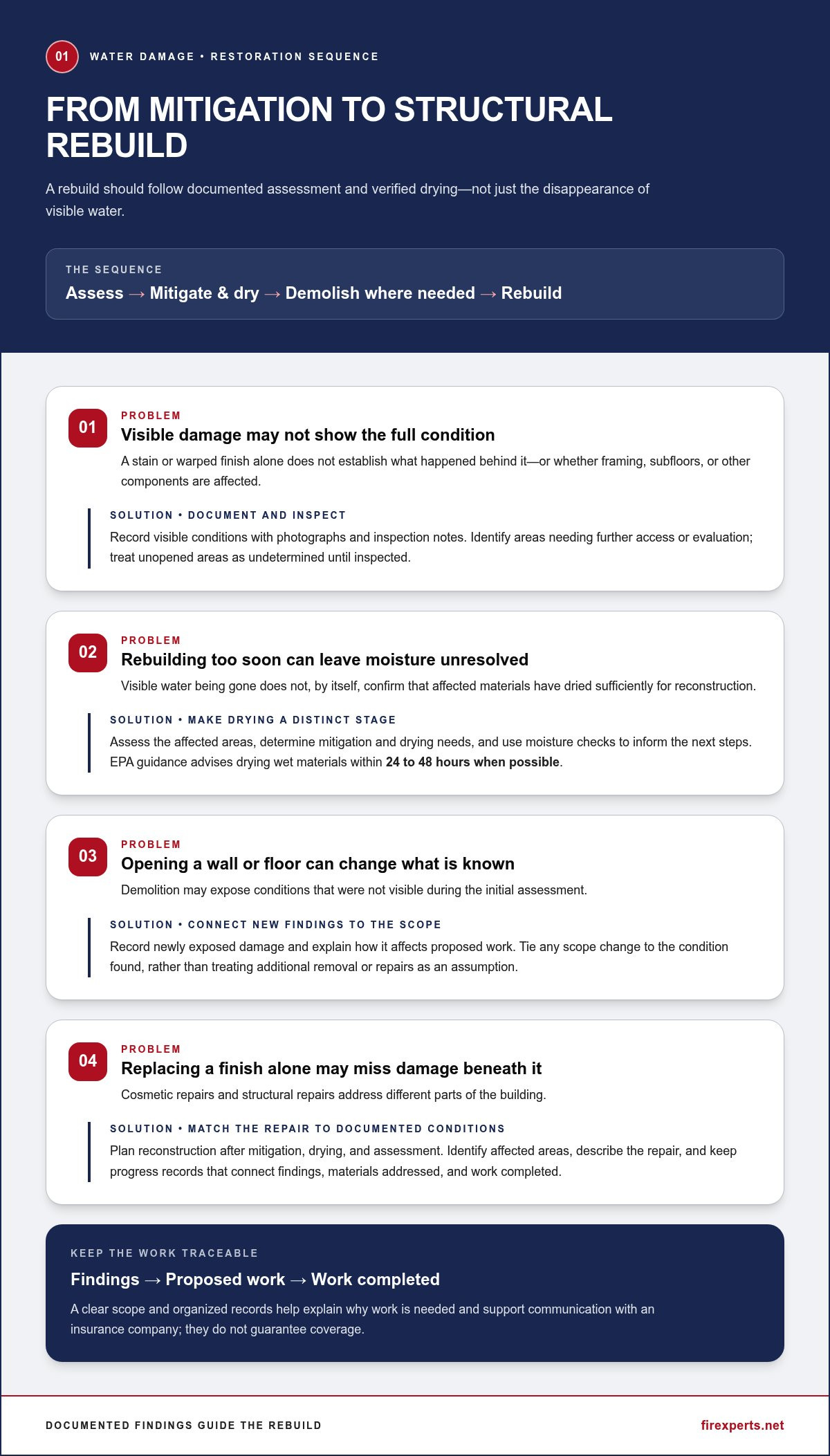
A rebuild should not begin just because visible water is gone. Assessment, drying, demolition, and reconstruction are distinct stages, and the work should progress in an order that reflects the property’s condition. In this Portland case, the restoration work included damage assessment, demolition, and rebuilding. For any project, keeping a record of findings and work completed at each stage makes the sequence easier to follow.
Structural repairs follow documented assessment because the repair scope needs to match what inspection and drying establish. For property owners, that means asking what has been assessed, what remains to be dried or inspected, and how the proposed repairs relate to the findings. Those questions help explain why restoration proceeds in stages rather than jumping straight from water removal to new materials.
Assessment, drying, and removal of damaged materials
The team assesses the reported water damage and affected areas, then determines what mitigation and drying are needed before setting the rebuild scope. Moisture checks help establish whether affected materials have dried sufficiently for the next steps. The EPA identifies moisture control as key to mold control and advises drying wet materials within 24 to 48 hours when possible. This guidance reinforces why drying is a separate stage, not a substitute for structural inspection.
Demolition follows when assessment identifies materials that need removal or openings that are needed to inspect concealed areas. Opening a wall or floor can reveal conditions that weren’t visible before, so record what the work exposes and how that affects the scope. This helps connect demolition to specific repair decisions instead of treating removal as an assumption.
Reconstructing the affected structural components
After mitigation, drying, and assessment, reconstruction can be planned around the documented condition. A practical scope identifies the affected areas, describes the planned repair, and notes any changes when demolition reveals new information. When repairs expand into broader residential renovations, partnering with an experienced general contractor such as River City Construction Inc can help homeowners navigate comprehensive home remodeling. Property owners can use that scope to follow what is complete, what remains in progress, and how the work relates to the original findings.
Progress records can connect each repair to the condition found, the materials addressed, and the work completed. This makes the handoff between mitigation and construction easier to understand and supports clear communication throughout restoration. Fire Industry Restoration Experts coordinates damage assessment, demolition, and rebuilding as part of its restoration work. Property owners considering a structural rebuild after water damage can learn more about water and structural restoration.
Repair or Replace? How Structural Rebuild Decisions Were Made
For a property owner, “repair” and “replace” can sound like competing guesses. The right decision depends on what inspection and demolition reveal, how much of a component is affected, and whether the damaged area can be properly assessed. In this Portland case, the restoration work included assessment, demolition, and rebuilding. For each component, a clear repair scope should explain the observed condition and how that condition informs the proposed work.
Which findings guided repair or replacement?
A component that remains sound and can be addressed within the repair scope may be treated differently from one that is damaged and needs removal. Access matters, too. A surface can conceal conditions that only become visible after material is opened during demolition. That new evidence can clarify the extent of work, but water exposure alone does not mean every building component needs replacement.
For property owners, the useful method is to connect each decision to observed condition, access, and the documented scope. Ask which finding supports a proposed repair or replacement and whether demolition has revealed information that changes the plan. This approach avoids applying a blanket rule to framing, subfloors, or other materials when each area may have a different condition.
How the rebuild scope was made understandable
A clear scope helps an owner follow what was found, what work is proposed, and why. Records can include assessment notes, photographs, demolition findings, and updates when newly exposed conditions change the planned work. Each revision should point back to new documented information. That creates a traceable explanation instead of leaving the owner to guess why the work changed.
Code requirements are another part of local planning, but they depend on the project and applicable jurisdiction. The International Code Council’s guidance on structural repairs offers reference material on repairs to existing buildings. It should not be treated on its own as a determination of which requirements apply to a particular Portland project. Include relevant permit and code considerations in the project plan when they apply.
Fire Industry Restoration Experts coordinates damage assessment, demolition, rebuilding, and insurance communication, keeping the work scope and project records connected. For broader context on the stages of water recovery, readers can also consult the related Water Damage Restoration in Portland: Complete Property Guide. Repair and replacement decisions should be grounded in the conditions documented at the property, not in general examples.
Insurance Coordination and Local Rebuild Planning in the Portland Area
Insurance communication can add another layer of uncertainty while a property is being restored. A clear project scope and organized work records help explain what was observed, what work is proposed, and how restoration is progressing. Fire Industry Restoration Experts coordinates restoration work with insurance companies. Documentation supports communication, but it does not determine coverage or guarantee a claim decision.
What documentation helped keep the project aligned?
For a restoration project, useful records may include the assessment, photographs of visible conditions, notes about areas opened during demolition, and updates to the work scope. Together, these can connect observed damage to proposed repairs and show how the work progresses. Keep copies organized so the property owner can refer to the same information during restoration and insurance discussions.
If demolition exposes a condition that changes the work plan, documenting what was found and explaining the proposed scope update helps keep the owner and restoration team aligned. Those records can also support clear communication with an insurer. They do not promise payment, coverage, or claim approval, which depend on the policy and the insurer’s decision.
What Portland-area property owners should plan for
Local planning matters because Portland, Gresham, and Clackamas-area properties may fall under different jurisdictions. Permit or code requirements can depend on the project and location. Owners should understand which requirements apply to their specific rebuild rather than assume one city’s process covers every property. Include local requirements in planning for the work when they apply.
Drying is another important handoff to understand before structural work begins. Moisture assessment helps determine whether affected materials are ready for reconstruction, while the rebuild scope addresses documented damage. For a closer look at how drying protects building materials, read Structural Drying in Portland: Protecting Subfloors & Walls.
A structural rebuild after water damage is easier to follow when assessment, proposed repairs, work records, and insurance communication stay connected. Fire Industry Restoration Experts coordinates these restoration stages for Portland, Gresham, and Clackamas-area property owners. To discuss a water-damage rebuild, talk with the restoration team.
The Completed Structural Rebuild: Case Outcome and Next Steps
A finished rebuild should give an owner a clear answer to a simple question: what work was completed, and what do the project records show about the result? In this Portland case, damage assessment, demolition, and rebuilding were part of the restoration. A useful project record connects those stages and describes the work completed without overstating what the findings demonstrate.
That distinction matters. A useful case study connects the starting findings to completed work so property owners can understand what changed and why. The documented sequence shows how assessment, demolition, and rebuilding fit into restoration. For any project, records of the initial condition, work carried out, and condition at completion provide a more useful account than a broad promise about the result.
What changed from the initial assessment to completion?
Compare the initial assessment with the completed scope. Which conditions were documented? What did demolition reveal? Which repairs were carried out, and what work remains? A before-and-after materials list or condition report can help answer those questions when project records include that information. Avoid assuming a timeline or completion check that the records do not show.
For an owner, a clear record is more useful than a broad promise. It can explain how the work scope followed observed conditions and distinguish structural repairs from cosmetic finish work. Fire Industry Restoration Experts brings assessment, demolition, and rebuilding together within its restoration work, helping keep the process connected from initial findings through reconstruction.
How to take the next step after water damage
If water damage has affected your property, start by gathering what you already know. Photos can help show visible conditions. Notes about the known water source and when it was noticed can add context, and existing insurance or repair records may help keep conversations organized. You don’t need every answer before discussing the situation.
A useful first conversation can focus on the property’s condition, what needs assessment, how the scope will be explained, and how restoration work will be coordinated. A structural rebuild after water damage should be guided by documented findings, with decisions explained in terms an owner can follow. For help discussing assessment, demolition, and rebuilding, talk with our restoration team.
Move Forward With a Clear Rebuild Plan
A sound structural rebuild after water damage follows a clear sequence: assess the damage, complete mitigation and drying, document what demolition reveals, then rebuild to match verified findings. Clear records help property owners understand why materials may need repair or replacement and support communication with insurance companies, without promising a coverage decision.
Fire Industry Restoration Experts coordinates damage assessment, demolition, and structural rebuilding as part of the restoration process. Founded in 2013 by volunteer firefighter and contractor Greg Philo, the company brings construction expertise and emergency response experience to restoration work for Portland-area property owners. Each property’s needs should be guided by its own documented condition.
If water damage has left you unsure what comes next, start with a clear conversation about the assessment, repair scope, and coordination of restoration work. Talk with our restoration team about the next step for your property.
Frequently Asked Questions
What does a structural rebuild after water damage include?
A structural rebuild after water damage restores building components affected by water after assessment and mitigation address the moisture. Depending on the documented condition, work may include removing damaged materials and repairing or replacing components such as framing or subfloor. Not every water-damaged material needs replacement. The scope depends on the property’s findings, and a clear assessment helps explain which work is needed and how it fits into the restoration sequence.
How do restoration teams know whether water-damaged framing needs repair or replacement?
The decision depends on the framing’s documented condition and the findings of the property assessment. The team considers what was affected, whether the area can be accessed and evaluated, and how the proposed work fits the documented scope. There’s no single answer for every property. Clear records of the findings and proposed repair or replacement help owners understand the reasoning behind the work.
Does structural rebuilding start before water damage is fully dried?
Structural rebuilding generally follows mitigation and drying, so moisture conditions and affected materials can be assessed before reconstruction moves ahead. The sequence depends on the property and documented findings. The restoration team can explain which areas are ready for rebuilding and which work remains underway. Keeping those stages distinct helps owners follow progress and reduces the risk of rebuilding over unresolved moisture conditions.
How long does a structural rebuild after water damage take?
The duration depends on the affected areas, the amount of demolition and repair required, material availability, and any project-specific approvals. A limited repair and a larger structural rebuild won’t follow the same schedule. For a specific project, dates should come from the work plan and project records rather than being treated as a universal estimate. As the scope becomes clear, the restoration team can explain the expected work sequence for the property.
Will homeowners insurance cover structural rebuilding after water damage?
Coverage depends on the policy, the cause of the damage, and the insurer’s claim decision. Assessment notes, work records, and other project documentation can help explain observed damage and restoration work, but they don’t guarantee coverage or payment. Keep relevant records and communicate with your insurer about the claim. Fire Industry Restoration Experts coordinates restoration information with insurance companies while assessment, demolition, and rebuilding proceed according to the documented scope.
Are permits required for structural water-damage repairs in Portland?
Permit requirements depend on the work involved and the property’s jurisdiction. Structural repairs may have different requirements from limited finish work, so one project’s requirements shouldn’t be assumed to apply to another. Owners in Portland, Gresham, and Clackamas should verify the applicable requirements for their property and repair scope with the relevant local authority. Any specific permit or code guidance should be based on current, project-specific information.
Can a restoration company handle both water mitigation and structural rebuilding?
Yes. A restoration project can include separate stages, from addressing water damage and assessing affected areas to demolition and structural rebuilding. Fire Industry Restoration Experts handles damage assessment, demolition, and rebuilding as part of its restoration work. The sequence depends on the property and documented scope. Clear communication between stages helps owners understand what has been completed, what remains in progress, and what comes next.