
A room can feel dry while water remains inside a wall or beneath the floor. After a leak or flood, surface appearance alone can’t confirm that building materials have dried. With structural drying Portland OR professionals assess moisture inside affected materials, not just what you can see or feel.
It’s reasonable to ask which areas need attention, how long equipment will run, and whether walls or flooring must be removed. A careful process answers those questions in stages. This article explains how professionals assess moisture, plan drying, check progress, and document findings. You’ll also learn what can affect the timeline, when damaged materials may need removal, and how drying can connect to repairs or rebuilding. If water damage affects your property in Portland, Gresham, or Clackamas, understanding the work can help you follow each decision and discuss next steps with your restoration team.
Key Takeaways
- Structural drying addresses moisture in building materials and interior spaces, not just visible puddles or damp surfaces.
- With structural drying Portland OR, the assessment helps identify which materials and areas may need focused attention.
- Drying progress is judged through repeat checks and documented readings, not by whether a room feels comfortable.
- Drying time varies with the amount of water, affected materials, access, and measured progress, so a fixed timeline may not fit every property.
- If damaged materials can’t be retained, drying may lead to demolition and structural rebuilding as part of the broader restoration process.
What Structural Drying Means for a Water-Damaged Portland Property
Structural drying is a measured process for removing moisture from affected building materials and interior spaces after water enters a property. Wiping up a spill or extracting standing water addresses visible water, but doesn’t show whether moisture remains behind a wall or beneath flooring.
The right response in Portland depends on the water event and how the property is built. A leak near a bathroom, for example, may affect different materials and areas than water entering through a floor. An assessment helps identify where moisture has traveled before anyone decides what can stay and what may need removal. For a general overview of water intrusion and restoration, see Water damage restoration.
Which parts of a structure can hold hidden moisture?
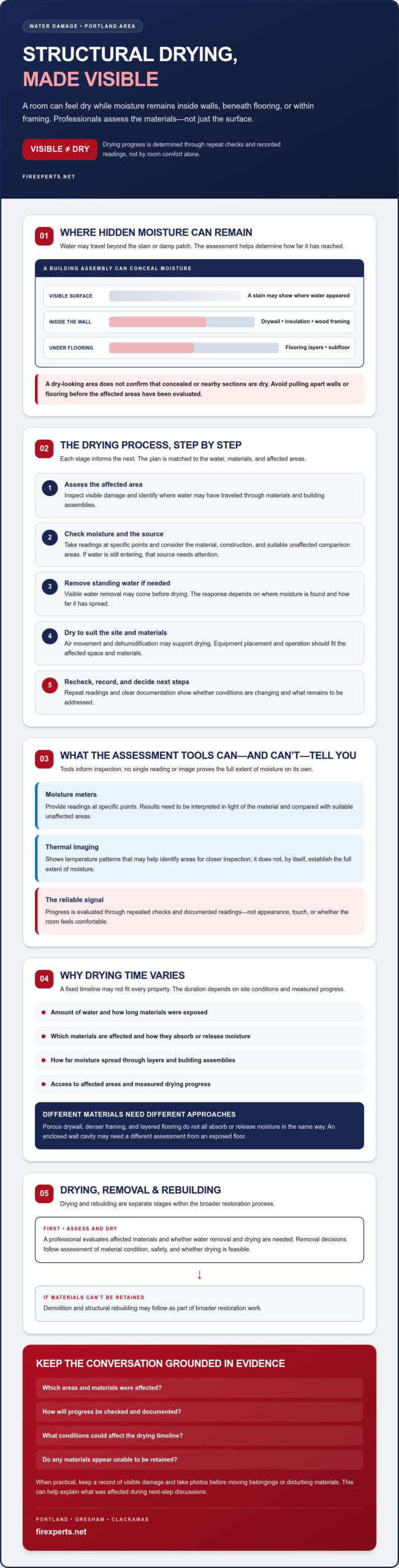
Water can soak into drywall and insulation, spread beneath flooring into the subfloor, or reach wood framing inside wall and floor assemblies. A visible stain may show where water appeared without showing its full path. Moisture can also move along building materials, so a dry-looking patch doesn’t confirm that nearby or concealed sections are dry.
Assessment helps determine how far moisture has reached and whether materials can remain. Avoid pulling apart walls or flooring before the affected areas have been evaluated, since doing so can disturb materials before the extent of the damage is understood.
When does a property need structural drying?
A plumbing leak, overflow, flood, or other water intrusion may leave moisture in building materials after visible water is gone. The water source, how long materials were exposed, and the construction around the affected area all help shape the assessment. Structural drying Portland OR property owners may need depends on those conditions, not on appearance alone.
Drying and rebuilding are separate stages. A restoration professional first assesses affected materials and whether water removal and drying are needed. If some materials can’t be retained, demolition and structural rebuilding may follow as part of broader restoration. Keep a record of visible damage and, when practical, take photos before moving belongings or disturbing materials. These details can help you explain what was affected when discussing next steps.
How Structural Drying Removes Moisture From Walls, Floors, and Framing
A sound drying plan starts by identifying where water traveled and matching the response to the affected materials. In structural drying Portland OR properties, the process generally includes assessment, moisture checks, water removal if needed, drying, monitoring, and documentation. Each step helps guide the next instead of relying on how a room looks or feels.
A restoration professional assesses visible damage and checks for moisture in materials and building assemblies. Moisture meters provide readings at specific points. Thermal imaging can show temperature patterns that may help identify areas for closer inspection, but neither tool proves the full extent of moisture on its own. Readings need to be interpreted in light of the material and compared with suitable unaffected areas.
How the drying plan takes shape
If standing water remains, it may need to be removed before drying begins. The approach depends on where moisture is found, how far it has spread, which materials are involved, and how accessible the affected areas are. If water is still entering, that source also needs attention. Drying wet materials without addressing ongoing water entry won’t resolve the underlying problem.
Air movement and dehumidification may support drying, depending on site conditions and the restoration plan. Equipment placement and operation should suit the affected space and materials. The EPA flood cleanup guidance also offers information about safe cleanup and indoor air quality after flooding.
Why walls, floors, and framing need different approaches
Materials don’t all absorb or release moisture in the same way. Porous drywall can take in water readily, while denser framing may dry at a different pace. Flooring can conceal moisture in layers beneath the visible surface. Access also matters: an enclosed wall cavity may need a different assessment and plan from an exposed floor.
These differences mean there’s no single drying setup or universal pass/fail reading for every material. A professional considers the material, extent of moisture, construction layers, and water source. Removal decisions should follow an assessment of material condition, safety, and whether drying is feasible. If materials can’t be retained, demolition and structural rebuilding may become part of the broader restoration work.
Repeat checks and clear records help show whether conditions are changing and what remains to be addressed. If you need help understanding water or structural restoration options in Portland, Gresham, or Clackamas, you can review water restoration services and discuss the property’s specific conditions.
How to Tell Whether Structural Drying Is Working
A room can feel comfortable while moisture remains inside a wall cavity, beneath flooring, or within framing. Seeing no standing water or hearing equipment run doesn’t prove affected materials are ready. In structural drying Portland OR, progress is assessed by checking materials over time, not by relying on surface impressions.
Drying verification means comparing documented moisture readings from affected materials over time to assess whether conditions are moving in the right direction. A single reading offers only a snapshot. Repeat checks give the restoration team a clearer picture of changes and can help guide adjustments to the drying plan.
What moisture mapping and progress records should show
A useful record identifies affected areas, materials checked, and where readings were taken. Keeping locations consistent during follow-up makes comparisons more meaningful. Because drywall, flooring, and framing behave differently, readings need to be considered in context rather than judged by one universal number.
Ask the restoration team to explain what has changed since the last check and whether the drying approach needs adjustment. You can also ask which materials were tested and how those findings shape the next step. Clear explanations make technical readings easier to understand and help you track what remains.
What to ask before drying equipment is removed
Before equipment comes out, ask what evidence supports that decision. Were affected sections of flooring, wall materials, or framing monitored, and how did their readings change? Ask whether any areas remain inaccessible or need further assessment. If the team recommends removal, repair, or rebuilding, request a plain explanation of what was found and why that work is being considered.
Documentation also helps keep everyone aligned. If the drying plan changes, the records and explanation should make clear what prompted the change. This is particularly useful if drying is followed by demolition or structural rebuilding, which address materials that can’t reasonably be retained rather than simply extending the drying phase.
The goal isn’t to interpret every meter reading yourself. It’s to understand which areas were checked, what the results show, and why the team believes the next step is appropriate.
What Affects Structural Drying Time in Portland, OR?
There isn’t one reliable drying timeline for every property. The time needed depends on how much water entered, which materials were affected, how far moisture traveled, and whether those areas are accessible. Progress readings matter too. The plan may change as the restoration team learns more about the building and how its materials are responding.
One Portland home’s experience can’t predict another’s. A small area of surface impact is different from water that has reached flooring layers, wall cavities, or framing. The initial assessment and follow-up checks help determine what work remains.
Why no single drying timeline fits every Portland property
The water source and length of exposure shape the assessment. A brief overflow may affect a different area than a leak that went unnoticed, and building layout can make some materials harder to inspect or reach. Conditions inside the property may also influence the drying approach. A property’s location in Portland, Gresham, or Clackamas doesn’t establish how long drying will take. The affected materials and measured progress provide more useful guidance.
Be cautious of a firm completion estimate made before the affected areas are assessed. Ask what conditions the estimate depends on and how the team will update you if checks show that the plan needs to change.
When materials may need removal instead of continued drying
Drying isn’t the right path for every affected material. Its condition, the water involved, safety, and whether the area can be accessed may all affect whether it can reasonably remain. If a material can’t be safely or effectively dried in place, removal may be considered, followed by repair or structural rebuilding as needed.
These decisions call for a site-specific assessment. Don’t disturb damaged or concealed materials based on appearance alone. Ask the restoration professional what they found, why continued drying or removal is being recommended, and what work may follow. If there are safety concerns, consult a qualified professional before handling affected materials yourself.
For a property in Portland, Gresham, or Clackamas with water damage, request an assessment for water restoration to discuss the affected areas and possible next steps.
What to Expect From a Structural Drying Contractor in Portland
A careful contractor should explain what was affected, what the drying plan involves, and how progress will be checked. For structural drying Portland OR property owners can expect an assessment of visible damage and areas that may hold concealed moisture, followed by an explanation of recommended steps. As work proceeds, ask for updates on findings and any changes to the plan.
Good communication matters as much as equipment. Keep photos of affected areas, assessment notes, drying records, and messages with your insurer together. These records can help you follow the work and share information, but they don’t determine whether a claim will be covered or paid. Ask what documentation the contractor can provide and how they coordinate work information with you and your insurer.
Questions to ask before structural drying begins
Before work starts, ask which materials and areas will be assessed, how the team will document progress, and who will explain any recommendation to remove or rebuild. Ask what findings support that recommendation. Clarify how updates will be shared and whether the contractor coordinates restoration information with your insurer. Direct answers help you understand the plan and make informed decisions as work moves forward.
How drying connects to restoration and rebuilding
Drying is one stage of recovery, not a promise that every water-damaged material can be saved. Assessment may show that some materials can remain while others need demolition before repairs or structural rebuilding can proceed. The contractor should explain how those next steps relate to the damage and what findings support them, so you can follow the work from moisture control through restoration of the affected structure.
Fire Industry Restoration Experts provides water and structural restoration in Portland, Gresham, and Clackamas, from damage assessment and demolition through structural rebuilding. The company also coordinates with insurance companies. To discuss what happened at your property and understand possible restoration steps, contact the restoration team.
Take the Next Step Toward a Dry, Restored Property
A room that feels dry doesn’t confirm that moisture has left the walls, floors, or framing. For structural drying Portland OR property owners should look for a measured process, with material readings and clear records guiding decisions. Drying time depends on the water event, affected materials, access, and progress. Some damaged materials may need removal before rebuilding can begin.
Fire Industry Restoration Experts was founded by a volunteer firefighter and contractor. The company provides water and structural restoration, including assessment, demolition, and rebuilding, and coordinates with insurance companies. Keeping photos, reports, and insurer communications organized can help you follow the work and understand next steps, without assuming a particular claim outcome.
If water has affected your property in Portland, Gresham, or Clackamas, get a clear explanation of what needs attention and why. Talk with Fire Industry Restoration Experts about your property and discuss the restoration steps that may apply.
Frequently Asked Questions
What is structural drying after water damage?
Structural drying removes moisture from affected building materials and interior spaces after water enters a property. It can address water in drywall, flooring, subfloors, or framing, not just visible puddles. In structural drying Portland OR professionals assess where moisture traveled, then plan drying and follow-up checks based on the materials and conditions. If damaged materials can’t be retained, removal and rebuilding may become part of the broader restoration work.
How do professionals know when a structure is dry?
Professionals assess progress with repeated moisture checks and documented readings from affected materials. They interpret results in context, since different materials can retain and release moisture differently. Records of the areas checked and changes over time help show whether conditions are improving and guide next steps. A room that feels dry, equipment that has been running, or the absence of visible water alone doesn’t confirm that concealed materials are dry.
How long does structural drying take in Portland, Oregon?
There’s no dependable fixed timeline for every property in Portland. Drying time depends on the amount of water, which materials were affected, how far moisture spread, access to concealed areas, and measured progress. A limited surface impact may call for a different plan than water inside a wall or beneath flooring. Ask the restoration professional what findings shape the estimate and how progress will be communicated.
Can walls and floors look dry while moisture remains inside?
Yes. Drywall, flooring layers, subfloors, insulation, and framing can retain moisture even when exposed surfaces look or feel dry. A stain can show where water appeared without revealing how far it traveled. Professionals assess affected materials rather than relying on appearance alone. If you’re unsure whether hidden areas were checked, ask which materials and locations were assessed and what those findings indicate.
What happens if wet drywall or subflooring cannot be dried in place?
If an assessment finds that wet material can’t reasonably be retained, removal may be recommended before repairs or structural rebuilding. The decision depends on the material’s condition, safety considerations, water event, and whether the area can be accessed and dried. Ask the restoration professional to explain what was found and why removal is being considered. Drying is one phase of recovery, and it can’t guarantee every damaged material can be saved.
Does homeowners insurance cover structural drying?
Coverage depends on the policy, the cause of the water damage, and the insurer’s review, so don’t assume every drying project will be covered. Contact your insurance company to ask how your policy applies and what documentation it needs. Keep photos, assessment notes, reports, and insurer communications together. A restoration company may coordinate work information with the insurer, but it can’t guarantee a claim decision or payment.
Is structural drying different from water extraction?
Yes. Water extraction removes standing or accessible water, while structural drying addresses moisture remaining in building materials and indoor spaces. Extraction may be an early step when water is present, but it doesn’t establish that subfloors, wall cavities, or framing have dried. A restoration professional assesses the affected areas and determines whether additional drying, monitoring, or other restoration work is needed.
Do I need a Portland restoration contractor for structural drying?
Professional assessment is worth considering if water has reached walls, flooring layers, subfloors, or other concealed areas, or if the extent of damage is unclear. A qualified restoration professional can assess affected materials, explain the drying plan, and discuss whether removal or rebuilding may be needed. Fire Industry Restoration Experts provides water and structural restoration in Portland, Gresham, and Clackamas, and coordinates with insurance companies.